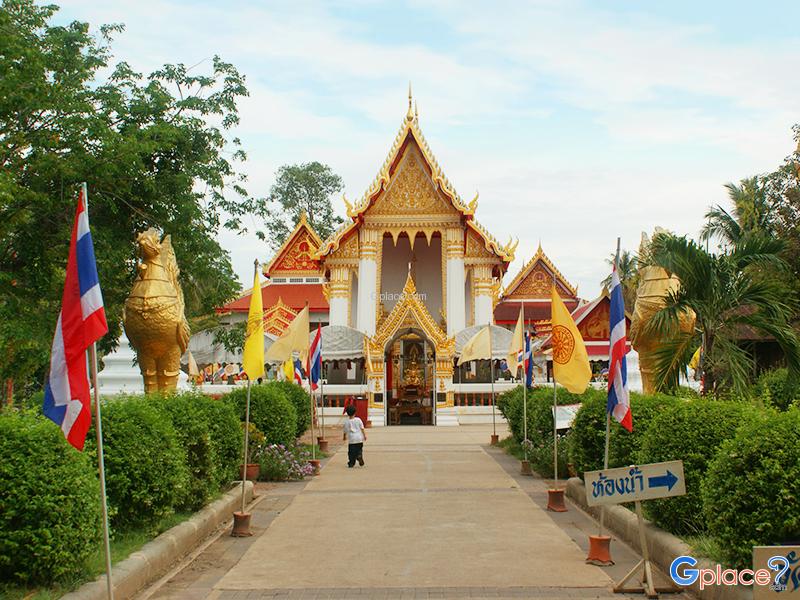
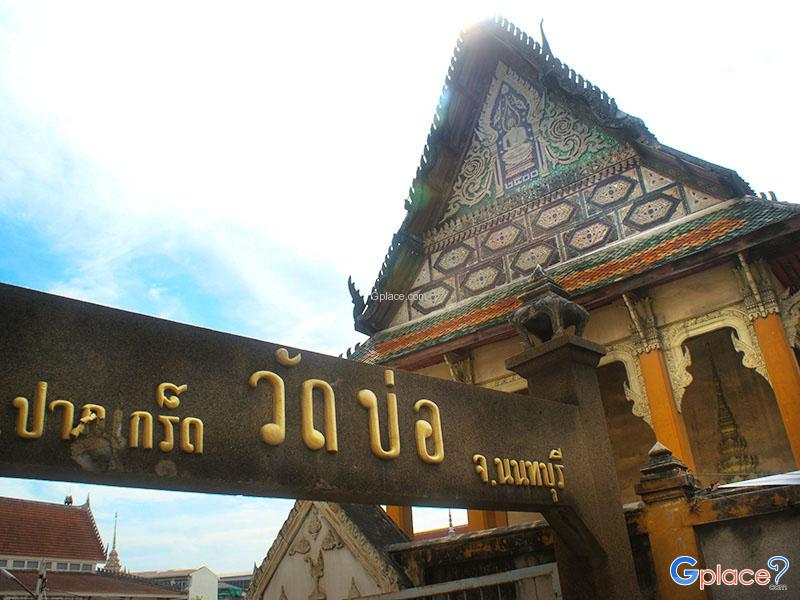
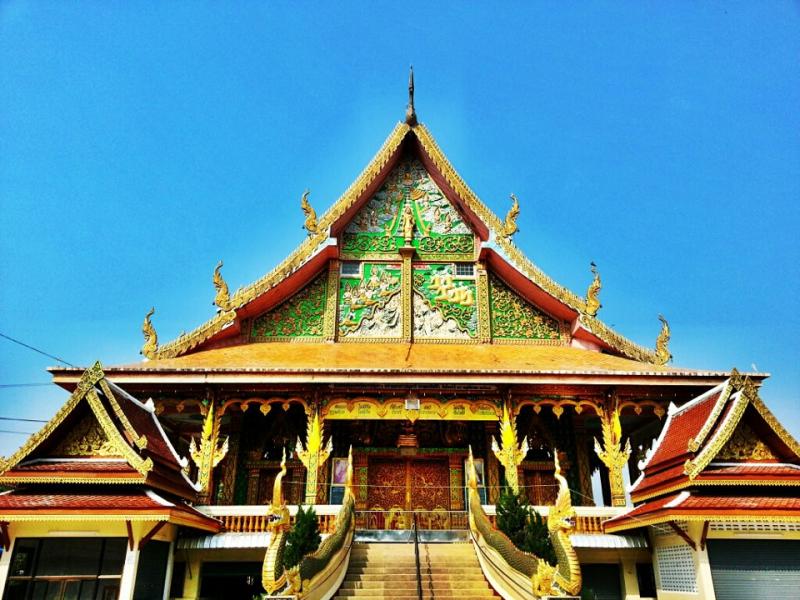
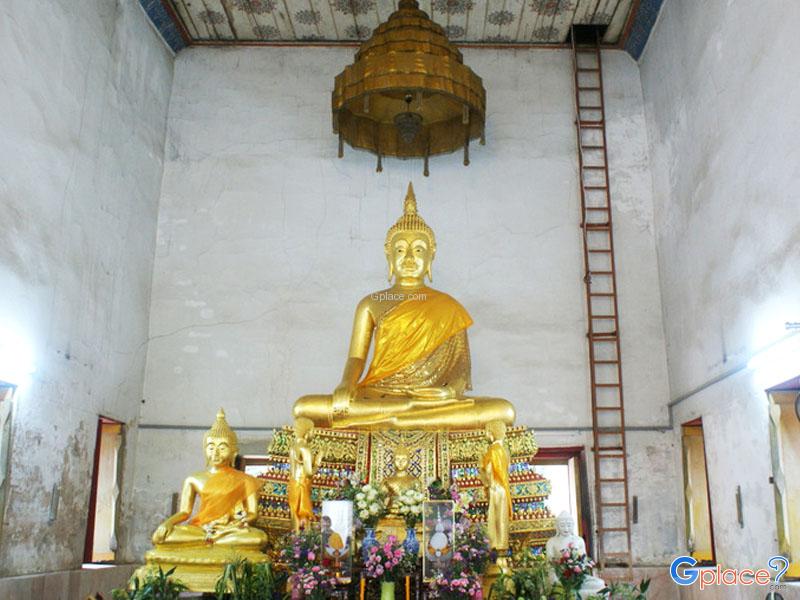
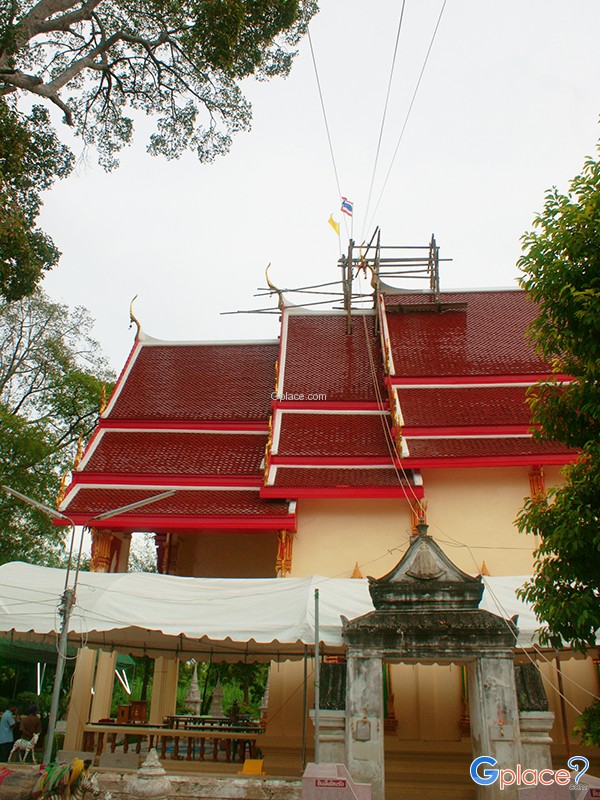
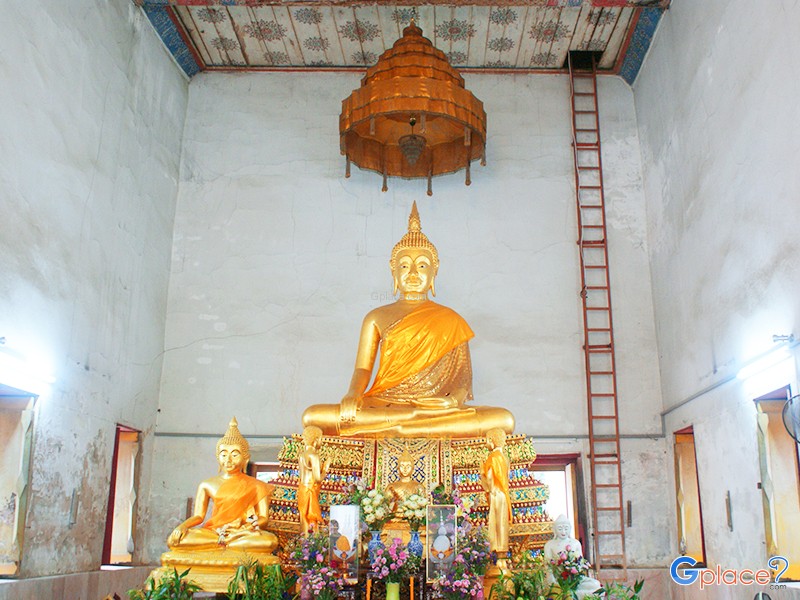
Wat Sao Thong Thong is an important ancient temple located on Koh Kret in Nonthaburi Province. Its history dates back to the late Ayutthaya period. The temple was originally called “Wat Suan Mak” because the surrounding area was once filled with betel nut trees and various orchard plants. This reflects the traditional riverside way of life, where communities depended on natural resources and river-based trade.Later, during the early Rattanakosin period up to the reign of King Rama IV, the temple was extensively restored by Chao Chom Manda Ampa, who played an important role in supporting several religious sites. During this renovation, the temple structures and architecture were strengthened, and the name was changed to “Wat Sao Thong Thong” because the original betel nut trees had disappeared.Inside the temple, there is an old ordination hall that still preserves its original artistic style. One of its highlights is the gilded ceiling mural in the traditional Thai “krueng ching” style, a rare form of ancient craftsmanship. The intricate patterns reflect Buddhist beliefs and clearly show artistic influences from the late Ayutthaya to early Rattanakosin periods
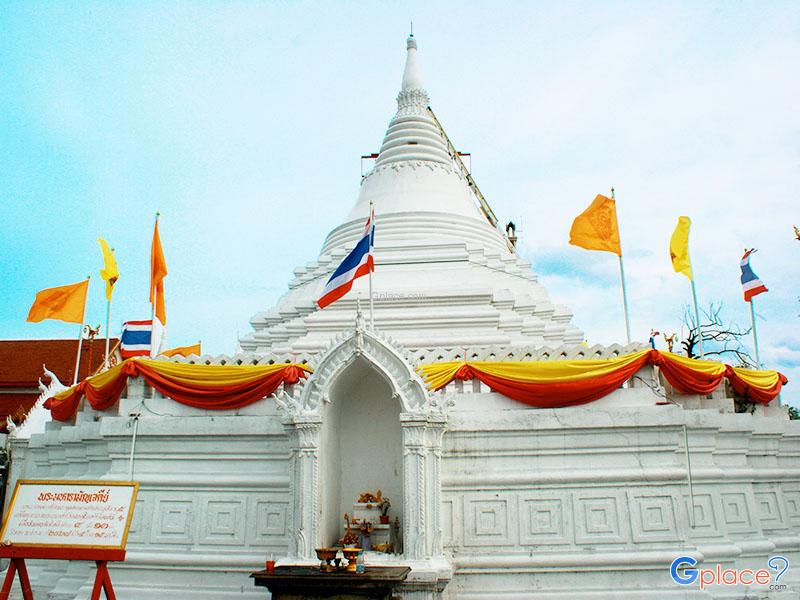
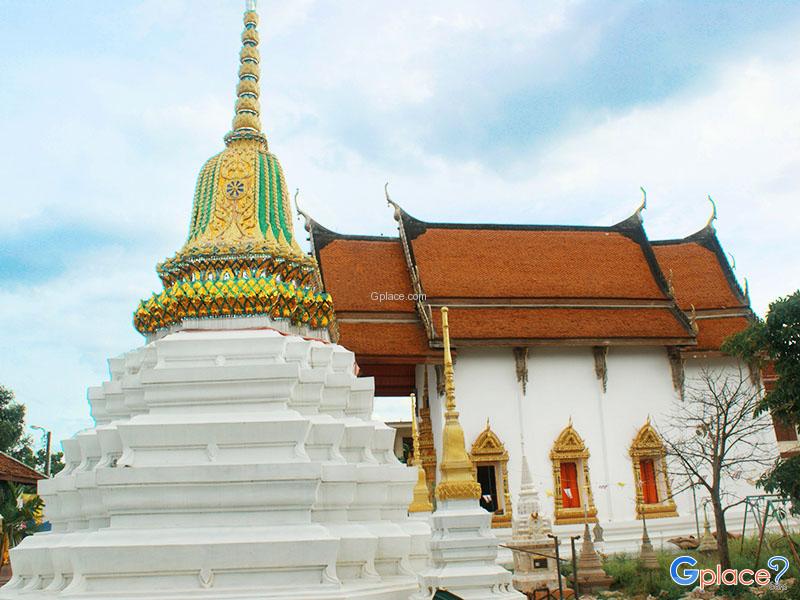
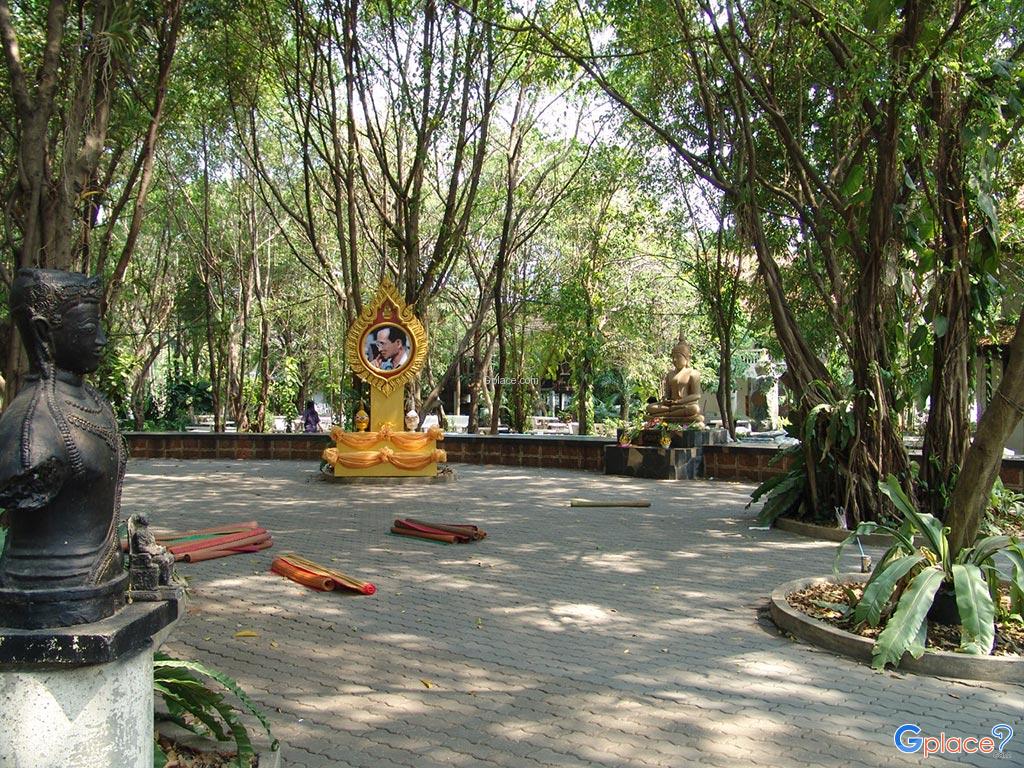
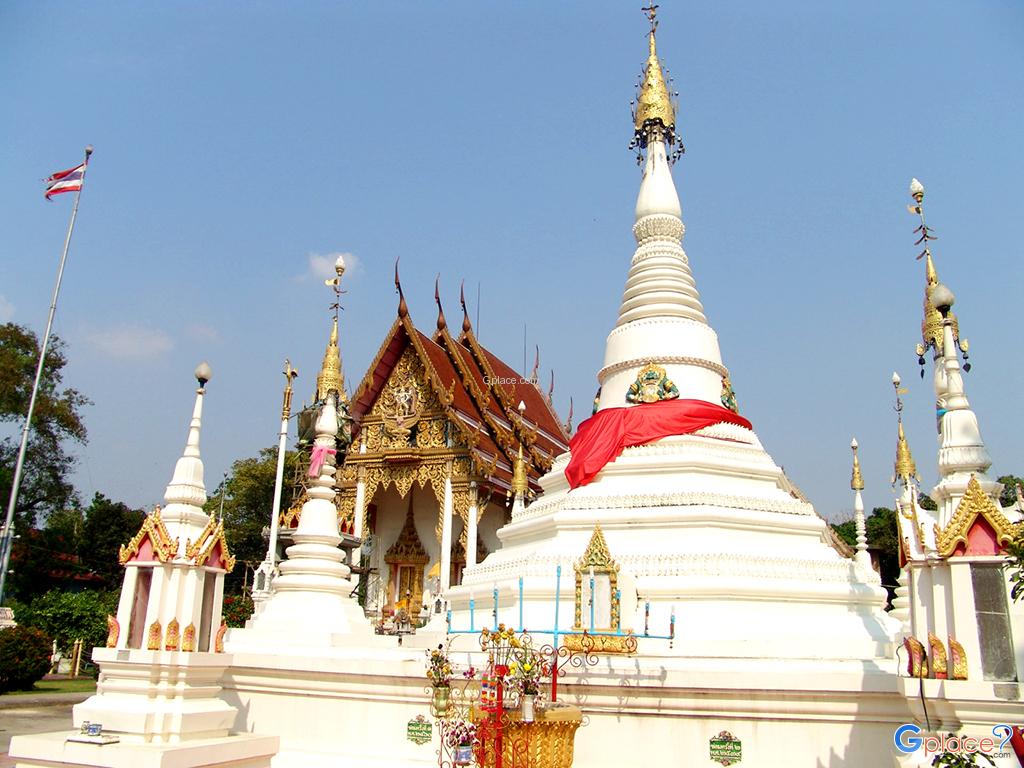
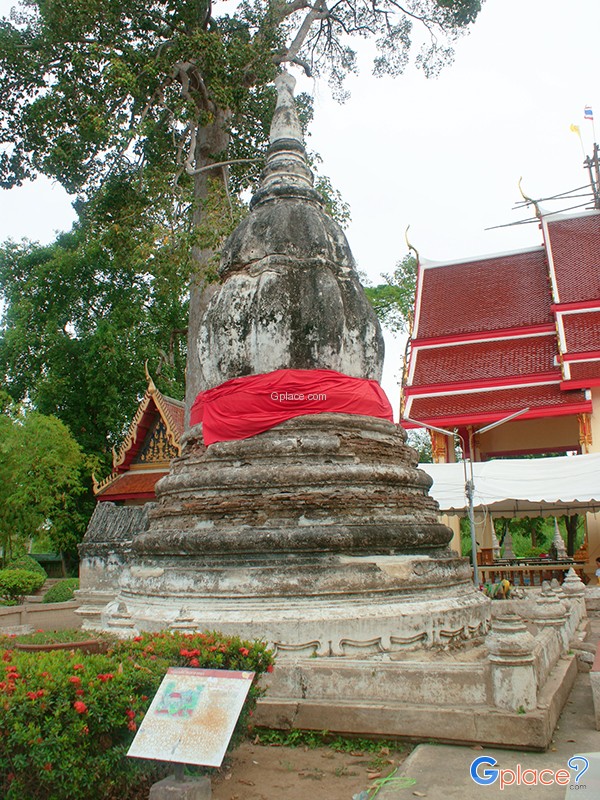
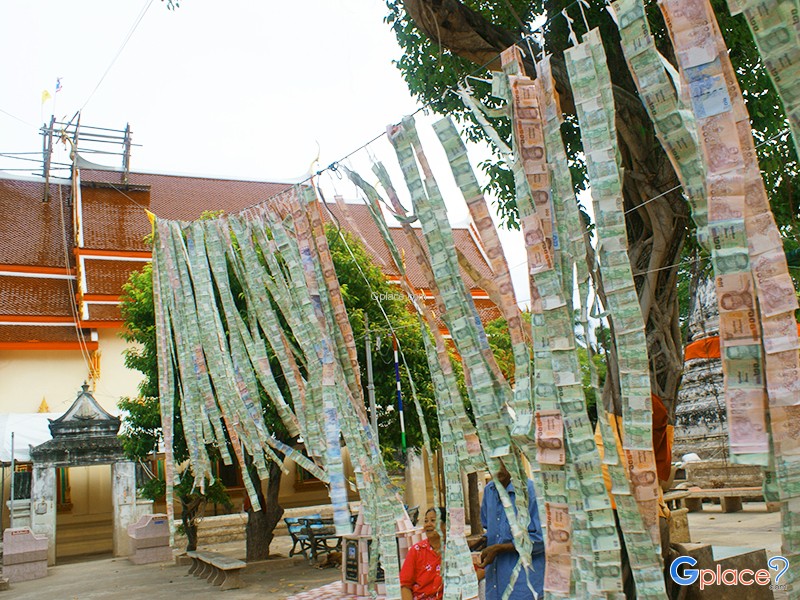
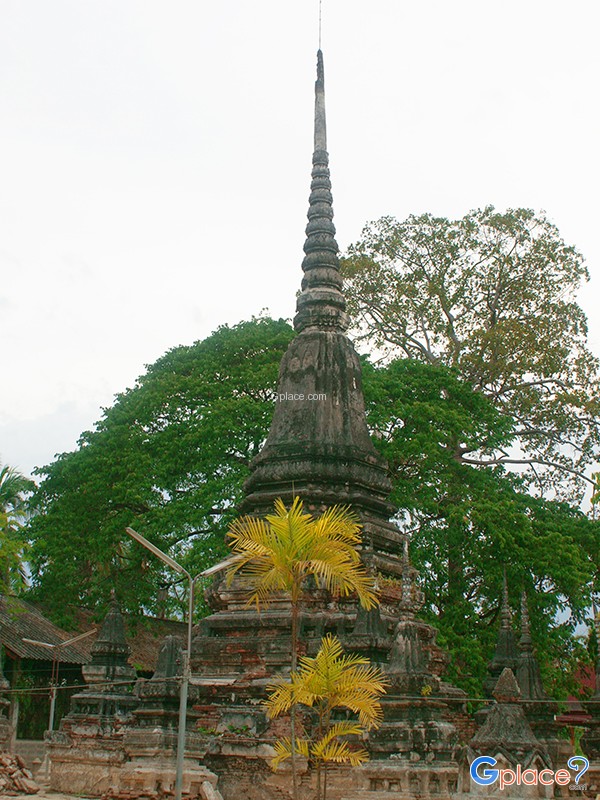
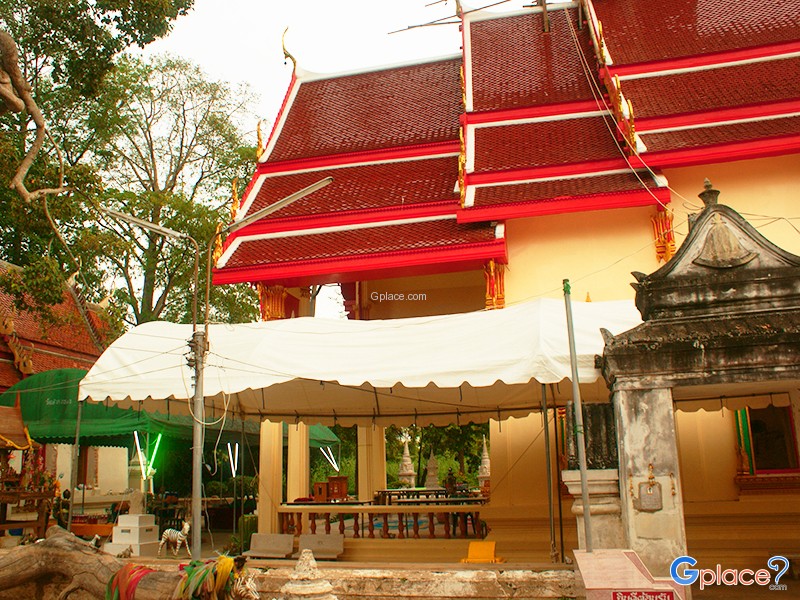
A key architectural feature of the temple is the twelve indented corners chedi, which is the tallest chedi in the Pak Kret district. It represents high-class Thai royal art. The temple also features a unique mushroom-shaped chedi, which is extremely rare and considered the only one of its kind in Thailand. In front of the temple stands a more than 200-year-old Yang Na tree, the largest and tallest in Nonthaburi Province. It provides shade and serves as a natural symbol of the local community. Beneath the tree are sacred shrines, including the Shrine of the Two Topknot Children and the Mae Takhian Shrine, which are popular places for locals and visitors to pray for good fortune and blessings.
Wat Sao Thong Thong also holds historical significance, as there is evidence that King Rama V (King Chulalongkorn) once visited and stayed on Koh Kret. This highlights the area’s importance as a river transportation route and royal resting point in the past.Today, the temple remains a spiritual center for the people of Koh Kret and a major tourist attraction in Nonthaburi. Visitors can walk around the riverside temple, admire its ancient architecture, learn about Mon community culture, and enjoy traditional local food and Thai desserts nearby. As a result, the temple continues to serve as a living site of religion, history, and culture.

 Attractions
  Hotel
Hotel  Restaurant
  Shopping
  Abroad








 Share
Share
 Koh Kret Subdistrict, Pak Kret District, Nonthaburi 11120
Map
Koh Kret Subdistrict, Pak Kret District, Nonthaburi 11120
Map
 Closed today



 59
59