 Attractions
  Hotel
Hotel  Restaurant
  Shopping
  Abroad





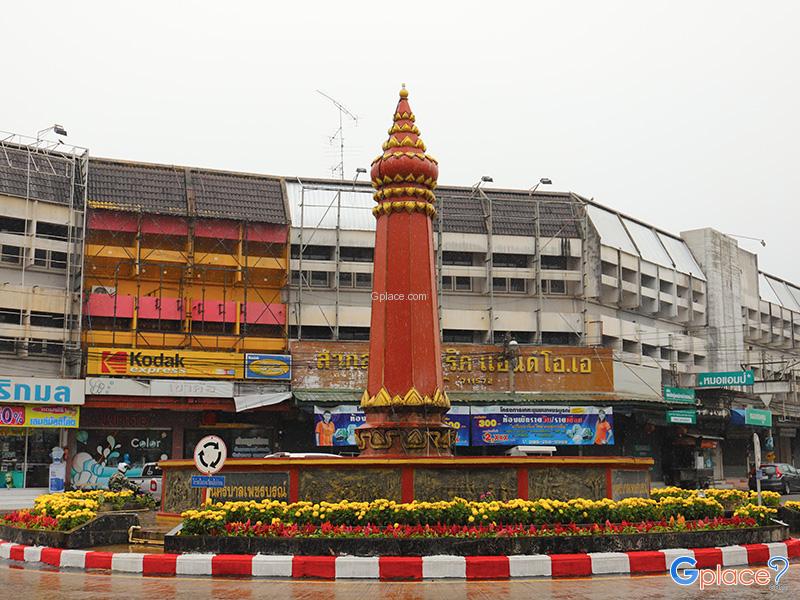

“A historic World War II city pillar replica symbolizing the grand wartime plan to relocate Thailand’s capital to Phetchabun, featuring informative outdoor exhibition displays.”
Sanam Nakhonban Phetchabun, or the Phetchabun City Pillar Monument, is one of the most important historical landmarks in Phetchabun Province and a symbol of a major political event during World War II. Located in Ban Bung Nam Tao, Lom Sak District, it was designated as the center of "Nakhonban Phetchabun," a new city envisioned by the Thai government under Field Marshal Plaek Phibulsongkram to develop as a new administrative and strategic hub for the country during 1943-1944. This idea arose as Bangkok faced the risk of air attacks during World War II. The government sought a suitable location with mountainous terrain and inaccessibility from the coast, and Phetchabun was considered the most suitable at the time.
The Bung Nam Tao area was historically densely forested, consisting of plains interspersed with mountains. The construction of Nakhonban Phetchabun was a large-scale project requiring significant labor, resources, and manpower. The government began constructing roads, building transportation routes, planning the city, and preparing land for various government agencies. Many agencies began moving personnel and equipment into the area, and temporary government buildings, military camps, and basic infrastructure were built. To support the plan for developing this new city, although the project had been underway for some time, the mountainous and forested terrain, disease, resource scarcity, and budgetary problems became significant obstacles, making the project extremely difficult.
One of the most significant events in the area was the foundation stone laying ceremony for the Phetchabun City Pillar on April 23, 1944. This was a symbolic ceremony declaring the city as the new central hub of the country. The ceremony was attended by numerous government officials, military personnel, and representatives from various government agencies. The city pillar erected at that time symbolized power, stability, and the government's hope in establishing a new strategic city amidst the mountains of Phetchabun. However, despite the actual implementation of several aspects of the project, the House of Representatives ultimately did not approve the royal decree establishing Phetchabun City Pillar, resulting in the termination of the plan to relocate the country's administrative center, and the entire project was subsequently canceled.
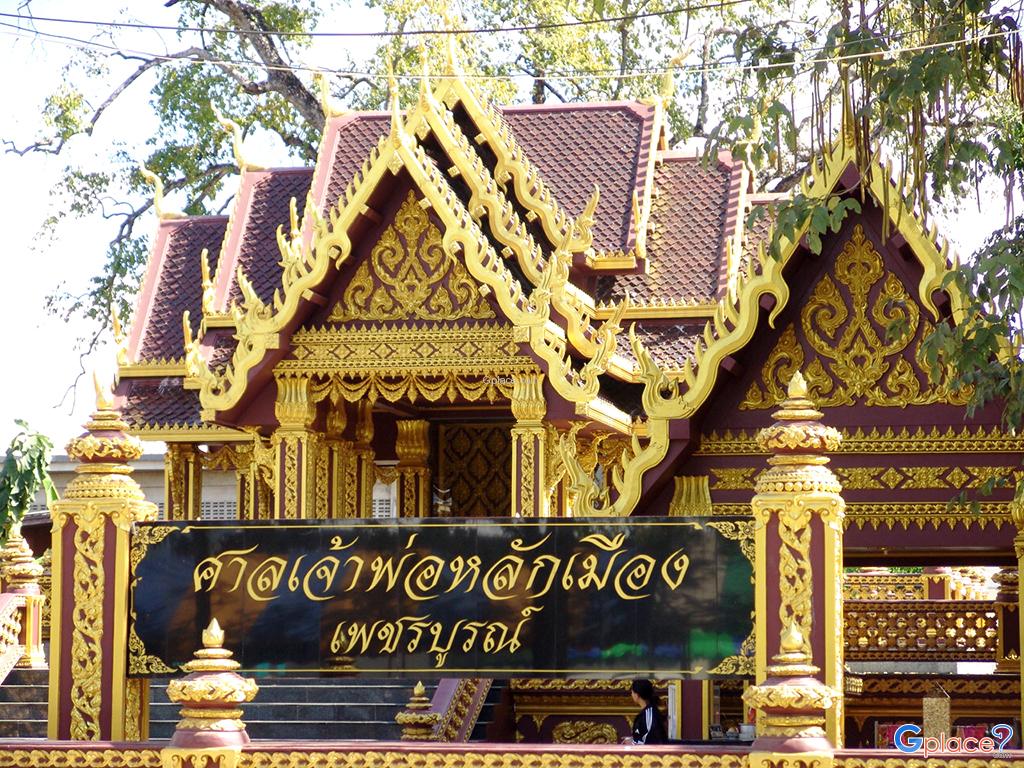
After the end of World War II, many parts of the former Phetchabun City Pillar area were abandoned, leaving only scattered historical traces in the area. The city pillar, in particular, remains a cherished memory for locals. Later, government agencies and the community in Phetchabun province jointly restored and developed it into a historical monument, allowing future generations to study this important national event. Currently, the monument is designed as a prominent white pavilion-shaped pillar standing at the Bung Nam Tao intersection. The surrounding area features information plaques and inscriptions recounting the history of Phetchabun, including historical city plans. This allows visitors to visualize the near-realization of the new capital city project in Thai history.
Beyond its historical value, the Phetchabun City Pillar Shrine reflects crucial periods in Thailand's life, including the pressures of World War II, political decisions, and national strategic shifts. Therefore, it is not just a memorial, but a clear record of the security concepts, urban planning, and political vision of the Thai government during that era. For tourists interested in Thai political history or the events of World War II, this is a significant destination in Phetchabun province well worth a visit and study.
How to Get There
- From Phetchabun downtown, take Highway 21 heading towards Lom Sak District for approximately 30 kilometers. Upon reaching the Bung Nam Tao Intersection, turn left onto Highway 2278. Drive further for about 1-2 kilometers; the monument is prominently located at the secondary crossroads.
Travel Tips
- Visit during the morning or late afternoon to avoid the midday heat.
- Winter is the best season for photography in Phetchabun.
- Read the informational signs around the monument for deeper historical insight.
- Bring drinking water since the surrounding area is mostly open-air.
Admission Fees:
- Free admission.
Opening Hours:
- Open for visits and worship 24 hours a day, every day (but it is recommended to visit during daylight hours, 6:00 AM – 6:00 PM).
Sanam Nakhonban Phetchabun

 Share
Share
 T.Nai Mueang, A.Mueang Phetchabun, Phetchabun, 67000
Map
T.Nai Mueang, A.Mueang Phetchabun, Phetchabun, 67000
Map
 Open now



 2272
2272