 Attractions
  Hotel
Hotel  Restaurant
  Shopping
  Abroad





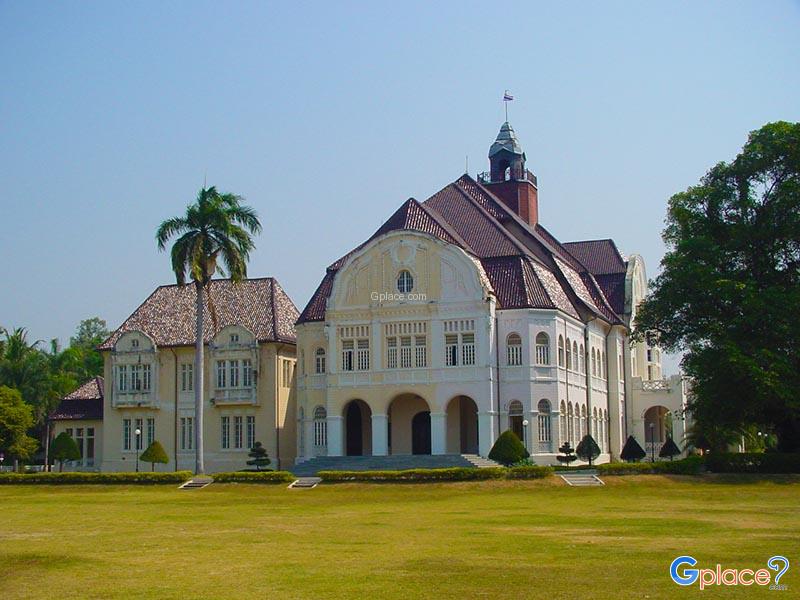

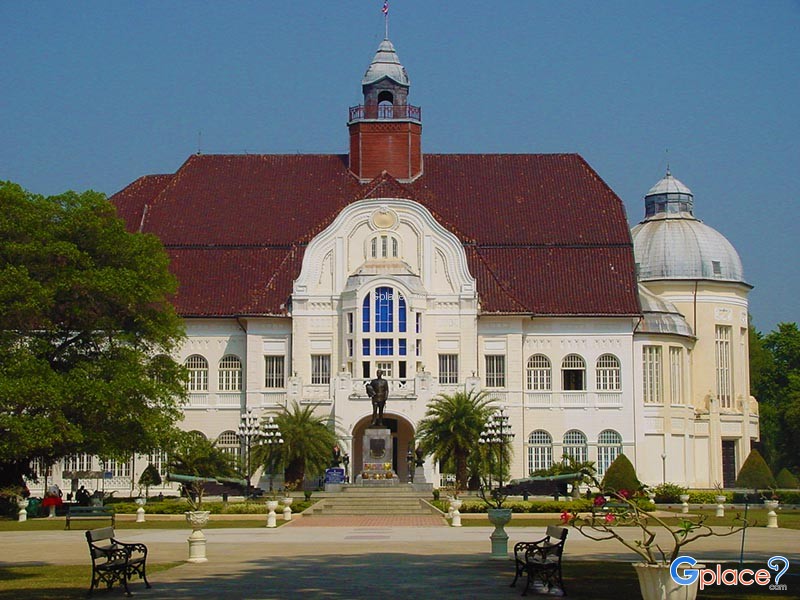
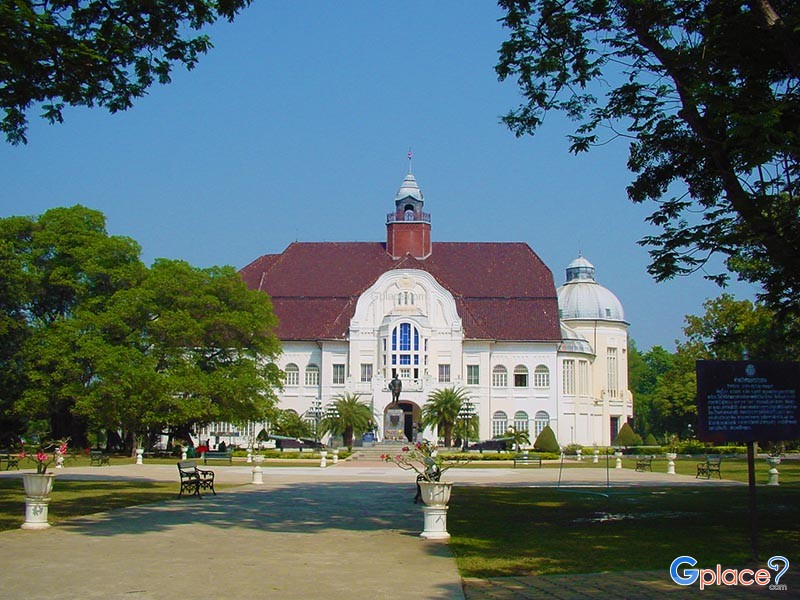
“Marvel at the magnificence of this German-style palace, featuring a high-pitched roof and a stunning grand spiral staircase adorned with golden-yellow glazed tiles and exquisite Greek god statues.”
Phra Ram Ratchaniwet Palace, commonly known as “Ban Puen Palace,” was commissioned by King Chulalongkorn (Rama V) as a royal residence for use during the rainy season. The palace was designed by German architects in Western architectural styles, particularly Baroque and Art Nouveau, resulting in a modern appearance that clearly contrasts with traditional Thai palaces of the same period. The two-story structure emphasizes symmetry, elegance, and graceful curved lines.
A defining feature of the palace is its richly decorated interior, which showcases glazed ceramic tiles, intricate stucco work, and marble columns. The most striking area is the central spiral staircase hall, adorned with vivid green tiles contrasted with golden-yellow tones, and surrounded by classical Greek-style statues. Each room within the palace features distinct color schemes and decorative patterns, reflecting the refined artistic taste of Germany’s Wilhelmine era under Emperor Wilhelm II, a period when Western cultural influence reached Siam extensively.
The palace grounds are surrounded by English-style gardens and large shade trees, creating a serene and peaceful atmosphere. Located near the Phetchaburi River, the palace enjoys cool breezes throughout the day. Visitors often feel as though they have stepped into Europe, while also gaining insight into the deep connection and affection Thai monarchs held for Phetchaburi, conveyed through exhibitions and well-preserved royal artifacts displayed within the palace.
Phra Ram Ratchaniwet Palace is a must-visit destination for photographers and art lovers, offering distinctive photo opportunities both outside the palace—with its green-tiled steep roofs and tall windows—and inside, where light and shadow play beautifully along the spiral staircase. The site is also ideal for families, students, and scholars seeking to learn about Thailand’s historical transition toward modernity.
More than a historical monument, Phra Ram Ratchaniwet Palace stands as a symbol of Siam’s adaptation to Western civilization during the reign of King Rama V. Its elegance and historical value continue to shine today, making it a remarkable heritage site in the heart of Phetchaburi.
How to Get There
Private Car:
- Drive into Phetchaburi city center and follow the signs for the 15th Military Circle (Ban Puen Palace). Parking is available directly in front of the palace.
Public Transport:
- Take a local "Songthaew" (baht bus) passing the military camp, or hire a Tuk-Tuk or motorcycle taxi from the Phetchaburi market.
Train:
- Get off at Phetchaburi Railway Station and take a local taxi or motorcycle taxi; the journey takes about 10-15 minutes.
Travel Tips
Best Visiting Season:
- Morning (09:00 – 11:00) or late afternoon is recommended to avoid the midday heat and to capture the best natural light on the building.
Regulations:
- Since the palace is located within a military zone, please bring your ID card or passport and dress politely (no short skirts, shorts, or sleeveless tops).
Photography:
- Photography is generally allowed outside. Inside, some areas may have restrictions on flash or certain rooms may prohibit photos; please check for signs.
Facilities:
- There is a coffee shop and resting areas in the gardens. On weekends, local student guides are often available to provide historical insights.
Planning:
- Allow approximately 1.5 – 2 hours to fully explore the palace interior and the surrounding gardens.
Admission Fee
-
Local visitors: Adult 20 THB, Child 10 THB
-
Foreign visitors: Adult 50 THB, Child 20 THB
Opening Hours:
-
General daily hours: 08:00 – 16:00
-
Open on public holidays
Phra Ram Ratchaniwet

 Share
Share
 Phra Ram Ratchaniwet (Ban Puen Palace), 15th Military Circle, Khlong Krachaeng, Mueang Phetchaburi, Phetchaburi, Thailand
Map
Phra Ram Ratchaniwet (Ban Puen Palace), 15th Military Circle, Khlong Krachaeng, Mueang Phetchaburi, Phetchaburi, Thailand
Map
 Open now : 8.00 - 16.00
Mon8.00 - 16.00
Tue8.00 - 16.00
Wed8.00 - 16.00
Thu8.00 - 16.00
Fri8.00 - 16.00
Sat8.00 - 16.00
Sun8.00 - 16.00



 6752
6752