 Attractions
  Hotel
Hotel  Restaurant
  Shopping
  Abroad





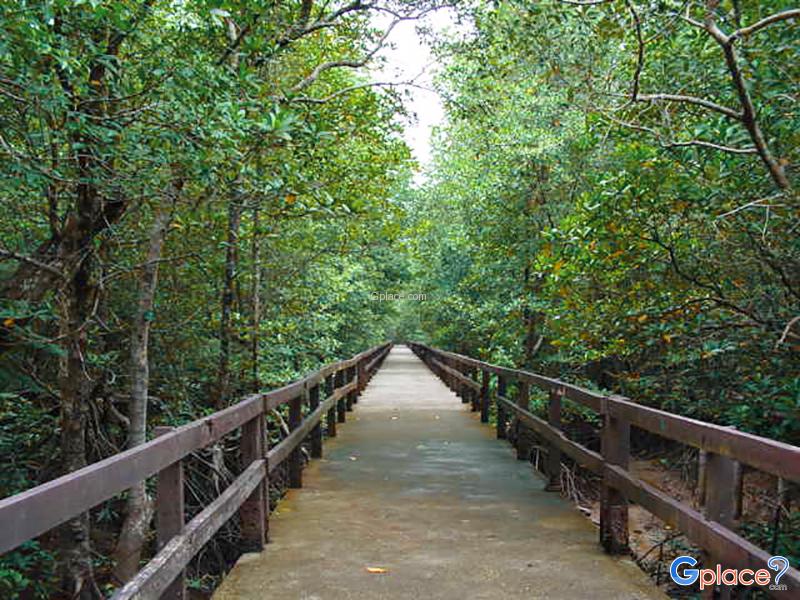

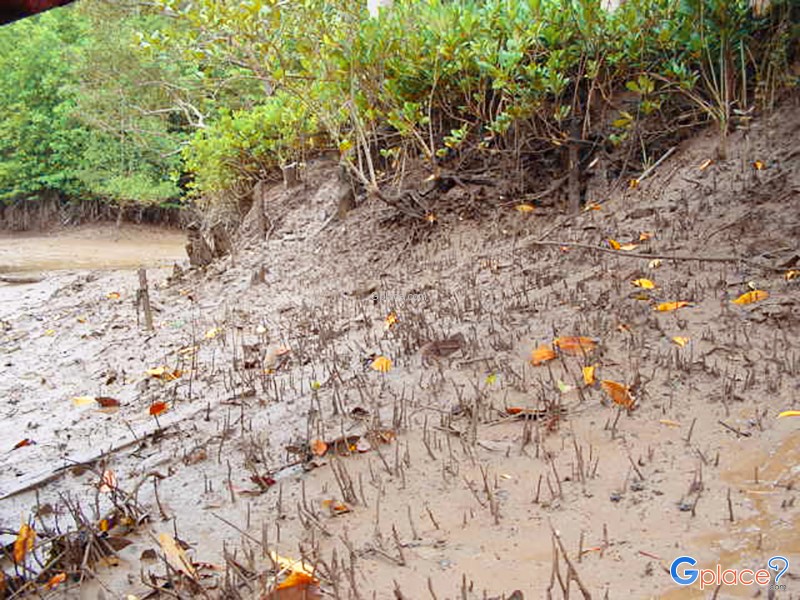
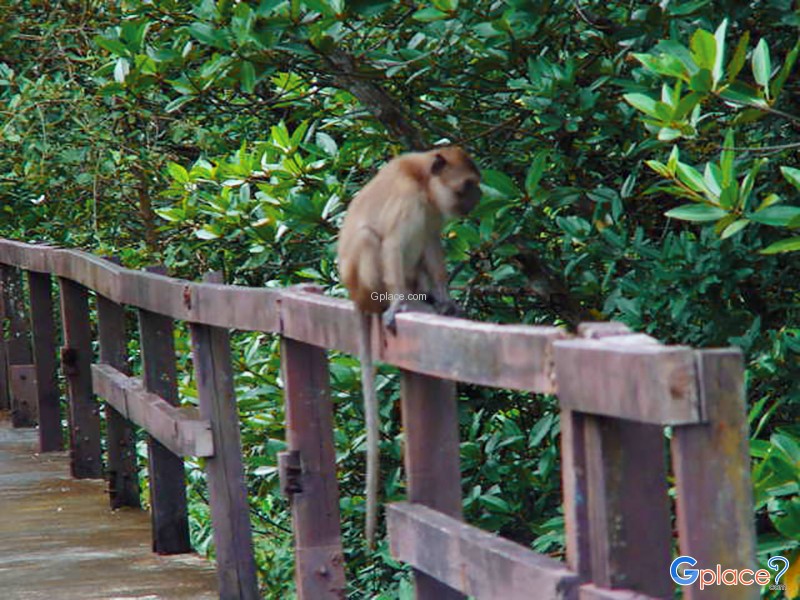


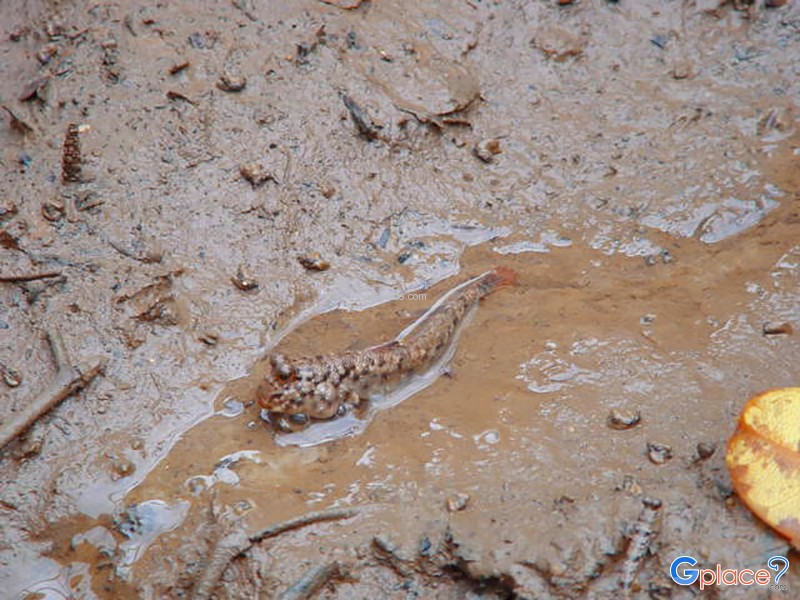
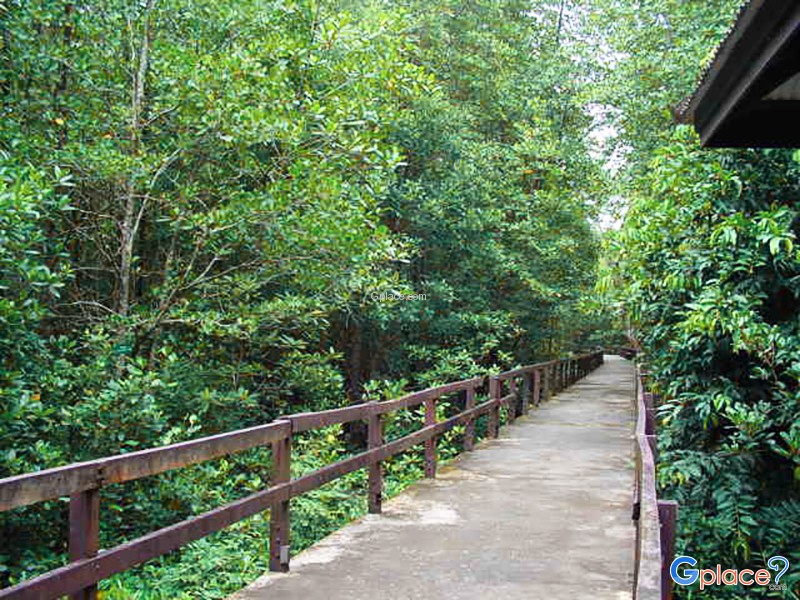
“Mangrove forest nature trail for studying wildlife, where visitors can observe various mangrove animals such as long-tailed macaques, fiddler crabs, and kingfishers.”
The Ngao Mangrove Forest Research Center in Ranong Province is located within the Ranong Bay area, which is part of the Andaman Sea coastal ecosystem of global importance. This area falls under the UNESCO Man and the Biosphere (MAB) Reserve designation since 1997 and is considered one of the most well-preserved mangrove forests in Thailand. It remains a primary mangrove forest that has largely never been disturbed or altered by industrial human activities.The ecosystem here is a river-estuary mangrove system connected directly to the sea, resulting in extremely high biodiversity. More than 50 mangrove plant species can be found in the area, including Rhizophora apiculata, Rhizophora mucronata, Avicennia species, Xylocarpus granatum, Xylocarpus moluccensis, and Sonneratia caseolaris. These species play a crucial role in maintaining ecological balance, especially through their complex prop-root systems, which trap sediment, reduce wave energy, and create habitats for small aquatic organisms.
This area also serves as a natural nursery ground for marine life, supporting the early life stages of many economically important marine species. The ecosystem is home to a variety of animals such as fiddler crabs living in burrows within the mudflats, mudskippers that can move both on land and in water, as well as numerous shrimp, shellfish, crabs, and coastal bird species that feed in the area. This biodiversity plays a vital role in sustaining the productivity of the Andaman Sea and surrounding coastal zones.The site is designed as a circular nature interpretation trail, featuring wooden and concrete boardwalks that extend through the mangrove forest for approximately 1–2 kilometers. This allows visitors to experience the ecosystem up close without disturbing its natural balance. There is also a viewing tower that provides a 360-degree panoramic view of the mangrove forest and the continuous landscape extending toward the Andaman Sea.
In terms of research, the center functions as a large natural laboratory for long-term mangrove ecosystem studies. Research activities include mangrove restoration, carbon sequestration, coastal change monitoring, biodiversity assessment, and the study of human–nature interactions. As such, the area is not only a tourist attraction but also an important scientific research site at both national and international levels.Furthermore, the site is part of a UNESCO Biosphere Reserve, which emphasizes sustainable coexistence between humans and nature. It serves as a model area where conservation and learning are integrated in a balanced way.
Natural processes such as tidal fluctuations play a key role in the ecosystem. High tide brings nutrients and marine organisms into the mangrove forest, while low tide exposes mudflats where species like fiddler crabs and mudskippers emerge to feed. These tidal dynamics also contribute to sediment accumulation and the natural expansion of the mangrove forest.Despite its high ecological integrity, the area is also fragile. It can be impacted by trampling of mudflats, marine debris, sea level rise due to climate change, and disturbances from tourism activities. Therefore, tourism here is strongly guided by conservation principles and sustainable ecotourism practices.
How to Get There
- By car: From Ranong city center, take Highway 4 (Phetkasem Road) heading toward Kapoe for about 15 kilometers. At kilometer marker 613–614, you will see a sign for the research center on the right-hand side. Turn in and continue for approximately 3.5 kilometers until you reach the Ngao Mangrove Forest Research Center.
- By public transportation: Take a local songthaew (shared pickup truck) on the Ranong–Kapoe route and get off at the entrance of Ngao Subdistrict. From there, you will need to take a motorcycle taxi to the research center. However, traveling by private car or rental vehicle is recommended for greater convenience.
Travel Tips
- It is recommended to visit during low tide in order to clearly observe fiddler crabs and mudskippers on the mudflats.
- Bring mosquito repellent, as the area is humid and contains insects.
- The best visiting times are early morning or after 3:00 PM when the weather is cooler and lighting conditions are ideal for photography.
- Be cautious of slippery mudflat areas and always walk only on the designated boardwalk paths.
Admission Fee:
- Free of charge. Visitors can enter without any admission fee (donations are welcome to support the maintenance of the nature trail).
Opening Hours:
- Open daily from 08:30 AM to 04:30 PM.
Ngao Mangrove Forest Research Centre

 Share
Share
 Mu 4, Ban Lang, Tambon Ngao, Amphoe Mueang, Ranong 85000
Map
Mu 4, Ban Lang, Tambon Ngao, Amphoe Mueang, Ranong 85000
Map
 ไม่ทราบเวลาเปิดปิดที่แน่นอน

 https://www.thai-tour.com/thai-tour/south/ranong/data/place/pic-zero-wijai.htm

 7949
7949