 Attractions
  Hotel
Hotel  Restaurant
  Shopping
  Abroad





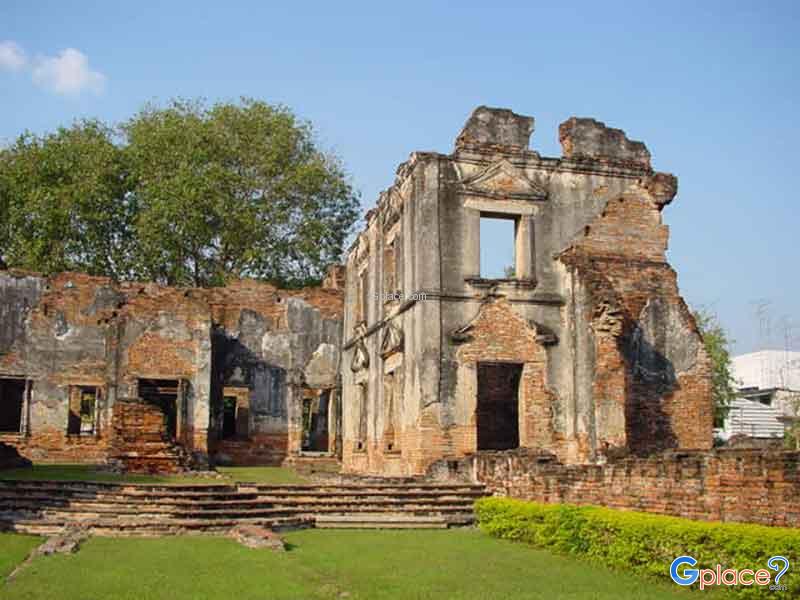

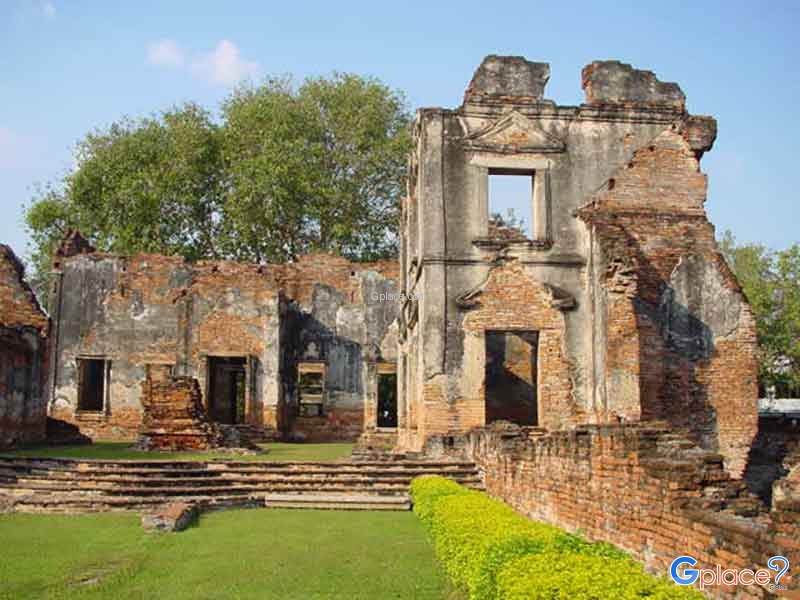
“Behold the world’s first Christian chapel decorated with Buddhist architectural motifs (Thai-style gable arches and lotus capitals) and explore the grand mansion once inhabited by French diplomats and the legendary Constantine Phaulkon.”
Ban Luang Rap Ratchathut, commonly known as Ban Wichayen, is an ancient site of international historical significance located north of King Narai’s Palace in Lopburi Province. It was constructed during the reign of King Narai the Great around 1685 CE to serve as a residence and reception hall for the first French diplomatic mission to Siam, led by Chevalier de Chaumont, during a period when international diplomacy was at its peak.
Later, this complex became the residence of Constantine Phaulkon, also known as Chao Phraya Wichayen, a Greek nobleman who held great influence in the Lopburi royal court. As a result, the site was not merely a diplomatic residence but also a center of political power, diplomacy, and cultural exchange between Siam and the Western world during the late Ayutthaya period.
The architectural significance of Ban Wichayen lies in its harmonious blend of Western and Eastern styles. The main buildings were constructed of brick and mortar, rising two stories high in the Renaissance European style, with elegant arched doors and windows. The spacious compound is clearly divided into three main sections.
The eastern section consists of large residential buildings for the diplomatic delegation and their attendants, featuring a distinctive semi-circular curved staircase that reflects the refined Western aesthetic of the era.
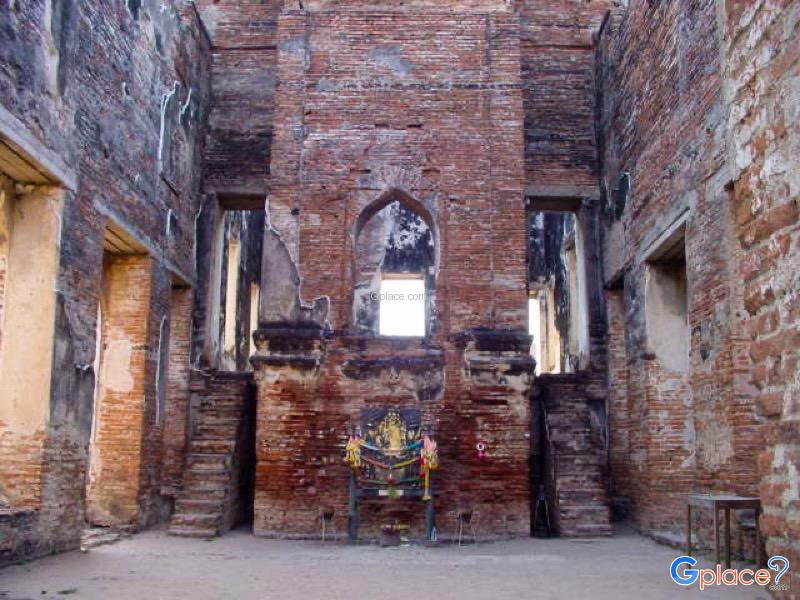
The central section houses a Christian church and a bell tower, regarded as the most remarkable features of the site. While the church follows a European architectural layout, its windows are decorated with Thai-style “ruan kaew” arches and lotus-bud columns, symbolizing a rare and meaningful fusion of cultures and religious traditions.
The western section is believed to have been the residence of Chao Phraya Wichayen and his wife, Thao Thong Kip Ma, who is renowned for introducing Western-style desserts and culinary techniques into the Siamese royal court.
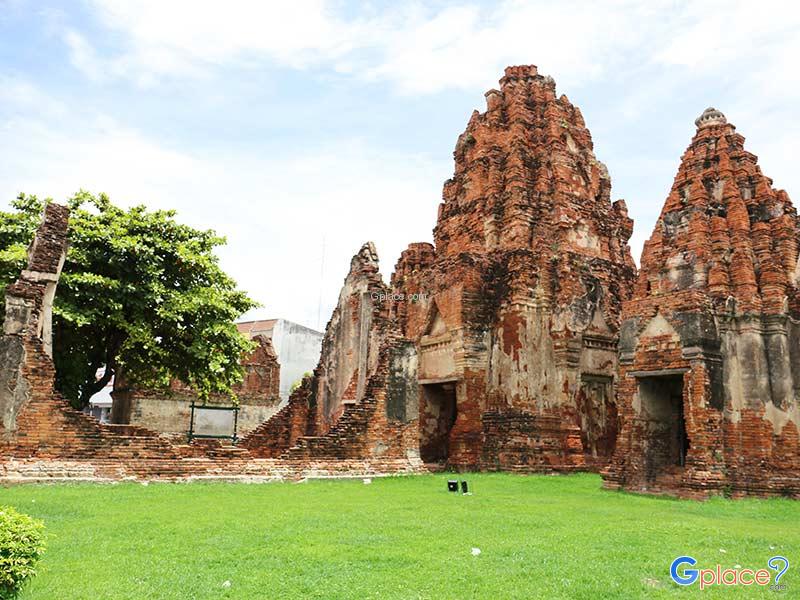
Although Ban Wichayen now stands in ruins, the remaining structures still convey the grandeur and advanced living standards of the past. Features such as large water storage systems and underground chambers—believed to have been used for storing wine or valuable possessions—highlight the influence of Western civilization. This site serves as important evidence of how foreign knowledge and culture transformed the city of Lavo into a “second royal capital,” one of the most prosperous and cosmopolitan centers in Thai history.
How to Get There
Private Car:
- Located on Wichayen Road in Lopburi's old town, about 300 meters from Prang Khaek.
Train:
- A 10-15 minute walk (approx. 700-800 meters) north from Lopburi Railway Station, passing King Narai's Palace.
Public Transport:
- Local songthaews run along the main road right in front of the site.
Travel Tips
Recommended Time:
- Late afternoon (3:30 - 4:30 PM) provides the best lighting as sunbeams cast through the brick arches, creating a dramatic and nostalgic atmosphere for photos.
Must-Visit Photo Spot:
- The Eastern arched doorway and the Roman Catholic chapel front offer the most intricate brickwork details.
Attire:
- Wearing traditional Thai costumes is highly popular here, adding to the historical immersion.
Nearby Activities:
- It’s a short walk to Prang Khaek or the Phra Narai Ratchaniwet (King Narai's Palace) Museum.
Monkey Caution:
- Be mindful of your belongings and avoid carrying food, as monkeys are active in this urban area.
Admission Fee
-
Thai Citizens: 10 THB
-
Foreigners: 50 THB
-
(Joint tickets for multiple historical sites in Lopburi may be available)
Opening Hours
-
Open Wednesday – Sunday: 8:30 AM – 4:30 PM
-
Closed on Mondays and Tuesdays (Please plan accordingly)
Ban Luang Rap Ratchathut

 Share
Share
 Wichayen Road, Tha Hin, Lopburi, Lopburi 15000
Map
Wichayen Road, Tha Hin, Lopburi, Lopburi 15000
Map
 Closed today
Mon -
Tue -
Wed8.30 - 16.30
Thu8.30 - 16.30
Fri8.30 - 16.30
Sat8.30 - 16.30
Sun8.30 - 16.30



 5230
5230