 Attractions
  Hotel
Hotel  Restaurant
  Shopping
  Abroad





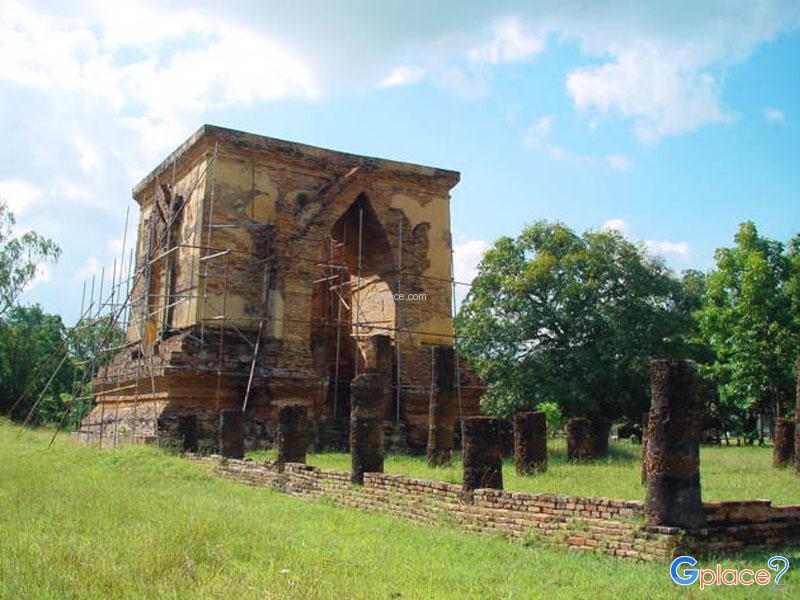

“View the beautiful square Mandapa decorated with stucco reliefs telling stories of the Buddha’s life. It is praised as the most elegant Sukhothai-style stucco, especially the scene of "The Buddha Descending from Heaven.”
Trapang Thong Lang Temple was built during the late Sukhothai Kingdom, presumably during the reign of King Mahathammaracha I (Phraya Lithai), an era when Buddhism and the arts reached their peak. The name of the temple comes from "Trapang," meaning a pond, and "Thong Lang," an ancient tree species that may have grown abundantly in the area. The heart of this temple is not a bell-shaped pagoda like others, but a large square "Mandapa" that once enshrined a walking Buddha image inside.
The historical art highlight of this temple lies in the stucco reliefs decorating the three outer walls of the Mandapa. These reliefs tell stories of the Buddha’s life with exquisite detail. The southern wall features the scene of The Buddha Descending from Tavatimsa Heaven, which art historians praise as the finest example of Sukhothai craftsmanship. The image depicts the Buddha in a graceful, fluid motion surrounded by deities, proving that Sukhothai artisans were masters at creating lifelike sculptures.
In ancient times, Temple Trapang Thong Lang was situated on an important path connecting the old city to nearby communities and temples. The area around the Mandapa once housed a large assembly hall (Vihara) and several smaller pagodas surrounding a large, serene pond (Trapang). The architectural layout with the Mandapa as the center reflects influences from Pagan and Ceylonese arts, uniquely adapted into the elegant and airy Sukhothai style that emphasizes grace and sophistication.
Today, although most of the original stucco has eroded over time, the remaining traces preserved in the Ramkhamhaeng National Museum serve as vital evidence that Sukhothai was truly the "Dawn of Happiness." Temple Trapang Thong Lang is not just a tourist site but an open-air art gallery recording the faith and excellence of ancient Thai craftsmen. The site is kept clean and quiet, allowing visitors to deeply absorb the beauty of this world heritage before concluding their journey.
How to Get There
-
Private Car: Located outside the eastern city wall along Jarod Withee Thong Road. Easy access with clear signs.
-
Public Transport: Rent a bicycle from the park entrance or take the electric tram service on the eastern historical site route.
Travel Tips
-
Recommended Time: Best visited in the late afternoon to see the stucco details under the soft sunlight.
-
Apparel: Please dress politely to respect the religious historical site.
-
Conservation: Strictly do not touch the ancient stucco reliefs to prevent damage from moisture or chemicals.
Admission Fees:
-
Included in the Sukhothai Historical Park entry fee: Thai Citizens 20 THB / Foreigners 100 THB.
Opening Hours:
-
Open Daily: 06:30 AM – 07:30 PM.
Trapang Thong Lang Temple

 Share
Share
 East of the Old City Walls, Sukhothai Historical Park, Mueang Kao Subdistrict, Mueang District, Sukhothai
Map
East of the Old City Walls, Sukhothai Historical Park, Mueang Kao Subdistrict, Mueang District, Sukhothai
Map
 Open now : 6.30 - 17.30
Mon6.30 - 17.30
Tue6.30 - 17.30
Wed6.30 - 17.30
Thu6.30 - 17.30
Fri6.30 - 17.30
Sat6.30 - 17.30
Sun6.30 - 17.30



 5145
5145