 Attractions
  Hotel
Hotel  Restaurant
  Shopping
  Abroad





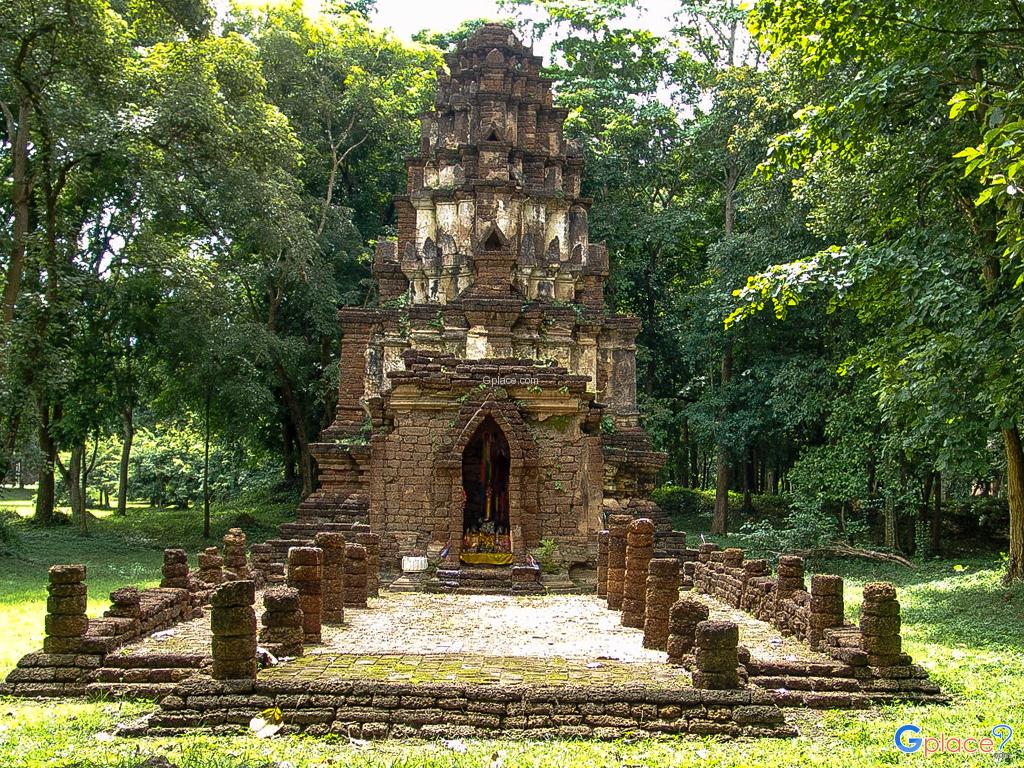



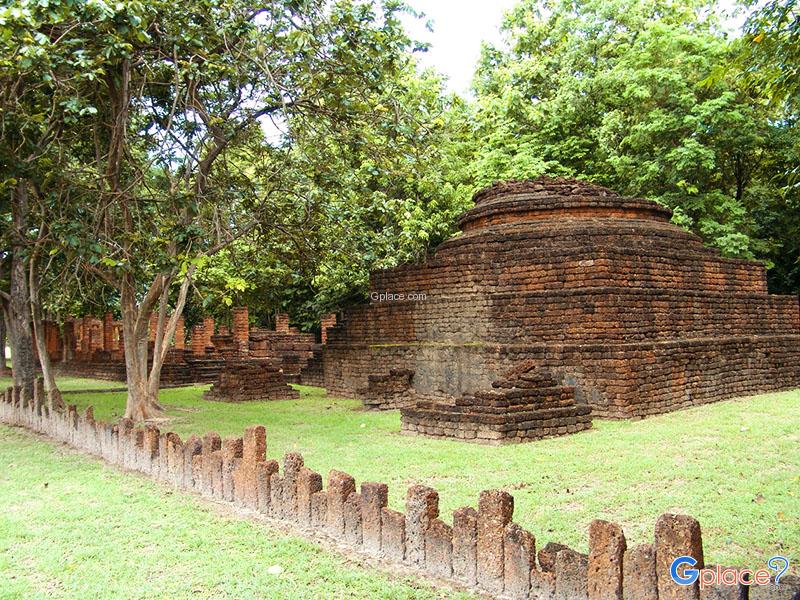
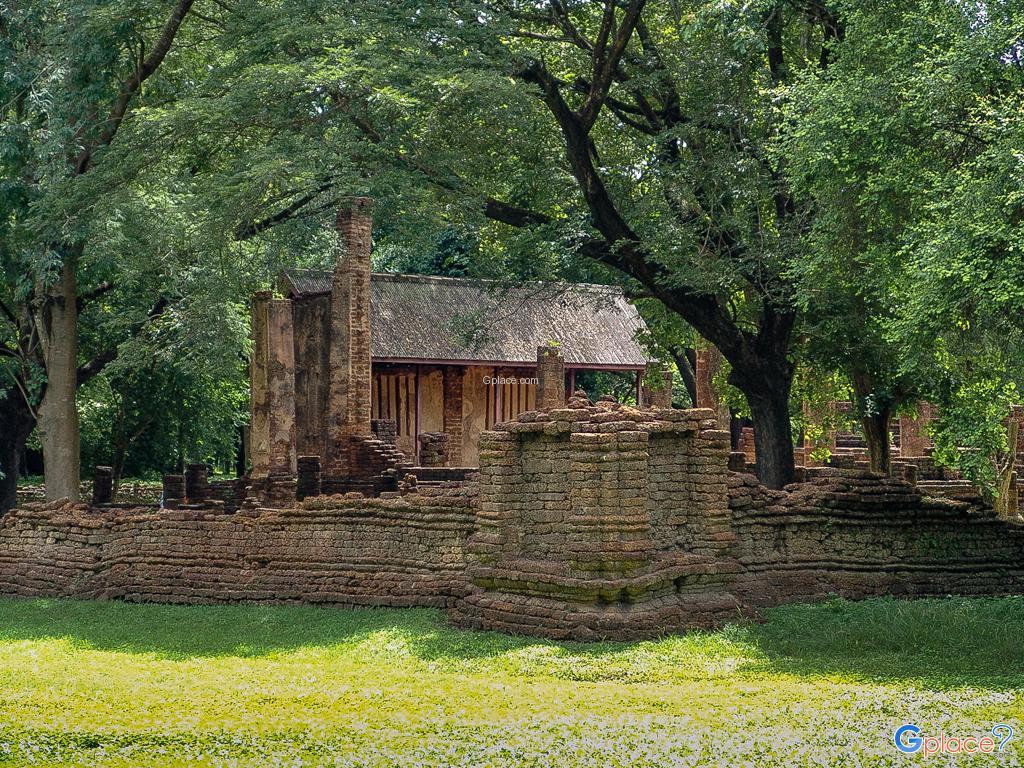
“A square laterite mondop in early Sukhothai style, set near the ancient city wall, offering a quiet atmosphere ideal for a peaceful historical stop along the cycling route.”
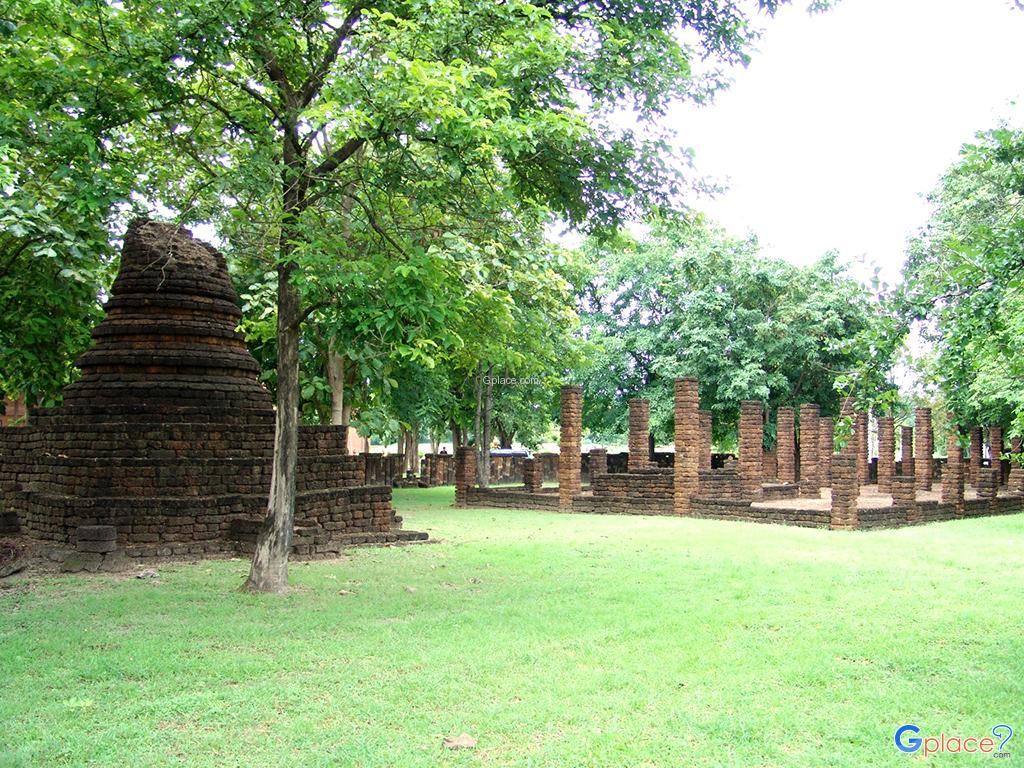
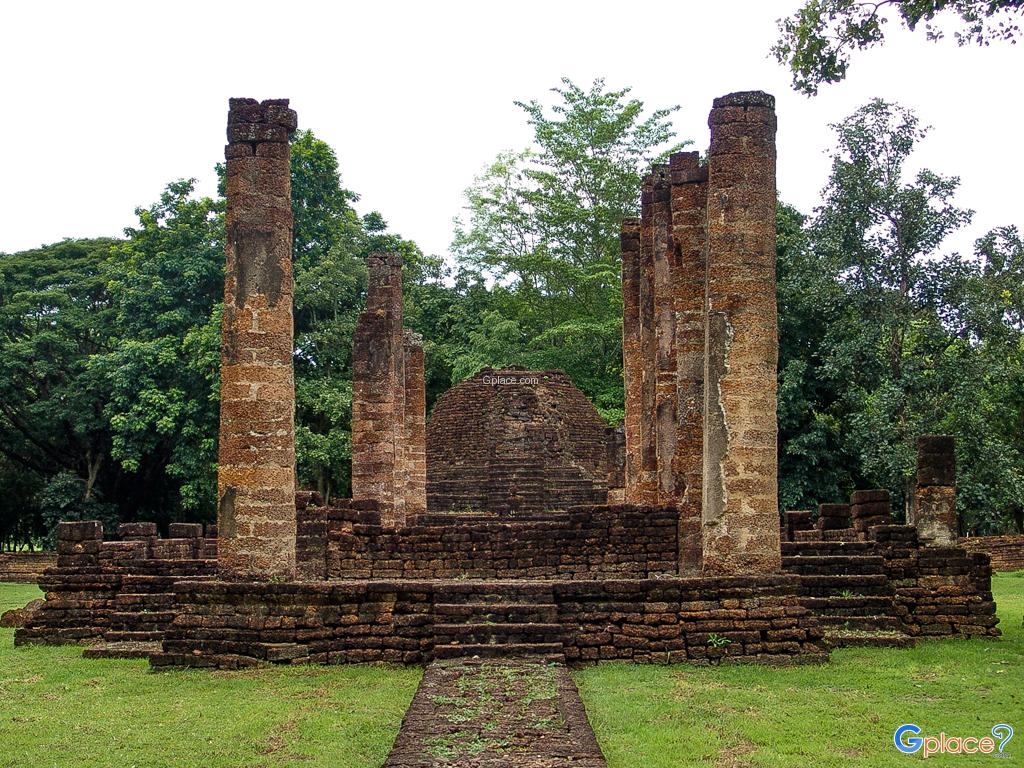
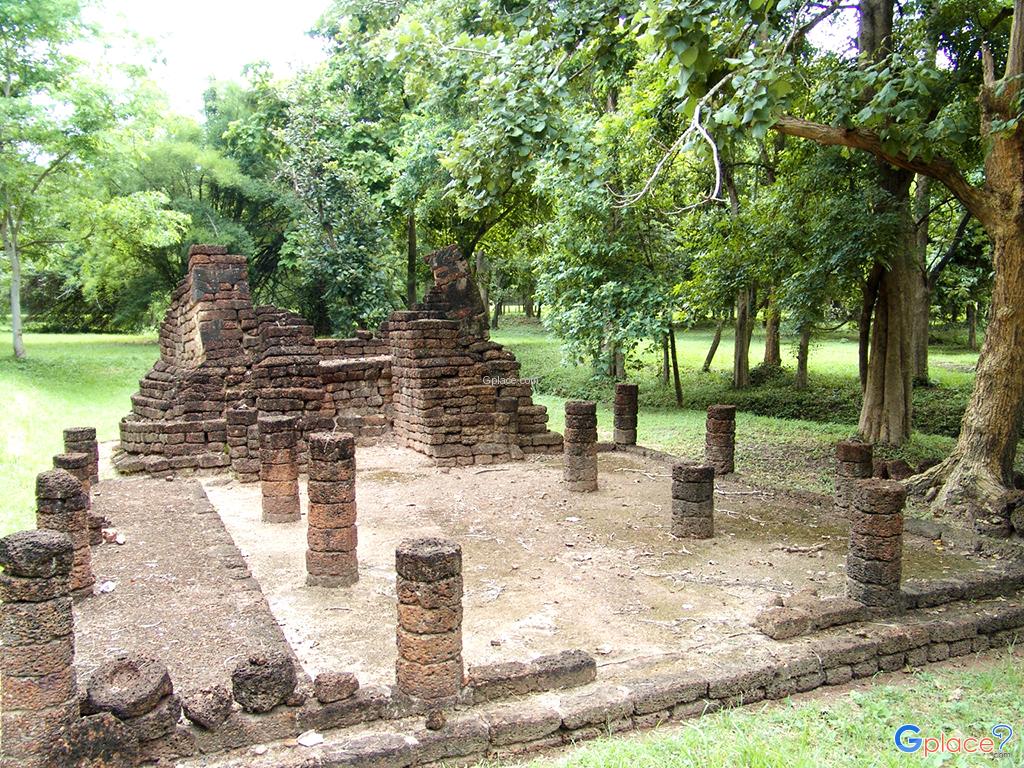
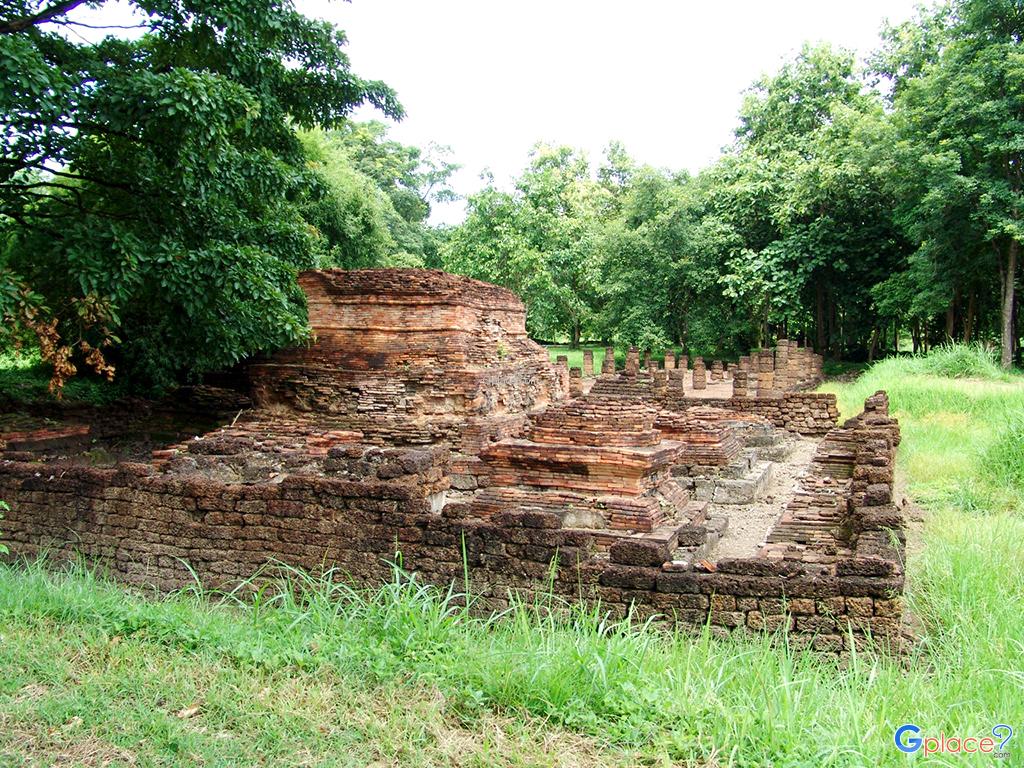
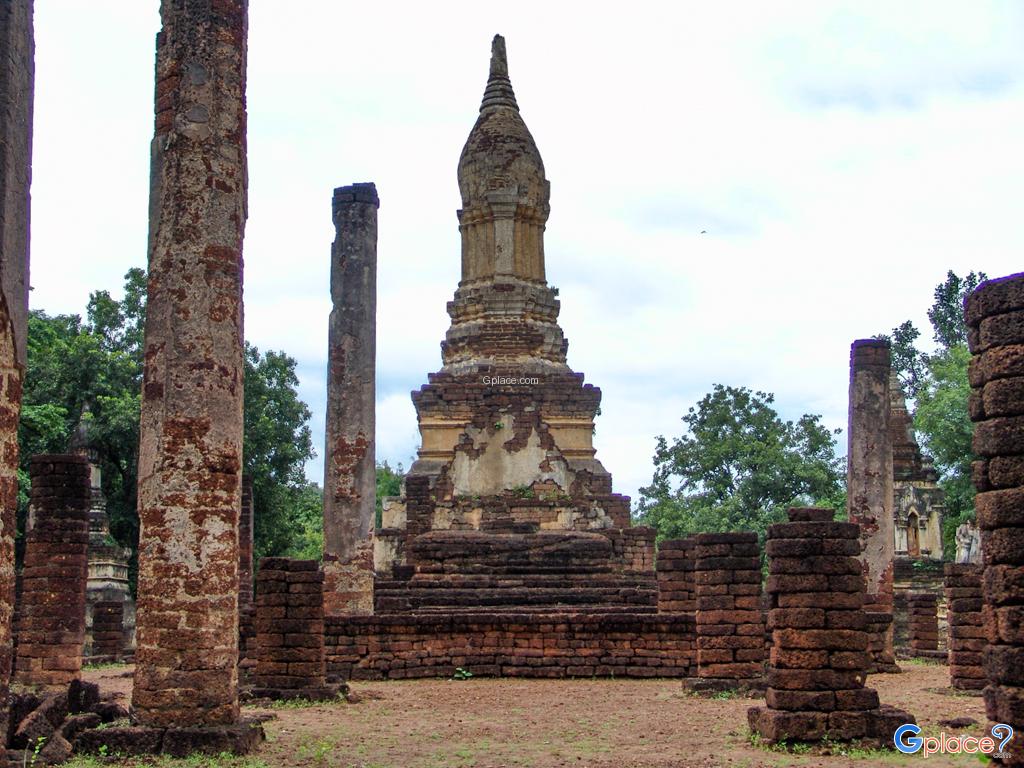
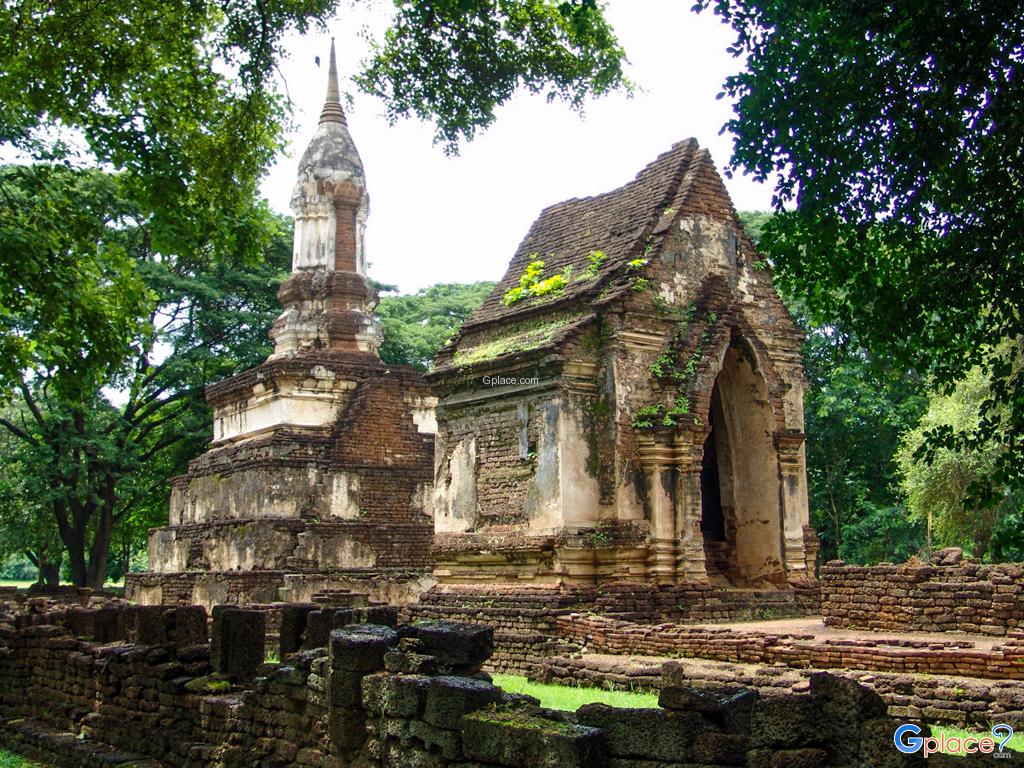
Wat Lak Mueang is a small yet distinctive ancient site with an independent layout, consisting of a laterite viharn at the front connected to a mondop at the rear, aligned along a straight axial plan typical of early Sukhothai temple design. Although only the foundations and pillars remain, the carefully arranged laterite blocks reflect advanced craftsmanship from the period when Si Satchanalai flourished as a major administrative center.
From a technical perspective, laterite a material that hardens when exposed to air was widely used for durable construction. The blocks were cut into rectangular shapes and stacked with precision, sometimes without mortar, demonstrating the ingenuity of ancient builders. Its natural drainage properties also made it suitable for the humid landscape near the Yom River basin.
Historical Interpretation and Debate
Wat Lak Mueang was mentioned in the royal travelogue “Thiao Mueang Phra Ruang” by King Rama VI, who noted:
"I believe this is not a Buddhist temple, nor a Brahmanic sanctuary, but rather something associated with spirits or deities perhaps even a city pillar."
This reflects an early interpretation of the site as a spiritual or ceremonial structure rather than a Buddhist temple.
However, subsequent archaeological excavations and studies particularly analysis of the viharn–mondop layout, structural bases, and architectural style suggest that the site was most likely a Buddhist temple, consistent with other monuments in Si Satchanalai. To date, no conclusive evidence confirms it as the location of a city pillar.
Urban Significance and Spatial Context
Although the name “Lak Mueang” (City Pillar) was likely given later, the temple’s location near the eastern city wall and along a main circulation route indicates strategic importance within the ancient urban plan. It may have functioned as a transitional or ceremonial space between sacred and residential zones.
Its compact scale and lack of elaborate decoration suggest it may have served a community-level function or specific ritual purposes, rather than acting as a major religious center like Wat Mahathat.
A Quiet Stop for Deeper Exploration
Unlike the more prominent temples, Wat Lak Mueang remains a peaceful and less crowded site, making it ideal for travelers seeking a deeper, more reflective experience. Visitors can sit quietly among the laterite pillars, feel the breeze passing through the ruins, and imagine the movement of people through the nearby city gates in centuries past.
For photography and cultural exploration, the site offers excellent opportunities to observe laterite construction techniques, spatial layout, and its relationship with the surrounding historical landscape enhancing a deeper understanding of Si Satchanalai as a UNESCO World Heritage site.
How to Get There
- Bicycle: From Wat Chedi Chet Thaeo, cycle toward the eastern city wall. The site is located along the main road and is easy to access with clear signage.
Travel Tips
- Best time to visit: 09:00 – 11:00 AM for soft light and comfortable weather
- Walk toward the nearby city wall to explore ancient moats and embankments
- Bring drinking water, as the area is open and has limited facilities
- Use the laterite pillars as a foreground frame for photography
- Visit on weekdays for a quieter experience
Admission Fee:
- Thai: 20 THB
- Foreigners: 100 THB
(Included in the Si Satchanalai Historical Park entrance fee)
Opening Hours:
- Open daily: 08:30 AM – 04:30 PM
Wat Lak Mueang

 Share
Share
 Si Satchanalai Historical Park, Sukhothai 64190
Map
Si Satchanalai Historical Park, Sukhothai 64190
Map
 Open now : 8.30 - 16.30
Mon8.30 - 16.30
Tue8.30 - 16.30
Wed8.30 - 16.30
Thu8.30 - 16.30
Fri8.30 - 16.30
Sat8.30 - 16.30
Sun8.30 - 16.30

 https://www.thai-tour.com/thai-tour/north/sukhothai/data/place/wat_lakmuang.html

 4692
4692