 Attractions
  Hotel
Hotel  Restaurant
  Shopping
  Abroad





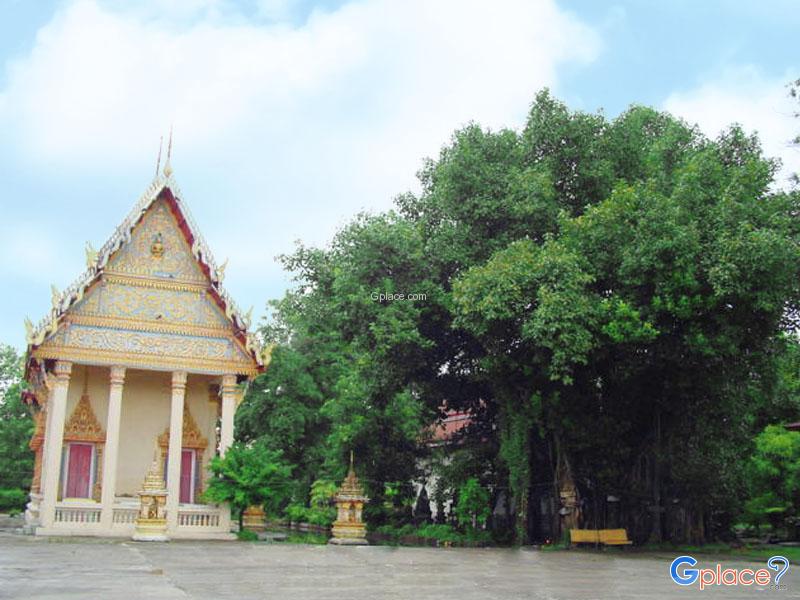

“Behold the 1,000-year-old giant tamarind tree, explore the traditional Thai-style "Khun Phaen’s House," and walk under the "Giant Wasp" for good fortune and prosperity.”
Kae Temple is a nationally renowned temple best known for its prominent appearance in the classic Thai epic Khun Chang Khun Phaen. The temple is believed to have been established during the Ayutthaya period and represents a unique convergence of history, belief, and Thai literature. According to legend, when Khun Phaen was still known as “Novice Kaew,” he came to reside at this temple to study magical arts under Ajarn Khong (Luang Pu Khong), the abbot of Kae Temple at that time. This period marked the beginning of Khun Phaen’s mastery of mystical knowledge, which later defined him as one of the most powerful heroes in Thai literature.
The most iconic landmark of the temple is the “Giant Tamarind Tree,” believed to be over 1,000 years old. The trunk is so massive that it takes several people to encircle it, measuring approximately 10 meters in circumference and about 15 meters in height_. More than just an ancient tree, it is a symbol deeply rooted in legend. According to the epic, this was the very spot where Ajarn Khong taught Novice Kaew magical practices, including the spell that transformed tamarind leaves into fierce wasps used to attack enemies.
Within the temple grounds, visitors will find many other fascinating attractions. One of the highlights is the Khun Phaen Residence, a large traditional teakwood Thai house built in classical architectural style. The house recreates the atmosphere of an Ayutthaya-era dwelling and features life-sized mannequins of key characters from Khun Chang Khun Phaen, along with antique household items, offering visitors a vivid glimpse into historical lifestyles and social conditions.
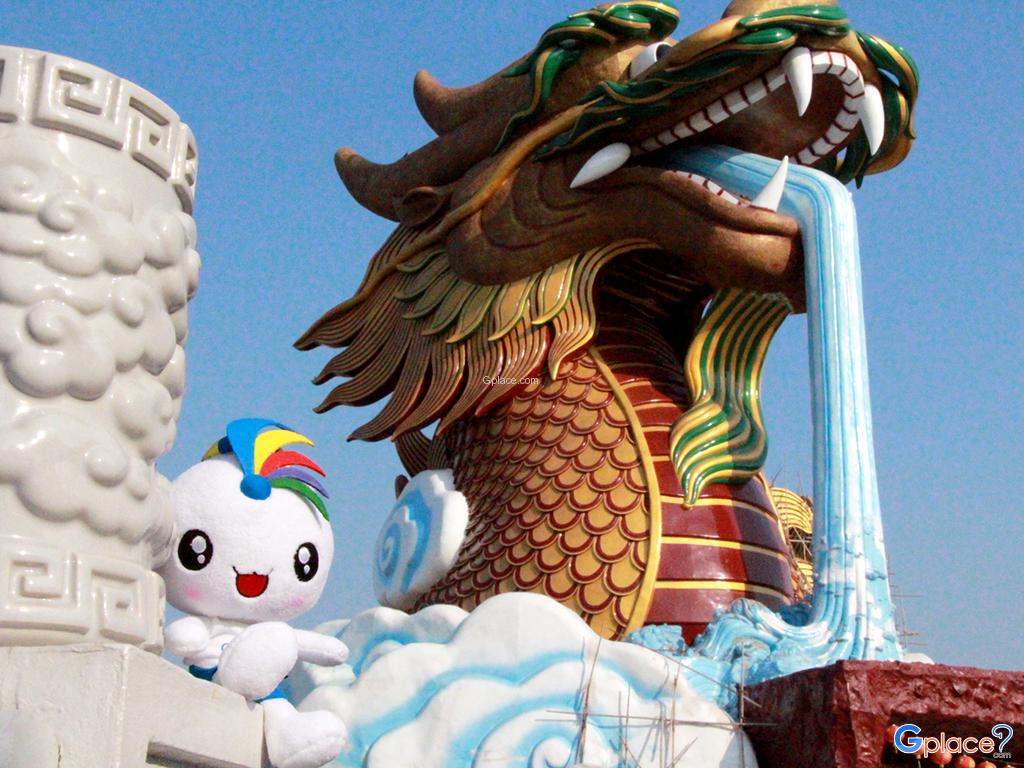
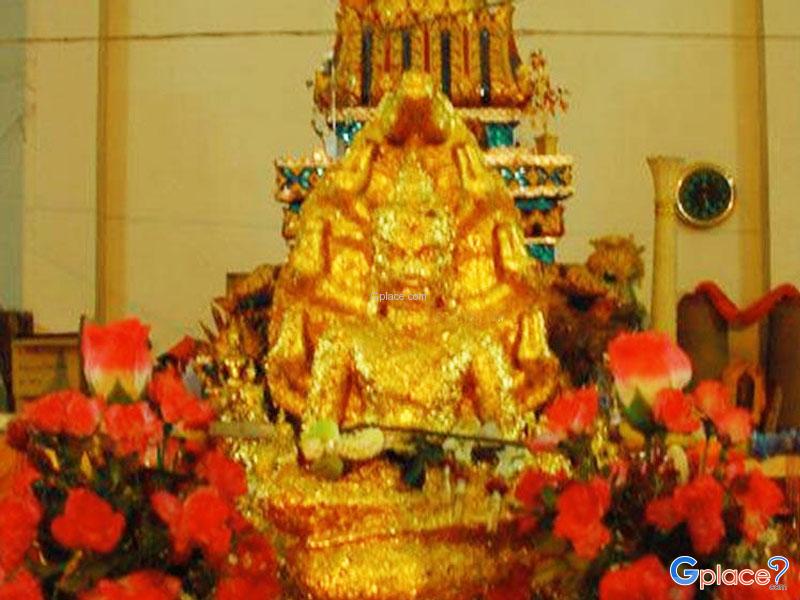
Another highly popular attraction is the Giant Wasp Statue, a colossal sculpture with a statue of Luang Pu Khong enshrined on top. This monument symbolizes mystical power and ancient beliefs in magic. Today, it is a major spiritual destination for devotees, especially those following spiritual or fortune-seeking practices. Many believe that walking beneath the wasp brings prosperity, financial growth, success, and advancement in one’s career.
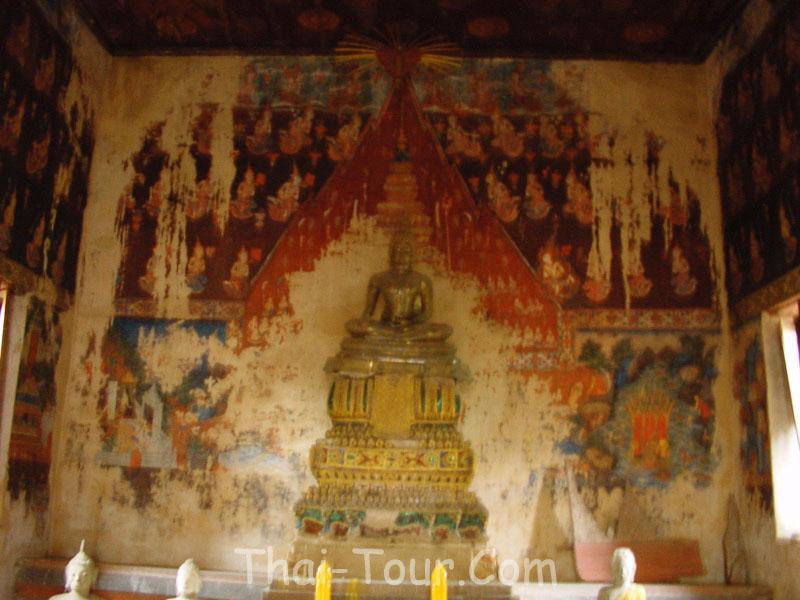
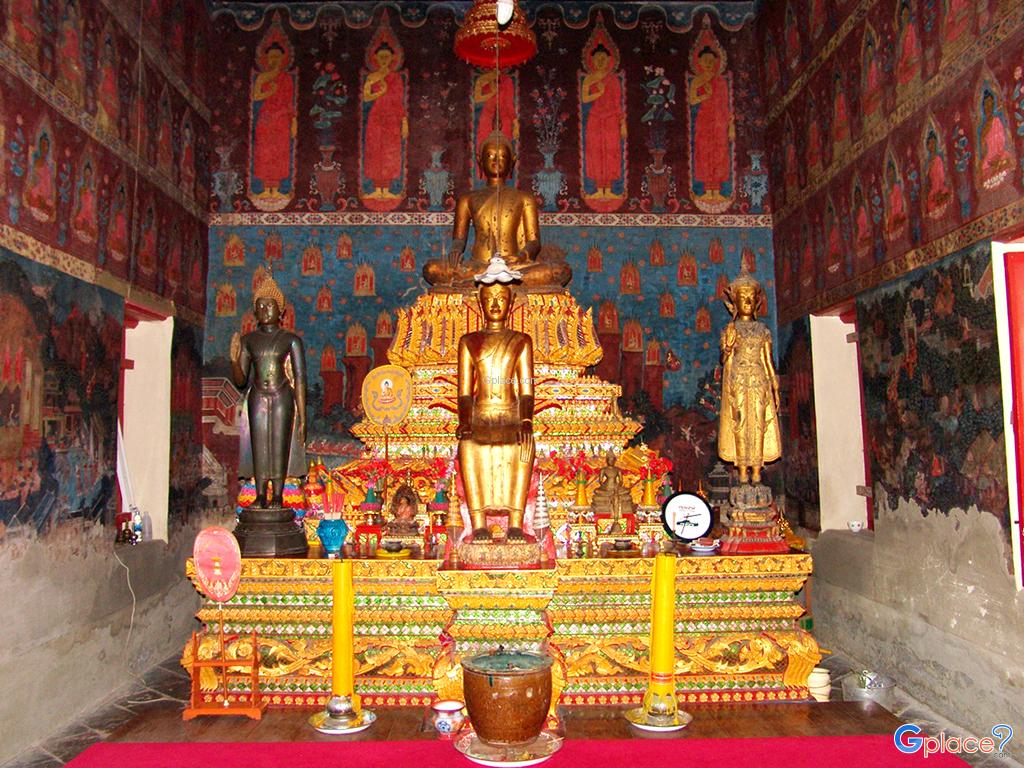
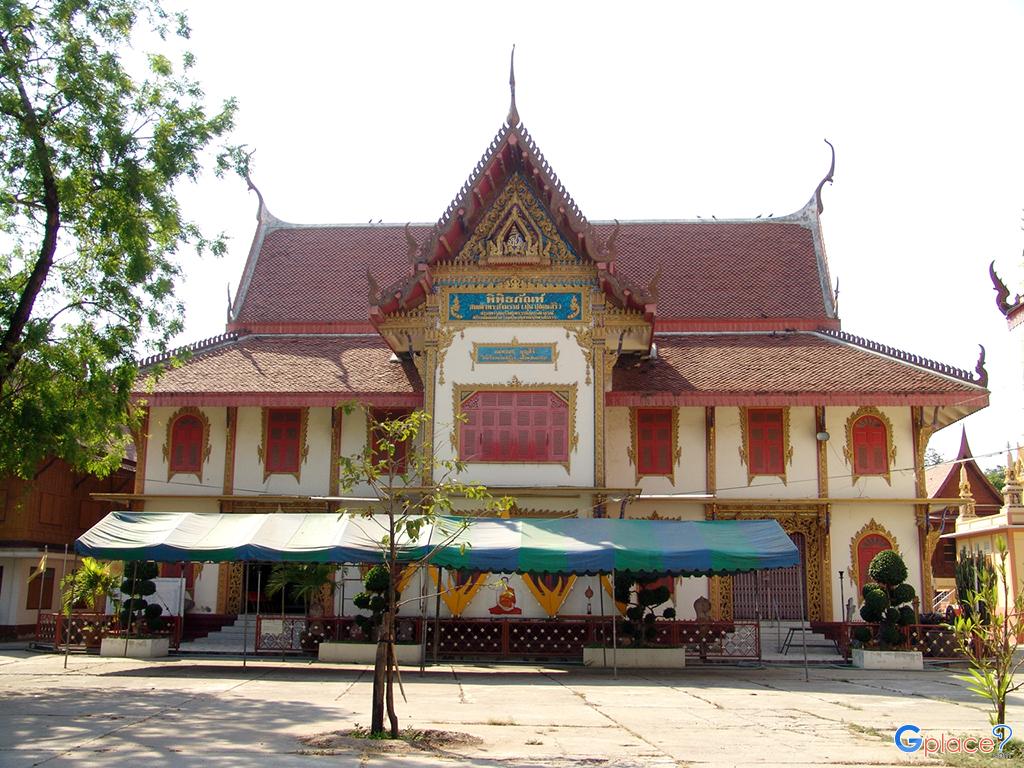
The temple also houses the Viharn Phra Phuttha Mongkhon, which enshrines a beautiful Buddha image in the Subduing Mara posture, created in the Rattanakosin artistic style. The Buddha’s robe is intricately decorated with floral motifs resembling pikul flowers. Inside the viharn, visitors can also pay respect to four replica Buddha footprints made of brass, revered as symbols of blessings and spiritual merit.
Overall, the atmosphere of Kae Temple is shady, serene, and rich in historical charm. The pathways are adorned with statues of characters from Khun Chang Khun Phaen, making a visit feel like a journey back in time into the world of Thai literature. Kae Temple is an ideal destination for travelers, students, literature enthusiasts, and anyone wishing to experience the deep cultural roots and imaginative heritage of Thailand in a truly immersive setting.
How to Get There
Private Car:
- Located on the west bank of the Tha Chin River, about 2 km from Wat Pa Lelai. Plenty of parking is available.
Public Transport:
- Easily accessible via local Tuk-tuks or "Songthaew" (mini-buses) from Suphan Buri city center.
Travel Tips
Best Time to Visit:
- Morning (08:00 - 10:00 AM) when the air is fresh and the sunlight through the giant tamarind branches is perfect for photography.
Recommended Activity:
- Try the traditional fortune sticks (Esiimsi) at Khun Phaen’s house and shop for local snacks at the small market near the entrance.
Planning:
- Kae Temple is located near Wat Pa Lelai and Wat Phra Non, making it easy to combine these into a one-day heritage tour.
Admission Fee
-
Local Visitors: Free
-
Foreign Visitors: Free
Opening Hours
-
Daily from 07:00 AM – 06:00 PM
Kae Temple

 Share
Share
 191 Somphan Khong Road, Rua Yai, Mueang Suphan Buri, Suphan Buri, Thailand
Map
191 Somphan Khong Road, Rua Yai, Mueang Suphan Buri, Suphan Buri, Thailand
Map
 Open now : 7.00 - 18.00
Mon7.00 - 18.00
Tue7.00 - 18.00
Wed7.00 - 18.00
Thu7.00 - 18.00
Fri7.00 - 18.00
Sat7.00 - 18.00
Sun7.00 - 18.00



 4716
4716