 Attractions
  Hotel
Hotel  Restaurant
  Shopping
  Abroad





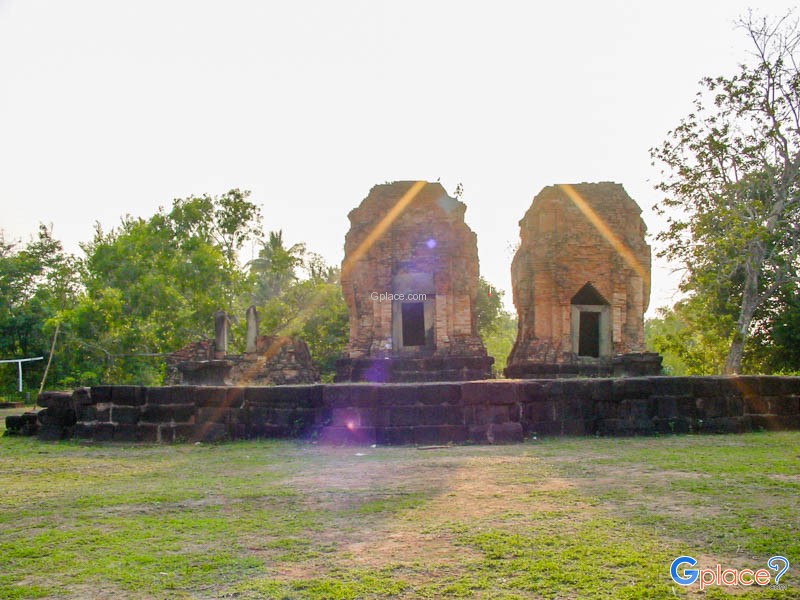

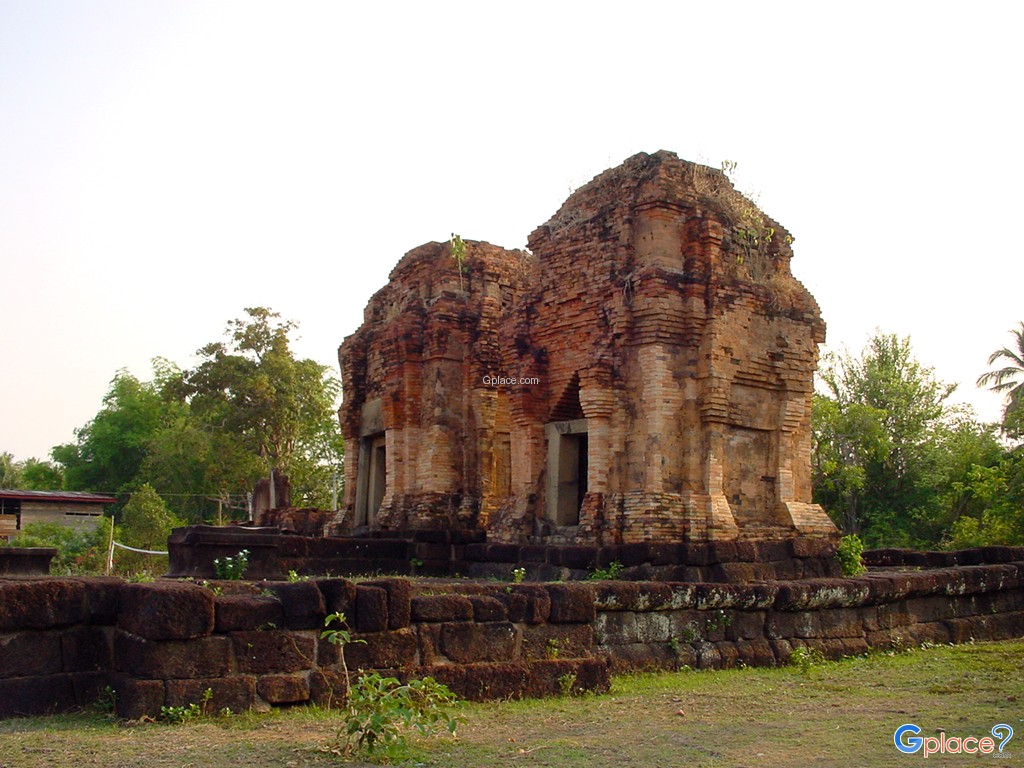
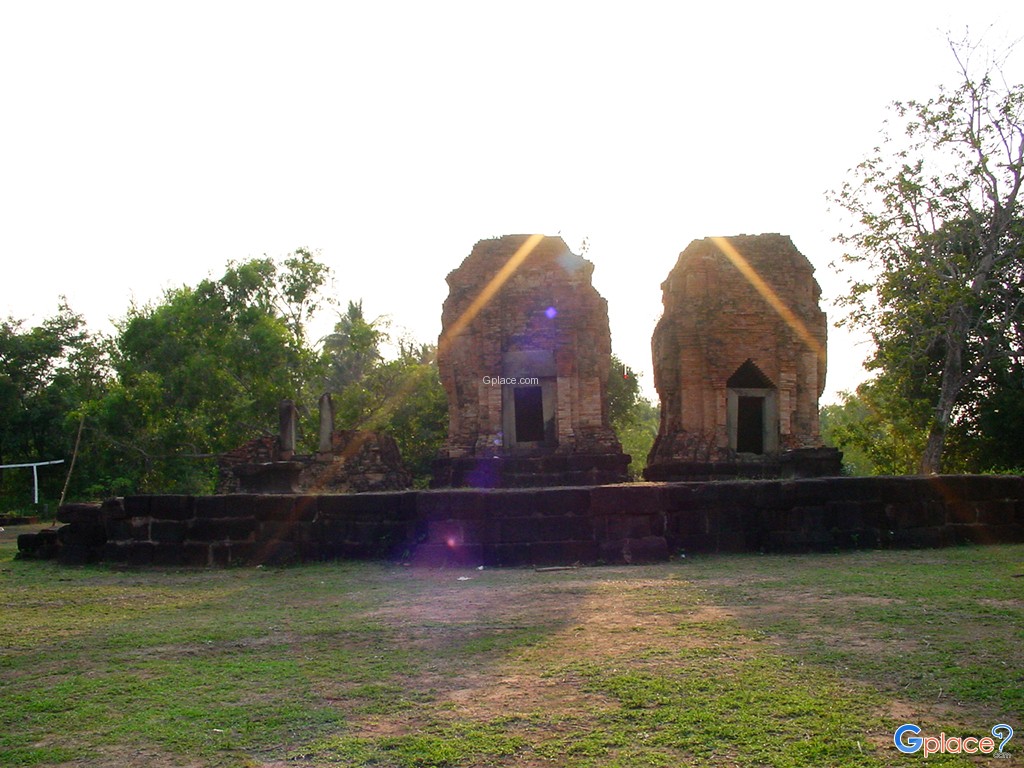
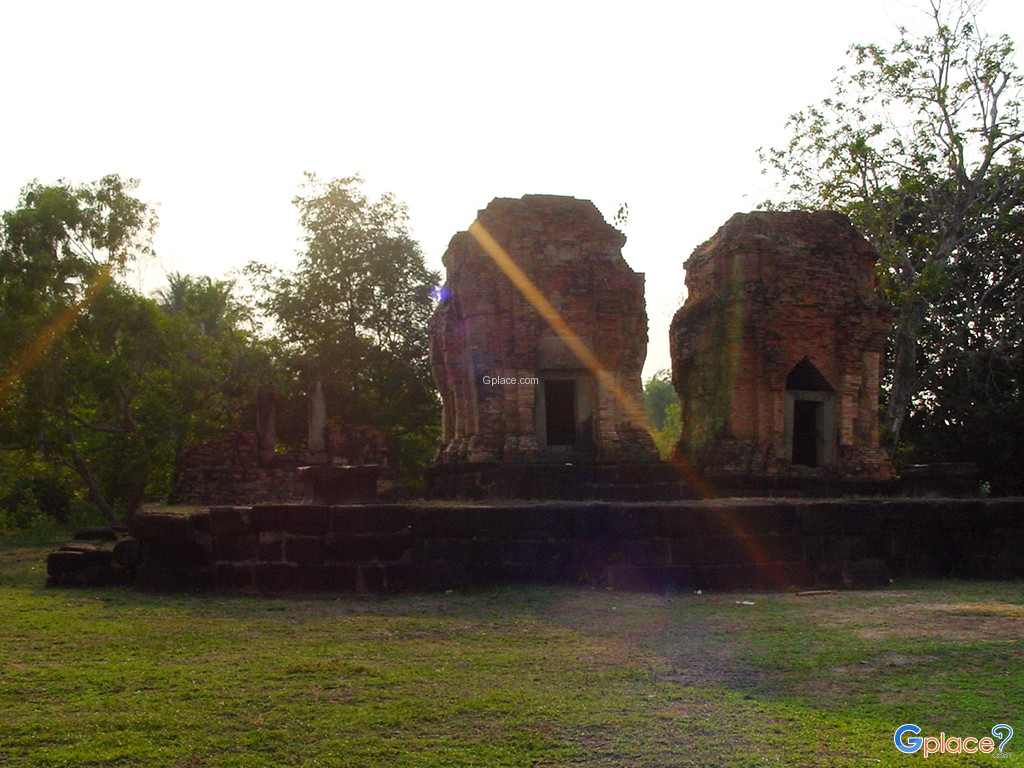
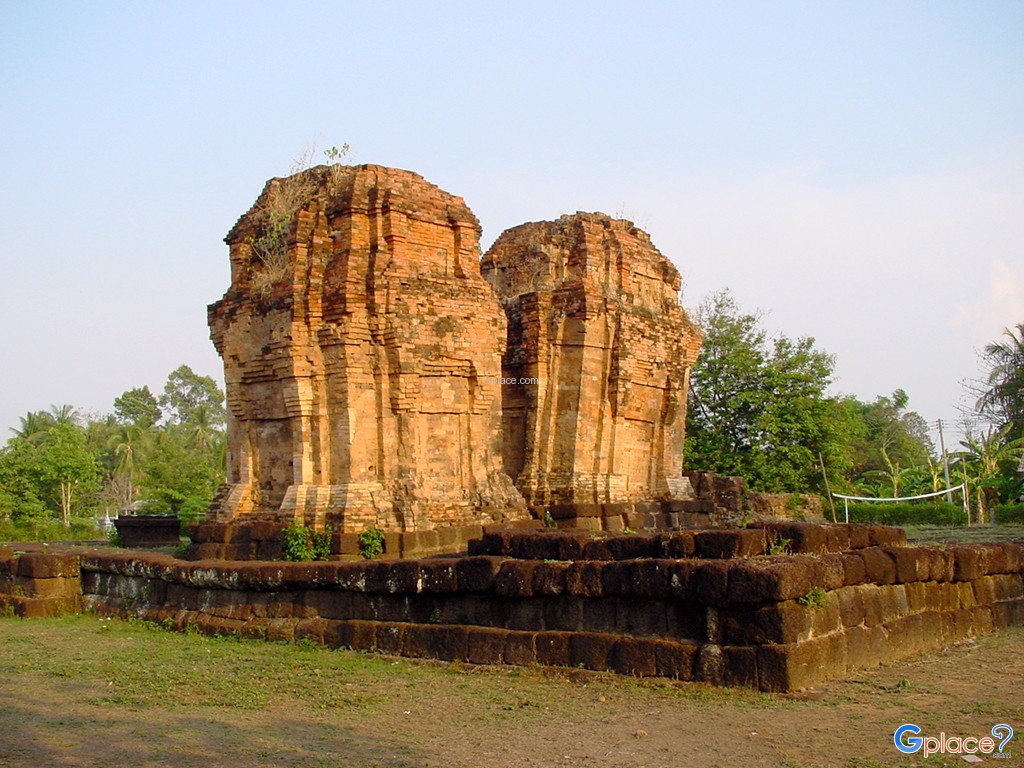
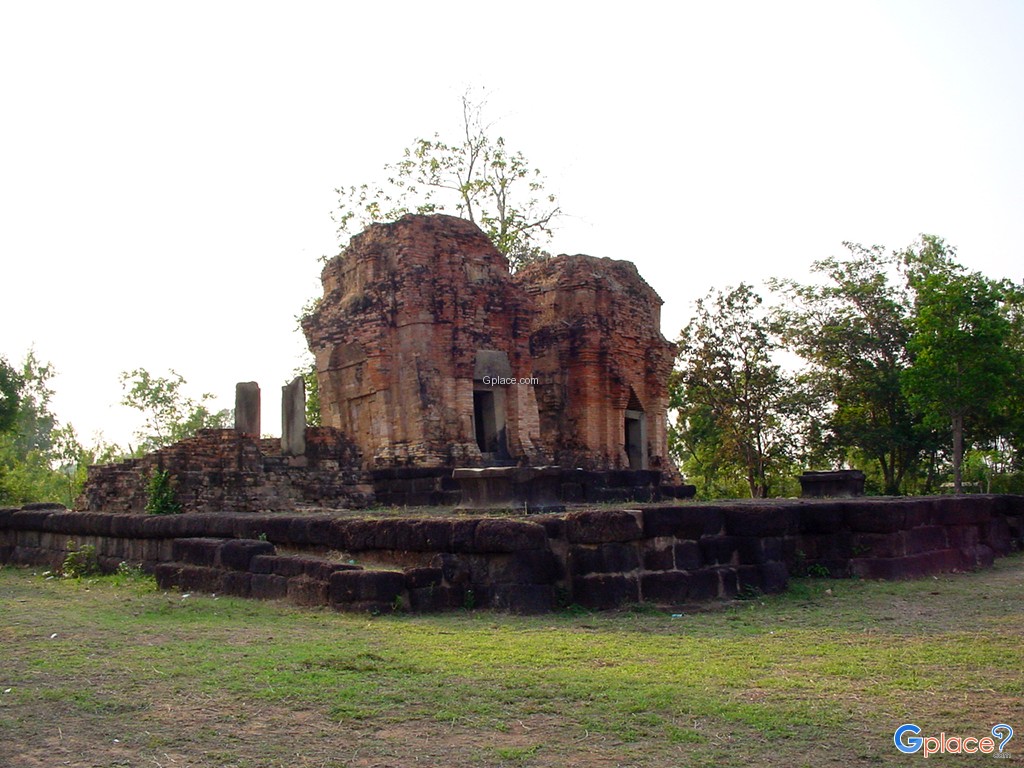
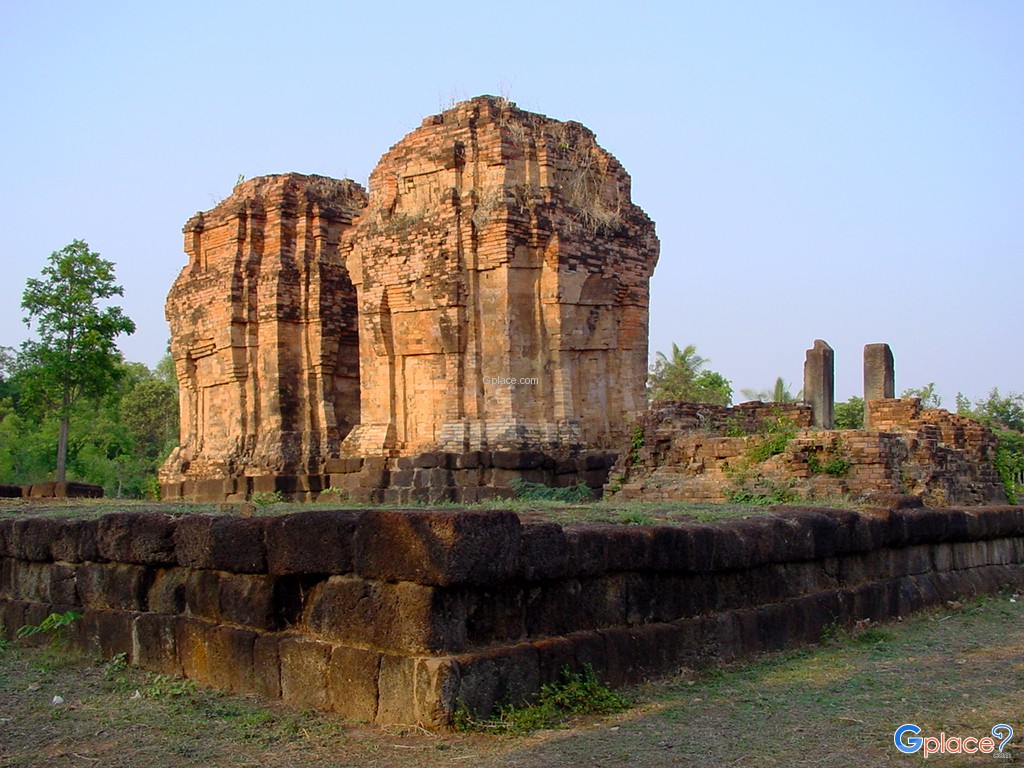
“Admire the beauty of the three brick prangs standing on a single laterite base, especially the central prang, which remains the most complete and preserves traces of a finely carved lintel depicting Indra riding Erawan, the three-headed elephant, still showing delicate craftsmanship for study.”
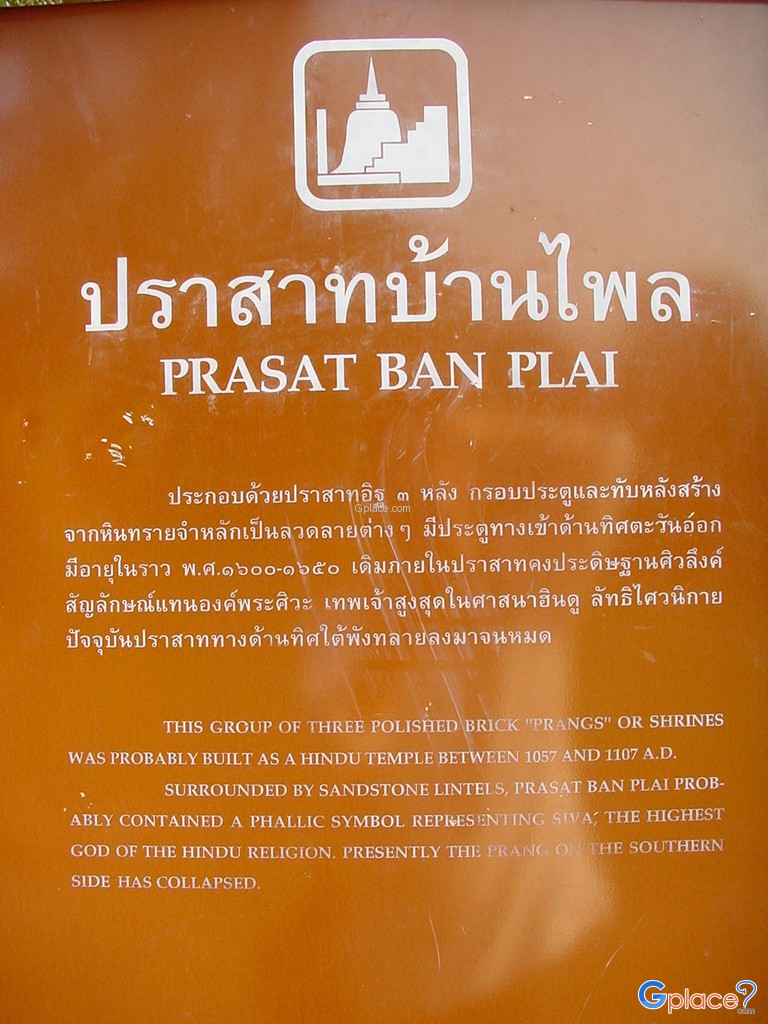
Prasat Ban Phlai (Prasat Ban Phlai) is a small Khmer archaeological site located in the lower Mun River basin, reflecting the role of local communities within the broader Khmer civilization during the 11th–12th centuries CE. Scholars classify it within the Baphuon architectural style, which evolved from earlier styles such as Khleang and Koh Ker. The sanctuary consists of three prangs arranged in a north–south alignment on a shared laterite base, with the central prang as the main structure flanked by two subsidiary towers. This layout is commonly found in community-scale Khmer religious sites. The eastward orientation follows the Hindu solar cult tradition, symbolizing auspiciousness and the welcoming of the first light of the sun as a representation of renewal and prosperity.
The surrounding area features a U-shaped moat, interpreted in Khmer cosmological beliefs as the mythical ocean encircling Mount Meru, the center of the universe in Hindu cosmology. The main structure is built primarily of fine-fired bricks, carefully and tightly laid with minimal visible mortar, suggesting the use of organic binding materials. The brick surfaces were finely polished, a sophisticated construction technique typically found in religious structures of higher significance, even in relatively small-scale temples. The base is constructed from laterite to enhance structural stability and protect against seasonal flooding.
Artistically, the site reflects the Baphuon style, which emphasizes a balance between structural solidity and refined aesthetics. The prang forms are more slender and vertically elongated compared to earlier styles. Decorative elements become more refined but are less complex than those of the later Bayon style. Fragments of lintels once discovered at the site depict Indra riding the three-headed elephant Erawan, symbolizing celestial authority and divine protection of the sanctuary, representing a clear influence of Hindu religious traditions.
The three-prang layout can be interpreted in two main ways: either as the Trimurti concept—Brahma, Vishnu, and Shiva—or as a hierarchical structure with a central principal deity flanked by attendant elements, symbolizing cosmic balance. The central prang typically represents the primary sacred focus, while the side prangs serve as complementary elements maintaining universal harmony.
Historically, Prasat Ban Phlai demonstrates that the Surin region was not merely a peripheral zone of the Khmer Empire but an active area of settlement and religious integration. Such monuments were likely constructed by local communities under religious belief systems, functioning as ritual and spiritual centers rather than large royal-state temples.
Although parts of the structure have deteriorated over time, the original layout remains relatively clear, making the site valuable for studying the development of Khmer art at the community level. It also provides important insights into settlement patterns, construction technology, and the diffusion of Khmer cultural influence throughout the lower Mun River basin.
How to Get There
- By car: From Surin city, take Highway 214 (Surin–Prasat route) heading toward Prasat District. Upon reaching Choeng Pling Subdistrict, turn left at the junction into Ban Phlai village. Clear signs are available along the route leading directly to Prasat Ban Phlai.
Travel Tips
Admission Fee:
- Free of charge
Opening Hours:
- Open daily from 08:00 AM – 06:00 PM
Prasat Ban Phlai

 Share
Share
 Choeng Pling , Prasat District, Surin 32140
Map
Choeng Pling , Prasat District, Surin 32140
Map
 Closed today
Mon8.00 - 18.00
Tue8.00 - 18.00
Wed8.00 - 18.00
Thu8.00 - 18.00
Fri8.00 - 18.00
Sat8.00 - 18.00
Sun8.00 - 18.00

 https://www.thai-tour.com/thai-tour/northeast/surin/data/place/pic_prasat-banphai.htm

 5074
5074