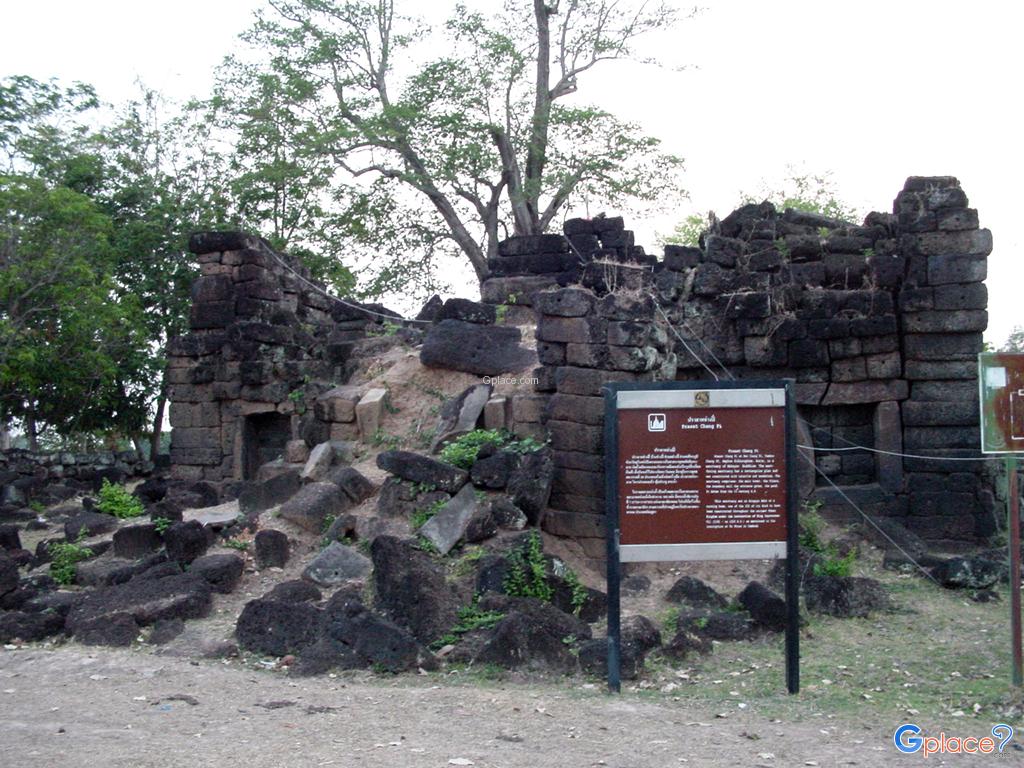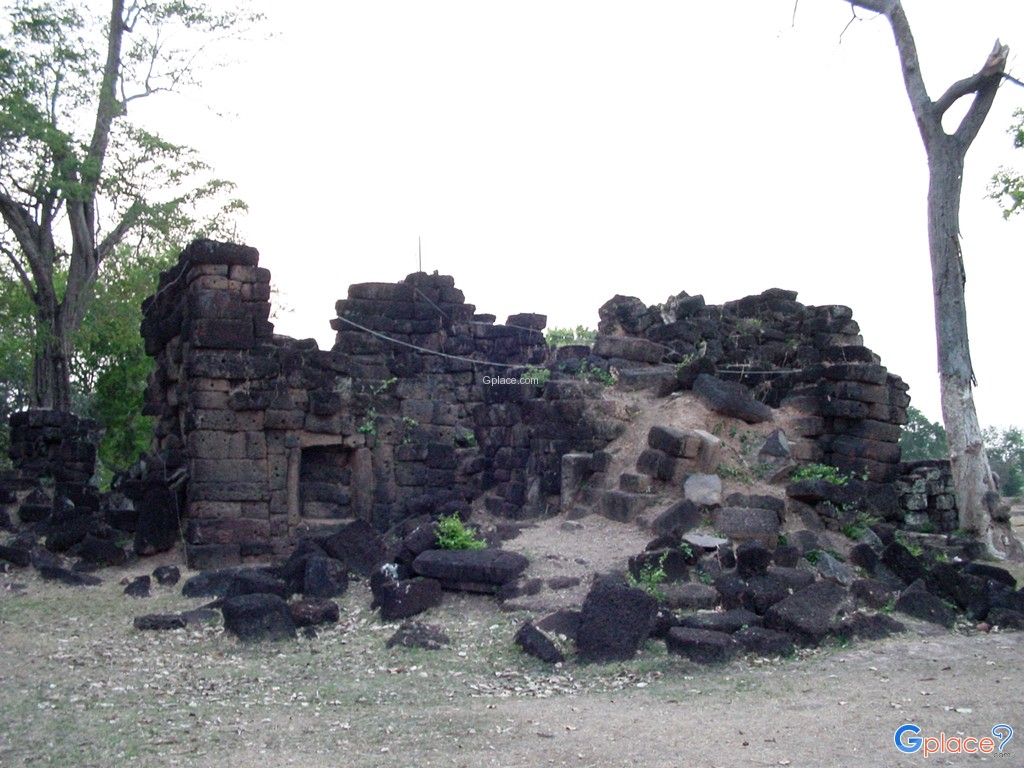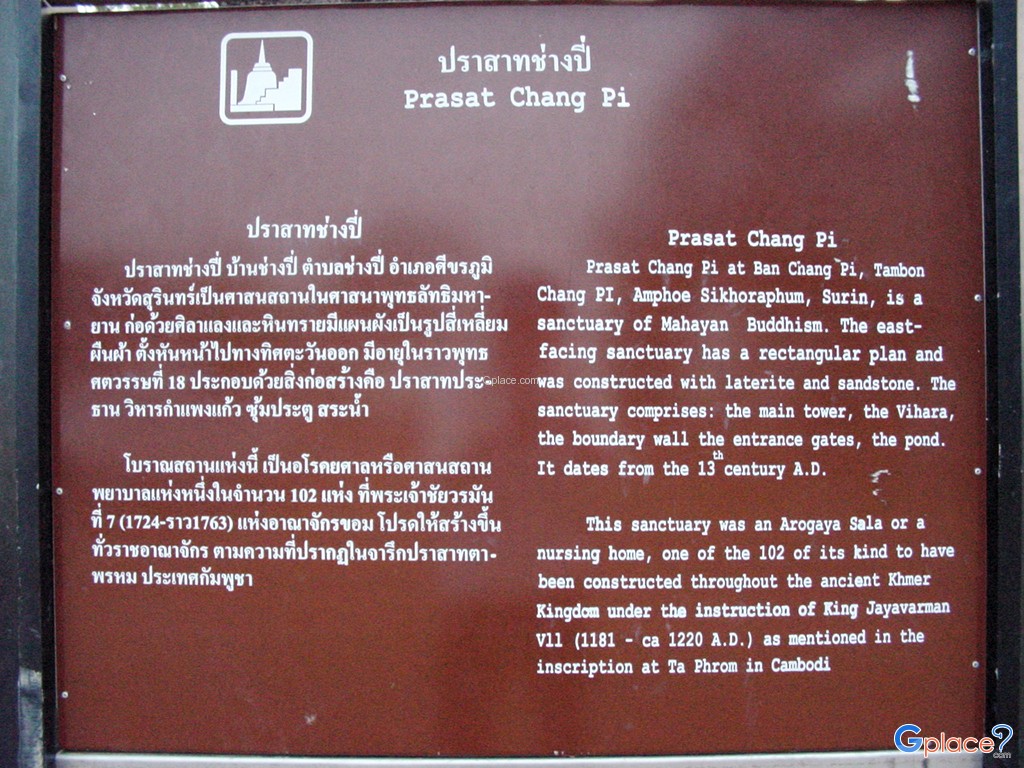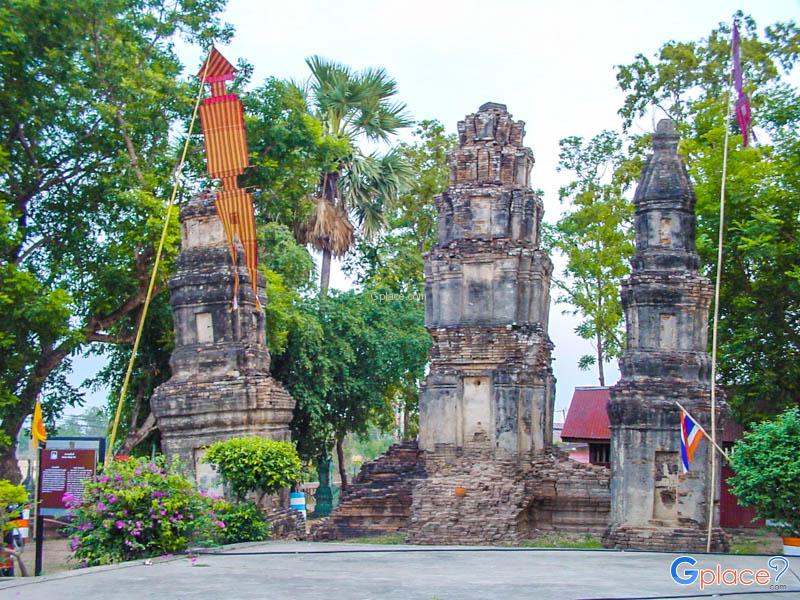
Prasat Chang Pi is an important Khmer Bayon-style archaeological site located in Surin Province, Thailand, and historically functions as part of the Arokhayasala system, a network of approximately 102 ancient hospital-sanctuary complexes established during the reign of King Jayavarman VII in the 12th–13th century CE. This system reflects a highly integrated concept of governance that combined Mahayana Buddhism, healthcare, and social welfare, based on the belief that healing the sick was both a civic duty and a form of religious merit-making. The site consists of key architectural elements such as a central sanctuary serving as the ritual core, auxiliary buildings used for religious and healing-related activities, laterite enclosure walls defining the sacred boundary between the physical and spiritual realms, and an ancient water reservoir that reflects the importance of water in Khmer ritual practices, purification rites, and traditional medical beliefs. The entire structure is built primarily from laterite and sandstone, materials commonly used in late Khmer architecture, which remain durable yet naturally weathered over time, though the original layout is still clearly visible.
Religiously, Prasat Chang Pi is closely associated with Mahayana Buddhism, particularly the worship of Bhaisajyaguru, the Medicine Buddha, who represents healing and protection from illness. People in the ancient Khmer period believed that prayers, rituals, and offerings performed at such sanctuaries could alleviate suffering, cure diseases, and bring spiritual merit, making the site not only a religious center but also a symbolic healing space that merged spiritual belief with healthcare practices.
Geographically, the sanctuary is situated within a rural agricultural landscape surrounded by rice fields and local communities, reflecting the Khmer civilization’s preference for constructing religious and medical centers near water sources and populated areas to ensure accessibility and sustainability. This setting also supported the functional needs of the Arokhayasala system, which relied on water for both ritual purification and hygienic practices, creating a harmonious relationship between the monument and its natural environment.
In addition, Prasat Chang Pi is notable for a natural phenomenon that occurs in March, when the setting sunlight aligns precisely through the three main doorways of the sanctuary in the late afternoon. This phenomenon demonstrates the advanced astronomical knowledge and architectural precision of Khmer builders, who designed structures in accordance with solar movement and religious symbolism.
Today, Prasat Chang Pi remains an important cultural, historical, and archaeological learning site in Surin Province. It serves as both a heritage tourism destination and a spiritual center for the local community, which continues to preserve related traditions and holds annual cultural events to promote heritage conservation and cultural identity, ensuring that the site remains a living link between the ancient Khmer civilization and the present day.