 Attractions
  Hotel
Hotel  Restaurant
  Shopping
  Abroad






“A private museum showcasing rare authentic ancient boats and hundreds of golden teak wood models, deeply reflecting the relationship between the Siamese people and their waterways.”
Thai Boat Museum was founded by Ajarn Paitoon Khaomala, a master craftsman and boat-building expert who devoted his life to the preservation of Thailand’s water-based cultural heritage. The museum was established from his personal dedication to collecting, conserving, and passing on knowledge about traditional Thai boats, which have long been at the heart of Thai life since the Ayutthaya period.
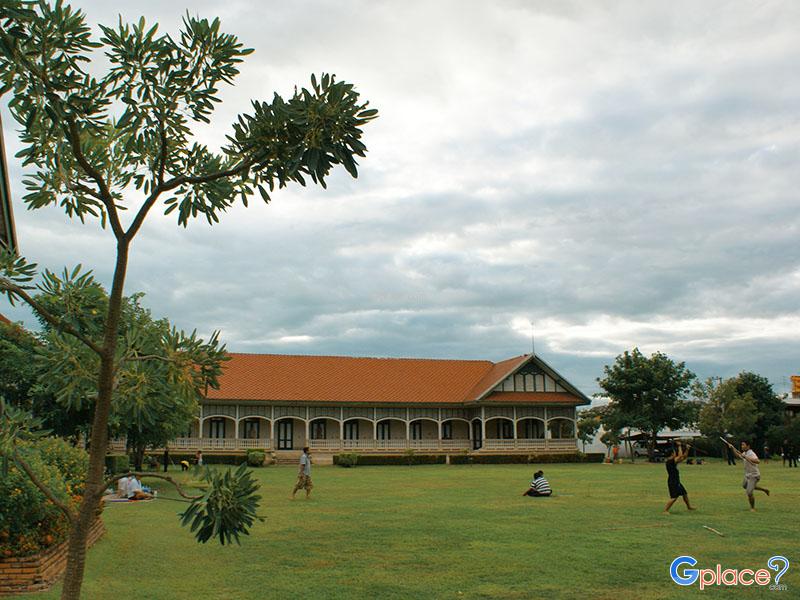
The museum is located within his private residence, a traditional Thai-style wooden house, surrounded by a peaceful and welcoming atmosphere. Visiting the museum feels like stepping back in time to an era when waterways shaped everyday life, and boats were not merely means of transportation but essential tools for living, symbols of local wisdom, and true works of Thai craftsmanship.
The most outstanding feature of the museum is its collection of full-scale ancient boats that were genuinely used in the past, many of which are over a hundred years old. These include chalaw boats made of teak, dugout boats carved from takhian wood, and pong tan boats crafted from entire palm trees. Each vessel reflects a deep understanding of natural materials, traditional boat-building techniques, and designs adapted to Thailand’s rivers and canals across different periods.
In addition, the museum displays a remarkable collection of scale model boats made from golden teak wood, all meticulously handcrafted by Ajarn Paitoon himself. These range from replicas of royal ceremonial barges to various types of traditional folk boats that are rarely seen today. The models not only showcase elegant forms but also convey detailed knowledge of proportions, structures, and cultural beliefs associated with Thai boats.
The visiting experience is notably warm and intimate, unlike large conventional museums. Visitors often have the opportunity to speak directly with the museum’s founder, who willingly shares insights into boat-building techniques and the history of each type of vessel. The exhibition space is clearly organized, including an outdoor area for ancient boats, a Thai-style building housing the model boats, and a section displaying rare traditional woodworking tools.
For artists, collectors, designers, and craft enthusiasts, the Thai Boat Museum is an exceptional source of inspiration, highlighting the delicate craftsmanship and architectural beauty of traditional Thai boats. Photographers will also find unique opportunities to capture the textures of aged wood, natural light, and the timeless charm of a traditional Thai house, creating images that feel both solemn and full of life.
The Thai Boat Museum is therefore more than an exhibition space; it is a living archive of wisdom and stories from Thailand’s river-based way of life. It is an ideal destination for anyone seeking a deep and authentic understanding of Thai cultural roots and the art of traditional boat building.
How to Get There
Private Car:
- From Rochana Road, cross the Somdet Phra Naresuan Bridge into the city island. Pass Ayutthaya Wittayalai School and turn into Soi Bang Eian 8 (Soi Khao Mala); the museum is on the left.
Public Transport:
- Take a van from Bangkok to Chao Phrom Market, then take a "Hua Gob" Tuk-Tuk or motorbike taxi to Soi Bang Eian 8.
Train:
- Get off at Ayutthaya Station, take a ferry to the island, and hire a local vehicle or rent a bicycle to the museum, located near Wat Maha That.
Travel Tips
Ayutthaya Historical Study Centre:
- Can be visited year-round, but avoid the hot midday sun if you wish to see the outdoor boats; morning or late afternoon is best.
Reservation:
- Since this is a small private museum, it is highly recommended to call in advance at 035-241-195 to ensure the owner is available to welcome you.
Photography:
- Photography is allowed, but it is polite to ask for permission in specific galleries and maintain a quiet environment.
Support:
- There is no formal admission fee, but visitors are encouraged to make a donation to help support the maintenance of this private museum.
Admission Fee
-
Local visitors: Donation based
-
Foreign visitors: Donation based
Opening Hours
-
Daily: 09:00 – 17:00
-
Please contact in advance to confirm availability
Thai Boat Museum

 Share
Share
 Thai Boat Museum, 12 Moo 1 Soi Khao Mala (Soi Bang Eian 8), Bang Eian Road, Pratu Chai, Phra Nakhon Si Ayutthaya, Thailand
Map
Thai Boat Museum, 12 Moo 1 Soi Khao Mala (Soi Bang Eian 8), Bang Eian Road, Pratu Chai, Phra Nakhon Si Ayutthaya, Thailand
Map
 Closed today
Mon9.00 - 17.00
Tue9.00 - 17.00
Wed9.00 - 17.00
Thu9.00 - 17.00
Fri9.00 - 17.00
Sat9.00 - 17.00
Sun9.00 - 17.00

 http://www.thaiboatmuseum.com/

 6983
6983