 Attractions
  Hotel
Hotel  Restaurant
  Shopping
  Abroad





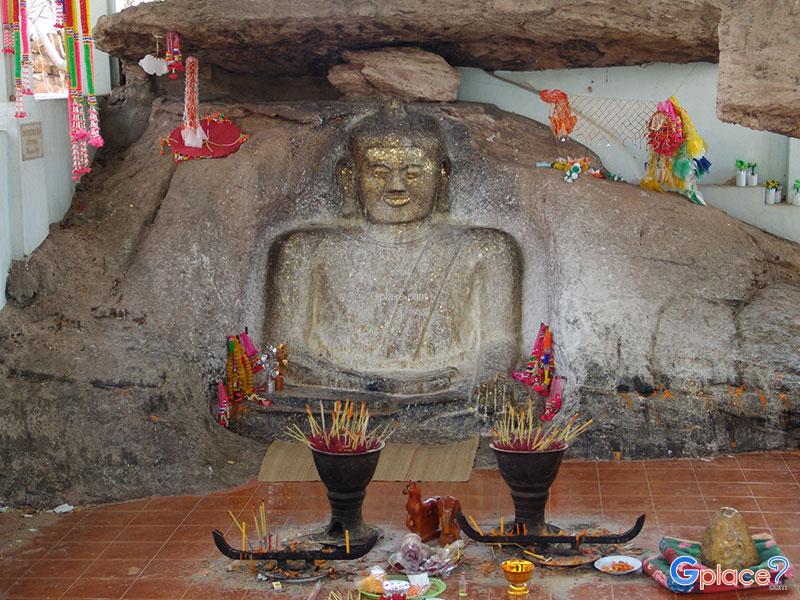

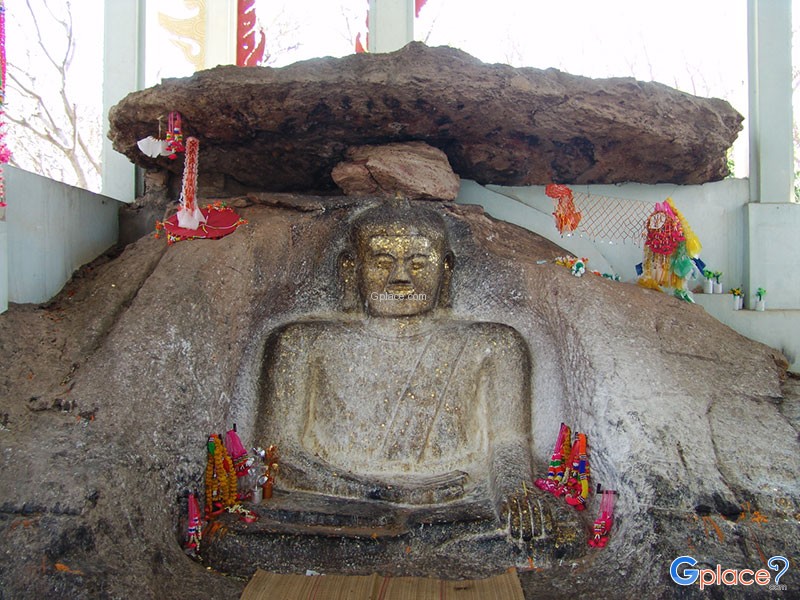
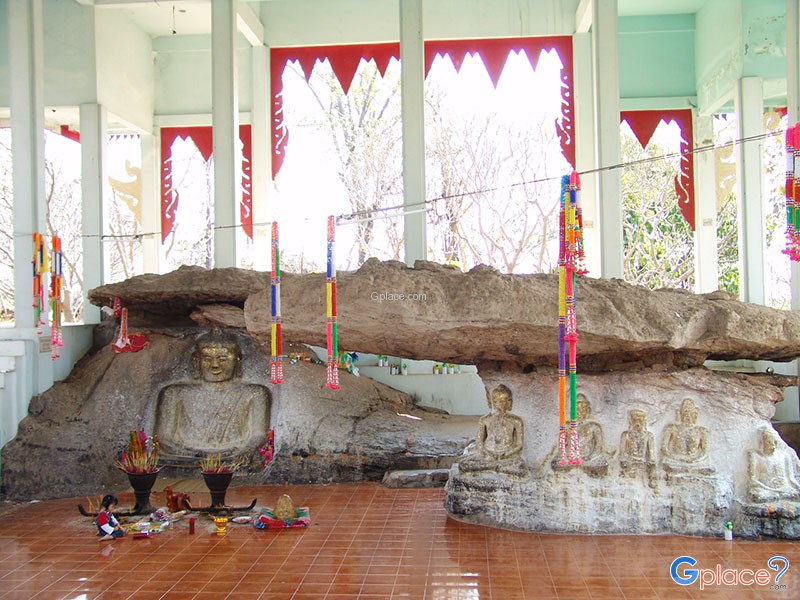
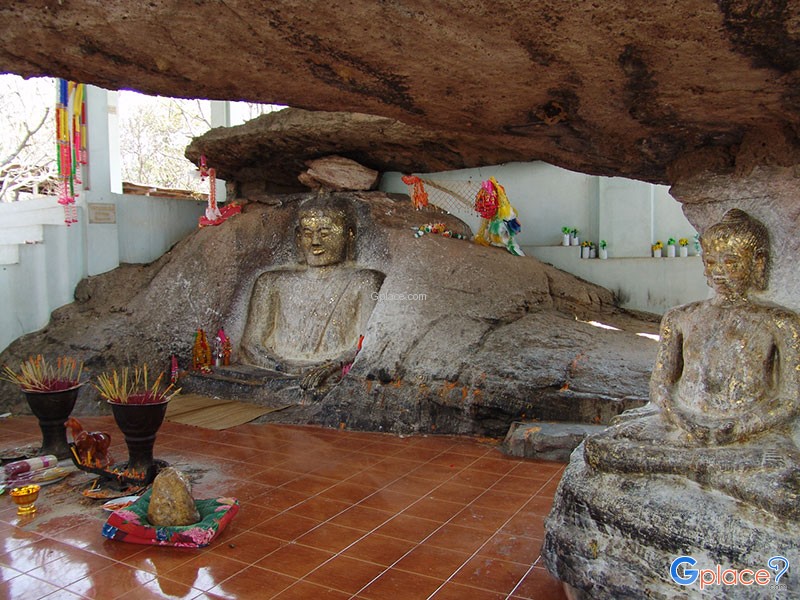
“ Admire ancient Khmer-style Buddha carvings on a sandstone cliff, featuring ‘Phra Chao Ong Tue’ as the principal Buddha image in the Maravijaya posture, estimated to be over 1,000 years old. ”
Phu Phra, Wat Sila At is located in Chaiyaphum Province, in the northern hillside area of the temple. It is an important open-air art and archaeological site of lower Northeastern Thailand, situated on a natural sandstone cliff that has long been regarded as a sacred space for religious use.The site features bas-relief Buddhist carvings influenced by ancient Khmer art dating back to approximately the 11th–13th centuries (Buddhist Era 16th–18th century), particularly reflecting the Bayon style from the late Angkor period. These carvings were created directly on the natural rock surface, integrating the artwork with the cliff itself. At the center of the site is a large Buddha image known as “Phra Chao Ong Tue,” carved directly into the sandstone cliff rather than being built as a separate statue. The Buddha is depicted in the Maravijaya posture, seated in meditation on a natural stone base. The image measures approximately 5 feet in width_ and about 7 feet in height_. Its facial features are angular and reflect Khmer Bayon-style artistic influence, with deeply carved relief that gives the figure a strong sense of depth and permanence, as if merging with the cliff itself.
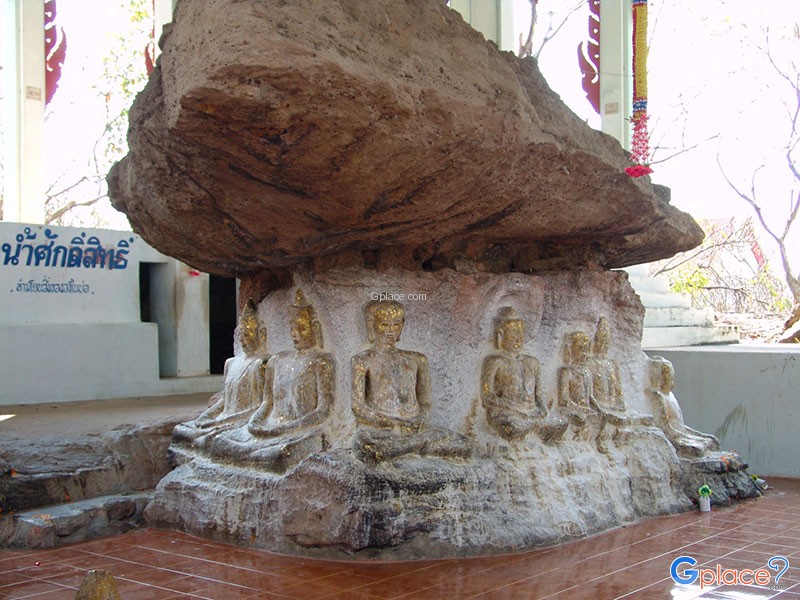
Surrounding the principal image are approximately seven smaller Buddha carvings, arranged at the same level on the sandstone surface. These figures are smaller in scale but maintain a simple yet distinctly Khmer-influenced style. Their arrangement suggests a symbolic composition representing the Buddha and his attendants, similar to a miniature “cosmic Buddhist realm” expressed through rock art in a sacred natural setting.
The carving technique used at Phu Phra is bas-relief stone carving, where artisans remove portions of the sandstone surface rather than constructing separate structures. This method ensures durability and harmony with the natural landscape, although the carvings remain vulnerable to long-term weathering from wind, rain, and humidity.Phu Phra is considered an important piece of Khmer cultural heritage in Chaiyaphum Province and serves as a cultural link between the lower Northeastern region of Thailand and the Mekong basin. It is also regarded as a sacred landscape site where natural geography and religious belief are deeply interconnected, often classified by scholars as a form of “natural sacred sanctuary” combining environment and spirituality.
The surrounding environment is a quiet hillside forest with open woodland, cooler temperatures compared to the city, and abundant natural shade. The peaceful atmosphere makes it suitable for meditation, religious practice, and the study of ancient art and history.Overall, Phu Phra is not merely a temple or tourist attraction, but a living archaeological landscape where nature, religion, and history converge, preserving a rare and authentic example of ancient Khmer-influenced Buddhist rock art in its original context.
How to Get There
- By car: From Chaiyaphum city center, take Highway 201 (Chaiyaphum–Kaeng Khro route) for approximately 13 kilometers. Then turn left following the sign to Wat Sila At (Phu Phra) and continue for another 2 kilometers. The road is accessible for all types of vehicles, and parking is available within the temple area.
Travel Tips
Admission Fee:
- Free of charge. Visitors may make voluntary donations according to their faith and belief.
Opening Hours:
- Open daily from 08:00 AM – 05:00 PM
Phu Phra Wat Sila At

 Share
Share
 Na Siao, Mueang Chaiyaphum, Chaiyaphum 36000
Map
Na Siao, Mueang Chaiyaphum, Chaiyaphum 36000
Map
 Closed today
Mon8.00 - 17.00
Tue8.00 - 17.00
Wed8.00 - 17.00
Thu8.00 - 17.00
Fri8.00 - 17.00
Sat8.00 - 17.00
Sun8.00 - 17.00

 https://www.thai-tour.com/thai-tour/northeast/chaiyaphum/data/place/pic_phu-pra.htm

 4832
4832