 Attractions
  Hotel
Hotel  Restaurant
  Shopping
  Abroad





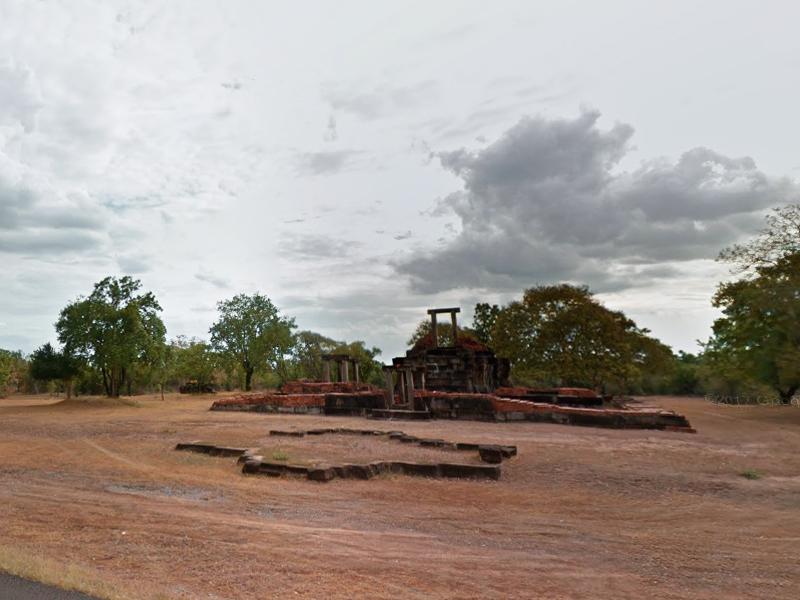

“Prasat Non Ku is a small group of ancient sites built in accordance with Hindu beliefs in the pre-Phimai period. It is notable for its brick base and the library, which still retains traces of intricate sandstone carvings.”
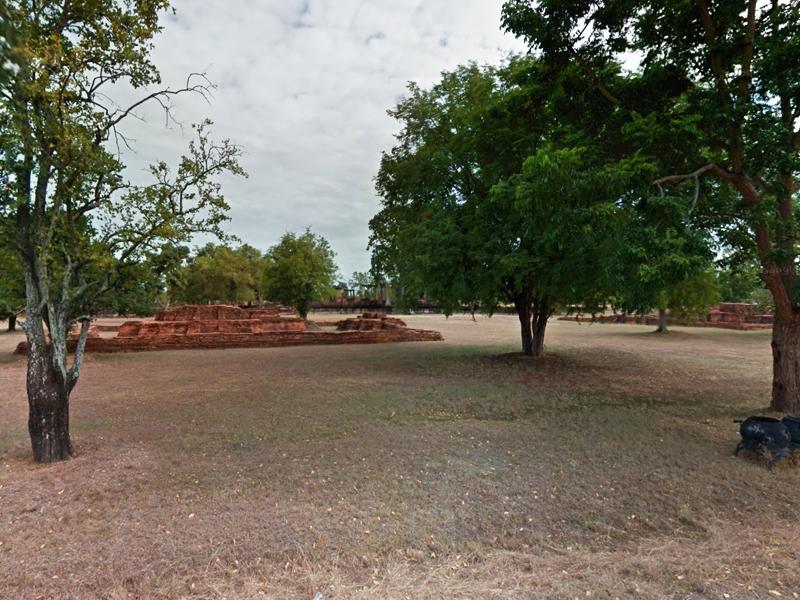
Prasat Non Ku is a small but historically and archaeologically significant ancient site, located in Ban Non Ku, Tambon Than Prasat, Non Sung District, Nakhon Ratchasima Province. This area was once a major center of Khmer civilization in the lower northeastern region (Isan). It is estimated that this monument was constructed around the 16th Buddhist century or roughly the early Baphuon period of the Khmer Empire. This pre-dates the construction of the larger Prasat Hin Phimai and serves as crucial evidence demonstrating the expansion and influence of Khmer culture in the region.
Layout and Structure: The Non Ku temple complex consists of five main structures built on the same laterite base, facing east.
-
Prasat Prathan (Main Towers): There were three main towers constructed from brick, aligned north-to-south. Currently, only the base and the lower sections of the walls remain. The bases of the prasats display the delicate craftsmanship of ancient Khmer architecture.
-
Bannalai (Libraries): Two smaller buildings constructed from sandstone are located in front of the main towers to the east. These libraries served as repositories for sacred religious texts (Tripitaka or Vedas). The presence of the sandstone structures helps pinpoint the architectural style of that specific era.
Artifacts and Belief System: Archaeological evidence recovered from the site suggests that Prasat Non Ku was a Hindu religious sanctuary of the Shaivite sect, dedicated to the worship of Lord Shiva. Key artifacts discovered in the vicinity include:
-
Sandstone Lintel Fragments: Pieces of lintels were found, carved with religious narratives, notably imagery believed to depict Shiva, characteristic of the Khmer Baphuon style.
-
Deva Heads and Sculpture Fragments: Various heads of deities and other sculptural fragments were found. These pieces were likely used to adorn the temple towers and libraries, reflecting the past splendor and the skill of the artisans.
Significance: Prasat Non Ku plays a vital role in connecting the region's history by providing physical evidence of an early settlement and a center of religious belief preceding the establishment of larger cities like Phimai. The site is currently registered as an ancient monument by the Fine Arts Department and is located within the grounds of Wat Non Ku, making it easily accessible for visitation and historical study.
How to Get There
-
Private Car: Take Highway 2 (Mittraphap Road) towards Non Sung District, then turn onto Highway 2068 and follow the signs to the castle.
-
Location: The castle is located within Wat Non Ku. For more information, please consult local villagers.
Travel Tips
-
Best Time to Visit: Visit early morning or evening to avoid the intense heat, as the castle is located in an open area.
-
Dress Code: Dress appropriately according to temple regulations, and bring an umbrella or hat for sun protection.
-
Education: Research the castle's history in advance to enhance your visit.
Admission Fees:
- Free (no charge)
Opening Hours:
- Open daily, generally from 8:00 AM to 4:30 PM.
Prasat Non Ku

 Share
Share
 Korat Subdistrict, Sung Noen District, Nakhon Ratchasima 30170
Map
Korat Subdistrict, Sung Noen District, Nakhon Ratchasima 30170
Map
 Closed today
Mon8.00 - 16.30
Tue8.00 - 16.30
Wed8.00 - 16.30
Thu8.00 - 16.30
Fri8.00 - 16.30
Sat8.00 - 16.30
Sun8.00 - 16.30



 194
194