 Attractions
  Hotel
Hotel  Restaurant
  Shopping
  Abroad





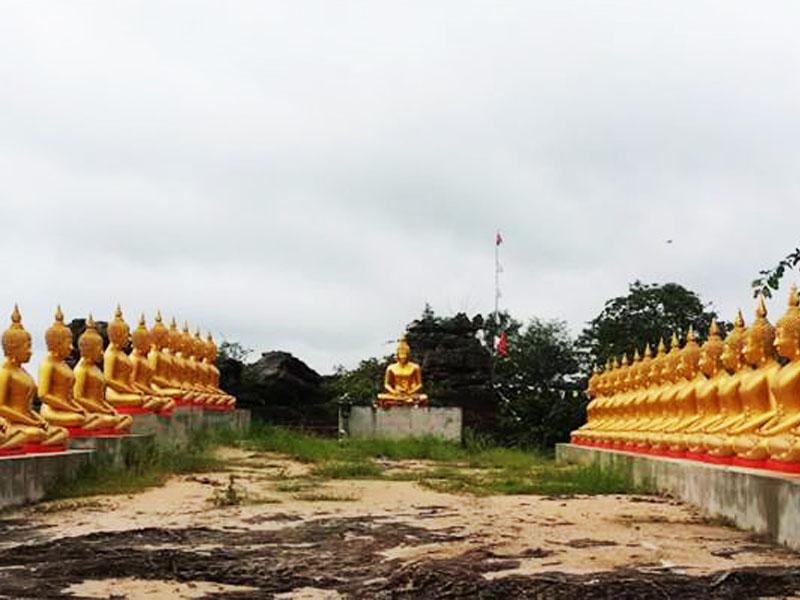

“An ancient sacred cave temple set within sandstone mountains, featuring revered Buddha images, scenic viewpoints, and beautiful natural caves surrounded by lush green forests.”
Phu Tham Phra is one of the most important natural, religious, and cultural attractions in Yasothon Province, located in Kut Hae Subdistrict, Loeng Nok Tha District, across an area of approximately 200 rai. Surrounded by forests and sandstone mountain ranges in the lower northeastern region of Thailand, the site is distinguished by its expansive rock terraces, cliffs, and cave systems formed through millions of years of wind and water erosion. These natural formations have created unusual and striking shapes resembling giant natural sculptures, leading many visitors to compare the landscape to the famous Phu Pha Thoep rock formations in Mukdahan Province.The most significant part of the area is “Tham Phra” (Buddha Cave), situated on the southern side of the mountain. The cave itself is approximately 3 wa wide and 8 wa long, offering a peaceful and cool atmosphere ideal for meditation and spiritual practice. Inside the cave are numerous ancient Buddha images made from wood, brass, and sandstone. Many of these statues are centuries old and reflect traditional Isan folk art and Buddhist craftsmanship. The Buddha images appear in various postures, including meditation, subduing Mara, and reclining poses. Local villagers deeply respect the cave and believe it possesses sacred power capable of bringing blessings and protecting worshippers from danger and misfortune.
Beyond the main cave, the surrounding mountain area contains several fascinating natural caves, including Tham Kheng, Tham Ngu Suang, Tham Kliang, and Tham Phrom But. Each cave has its own distinctive features. Some contain narrow rocky passages extending deep into the mountain, while others open onto broad stone terraces with natural skylights illuminating the interiors beautifully. These caves are especially attractive to visitors who enjoy hiking, exploring nature trails, and photographing dramatic mountain scenery. Much of the landscape around Phu Tham Phra remains largely untouched, allowing travelers to experience the authentic atmosphere of the northeastern Thai forest ecosystem.During the rainy season and early winter, the rocky surfaces become covered with vibrant green moss, ferns, and native plants. Wild orchids bloom along tree trunks and rock crevices, enhancing the freshness and beauty of the mountain. On certain mornings, particularly after rainfall, thin layers of mist drift across the forest and surrounding hills, creating a peaceful and magical atmosphere that makes the destination especially charming.
Phu Tham Phra is also closely connected to local legends and historical beliefs. According to local stories, the area was once a rich forest where white elephants were captured and later presented to King Rama IV. This reflects the abundance and significance of the forest in earlier times. There are also stories of wandering monks who discovered the cave while practicing meditation in the wilderness, eventually turning the site into a respected spiritual sanctuary for local communities.
Today, Phu Tham Phra has been developed as a cultural, natural, and geological tourism destination in Yasothon Province. It is an ideal place for visitors seeking relaxation in nature, spiritual experiences, historical exploration, or scenic walks among sandstone cliffs and forest ecosystems. Despite becoming more widely known, the area has retained its tranquility and natural charm, unlike many crowded tourist destinations. This makes it especially appealing to meditation practitioners, nature photographers, and travelers looking to experience the peaceful and authentic side of Yasothon.
How to Get There
- By Car: From Yasothon town, take Highway No. 2169 toward Loeng Nok Tha District, then continue into Kut Hae Subdistrict. Direction signs to Phu Tham Phra are available along the route. The total distance is approximately 80–85 kilometers.
- By Public Transport: Take a bus on the Yasothon–Loeng Nok Tha route, then hire a local vehicle to continue to Phu Tham Phra.
Travel Tips
- The best time to visit is during the late rainy season to winter (November–February), when the weather is cool and the scenery is at its most beautiful.
- Wear comfortable walking shoes, as some areas have rocky paths and uphill trails.
- Dress respectfully, as the site is considered a religious and meditation area.
- Bring drinking water if you plan to explore the viewpoints and surrounding caves.
Admission Fee:
- Free admission
Opening Hours:
- Open daily from 9:00 AM – 4:00 PM
Phu Tham Phra

 Share
Share
 Kham Nam Sang, Kut Chum, Yasothon 35140
Map
Kham Nam Sang, Kut Chum, Yasothon 35140
Map
 Closed today
Mon9.00 - 16.00
Tue9.00 - 16.00
Wed9.00 - 16.00
Thu9.00 - 16.00
Fri9.00 - 16.00
Sat9.00 - 16.00
Sun9.00 - 16.00

 https://www.thai-tour.com/thai-tour/northeast/yasothorn/data/place/lengnoktha.htm

 2669
2669