
 Attractions
  Hotel
Hotel  Restaurant
  Shopping
  Abroad





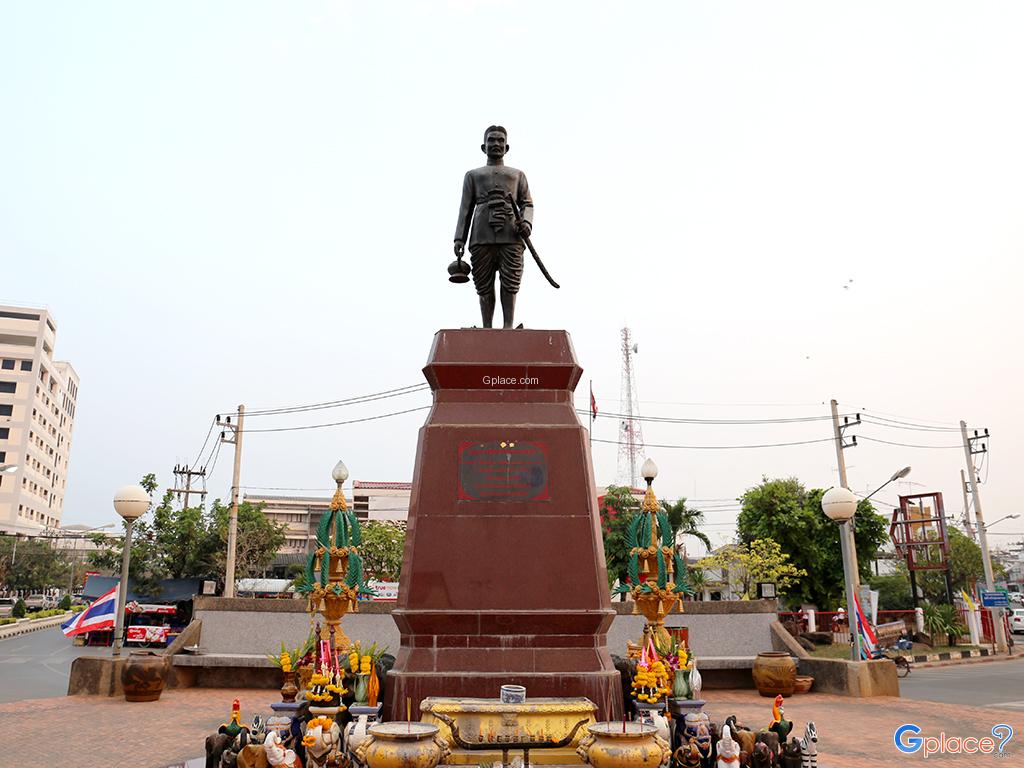

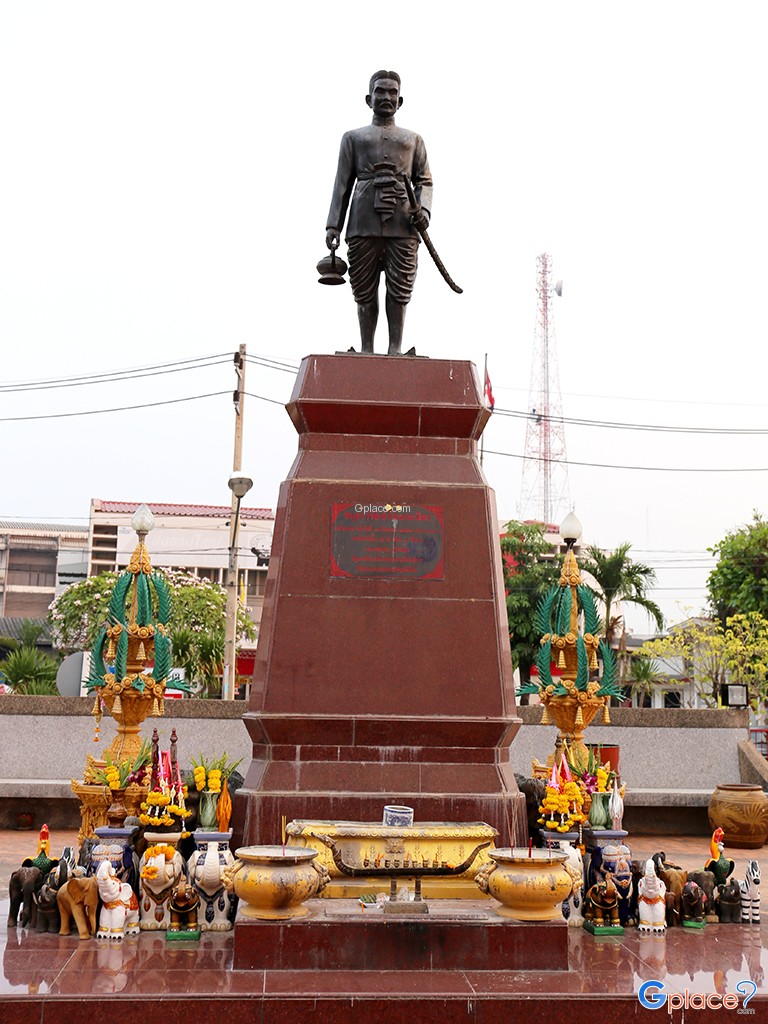
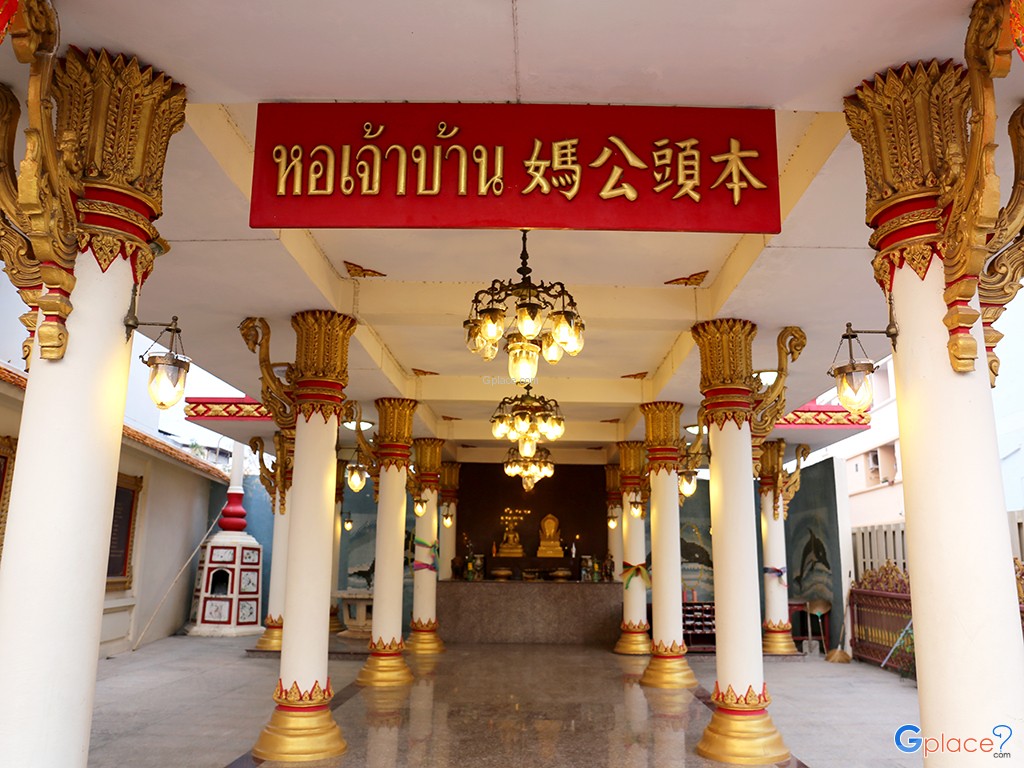
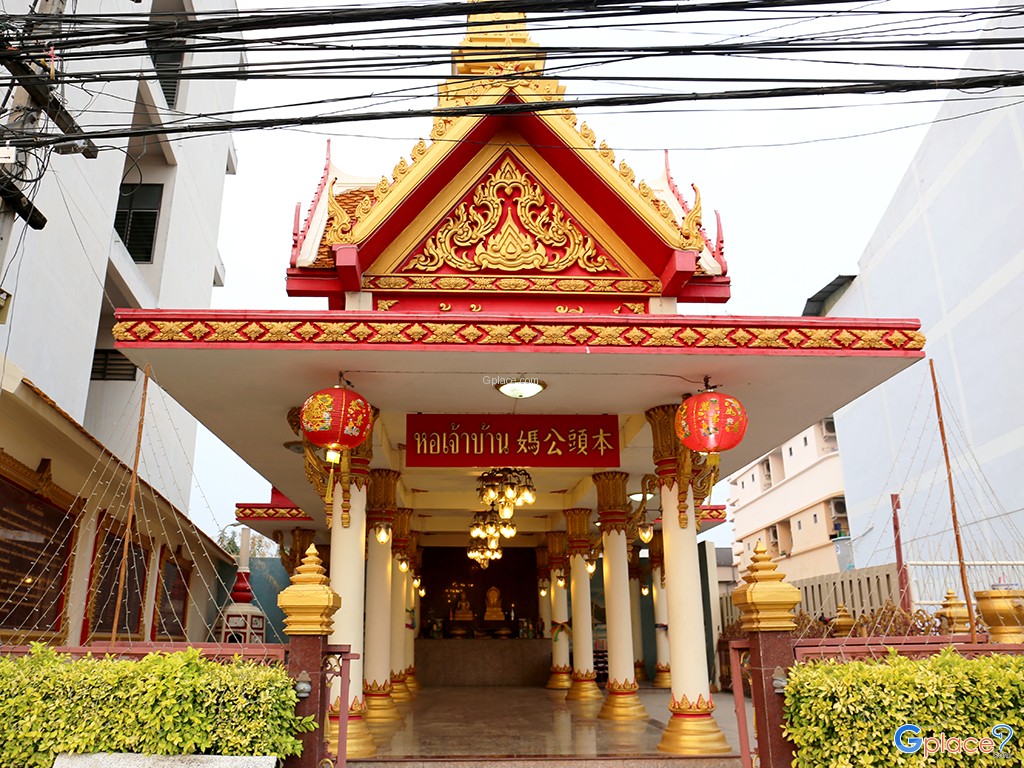
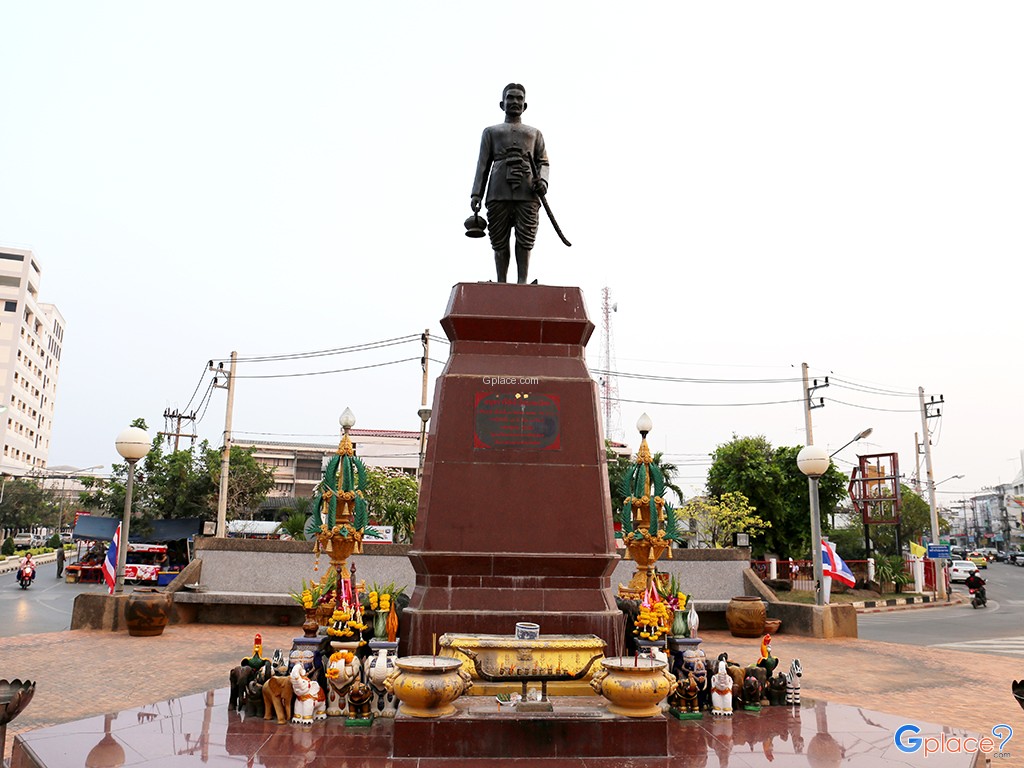
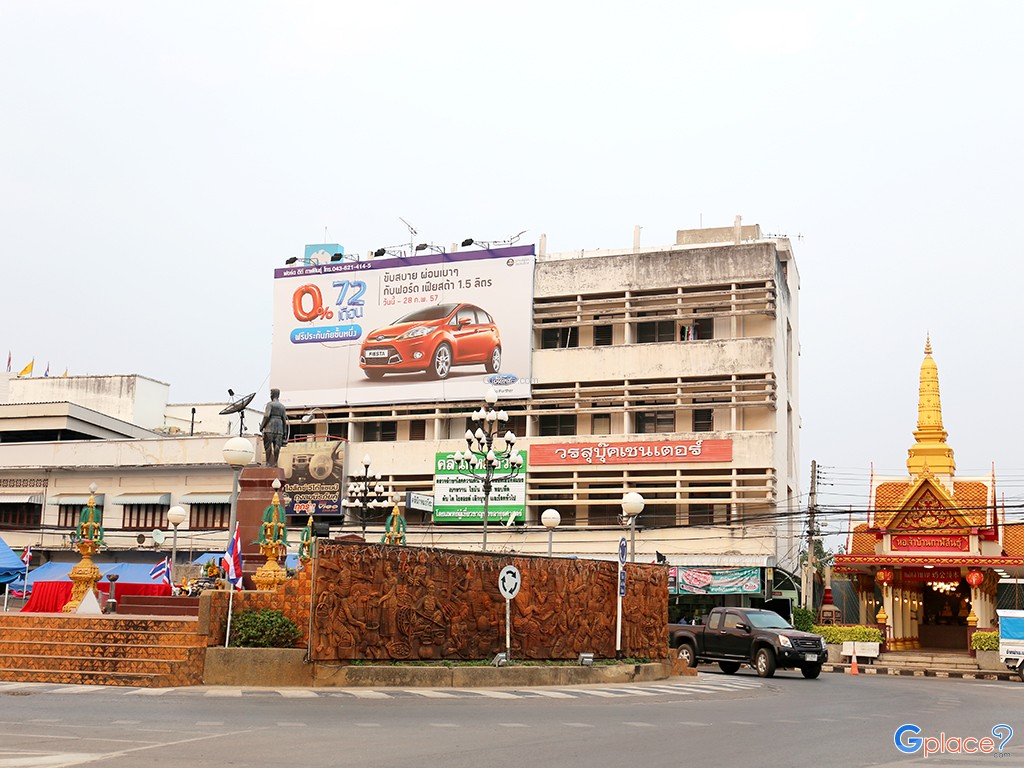
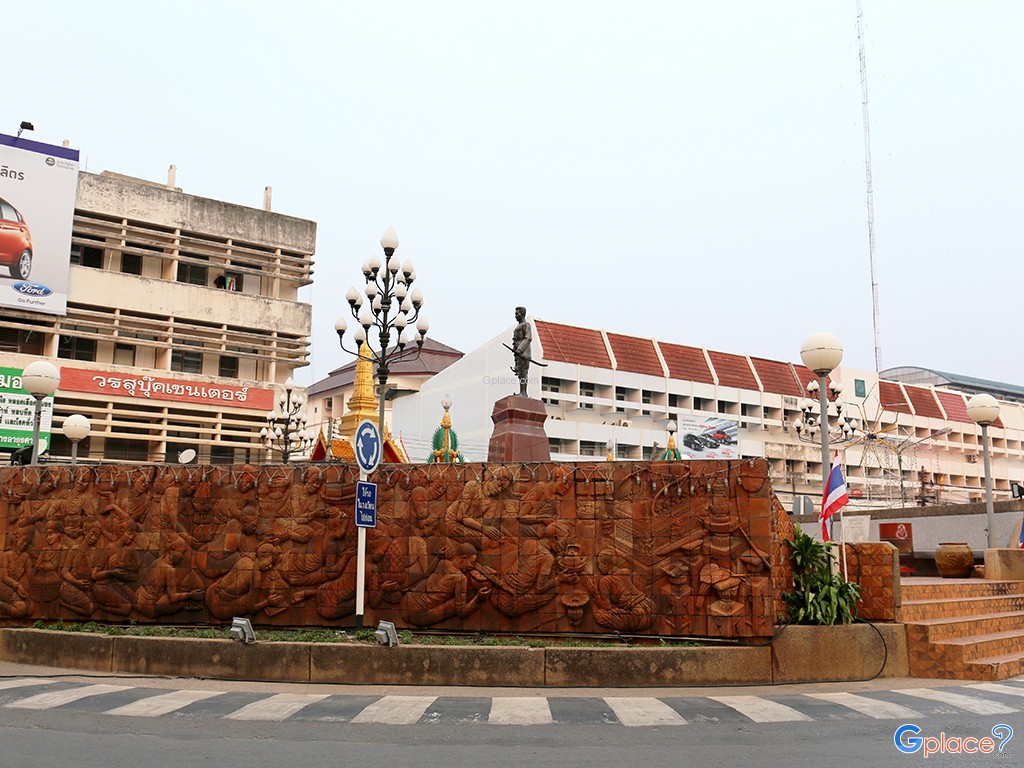
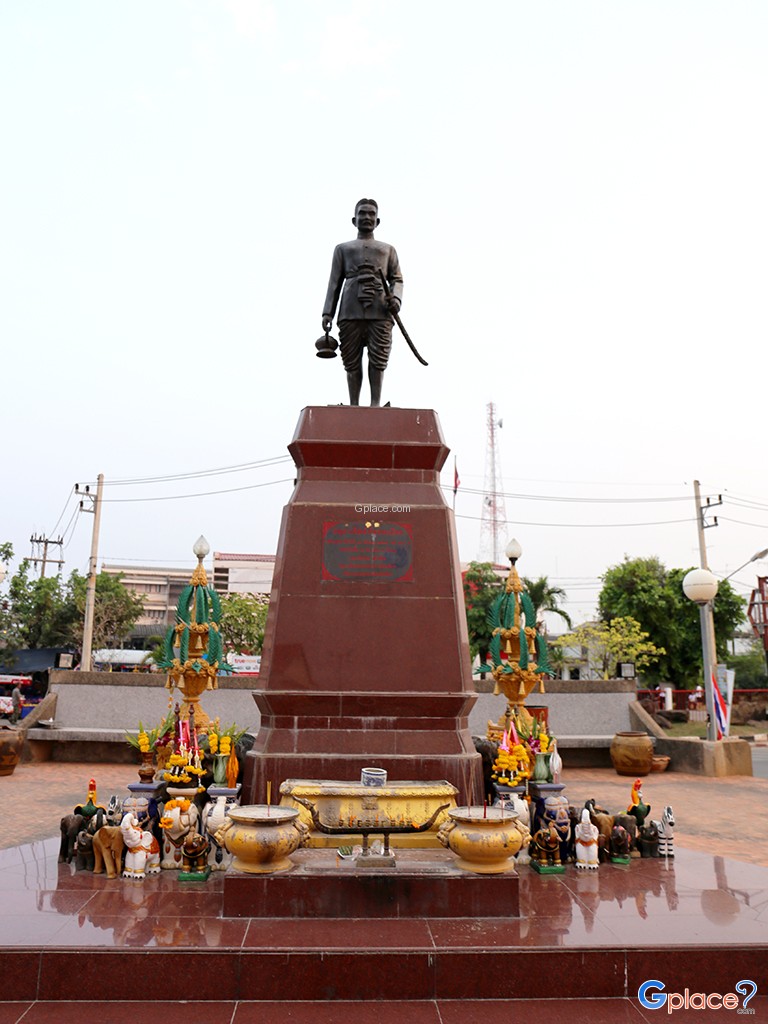
“Monument of the first governor of Kalasin, featuring a historical bas-relief wall, prominently located in the heart of Kalasin city with convenient access.”
The Monument of Phraya Chai Sunthon Thao Somphamit is an important memorial located in the heart of Kalasin City. It was built to honor the first governor and founder of Kalasin, who played a crucial role in the establishment of settlements in the central northeastern region of Thailand during the early Rattanakosin period.Thao Somphamit, also known as “Chao Phak Khao” (the White-robed Lord), was originally a government official from Vientiane in the Lan Xang Kingdom. He led a group of approximately 500 people in migrating across the Mekong River and the Phu Phan Mountains to settle in Ban Kaeng Samrong, which became the early foundation of the Kalasin community.This migration was not merely a relocation, but the creation of a new and stable settlement. It involved organizing households, forming a social structure, and uniting people with shared beliefs and culture, which gradually developed into a larger and more established community.
Later in 1793, Thao Somphamit brought a bronze water kettle as a royal tribute and traveled to an audience with King Rama I (Phra Phutthayotfa Chulalok). He requested permission to formally establish a city under Siam’s administration.The King granted the city the name “Kalasin,” meaning “black water,” referring to local geographical characteristics. He also appointed Thao Somphamit as “Phraya Chai Sunthon,” the first governor of Kalasin.
From that point onward, Kalasin became a tributary city under the Siamese administrative system and began to develop more structured governance, including administration, community organization, and territorial expansion.The present-day monument was constructed to symbolize the honor and legacy of the city’s founder. It serves as a historical landmark and is located in a central roundabout in front of the provincial post office, an area with heavy daily traffic.The monument’s elements carry symbolic meanings. The bronze kettle represents the journey to present a tribute and request the establishment of the city, while the sword symbolizes authority and responsibility in governing the city.
At the base of the monument, bas-relief sculptures depict historical scenes such as the migration from Vientiane, crossing mountains and the Mekong River, and the early settlement in the Isan region. These artworks help visitors visualize the city’s past more clearly.Today, the Monument of Phraya Chai Sunthon is not only a historical site but also a sacred place respected by local people. A major annual ceremony is held every September 13 to pay tribute to the city’s founder and preserve local traditions.In addition, the surrounding area has become a convenient city-center attraction, filled with local restaurants, cafés, and the atmosphere of the old town community. It functions both as a learning site for history and a key landmark of Kalasin City.
How to Get There
- By car: From Kalasin Bus Terminal, take the main road into the city for about 2–3 kilometers toward the roundabout in front of the Kalasin Provincial Post Office. You can easily travel by private car, motorcycle, or local three-wheeled taxi (skylab).
Travel Tips
- Visit in the morning or evening, as the area is open-air and can be very hot during the day.
- At night, the monument is beautifully illuminated and ideal for photography.
- The surrounding area has local restaurants and cafés for further exploration.
- Common offerings for paying respect include marigold garlands, drinking water, and floral garlands.
Admission fee:
- Free of charge (no admission fee)
Opening hours:
- Open 24 hours daily
Phraya Chai Sunthon Monument

 Share
Share
 Kalasin, Mueang Kalasin, Kalasin, 46000
Map
Kalasin, Mueang Kalasin, Kalasin, 46000
Map
 Open now

 https://www.thai-tour.com/thai-tour/northeast/kalasin/data/place/pic-phrayachai.html

 3878
3878