 Attractions
  Hotel
Hotel  Restaurant
  Shopping
  Abroad





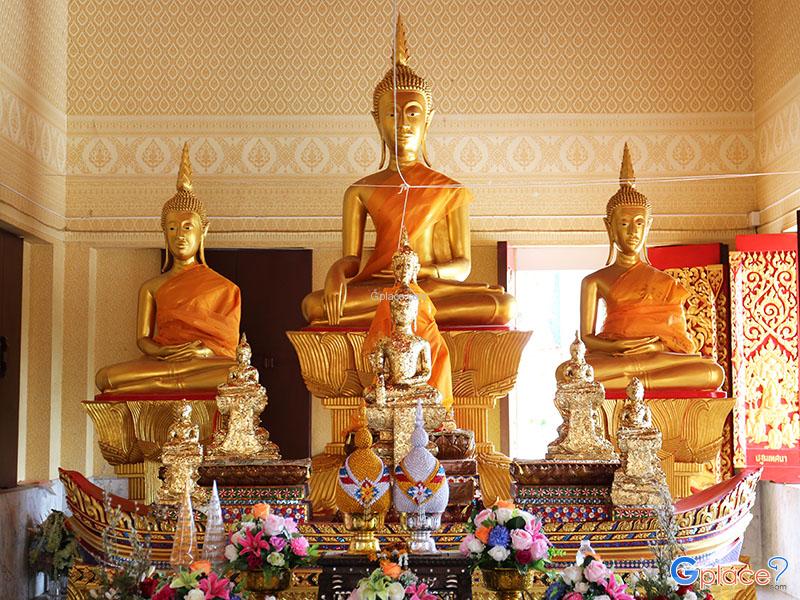

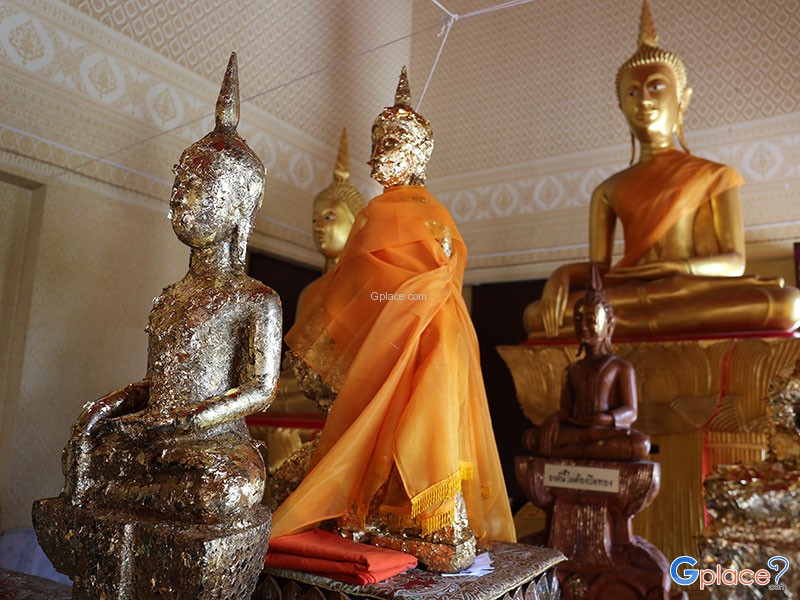
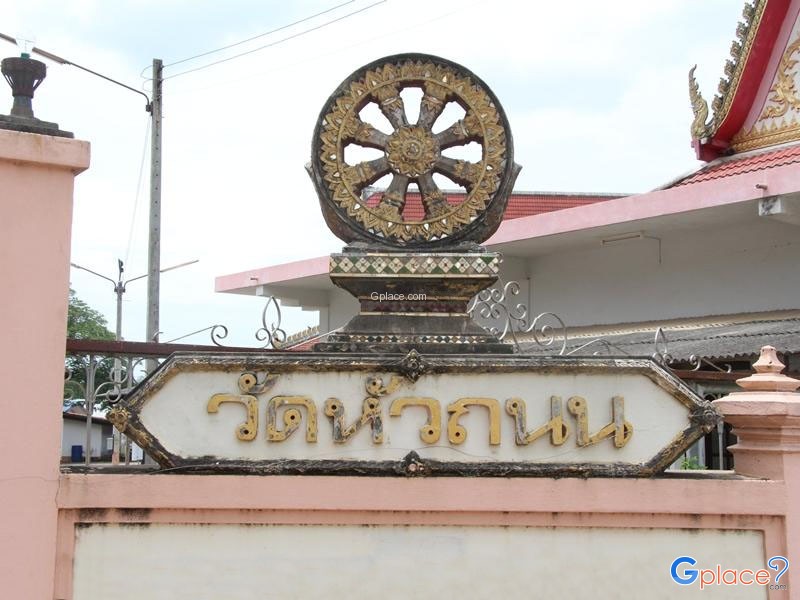
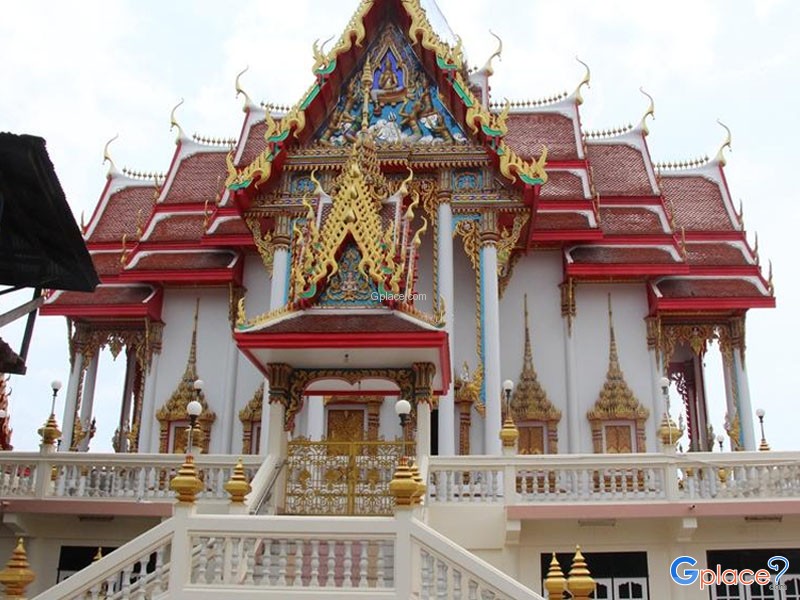
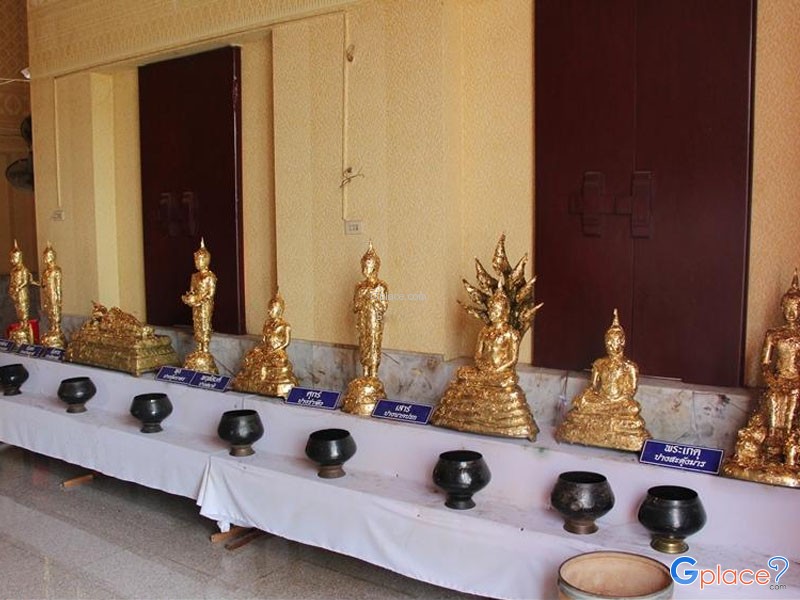
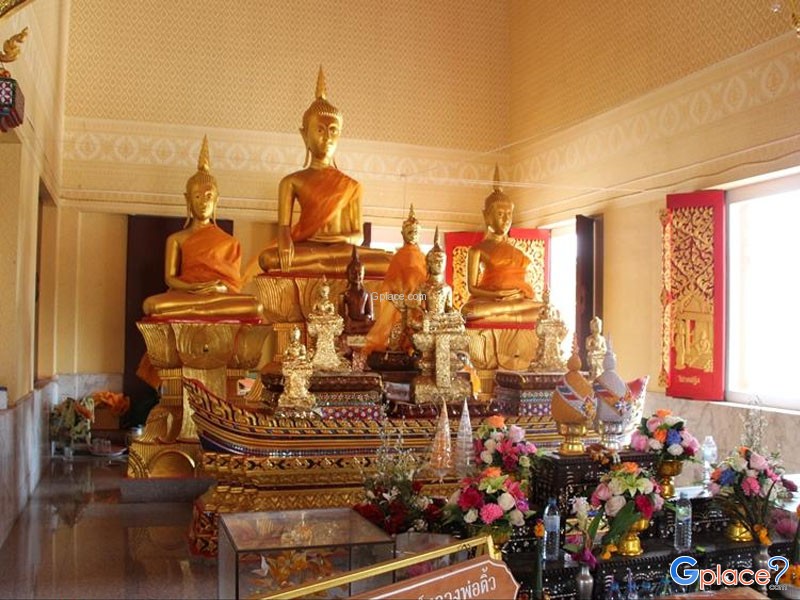
“A Buddha image in the posture of subduing Mara, entirely carved from Tiu wood, featuring beautiful Lan Xang artistic styles and serving as the center of a long-standing water procession tradition.”
Luang Pho Tiu is a Buddha image in the posture of subduing Mara with a very unique and rare identity, as it is carved from Tiu wood (also known as Taew wood in the local language), a hardwood considered auspicious. It is enshrined at Wat Hua Thanon in Hua Thanon Subdistrict, Phanat Nikhom District. According to history, Luang Pho Tiu was brought from Vientiane, Laos, by a group of Lao Vieng people who migrated and settled in this area during the early Rattanakosin period. Therefore, Luang Pho Tiu is not just a sacred Buddha image but also a symbol of maintaining cultural roots and the historical settlement of the community that remains strong to this day.
The artistic style of Luang Pho Tiu is beautiful, following the Lan Xang art tradition that emphasizes simplicity yet is filled with the power of faith. The image has a lap width_ of about 1 foot and a height_ of about 2 feet, carved from a single piece of Tiu wood and covered in shining gold leaf. Local people have great faith in His sanctity, especially in praying for seasonal rain, successful agriculture, and protection from all dangers. The faith in Luang Pho Tiu is deeply rooted in the way of life of the people in Hua Thanon Subdistrict and Phanat Nikhom District, becoming an inseparable part of their identity.
The key highlight that makes Wat Hua Thanon widely known is the Luang Pho Tiu Procession Tradition, held annually during the Songkran festival (on April 19th). Local residents jointly invite a replica of Luang Pho Tiu onto a boat and parade it along the canal so that people living by the water can participate in the bathing ceremony for prosperity. This tradition reflects a lifestyle connected to the water and the unity of the community. The atmosphere of the event is filled with smiles, local folk games, and people dressed in beautiful traditional fabrics, allowing visitors to feel the warmth and sincerity of the local people.
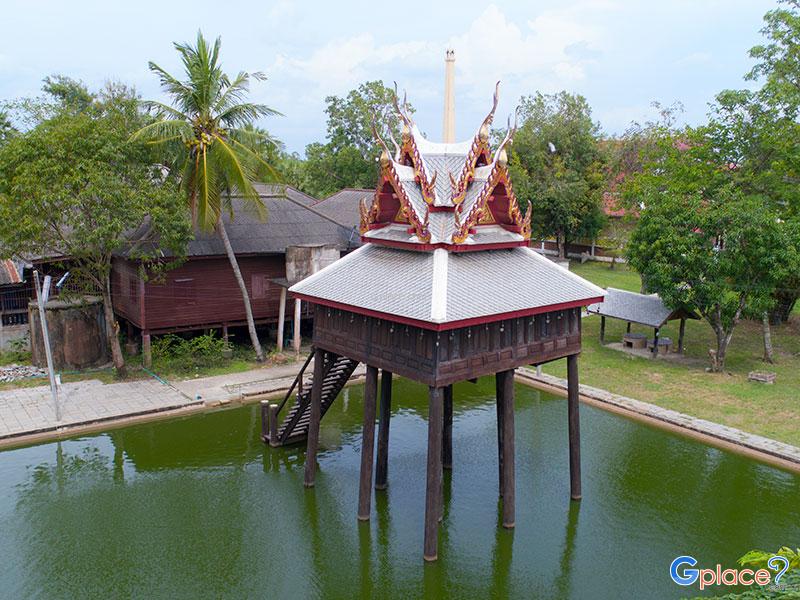
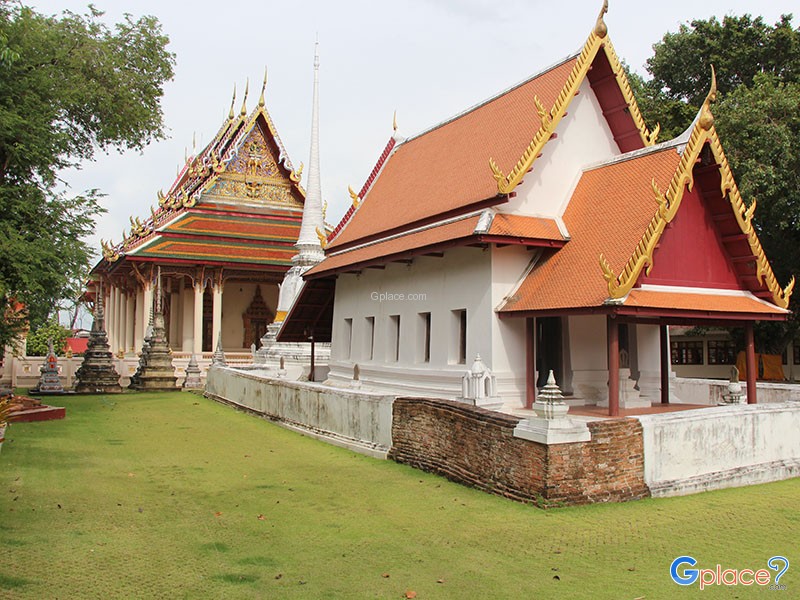
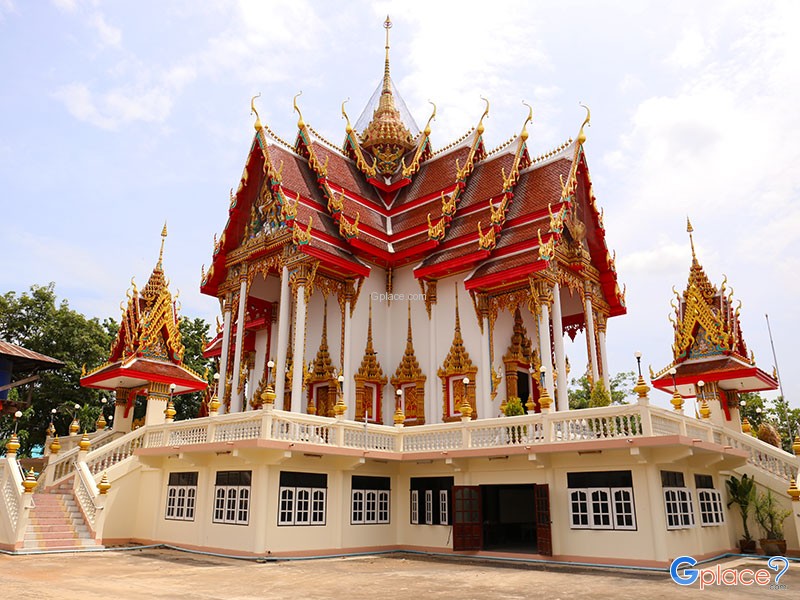
The atmosphere inside Wat Hua Thanon is quiet and shaded, suitable for those seeking true peace of mind and relaxation. The temple grounds are well-maintained, with designated areas for Buddhists to conveniently pay respect to Luang Pho Tiu inside the Vihara. For tourists who enjoy studying ethnology and local history, visiting here will allow you to see the cultural blend between Thailand and Laos through artworks and local practices, which is a charm not easily found in typical big-city tourist attractions.
We invite everyone to come and experience the merit and beauty of Luang Pho Tiu at Wat Hua Thanon. Paying respect to a carved wooden Buddha image with a history of over 200 years will provide you with positive energy and inspiration for life. Additionally, you will experience the beautiful friendship of the Hua Thanon villagers, which will make your journey even more meaningful. Wat Hua Thanon is a destination that perfectly combines sanctity, history, and community way of life that everyone should not miss visiting.
How to Get There
-
Private Car: From Phanat Nikhom District, take the route towards Hua Thanon Subdistrict (Highway 3284). Follow the signs to Wat Hua Thanon; the distance is not far from the heart of the city.
-
Public Transport: You can conveniently hire a motorized tricycle or a motorcycle taxi from the transport station in Phanat Nikhom District to the temple.
Travel Tips
-
Recommended Time: April 19th of every year to participate in the Luang Pho Tiu Procession and witness the local way of life.
-
Dress Code: Dress politely when entering the temple. During the festival, wearing traditional Thai fabrics or floral shirts is recommended.
-
Photography: You can take photos of Luang Pho Tiu in the Vihara, but please be respectful and do not use flash to preserve the gold leaf on the image.
-
Local Souvenirs: Stop by to buy fresh agricultural products and traditional Thai desserts sold by villagers around the temple.
-
Activities: Try walking around the village to see the remaining old wooden house architecture.
Admission Fee:
- No Admission Fee.
Opening Hours:
-
Open Daily: 08:00 AM – 05:00 PM
Luang Pho Tiu Buddha image

 Share
Share
 Hua Thanon Temple ,Hua Thanon Subdistrict , Phanat Nikhom District , Chonburi
Map
Hua Thanon Temple ,Hua Thanon Subdistrict , Phanat Nikhom District , Chonburi
Map
 Closed today
Mon8.00 - 17.00
Tue8.00 - 17.00
Wed8.00 - 17.00
Thu8.00 - 17.00
Fri8.00 - 17.00
Sat8.00 - 17.00
Sun8.00 - 17.00



 3123
3123