 Attractions
  Hotel
Hotel  Restaurant
  Shopping
  Abroad






“Pay homage to Phra That Doi Wiang, enshrining sacred Buddha relics; discover the legendary Phra Chao Dam Din and Phra Chao Sai Fon; and enjoy one of the most beautiful panoramic views over Mae Thi Reservoir.”
Wat Phra That Doi Wiang, formerly known as Wat Doi Wiang, is believed to have been established around 1220 BE (677 CE) during the reign of Queen Chamadevi. According to local chronicles, Khun Luang Palawicha built the temple as a monastery for a frontier town.
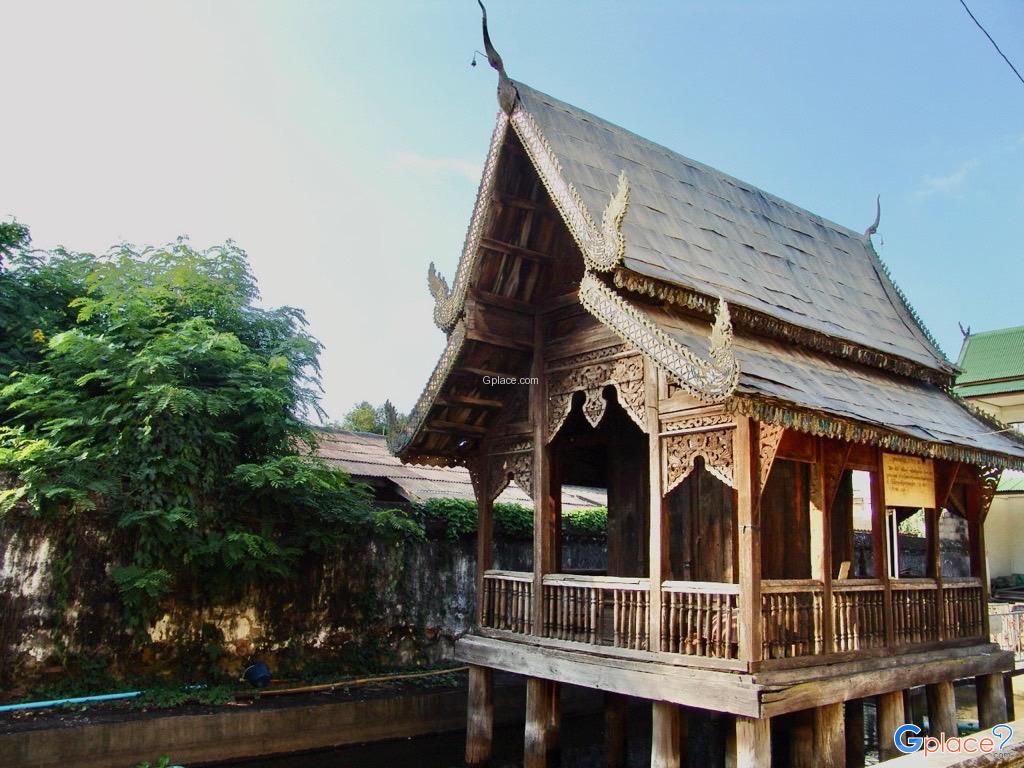
Although the temple was once damaged by wildfire, leaving only the chedi and a small pavilion, the faith of the Tai Lue community and Ban Thi villagers led to its restoration. Today, the hilltop enshrines a magnificent golden Lanna-style chedi, standing gracefully as a spiritual landmark.
Legendary Buddha Images
The temple houses three important Buddha images:
-
Phra Chao Sai Fon, a bronze Buddha in Mara-Vijaya posture (29-inch lap width_). Villagers believe that when it was paraded in a rain-calling ceremony during drought, rain would miraculously fall.
-
A large Buddha image (99-inch lap width_) enshrined in the sermon hall.
-
Phra Chao Dam Din, an ancient laterite Buddha (89-inch lap width_), originally discovered with only its head emerging from the ground. It has since been restored and is deeply revered by locals.
Panoramic Hilltop Viewpoint
Situated on a hilltop, the temple courtyard serves as an exceptional panoramic viewpoint overlooking Mae Thi Reservoir, surrounding mountain ranges, and lush green forests. During winter mornings, light mist often drifts across the chedi, creating a peaceful and mystical atmosphere.
Every year on the 8th waning moon of the 7th lunar month (Northern calendar month 9), the temple hosts the annual Relic Bathing Ceremony, the most important merit-making festival of the year, drawing devotees from nearby communities.
How to Get There
- By Car: From Lamphun town, drive toward Ban Thi district and follow signs to Mae Thi Reservoir. A clearly marked junction leads uphill to the temple. The concrete road has moderate slopes, but all vehicle types can reach the summit.
Travel Tips
-
Safe Drive: Use low gear when driving downhill and be cautious on narrow curves.
-
Respect: Dress modestly and keep noise levels low, as this is an active religious site.
-
Best Time: Winter mornings may offer light sea mist and cooler weather.
-
Golden Hour: Late afternoon sunlight beautifully reflects off the golden chedi.
-
Festival Time: Visit on the 8th waning moon of the 7th lunar month to join the annual relic bathing ceremony.
Admission Fee:
- Free admission
Opening Hours:
- Open daily: 07:00 AM – 06:00 PM
Wat Phra That Doi Wiang

 Share
Share
 Moo 9, Ban Doi Wiang, Ban Thi, Lamphun 51180
Map
Moo 9, Ban Doi Wiang, Ban Thi, Lamphun 51180
Map
 Closed today
Mon7.00 - 18.00
Tue7.00 - 18.00
Wed7.00 - 18.00
Thu7.00 - 18.00
Fri7.00 - 18.00
Sat7.00 - 18.00
Sun7.00 - 18.00



 50
50