 Attractions
  Hotel
Hotel  Restaurant
  Shopping
  Abroad





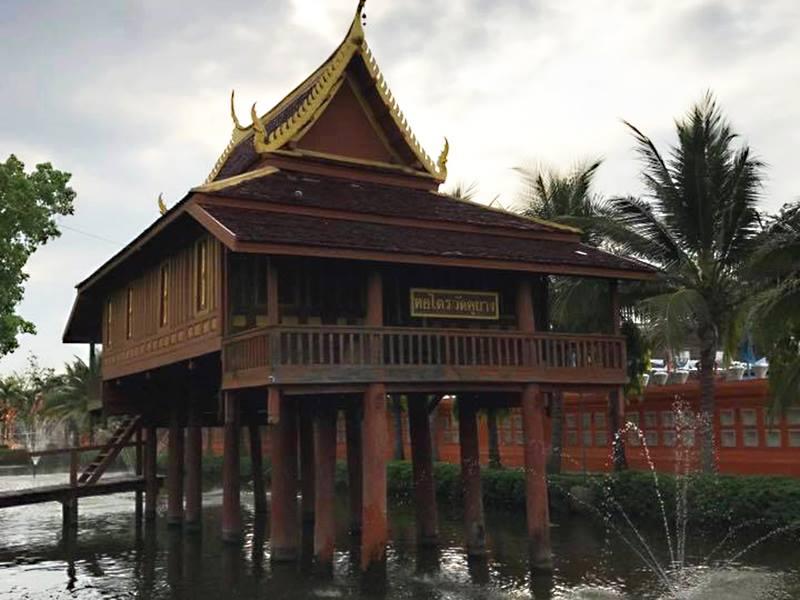

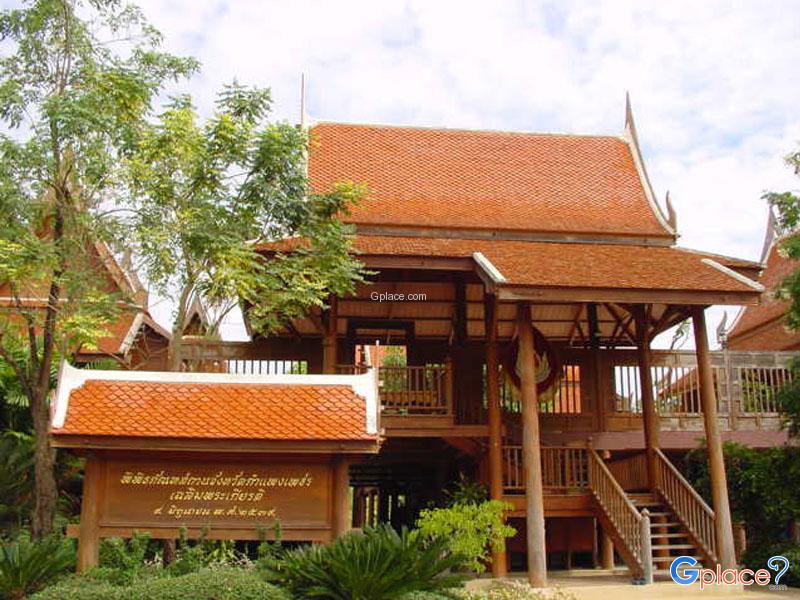
“The floating Ho Trai is built with traditional Thai wooden architecture, raised above a moat to protect Buddhist scriptures, and is historically significant as mentioned in King Rama V’s royal visit writings.”
Ho Trai Wat Khu Yang is one of the most important floating scripture halls in Kamphaeng Phet province, located within Wat Khu Yang, a third-class royal monastery. It has long served as the administrative center for the provincial Buddhist clergy, giving it a significant role in religion, education, and culture in Kamphaeng Phet. Wat Khu Yang is over 200 years old and houses a rich collection of antique artifacts and traditional architecture.
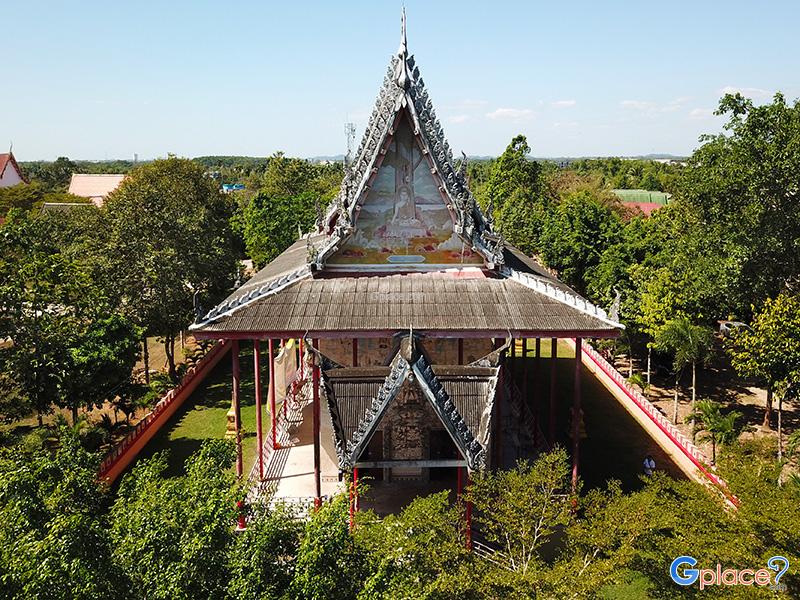
The Ho Trai is entirely made of wood in traditional Thai style, measuring 6 meters wide and 12 meters long, elevated on a high platform, and situated in the middle of a moat. This ancient design prevents termites, rodents, and insects from damaging the palm leaf scriptures, which require a dry and secure environment. The water-surrounded structure reflects generational knowledge of conserving sacred texts.
Its architecture represents early to mid-Rattanakosin artistry, featuring a gabled roof with elegantly carved chofah. Inside, the hall preserves significant artifacts, including gold-lacquered scripture cabinets, carved wooden scripture chests, and various palm leaf manuscripts such as Tripitaka, commentaries, and Vinaya texts, which are key sources of Northern Thai Buddhist knowledge. Some artifacts are only viewable from the exterior to protect their condition over time.
Over the decades, the Ho Trai has undergone careful restoration using traditional conservation methods, preserving original elements such as wooden pillars, floorboards, and the gabled roof. Maintaining a floating wooden structure like this is a rare and outstanding example of Buddhist architectural preservation in Kamphaeng Phet.
Additionally, Ho Trai Wat Khu Yang is historically significant as it was visited by King Rama V, recorded in his royal travel writings, making it a key destination for those interested in Thai history, ancient craftsmanship, and Buddhist architecture of the Rattanakosin era.
How to Get There
By Car:
- Take Highway 1 (Phahonyothin Road) towards Kamphaeng Phet city, then use GPS navigation to locate “Wat Khu Yang.” The temple has ample parking for visitors.
By Public Transport:
- From Kamphaeng Phet Bus Terminal, take a tuk-tuk or local songthaew to Wat Khu Yang. Travel time is just a few minutes.
Travel Tips
-
Explore other antiques in the temple, especially Phra Buddha Wachiraprakarn, the main Buddha image.
-
Observe the traditional wooden architecture of the floating Ho Trai, which is rare today.
-
History enthusiasts should read King Rama V’s royal travel writings to understand the hall’s significance.
-
Etiquette: As it is an active temple, visitors should dress modestly, maintain silence, and avoid touching or climbing the Ho Trai.
-
Best visiting time: Morning (08:00–10:00 AM) for soft light and a peaceful atmosphere for photography.
-
Photo spots: The bridge and surrounding moat provide excellent angles to capture the floating hall.
-
Small activities: Listen to historical explanations from staff or local experts and view palm leaf scriptures and antique artifacts inside the hall.
Admission Fee:
- Free – Ho Trai is within Wat Khu Yang (Royal Monastery), no entry fee required.
Opening Hours:
- Open daily
- 08:00 AM – 5:00 PM. (Midday is the most convenient time for visiting)
Ho Trai Wat Khu Yang

 Share
Share
 3 Kamphaeng Phet Rd, Soi 1, T. Nai Mueang, A. Mueang Kamphaeng Phet, Kamphaeng Phet 62000
Map
3 Kamphaeng Phet Rd, Soi 1, T. Nai Mueang, A. Mueang Kamphaeng Phet, Kamphaeng Phet 62000
Map
 No hours available

 https://www.thai-tour.com/thai-tour/north/kampaengpetch/data/place/hortri-watkooyang.html

 2991
2991