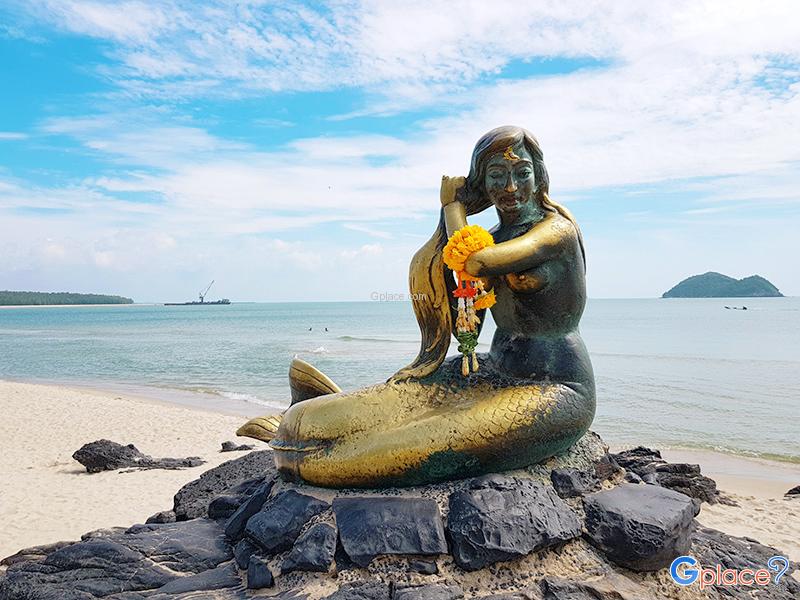
Khao Noi is a small hill located in the old town area of Songkhla, playing an important role in geography, history, and local lifestyle. The surrounding area connects to key attractions such as Samila Beach and Tang Kuan Hill, making it a central tourism hub of the city.
Geographically, Khao Noi is a low hill offering views of both sides of the city—the Gulf of Thailand and Songkhla Lake—making it a strategic viewpoint since the past, especially during the time when Songkhla was a major trading port.
At the summit stands the monument of Prince of Lopburi Rameswar, who played a significant role in the administrative and infrastructural development of southern Thailand. The monument is not only a place of respect but also reflects the historical relationship between central governance and the southern regions.
In terms of land use, Khao Noi has been developed into a semi-natural public park with a road leading to the top, accessible by both cars and motorcycles. The summit area features an open space with pavilions, seating areas, and tree-lined zones that help reduce heat, making it suitable for visits throughout the day.
“Seri Park,” located at the base of the hill, enhances its recreational function with landscaped greenery and decorative topiary, making it more popular among locals seeking relaxation than fast-paced tourists.
Another distinctive aspect is the monkey ecosystem living semi-naturally on the hill. These monkeys have adapted to human presence and become a unique identity of the area. However, feeding by visitors directly affects their behavior, leading to both familiarity and occasional aggression.
From a visitor experience perspective, Khao Noi is ideal in the early morning for a शांत and peaceful city view, or in the evening for sunset, especially from viewpoints facing the sea where reflections are most visible. At night, visitors can also enjoy the beautiful city lights of Songkhla.
Overall, Khao Noi is more than just a viewpoint—it is a place that integrates history, urban landscape, nature, and local lifestyle into one location, giving it both tourism and cultural significance.

 Attractions
  Hotel
Hotel  Restaurant
  Shopping
  Abroad







 Share
Share
 Bo Yang, Mueang Songkhla, Songkhla 90000
Map
Bo Yang, Mueang Songkhla, Songkhla 90000
Map
 Open now
 https://thai-tour.com/thai-tour/south/songkla/data/place/pic-khaonoi.htm

 2270
2270