
 Attractions
  Hotel
Hotel  Restaurant
  Shopping
  Abroad





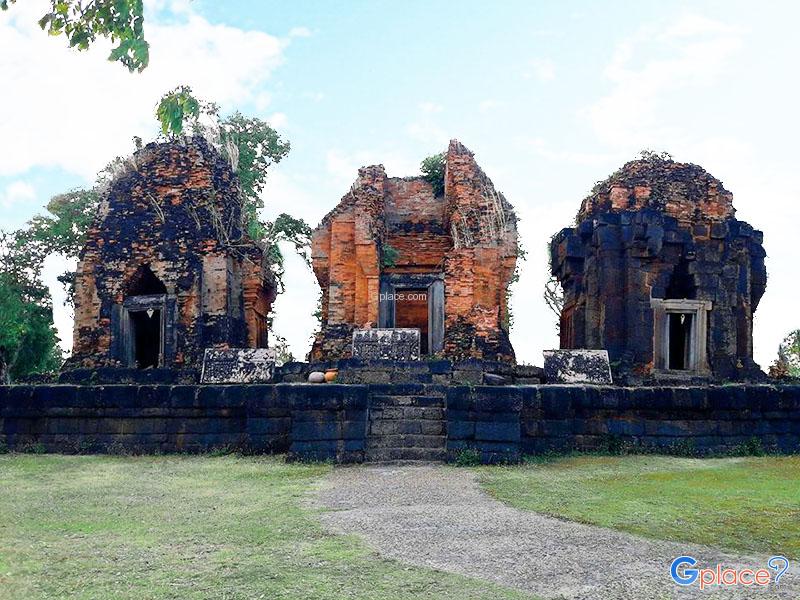

“ Admire the three principal prasats aligned on a large laterite base in a peaceful and shady atmosphere, surrounded by ancient Khmer artistic evidence such as lintels and stone carvings that still retain their beauty. ”
How to Get There
- By car: From Sisaket city, take Highway 220 (Sisaket–Khukhan) for about 10 km, then turn right onto Highway 2167 toward Prang Ku District. The total distance is approximately 70 km. The site is located near the district office.
Travel Tips
- Visit in the early morning or late afternoon for better lighting and cooler weather
- Avoid midday visits due to strong sunlight
- Dress modestly as it is an archaeological site
- Bring drinking water, a hat, or an umbrella for sun protection
- April is a great time to visit during the annual local festival with a lively atmosphere
Admission Fee:
- Free admission
Opening Hours:
- Open daily from 08:00 AM – 06:00 PM
Prasat Prang Ku

 Share
Share
 Ku, Prang Ku, Si Sa Ket, 33170
Map
Ku, Prang Ku, Si Sa Ket, 33170
Map
List 0 review
|
art & culture,Place of worship
 Open now : 8.00 - 18.00
Mon8.00 - 18.00
Tue8.00 - 18.00
Wed8.00 - 18.00
Thu8.00 - 18.00
Fri8.00 - 18.00
Sat8.00 - 18.00
Sun8.00 - 18.00

 https://www.thai-tour.com/thai-tour/northeast/srisakes/data/place/prasat-prangkoo.html

 2992
2992