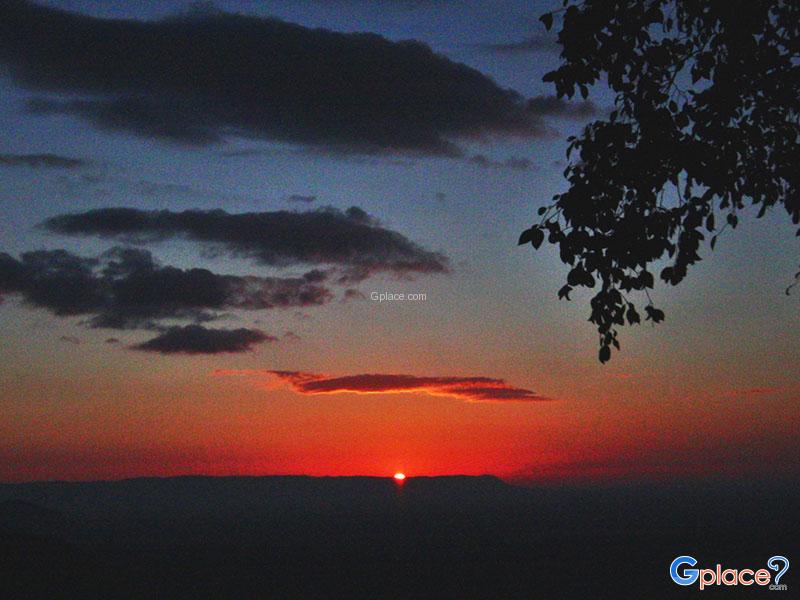
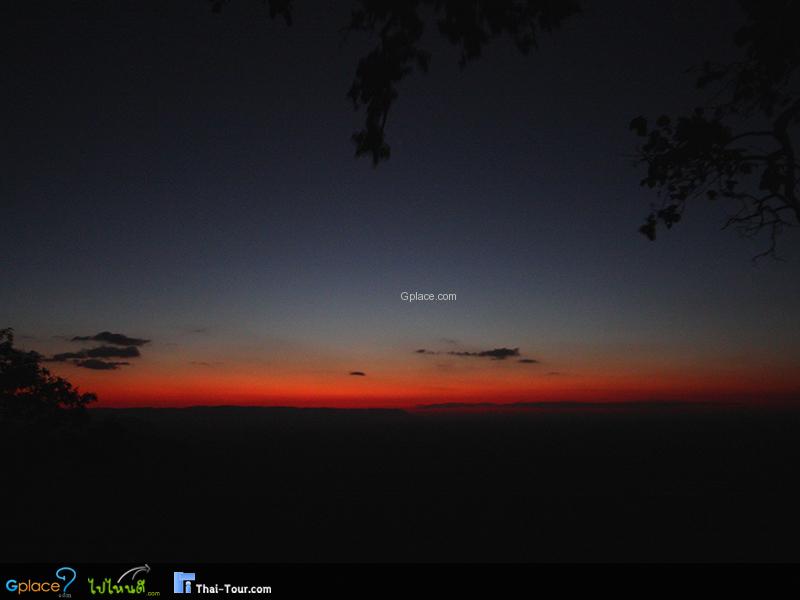
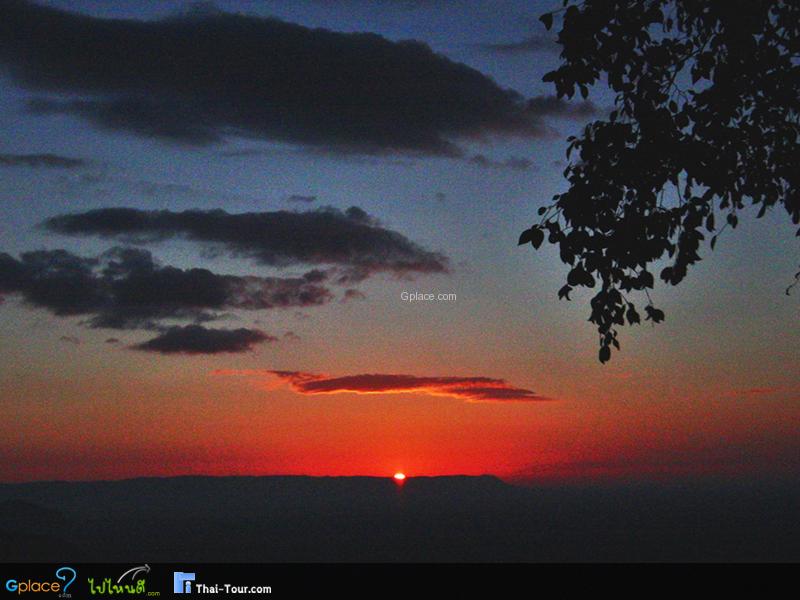
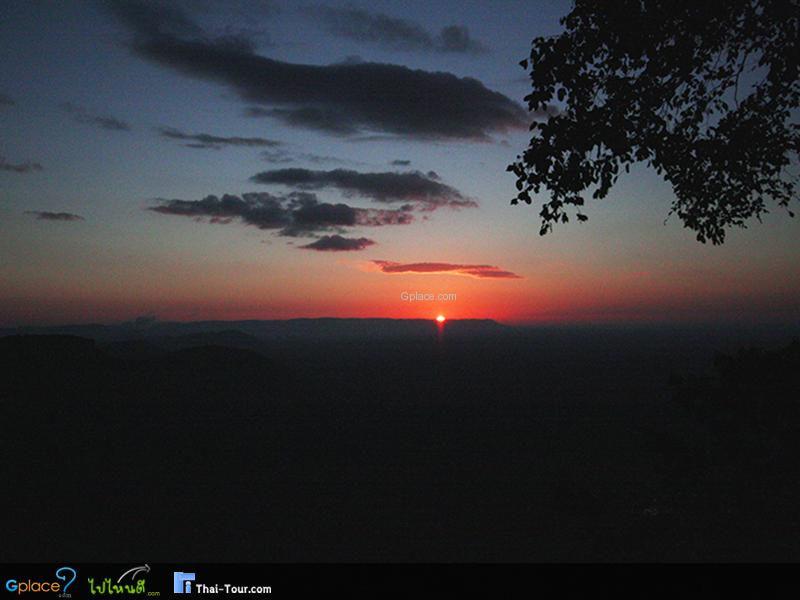
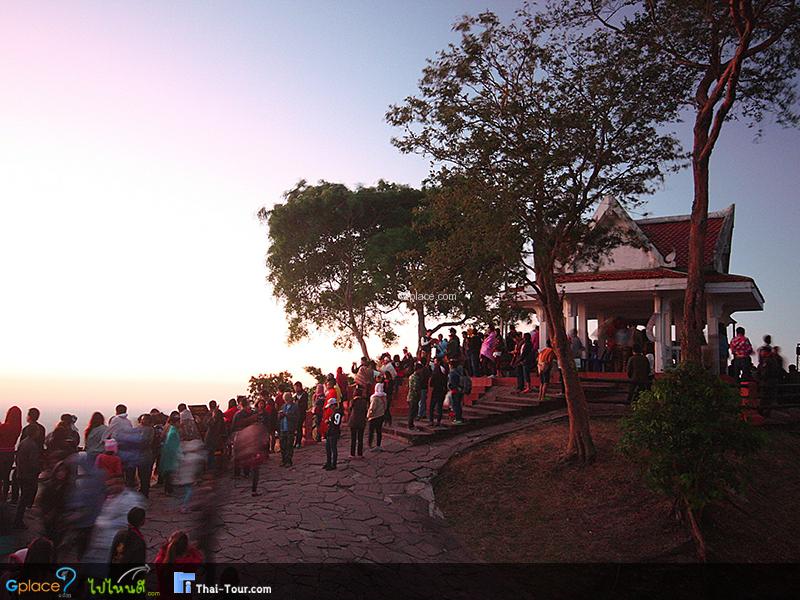
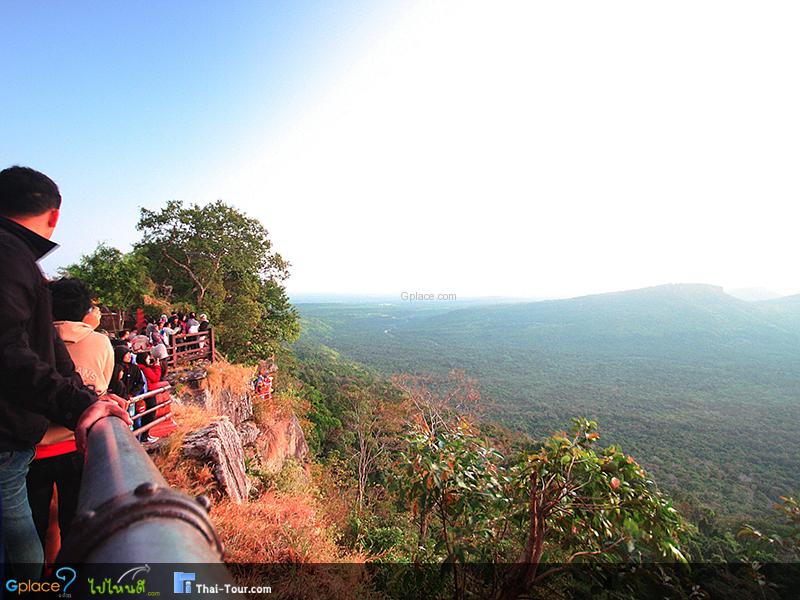
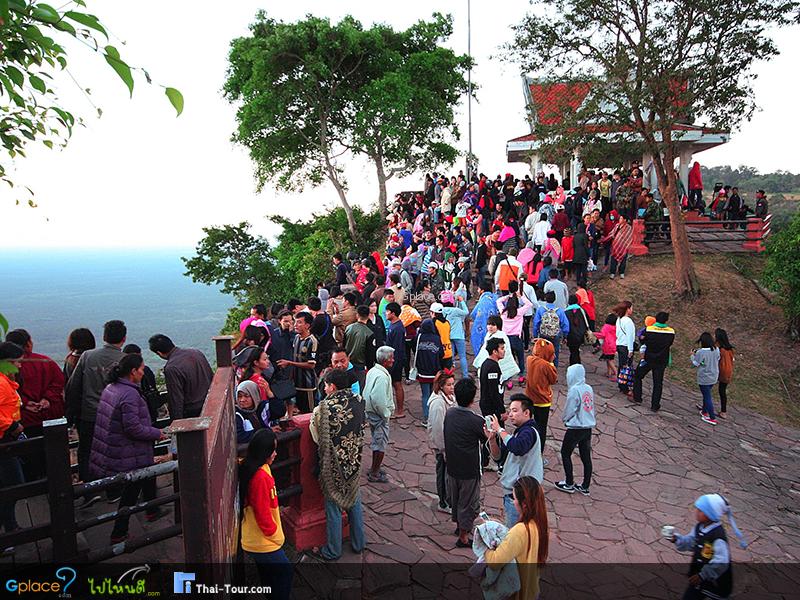
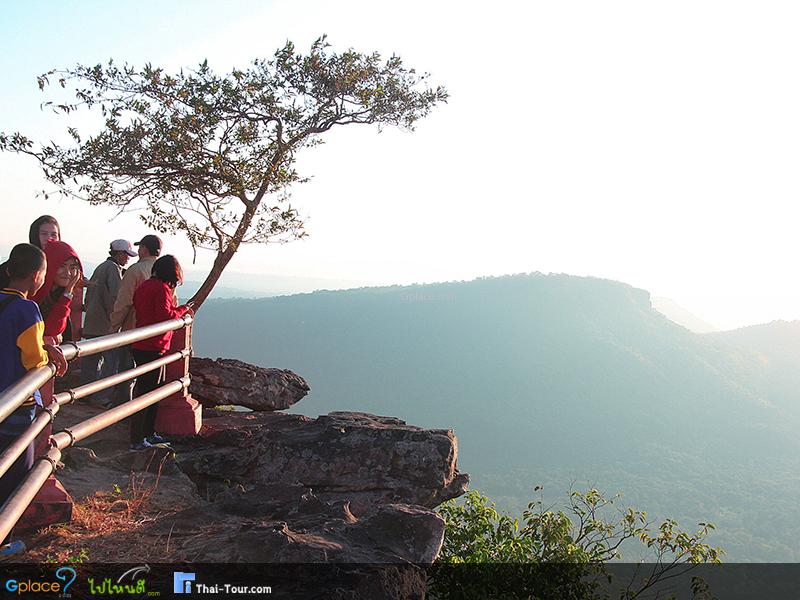
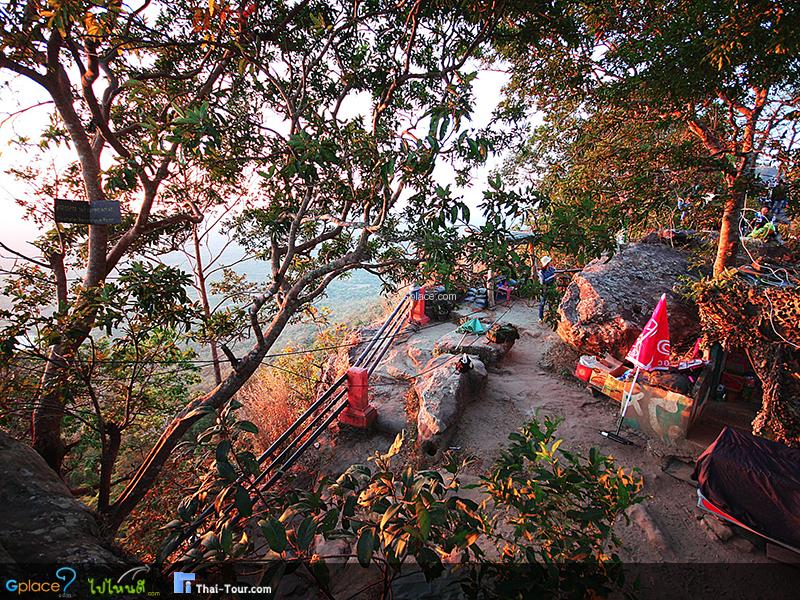
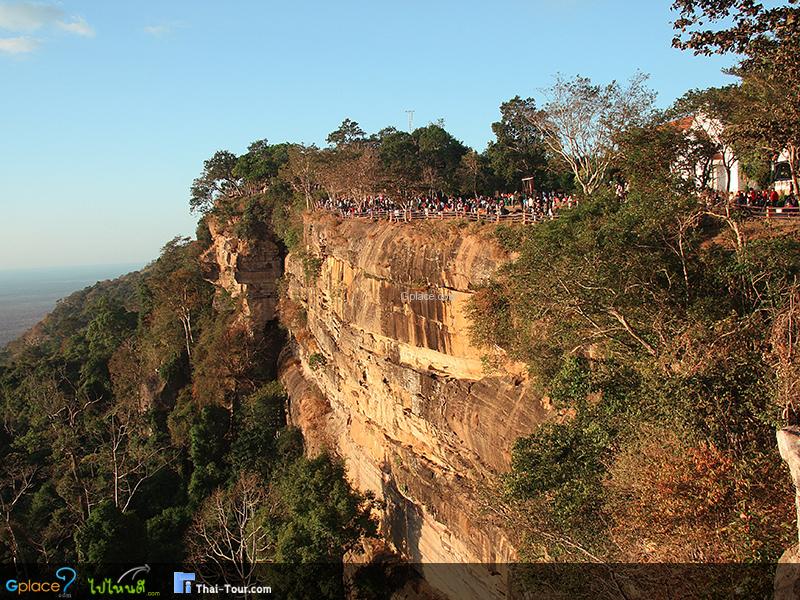
Pha Mo I Daeng is located within Khao Phra Wihan National Park in Kantharalak District, Sisaket Province, on the Phanom Dong Rak mountain range, which forms a natural border between Thailand and Cambodia. The area sits at an elevation of approximately 400–600 meters above sea level and features a long sandstone cliff stretching for several hundred meters. This landscape was formed through ancient tectonic uplift and millions of years of erosion by wind and rain, creating its dramatic cliff scenery. From the cliff edge, visitors can enjoy panoramic views of dense forests and rolling mountains on the Thai side, as well as parts of Cambodia and Preah Vihear Temple in the distance. The main viewpoint faces east, making it one of the most popular locations to watch the sunrise. In the early morning, sunlight gradually rises above the horizon while a sea of mist often blankets the valleys, especially during the rainy and cool seasons, creating a uniquely beautiful atmosphere.
Geologically, the area consists of sandstone from the Mesozoic era, which is both strong and naturally prone to erosion and layering. This characteristic makes it suitable for ancient carvings. Historically, the site was part of an important cultural and religious route, leaving behind significant archaeological evidence. Most notable are the bas-relief carvings on the cliff walls, dating back approximately 1,000–1,500 years (around the 10th–11th century), depicting Hindu deities such as Shiva, Uma, and Ganesha, reflecting the influence of ancient Khmer art in the region.In addition to the carvings, there are sandstone structures known as “twin stupas,” which are square-shaped stone monuments believed to have been used in religious ceremonies or as sacred symbols. Nearby areas also include caves and other archaeological sites such as Tham Khun Si, which are connected to ancient cultural routes and beliefs.
The surrounding ecosystem consists of dry evergreen forest and mixed deciduous forest, which remain relatively rich in biodiversity. Native vegetation includes species such as teak, dipterocarp, and other hardwood trees. Wildlife includes various bird species, monkeys, and small reptiles living naturally in the area. The climate on the cliff is generally cooler than the lowlands throughout the year. During the rainy season, humidity is high and mist is frequent, while the cool season offers clear skies and the best long-distance views.A wooden nature trail has been constructed along the cliff to allow safe access to viewpoints and historical sites. The path includes rest areas and informational signs about nature and history along the way. Visitors are advised to exercise caution, as some sections are close to steep cliffs and may be exposed to strong winds.

 Attractions
  Hotel
Hotel  Restaurant
  Shopping
  Abroad







 Share
Share
 Sao Thong Chai, Kantharalak, Sisaket 33110
Map
Sao Thong Chai, Kantharalak, Sisaket 33110
Map
 Open now : 5.00 - 18.30



 53
53