 Attractions
  Hotel
Hotel  Restaurant
  Shopping
  Abroad






“Admire the magnificent cluster of throne halls built during the Ayutthaya and Rattanakosin periods, reflecting the golden age of diplomacy and cultural exchange between Siam and the West.”
Throne Halls and Buildings in King Narai's Palace, commonly known by local residents as “Wang Sam Sahai” (the Palace of Three Friends), is a royal palace commissioned by King Narai the Great in 1666. It was built to serve as a secondary capital and an administrative center during the late Ayutthaya period. The construction involved collaboration with French and Italian architects and engineers, giving the palace a distinctive identity through the fusion of traditional Thai architecture with Western influences, reflecting the close diplomatic relations between Siam and Western nations at that time.
One of the most remarkable architectural features of the palace is the use of pointed arch doors and windows in the Gothic style, along with palace walls designed with thousands of niches for oil lamps. These lamps once illuminated the complex at night, emphasizing the grandeur and prosperity of the royal court. Such elements demonstrate King Narai’s forward-looking vision in embracing foreign knowledge while preserving Thai cultural identity.
Within the Middle Court stands Chanthara Phisan Throne Hall, a traditional Thai-style building reconstructed on its original foundations during the reign of King Mongkut (Rama IV). It serves as an assembly hall and an exhibition space presenting stories from the reign of King Narai the Great. Nearby is Phiman Mongkut Throne Hall, a group of three-story buildings combining Chinese and Western architectural styles, also built during the same period. Originally used as a royal residence, it now functions as the main building of the National Museum, King Narai Ratchaniwet.
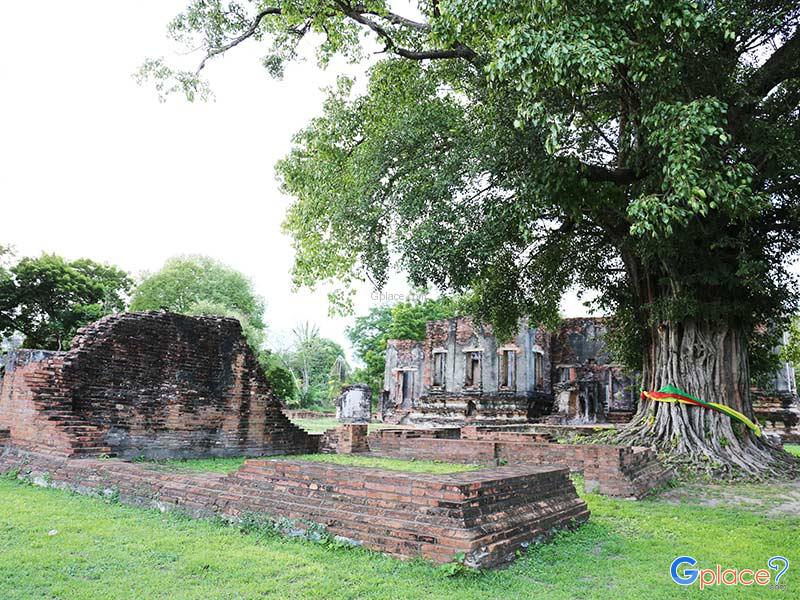
In the Inner Court lies Sutthasawan Throne Hall, which was King Narai’s private residence and the place where he passed away. Although only parts of its foundations and walls remain today, the site still conveys the former magnificence and refined craftsmanship of the palace. Close by is Dusit Sawan Thanya Maha Prasat Throne Hall, which served as the royal audience hall for welcoming foreign envoys. Its design includes a central royal window through which the king could formally appear to receive guests, highlighting Siam’s prominent role in international diplomacy.
For tourists, students, and art enthusiasts, the palace’s appeal is further enhanced by the museum exhibitions, which cover historical development from prehistoric cultures of the Chao Phraya River basin to art of the Rattanakosin period. Important artifacts, such as sandstone lintels and Lopburi-style (Khmer-influenced) Buddha images, are carefully displayed within well-preserved historic buildings. Walking through each section feels like a journey through time, revealing the evolution of Siam across different eras.
King Narai Ratchaniwet Palace is therefore not merely an archaeological site, but a living historical space that reflects past prosperity, international friendship, and Thai architectural wisdom. Visitors are warmly invited to retrace the glorious pages of history through its valuable throne halls and ancient buildings, where every stone and wall tells a story of Siam’s greatness, waiting to be experienced firsthand.
How to Get There
Private Car:
- Enter Lopburi city via Phahonyothin Road toward the old town. The palace is located in the heart of the city on Sorasak Road, near San Phra Kan and the railway station.
Train:
- Get off at Lopburi Railway Station and walk along Sorasak Road for only 5-10 minutes to reach the palace entrance.
Public Van:
- Take a Bangkok-Lopburi van, get off at the city terminal, and take a local minibus or walk to the museum.
Travel Tips
Best Time:
- The museum is open Wednesday–Sunday (closed Mon–Tue). Arriving at 09:00 AM is recommended to avoid the heat while exploring the 41-acre complex.
Dress Code:
- As it is a significant historical site and national museum, please dress politely and modestly.
Photography:
- Photography of the exterior buildings is permitted. However, some indoor exhibition zones may restrict flash or prohibit photography entirely.
Group Visits:
- For a guided tour, contact the museum staff in advance at 036-411458.
Monkeys:
- Be mindful of monkeys when walking from the train station or San Phra Kan to the palace gate (though they rarely enter the palace grounds).
Admission Fee
-
Thai visitors: 30 THB
-
Foreign visitors: 150 THB
-
(Free for students in uniform and monks/novices)
Opening Hours
-
Historical Grounds (Exterior): 07:30 – 17:30 (Daily)
-
Museum Buildings (Interior): 09:00 – 16:00 (Wed – Sun)
Throne Halls and Buildings in King Narai s Palace

 Share
Share
 King Narai's Palace, Sorasak Road, Tha Hin, Mueang Lopburi, Lopburi, Thailand
Map
King Narai's Palace, Sorasak Road, Tha Hin, Mueang Lopburi, Lopburi, Thailand
Map
 Open now : 7.30 - 17.30
Mon7.30 - 17.30
Tue7.30 - 17.30
Wed7.30 - 17.30
Thu7.30 - 17.30
Fri7.30 - 17.30
Sat7.30 - 17.30
Sun7.30 - 17.30



 1688
1688