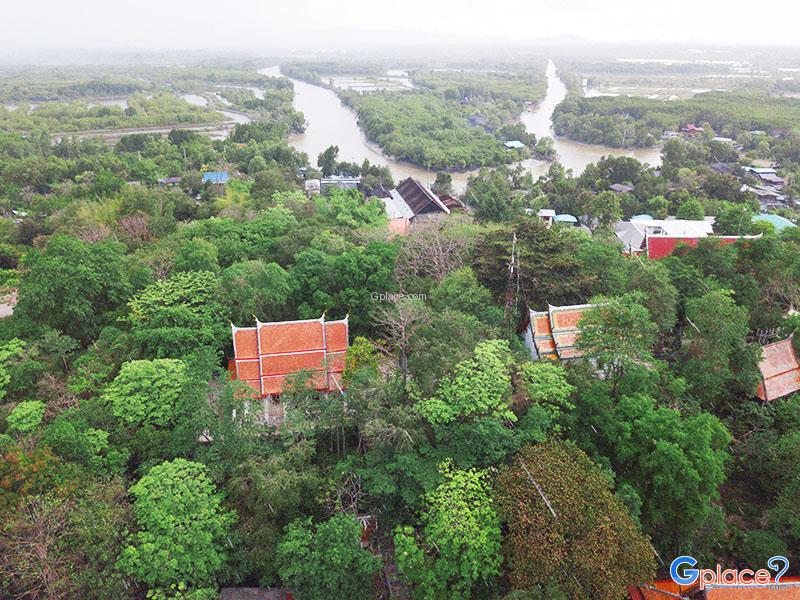
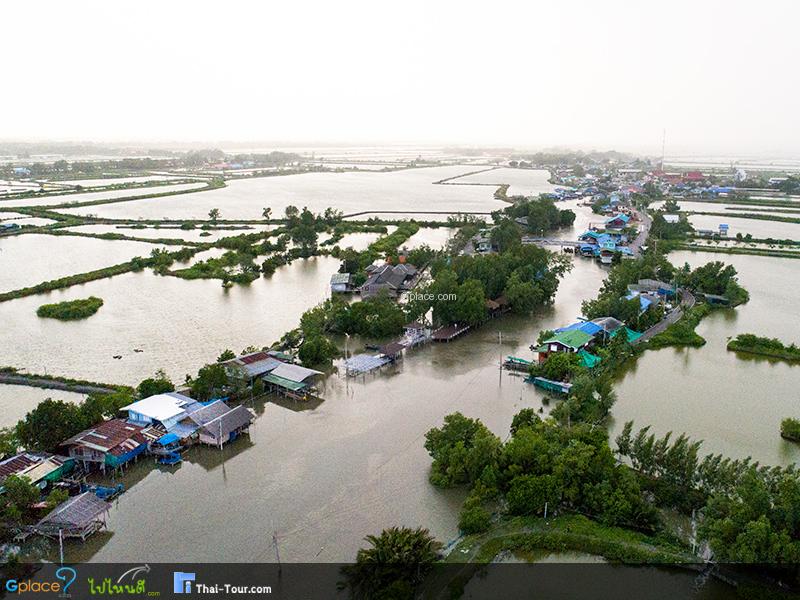
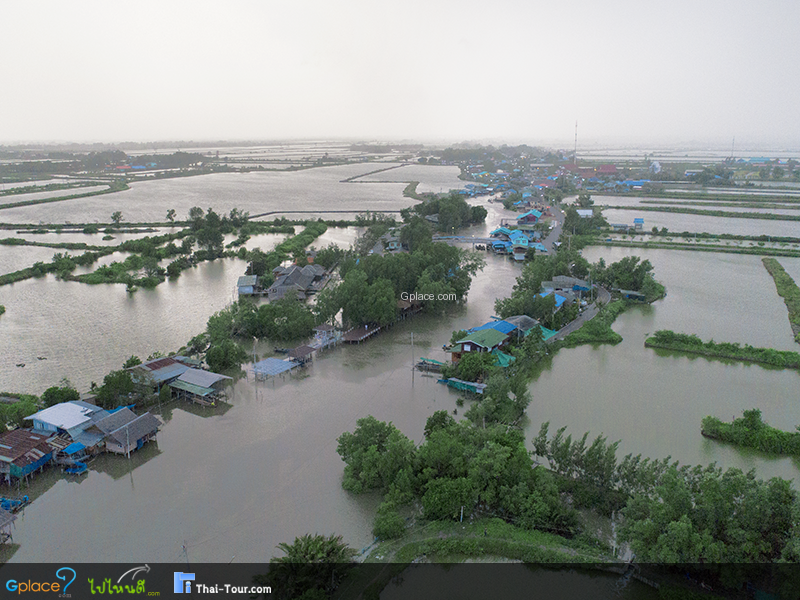
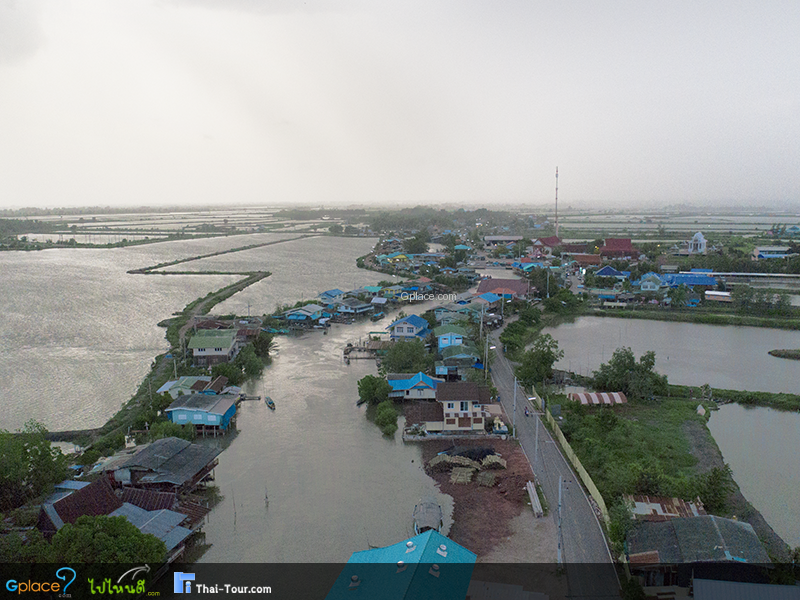
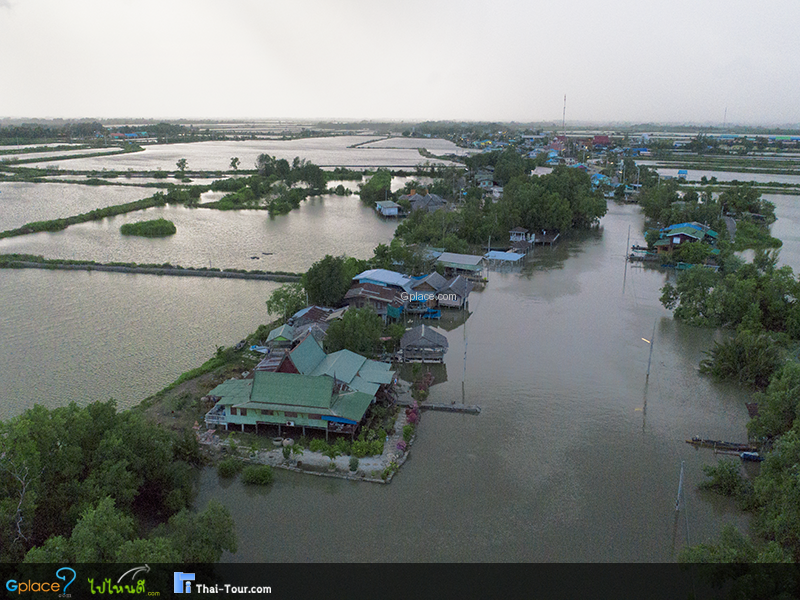
Khlong Khon is a coastal community located at the mouth of the Mae Klong River, where freshwater and seawater meet. This unique geographic condition has created a highly rich mangrove ecosystem with very high biodiversity.Originally, the area was a traditional fishing village where local people have lived in close connection with the sea for generations. Their livelihoods depended on natural resources such as catching mud crabs, collecting cockles and mussels, and seasonal fishing based on tidal cycles.Khlong Khon is a coastal community located at the mouth of the Mae Klong River, where freshwater and seawater meet. This unique geographic condition has created a highly rich mangrove ecosystem with very high biodiversity.
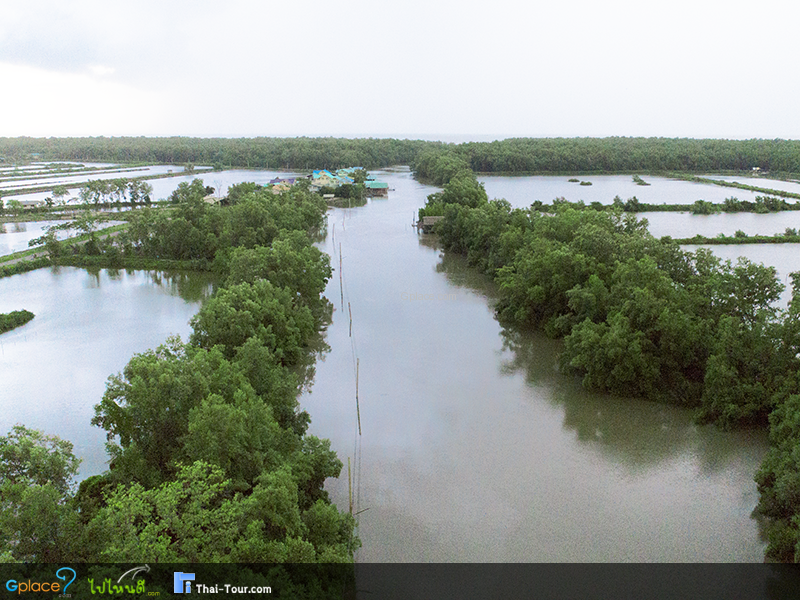
Originally, the area was a traditional fishing village where local people have lived in close connection with the sea for generations. Their livelihoods depended on natural resources such as catching mud crabs, collecting cockles and mussels, and seasonal fishing based on tidal cycles.At one point, the area suffered from mangrove degradation due to intensive resource use and deforestation. This led to an ecological imbalance, a decline in marine life, and direct impacts on the local way of life.Later, the community worked together to restore the mangrove forest through continuous replanting of mangrove species such as Rhizophora (mangroves), Avicennia, and other coastal plants. Over time, the ecosystem gradually recovered and became a model for environmental conservation.
The mangrove ecosystem in Khlong Khon consists of diverse species that function as nursery grounds for juvenile marine animals, helping restore balance in the coastal food chain. In addition, mangroves play an important role in preventing coastal erosion, reducing wave energy, and filtering organic matter before water flows into the open sea, improving overall water quality.The area also acts as a natural carbon sink, helping reduce the impacts of climate change, making it important both locally and nationally in environmental terms.
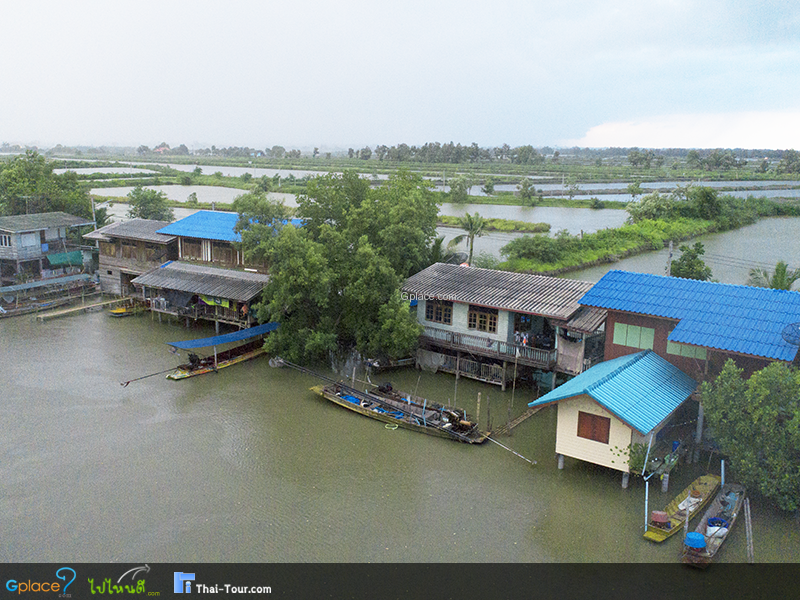
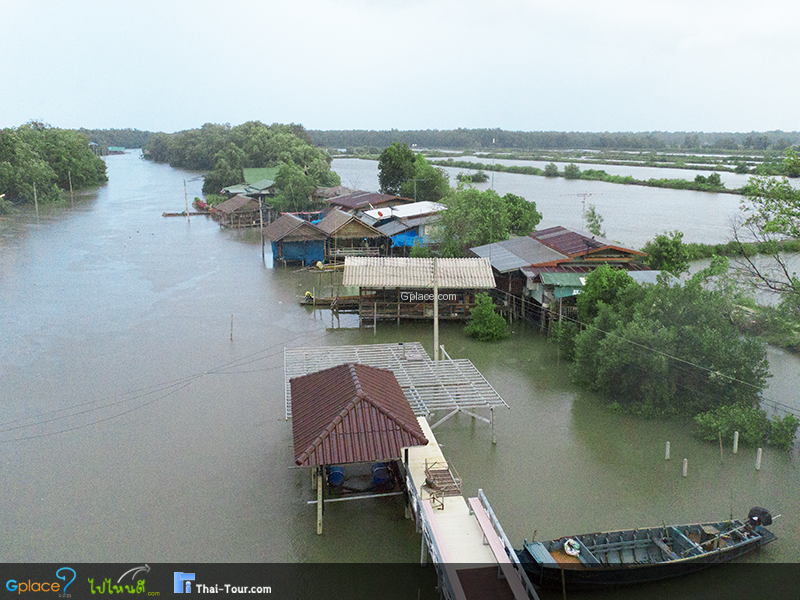
The local lifestyle remains strongly traditional. People still engage in small-scale fisheries such as catching cockles during low tide and farming mussels in floating shellfish rafts. One of the most distinctive local practices is the use of “mud sleds,” a traditional tool used to glide across mudflats to collect cockles, reflecting a deep connection between humans and nature.Visitors to Khlong Khon can participate in real mangrove planting activities by planting young mangrove trees directly into the muddy soil, offering a hands-on experience in ecosystem restoration.Mangrove boat tours are one of the main highlights, allowing visitors to see the overall landscape of lush mangrove forests, floating shellfish farms, and the everyday life of local fishermen still actively living along the waterways.During the boat trip, it is also possible to observe various marine animals and coastal birds, reflecting the strong recovery and health of the ecosystem.Mud sledding activities provide a rare cultural experience, requiring physical effort and skill to move across mudflats while learning traditional cockle harvesting methods from local fishermen.
Wild macaques can also be found living naturally in the mangrove forest, contributing to the area’s biodiversity and indicating a well-balanced ecosystem.Local cuisine in Khlong Khon is known for its freshness and seafood richness, including steamed mud crab, boiled cockles, sour curry with sea blite, and Mae Klong mackerel, all reflecting the authentic flavors of the coastal community.Homestays in the area are designed to blend with nature, often built as wooden houses along canals or mangrove edges, allowing visitors to experience a simple and peaceful local lifestyle.Overall, Khlong Khon is not only a tourist destination but also a living learning center for environmental conservation, culture, and traditional coastal livelihoods, representing a balanced and sustainable relationship between humans and nature.

 Attractions
  Hotel
Hotel  Restaurant
  Shopping
  Abroad







 Share
Share
 Khlong Khon, Mueang Samut Songkhram , Samut Songkhram 75000
Map
Khlong Khon, Mueang Samut Songkhram , Samut Songkhram 75000
Map
 Open now : 8.00 - 17.00



 1616
1616