 Attractions
  Hotel
Hotel  Restaurant
  Shopping
  Abroad





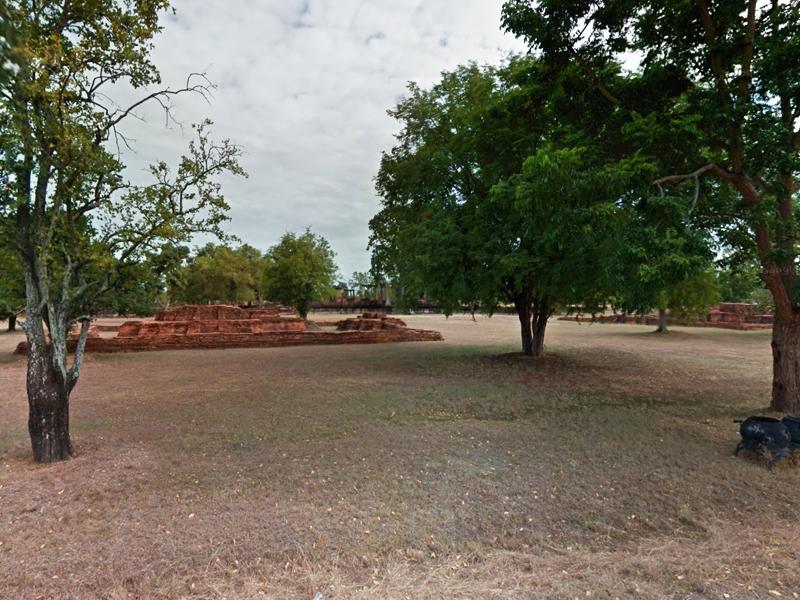

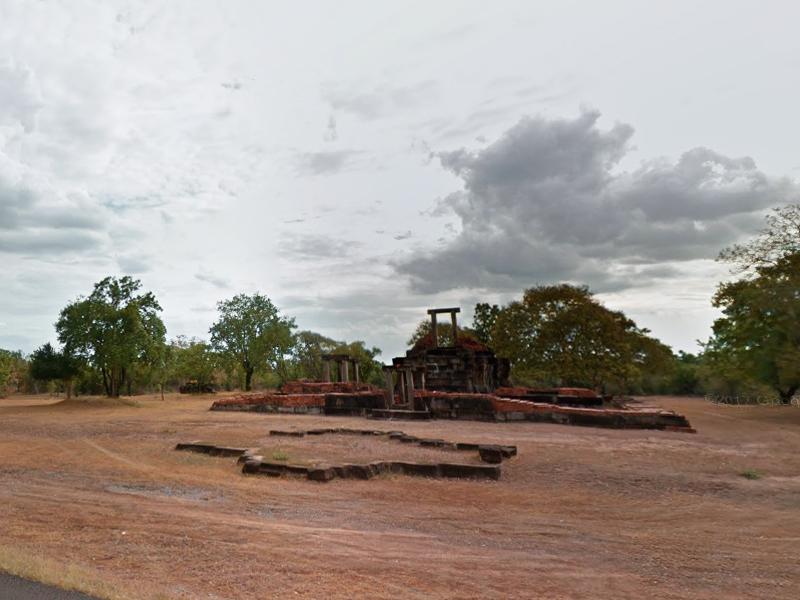
“Prasat Muang Khaek is a large and important ancient site in Nakhon Ratchasima Province. Although only the foundations of the building remain, it is notable for its Khmer architecture and art, reflecting the city's past prosperity.”
Prasat Muang Khaek was constructed during the latter half of the 15th Buddhist century (approximately 1450–1550 AD), placing it within the Khmer art style of Koh Ker. This era was significant as the capital of the Khmer Empire had temporarily shifted to the city of Koh Ker, rather than its traditional location at Yasodharapura (Angkor Thom). This reflects the influence emanating from the temporary seat of power during that time. The discovery of an inscription dating to 1514 AD further solidifies the link between this ancient site and a crucial period in Khmer history.
The layout of Prasat Muang Khaek is unique and notable. It features a main structural axis oriented north–south, with the principal structures facing north. This orientation differs significantly from most Khmer temples, which typically face east or west. The main complex consists of the Prasat Prathan (main sanctuary) situated in the innermost section, constructed from sandstone and brick. It is flanked by two Bannalai (libraries) and enclosed by a Gopura (gateway) and an inner gallery/wall. This entire enclosure is surrounded by an outer wall. To the north (front) of the temple are two large, outer buildings facing each other.
Key architectural evidence includes the discovery of a lintel fragment carved with a deity seated in a niche above a Kala (monster face), displaying intricate and delicate artistry similar to the Banteay Srei style. This demonstrates the sophisticated carving techniques of the craftsmen of that period. Although most of the temple buildings have collapsed, leaving behind only the foundation and piles of brick, all archaeological evidence suggests that Prasat Muang Khaek was not just a minor religious structure but a significant city-level temple. It served as the spiritual and ceremonial center for the High Noen–Korat community in the past. Furthermore, a large moat system surrounding the temple was found, a characteristic feature of Khmer temple construction that often symbolizes Mount Meru (the temple) surrounded by the ocean (the moat).
The location of Prasat Muang Khaek near the ancient trade routes connecting the Khmer Empire with Thailand's Northeastern region (Isaan) further highlights the city's strategic and economic importance. It likely functioned as a major rest stop or control point for communication and trade during the 10th to 12th centuries. The influx of Khmer culture, therefore, involved not just religious influence but also the application of complex stone construction technology and urban planning. Currently, the Fine Arts Department has excavated, conserved, and maintained Prasat Muang Khaek as an important site for historical and archaeological study in Thailand.
How to Get There
- Private car: From Bangkok, take Mittraphap Road (Highway No. 2) towards Nakhon Ratchasima Province. About 32 kilometers before reaching Korat City, turn into Sung Noen District (Mittraphap Road, Highway No. 2161). About 2.7 kilometers, you will reach the intersection near Wat Yan Sophitwanaram (Wat Pa Sung Noen). Turn right and go straight for about 3 kilometers, passing Prasat Non Ku for another 500 meters, and you will reach Prasat Mueang Khaek.
Travel Tips
-
It's best to visit in the morning or evening, as the area is open and the heat can be intense during the day.
-
While only the foundation remains, it's worth imagining its former grandeur and studying the information signs installed by the Fine Arts Department.
-
It's best to plan your visit alongside the nearby Prasat Non Ku for a comprehensive overview of the archaeological site in the high-lying area.
Admission Fees:
-
Thais: 10 baht
-
Foreigners: 50 baht
Opening Hours:
- General opening and closing hours of historical sites under the care of the Fine Arts Department are 8:00 a.m.–4:30 p.m. (Please check the latest opening hours before traveling.)
Prasat Muang Khaek

 Share
Share
 Korat Subdistrict, Sung Noen District, Nakhon Ratchasima 30170
Map
Korat Subdistrict, Sung Noen District, Nakhon Ratchasima 30170
Map
 Open now : 8.00 - 16.30
Mon8.00 - 16.30
Tue8.00 - 16.30
Wed8.00 - 16.30
Thu8.00 - 16.30
Fri8.00 - 16.30
Sat8.00 - 16.30
Sun8.00 - 16.30



 262
262