 Attractions
  Hotel
Hotel  Restaurant
  Shopping
  Abroad





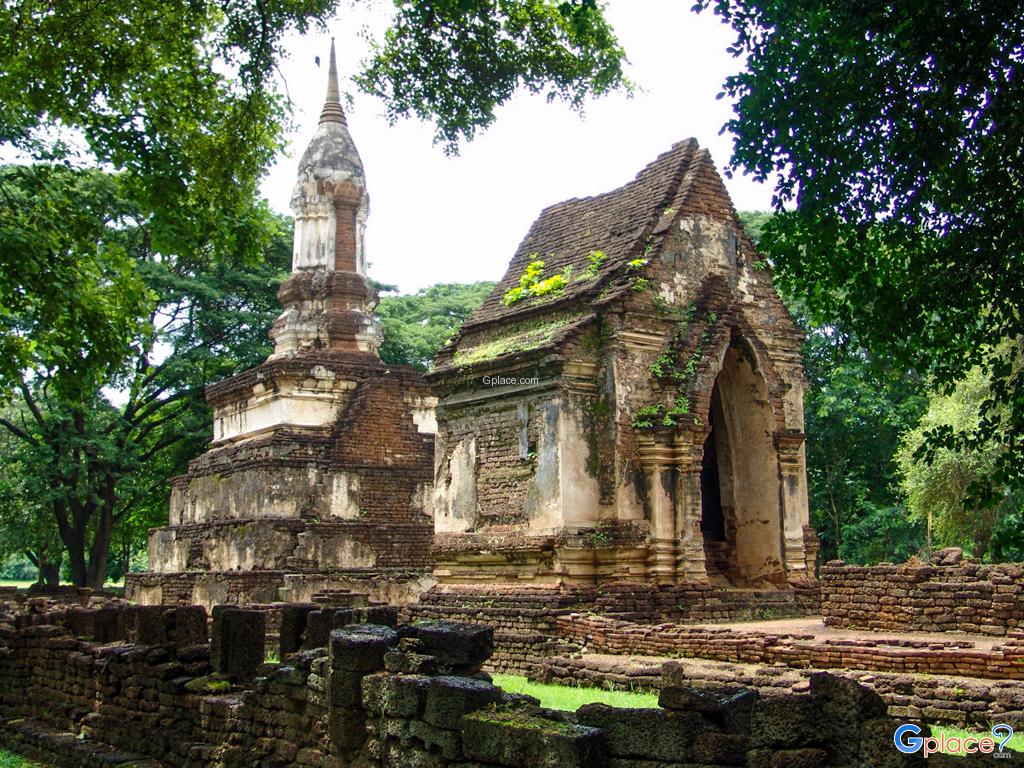



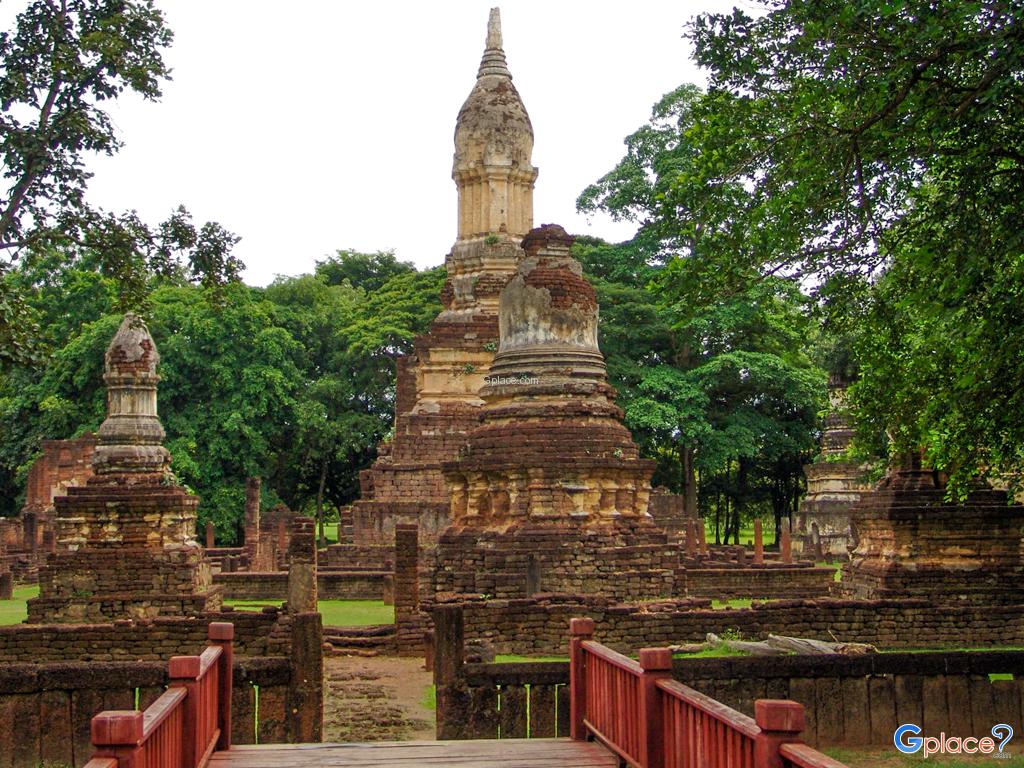
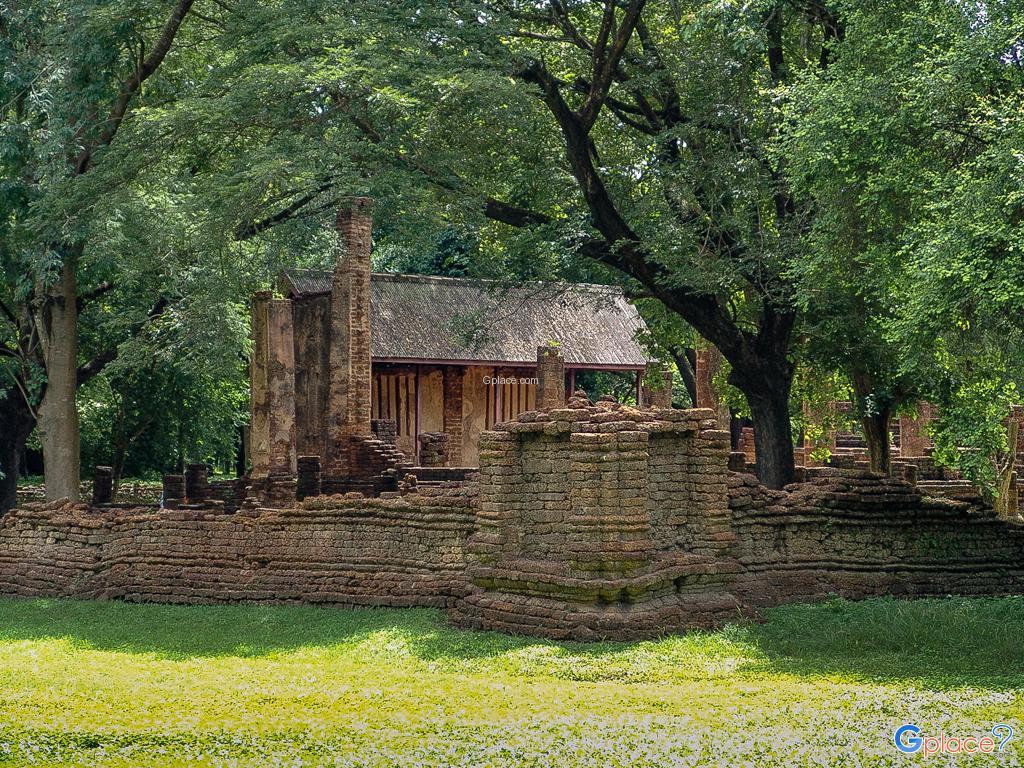
“Admire a small lotus-bud chedi, a laterite mondop with a stucco Buddha, and a pathway linking Wat Chedi Chet Thaeo, all set in a peaceful, shaded environment.”
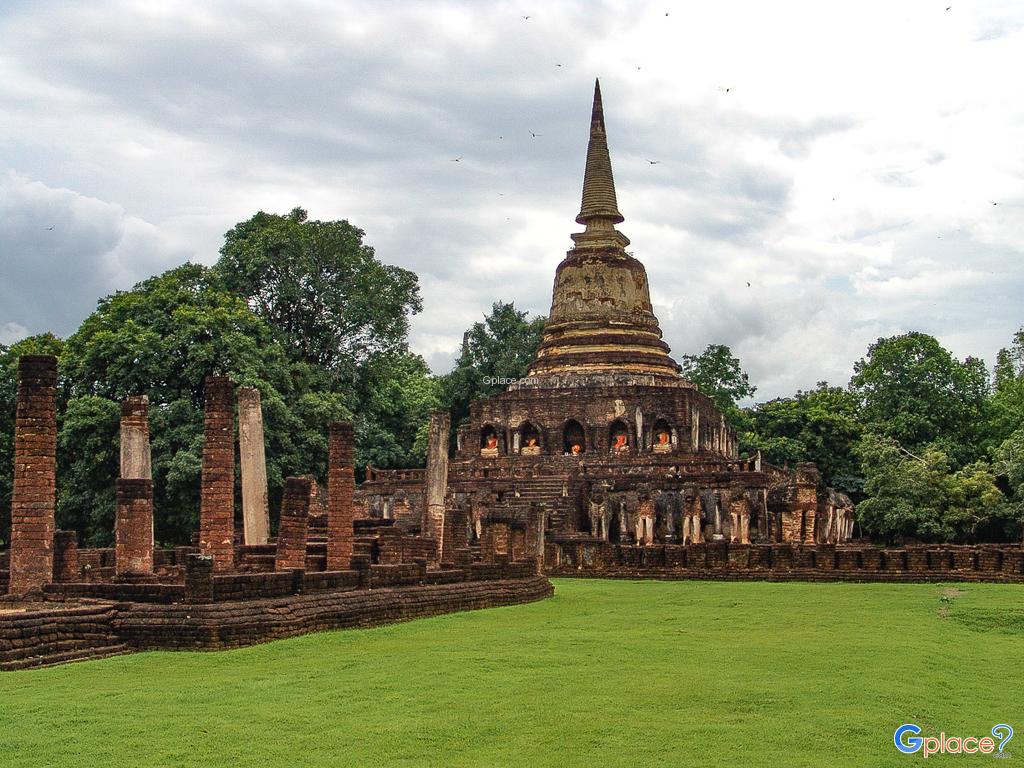
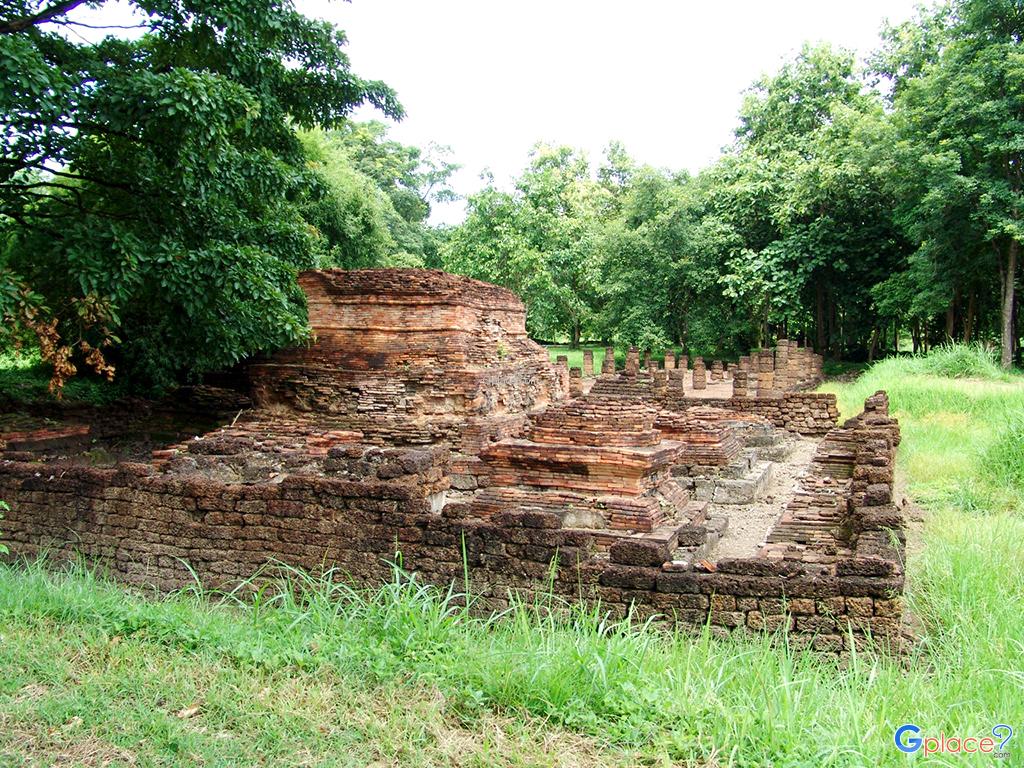
Wat Suan Kaeo Utthayan Noi (Wat Suan Kaeo Utthayan Noi) is a small temple constructed entirely of laterite, following the architectural style of Si Satchanalai. It is located about 200 meters southeast of Wat Chang Lom and oriented toward the southeast, reflecting auspicious directional beliefs in Buddhism. The complex is enclosed by a sacred boundary wall (Kamphaeng Kaew) with entrances at both the front and rear, clearly defining the religious space.
Architectural Layout and Components:
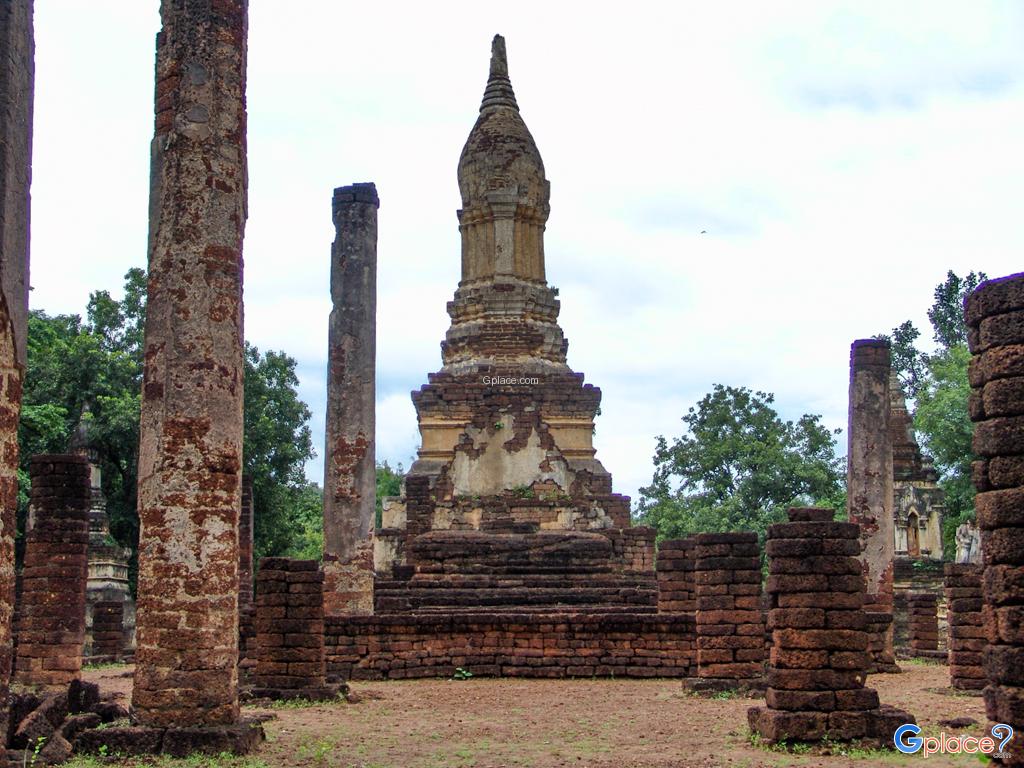
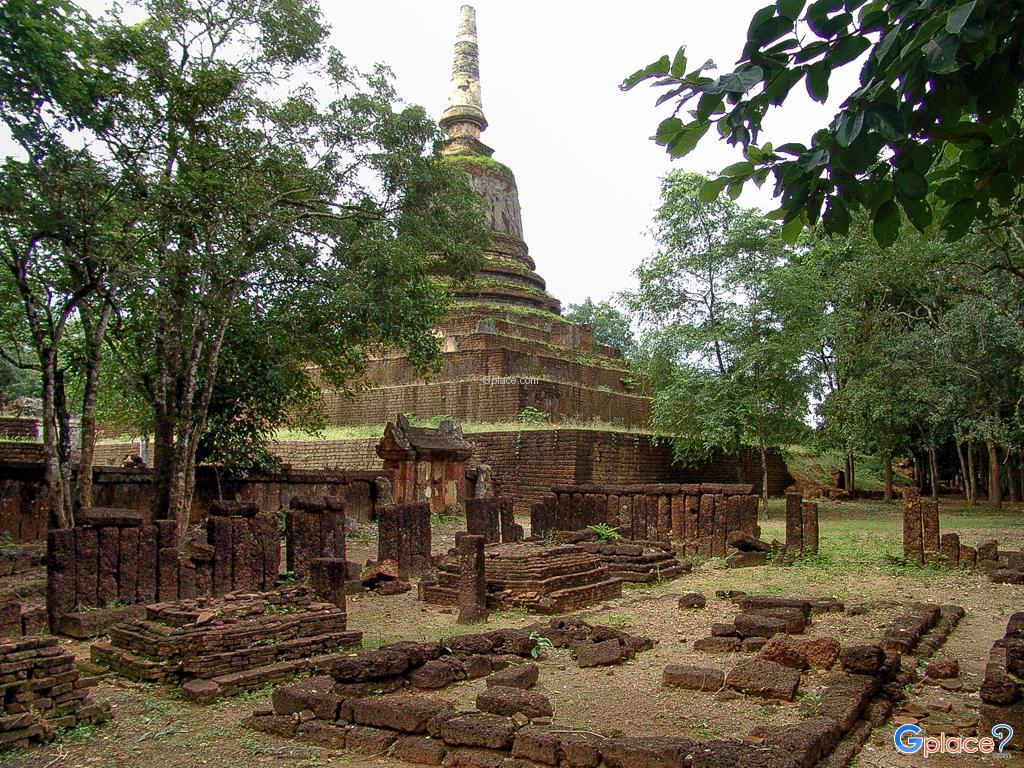
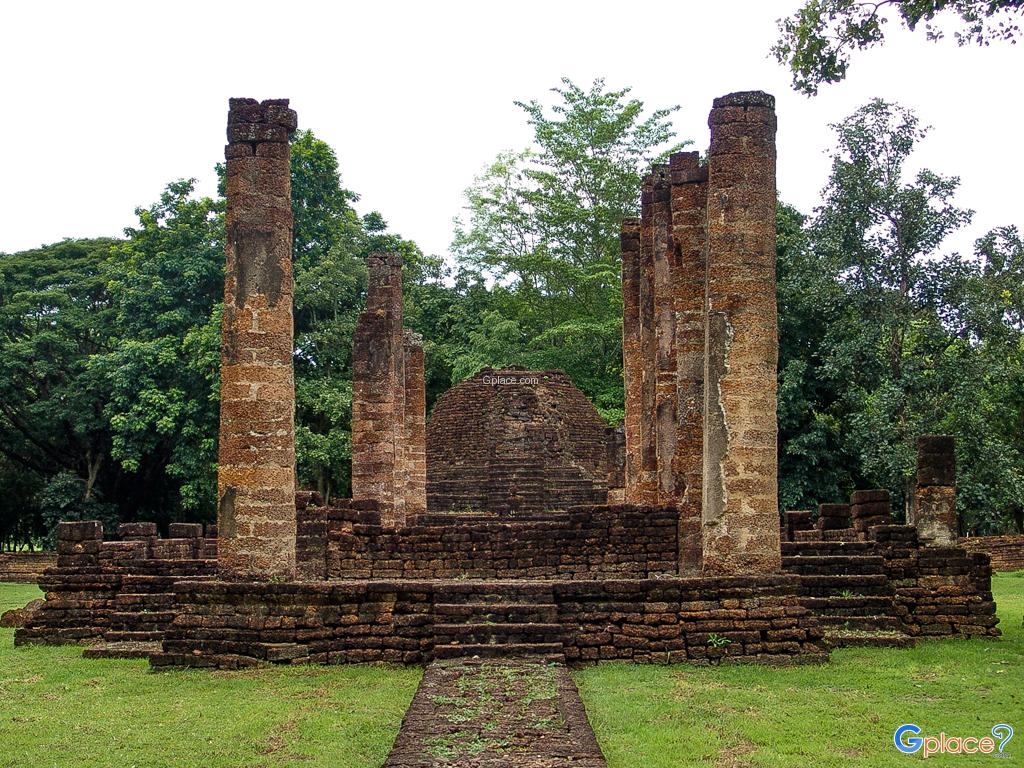
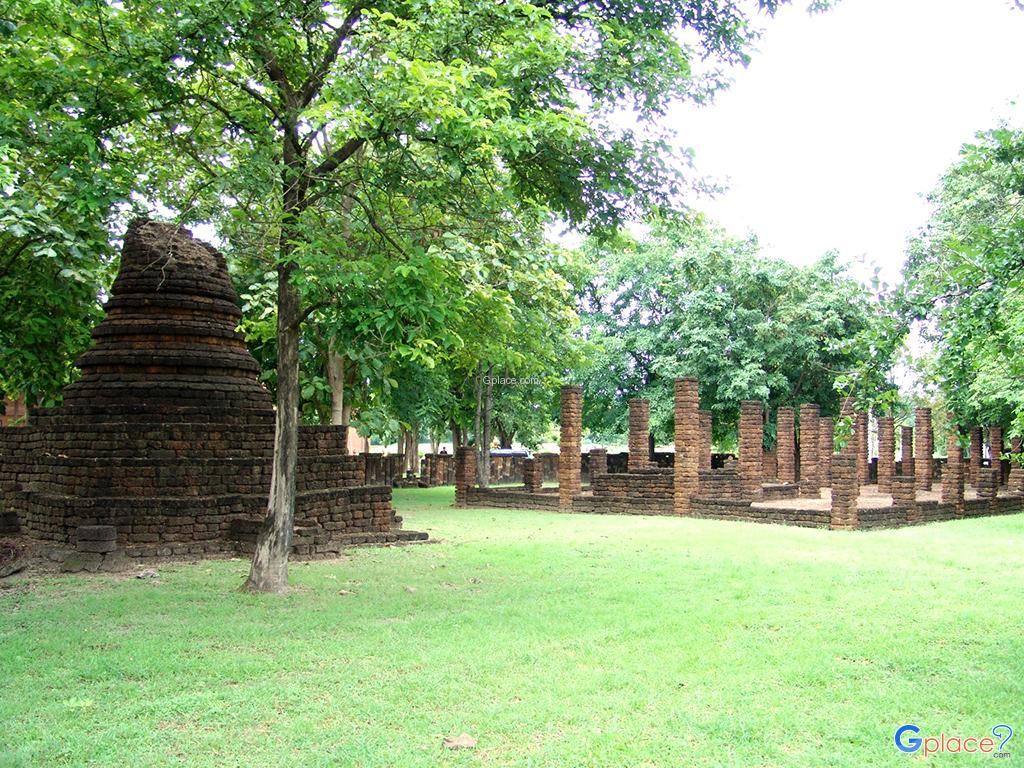
The site consists of a main chedi, viharn, mondop, and 13 satellite chedis, arranged symmetrically along a central axis. The main chedi stands on a tiered square base, enclosed by an inner boundary wall with a front entrance gate leading to the ceremonial courtyard. The viharn is positioned in front of the main chedi along the same axis, reflecting the hierarchical layout typical of Sukhothai temples.
Artistic Beauty:
The highlight is the lotus-bud chedi (Phum Khao Bin style), a signature of Sukhothai art, known for its balanced proportions and simplicity. It is surrounded by various satellite chedis in both bell-shaped and prang styles, reflecting artistic influences from Sri Lanka and the Khmer tradition.
Mondop and Construction Technique:
Behind the main chedi stands a pointed-arch mondop, a rare feature in smaller temples. Inside is a stucco Buddha image in the Mara-Vijaya posture. Today, only the base structure and teakwood core remain, revealing ancient construction techniques that combine wood and stucco for structural strength.
Beliefs and Functional Use:
The mondop likely served as a sacred chamber for enshrining important Buddha images used in specific rituals, while the front courtyard and viharn functioned as communal spaces for ceremonies and gatherings, highlighting the temple’s dual religious and social roles.
Historical Significance:
The temple is believed to date back to the 19th–20th Buddhist centuries, when Si Satchanalai flourished. Its connection to Wat Chedi Chet Thaeo via a laterite pathway reflects a carefully planned religious landscape.
Atmosphere and Visitor Experience:
Today, the site offers a quiet, shaded, and private atmosphere, ideal for visitors interested in in-depth exploration of Sukhothai architecture or photography. Morning light enhances the texture of the laterite, creating striking visual depth.
How to Get There
- Bicycle: The most recommended option. Easily reachable by cycling from Wat Chedi Chet Thaeo along the park’s internal paths.
Travel Tips
- Best time: 09:00 – 11:00 AM for soft natural light
- Photography: Use low angles to emphasize the chedi
- Atmosphere: Quiet and less crowded
- Caution: Surfaces may be slippery after rain
Admission Fee:
- Thai: 20 Baht
- Foreigner: 100 Baht
(Included in the Si Satchanalai Historical Park ticket)
Opening Hours:
- Daily: 08:30 – 16:30
Wat Suan Kaeo Utthayan Noi

 Share
Share
 Si Satchanalai Historical Park, Si Satchanalai, Si Satchanalai, Sukhothai 64190
Map
Si Satchanalai Historical Park, Si Satchanalai, Si Satchanalai, Sukhothai 64190
Map
 Open now : 8.30 - 16.30
Mon8.30 - 16.30
Tue8.30 - 16.30
Wed8.30 - 16.30
Thu8.30 - 16.30
Fri8.30 - 16.30
Sat8.30 - 16.30
Sun8.30 - 16.30



 64
64