 Attractions
  Hotel
Hotel  Restaurant
  Shopping
  Abroad






“Thailand’s second-highest mountain peak, panoramic sea of mist views, natural geyser hot springs, and Kio Lom Campsite.”
Doi Pha Hom Pok National Park (Doi Pha Hom Pok National Park) is a large national park in northern Thailand, covering more than 524,240 rai (approximately 838.78 square kilometers) across Fang, Mae Ai, and Chai Prakan districts of Chiang Mai Province. The park was originally known as Mae Fang National Park before being renamed after Doi Pha Hom Pok, the iconic mountain peak of the area. It was officially designated as Thailand’s 50th national park in 1991.
The name “Pha Hom Pok” originates from the appearance of dense montane evergreen forests that blanket the mountain ridges and peaks throughout the year. From a distance, the mountains appear to be covered by a giant green blanket. The park lies along the Daen Lao Mountain Range, an important mountain chain forming part of the natural border between Thailand and Myanmar. As a result, the landscape consists of complex high mountain systems and serves as an important watershed for the Fang and Kok river basins.
The park’s most prominent attraction is Doi Pha Hom Pok Peak, standing at 2,285 meters above sea level, making it the second-highest mountain in Thailand after Doi Inthanon. The summit offers 360-degree panoramic views of northern Thailand’s mountain ranges and even the mountains of Myanmar. During the cool season from November to February, visitors can enjoy morning sea of mist, spectacular sunrises, and temperatures that occasionally approach freezing point, with frost appearing in some years.
The journey to Doi Pha Hom Pok summit is considered one of northern Thailand’s most popular trekking experiences. Visitors typically spend the night at Kio Lom Campsite, located at approximately 1,800 meters above sea level, before beginning the ascent before dawn. The nature trail to the summit covers about 3.5 kilometers, passing through montane forests, moss forests, and unique high-altitude vegetation, requiring around two hours of hiking.
Doi Pha Hom Pok National Park is recognized as one of Thailand’s most biologically diverse protected areas. Surveys have recorded more than 1,000 plant species, including montane evergreen forests, pine forests, mixed deciduous forests, and dry dipterocarp forests. Above 1,500 meters in elevation, visitors can find numerous cool-climate species such as rhododendrons, wild orchids, rare ferns, mosses, and lichens thriving in the cool and humid environment.
The park is also home to a wide variety of wildlife, including serow, barking deer, sambar deer, wild boar, civets, palm civets, and Asiatic black bears. It is an important destination for birdwatchers, with over 300 recorded bird species, including Yellow-vented Bulbul, Green-tailed Sunbird, Blue-winged Leafbird, and many montane forest specialists. The park also supports numerous rare butterfly species, especially the famous Chiang Dao Kaiser Butterfly.
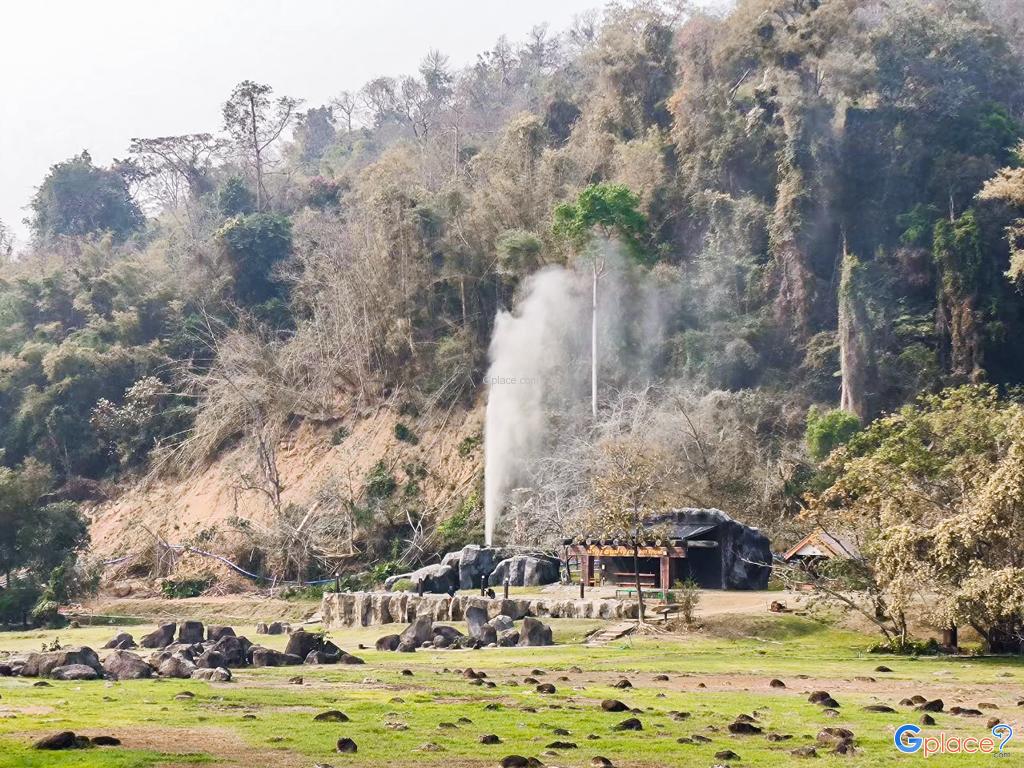
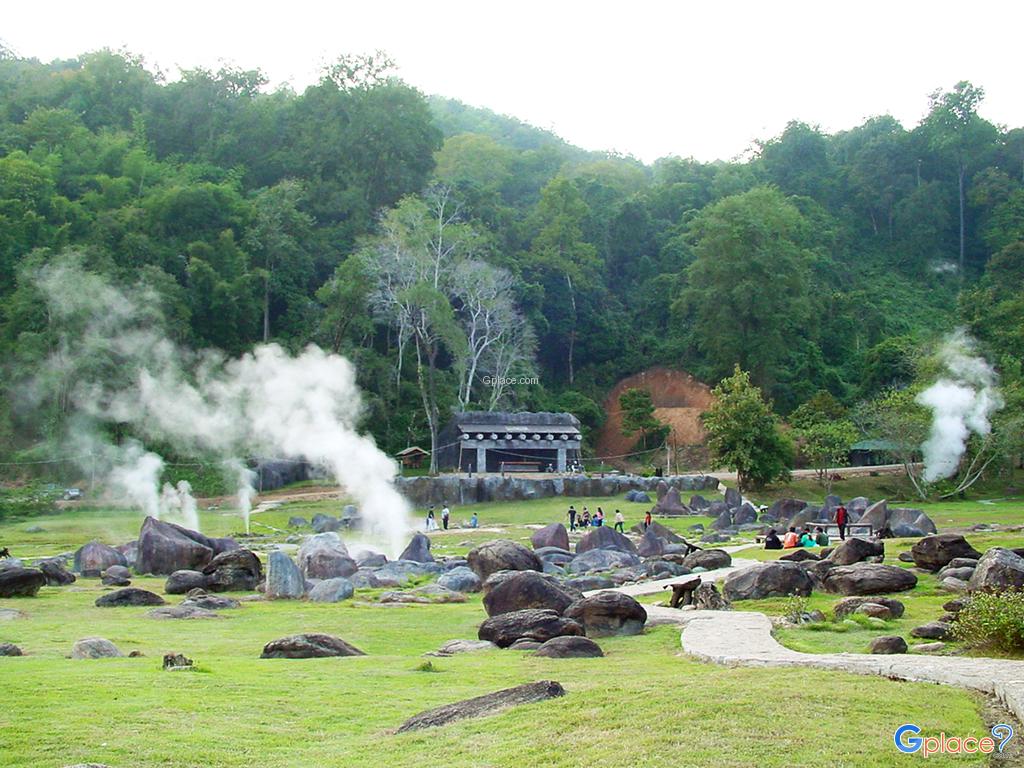
In addition to mountain tourism, the lower section of the park contains the famous Fang Hot Springs, formed by geothermal activity along geological fault lines. The hot spring water reaches temperatures of approximately 90–100 degrees Celsius and is considered one of Thailand’s largest natural hot spring systems. Its most remarkable feature is the natural geyser, which can shoot hot water 30–50 meters into the air at regular intervals throughout the day.
The Fang Hot Springs area has been developed as a wellness tourism destination, offering private mineral baths, outdoor hot spring pools, traditional Thai massage services, and the popular activity of boiling eggs in natural hot spring water. Short nature trails also provide educational information about geothermal energy, native plants, and mountain forest ecosystems.
Another notable attraction within the park is Nopburi Sri Nakhon Ping Garden, a collection of temperate-climate flowers and ornamental plants established to honor His Majesty King Bhumibol Adulyadej the Great (Rama IX). The garden blooms beautifully throughout the year, especially during the cool season when many flowers blossom simultaneously.
The period from November to February is considered the peak tourism season, offering excellent opportunities to experience sea of mist views, sunrises, and cool mountain weather. During the rainy season from June to October, visitors can enjoy lush green forests, waterfalls, and thriving ecosystems. Even during summer, temperatures remain noticeably cooler than those in the surrounding lowlands.
With its combination of Thailand’s second-highest mountain peak, pristine watershed forests, rare high-mountain ecosystems, impressive natural geysers, and diverse tourism activities, Doi Pha Hom Pok National Park is widely regarded as one of the most complete and attractive national parks in Chiang Mai and throughout Thailand.
How to Get There
-
By Private Car: From Chiang Mai city, take Highway 107 (Chiang Mai–Fang Road) toward Fang District, a distance of approximately 150 kilometers. Upon reaching Pong Nam Ron area, turn onto Highway 1326 following signs to Fang Hot Springs and Doi Pha Hom Pok National Park. Continue for approximately 8–10 kilometers to reach the national park headquarters located within the Fang Hot Springs area.
-
By Public Transportation: Take a bus on the Chiang Mai–Fang route from Chiang Mai Arcade Bus Terminal to Fang District. From there, continue by local songthaew, taxi, or hired vehicle to Doi Pha Hom Pok National Park headquarters (Fang Hot Springs), located approximately 10 kilometers from Fang town.
Note: Visitors wishing to travel to Kio Lom Campsite and Doi Pha Hom Pok summit must use a four-wheel-drive vehicle (4WD) or authorized local transport services due to steep and unpaved sections of the route.
Travel Tips
- Visitors planning to conquer Doi Pha Hom Pok Summit should stay overnight at Kio Lom Campsite and begin hiking around 03:30–04:00 AM to witness the sunrise and sea of mist.
- The trail from Kio Lom Campsite to Doi Pha Hom Pok Summit is approximately 3.5 kilometers long and takes around 2 hours to complete. A headlamp and proper hiking shoes are highly recommended.
- At Fang Hot Springs, visitors can purchase eggs to boil in the natural hot spring pools, a popular activity that takes approximately 10–15 minutes.
- Bring adequate warm clothing and cold-weather gear, especially during the cool season when temperatures at the summit may drop below 10°C.
- It is recommended to reserve accommodation, camping areas, and transportation to Kio Lom Campsite in advance during the popular November–February travel season.
Admission Fee:
| Category | Adult | Child |
|---|---|---|
| Thai Nationals | 50 THB | 20 THB |
| Foreign Visitors | 300 THB | 150 THB |
Vehicle Fees
| Vehicle Type | Fee |
|---|---|
| Car | 30 THB |
| Motorcycle | 20 THB |
Note: Fees for mineral bathing services, private bath facilities, and camping areas are charged separately according to the park’s regulations and may change without prior notice.
Opening Hours:
Fang Hot Springs Area / National Park Headquarters
- Open daily from 07:30 AM – 05:30 PM
Mountain Tourism Area
- Open for tourism and camping 24 hours a day
- Travel times to and from the mountain are regulated for safety reasons
- Vehicles are not permitted to travel uphill after 04:00 PM
- Visitors should descend according to schedules and instructions provided by park officials during each season.
Doi Pha Hom Pok National Park

 Share
Share
 224 Moo 6, Pong Nam Ron, Fang, Chiang Mai 50320
Map
224 Moo 6, Pong Nam Ron, Fang, Chiang Mai 50320
Map
 Open now : 7.30 - 17.30
Mon7.30 - 17.30
Tue7.30 - 17.30
Wed7.30 - 17.30
Thu7.30 - 17.30
Fri7.30 - 17.30
Sat7.30 - 17.30
Sun7.30 - 17.30



 5
5