 Attractions
  Hotel
Hotel  Restaurant
  Shopping
  Abroad





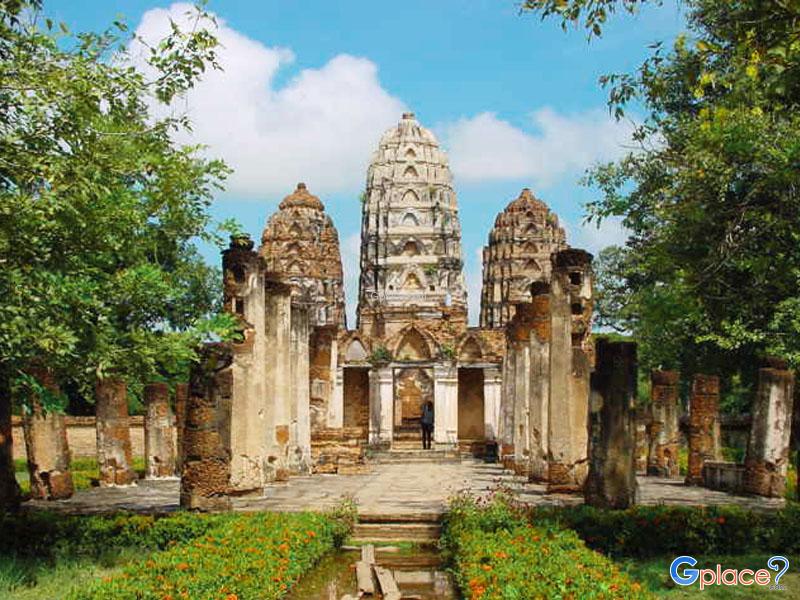

“Marvel at the Khmer-style Three Prangs the most beautiful and complete in Sukhothai. Explore ancient stucco patterns that tell stories of religious beliefs passed down for over 800 years.”
Si Sawai Temple is one of the most unique historical sites within the Sukhothai city walls. Its most visible feature is the Three Prangs (corn-shaped towers) lined up in a north-south direction on a low base. These prangs were built with laterite and decorated with intricate stucco. The art style is known as Lopburi art or influenced by ancient Khmer art, which is different from the Lotus Bud pagodas usually found in Sukhothai. This makes this temple a fascinating example of cultural blending.
According to archaeological evidence, historians believe that Si Sawai Temple was originally built as a Hindu shrine (Shaivism). This is because important religious objects such as a Shivalinga and a Lintel of Narayana Reclining on the Serpent were discovered within the temple grounds. Later, when the Sukhothai Kingdom was established and fully embraced Buddhism, the site was converted into a Buddhist temple. A large prayer hall (Vihara) and a surrounding wall were added. This complex history makes Si Sawai Temple like a diary recording the changes in people's beliefs in the past.
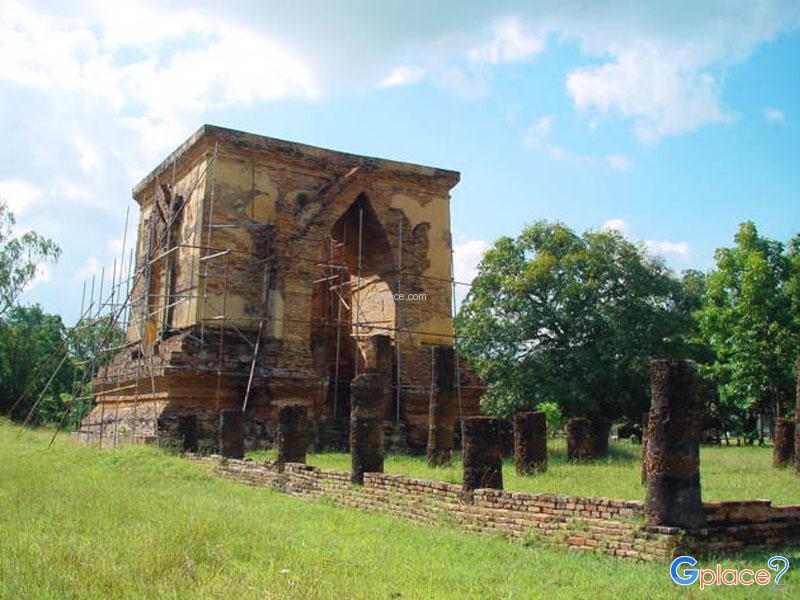
The stucco patterns decorating the prangs remain very complete in many areas, especially the figures of celestial beings, mythical animals, and floral designs. These represent delicate craftsmanship and reflect the prosperity of the artisans during that era. In addition to the prangs, there is a large Vihara in the front, with only its laterite pillars and pedestal remaining. This hall once housed important Buddha images. The atmosphere around the temple is surrounded by large trees and wide green lawns, providing a sense of solemnity and peace.
Today, Si Sawai Temple is a destination that tourists should not miss. It is located near Mahathat Temple and can be easily reached by walking or cycling. Standing in front of the Three Prangs when the sunlight hits the dark brown laterite creates a powerful and impressive sight. It shows that Sukhothai did not only have pure Thai art but was also a center that adapted various cultures into its own unique identity.
How to Get There
Transportation within the Park:
-
Bicycle: The most recommended way. The path from Mahathat Temple to Si Sawai Temple is shaded and passes through many historical ruins.
-
Electric Tram: There is a stop from which you can easily walk to the temple.
-
Walking: If you are already visiting Mahathat Temple, you can walk south for about 300–400 meters to reach Si Sawai Temple.
Travel Tips
-
Recommended Time: 09:00 AM – 11:00 AM or 03:30 PM – 05:00 PM to get the best light for photographing the prangs.
-
Must See: Explore the stucco patterns around the prangs and look for the pedestals that once held ancient religious statues.
-
Dress Code: Please dress politely to honor this ancient and sacred site.
Admission Fee:
-
Thai Citizens: 20 THB / Foreign Visitors: 100 THB (This is the combined fee for the Central Zone).
Opening Hours:
-
OpenDaily: 06:30 AM – 07:30 PM
Si Sawai Temple

 Share
Share
 Sukhothai Historical Park (Central Zone), Mueang Kao Subdistrict, Mueang District, Sukhothai
Map
Sukhothai Historical Park (Central Zone), Mueang Kao Subdistrict, Mueang District, Sukhothai
Map
 Closed today
Mon6.30 - 19.30
Tue6.30 - 19.30
Wed6.30 - 19.30
Thu6.30 - 19.30
Fri6.30 - 19.30
Sat6.30 - 19.30
Sun6.30 - 19.30



 6314
6314