 Attractions
  Hotel
Hotel  Restaurant
  Shopping
  Abroad





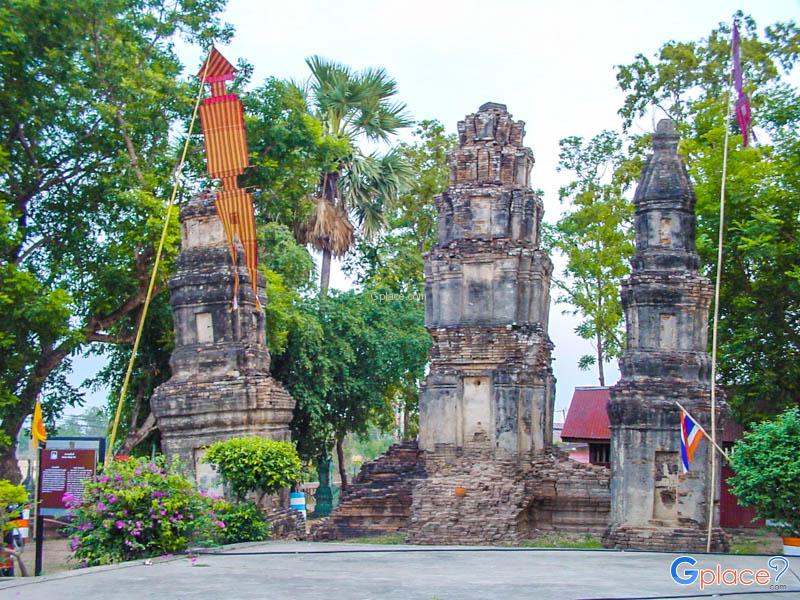

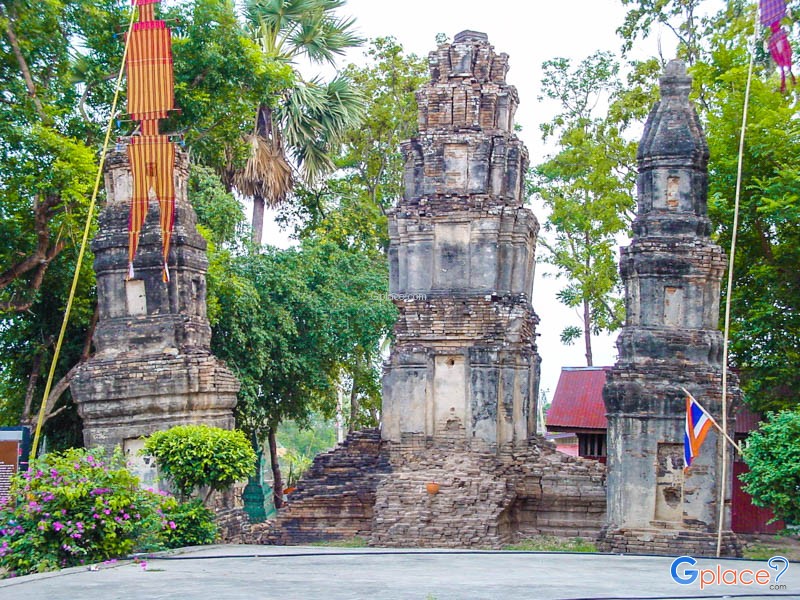
“Mixed Khmer–Lan Xang art. The tower tops were later modified to resemble ancient stupa forms. Built on a single base, it is a rare architectural style in the lower Isan region.”
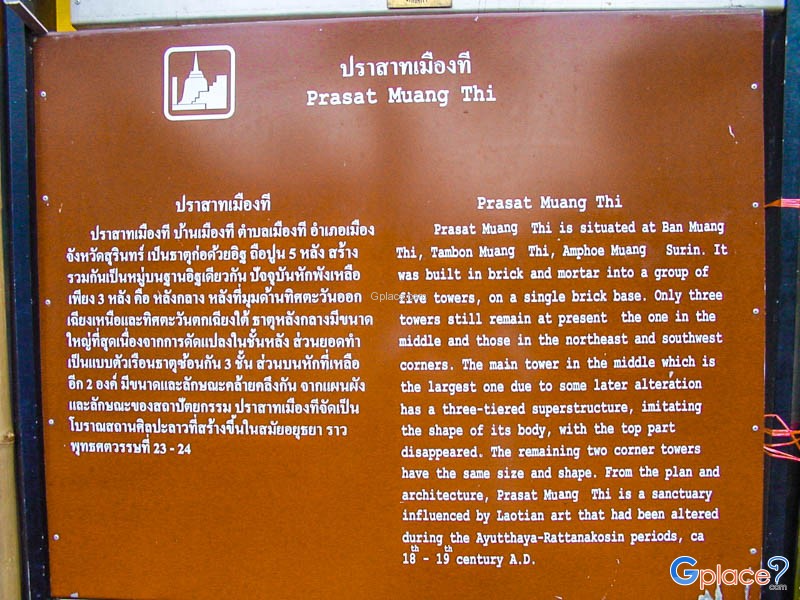
Prasat Muang Thi is an ancient archaeological site in the Lower Isan group of Khmer stone sanctuaries, reflecting multi-layered cultural influences across different historical periods. The main structure consists of five brick-and-stucco prasats built on a single laterite/brick base, arranged in a quincunx plan—a layout commonly found in classical Khmer architecture during the peak of the Khmer Empire.
Original structure
The sanctuary was originally constructed as a Hindu temple complex. The central prang represents Mount Meru, while the surrounding four prangs symbolize the surrounding sacred mountains in the cosmological universe. This five-tower arrangement reflects Hindu-Buddhist cosmology rather than purely architectural design.
Materials and construction techniques
The structure is mainly built from fine-fired bricks, originally covered with stucco decoration, although most of the decorative elements have eroded over time. The layered brick foundation reflects typical Khmer construction techniques from the medieval period.
Later modifications
During the late Ayutthaya to early Rattanakosin period, the region of Surin was influenced by Lan Xang culture. As a result, parts of the sanctuary were renovated, especially the upper sections of the prangs, which were modified into elongated forms resembling Lao-style stupas instead of traditional Khmer spires.
Current condition
Today, only three prangs remain structurally intact:
- The central prang
- The northeastern prang
- The southeastern prang
The remaining two survive only as foundations.
Historical significance
Prasat Muang Thi is an important example of cultural layering, combining:
- Ancient Khmer Hindu-Brahman traditions
- Ayutthaya-era restoration influences
- Lan Xang stylistic adaptation
It clearly reflects the historical transitions of belief systems and political influence in the Mun–Chi river basin region of northeastern Thailand.
How to Get There
- By car: From Surin city, take Highway 226 (Surin–Sisaket) and drive straight for about 16 km. When you reach Ban Mueang Thi, turn right at the village intersection following the signs. The prasat is located inside Wat Mueang Thi.
Travel Tips
- Dress modestly as it is located inside a temple
- Visit in the morning or late afternoon for better lighting
- Bring drinking water and sun protection (it can be hot)
- Walk around all sides of the site to see the full structure
- Be careful on old brick surfaces and avoid climbing the ruins
Admission Fee:
- No admission fee. Donations are welcome.
Opening Hours:
- Open daily from 8:00 AM to 5:00 PM.
Prasat Muangthi

 Share
Share
 Thedsaban 2, Muangthi, A.Muang, Surin
Map
Thedsaban 2, Muangthi, A.Muang, Surin
Map
 Closed today
Mon8.00 - 17.00
Tue8.00 - 17.00
Wed8.00 - 17.00
Thu8.00 - 17.00
Fri8.00 - 17.00
Sat8.00 - 17.00
Sun8.00 - 17.00

 https://www.thai-tour.com/thai-tour/northeast/surin/data/place/pic-prasattee.html

 4261
4261