 Attractions
  Hotel
Hotel  Restaurant
  Shopping
  Abroad





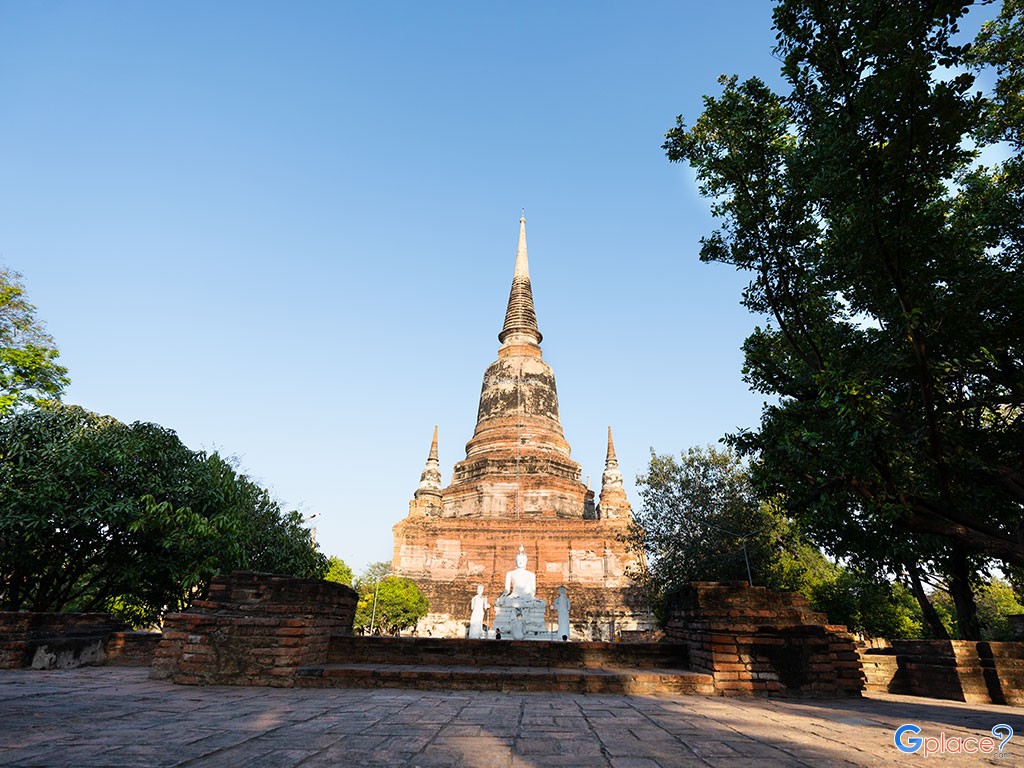

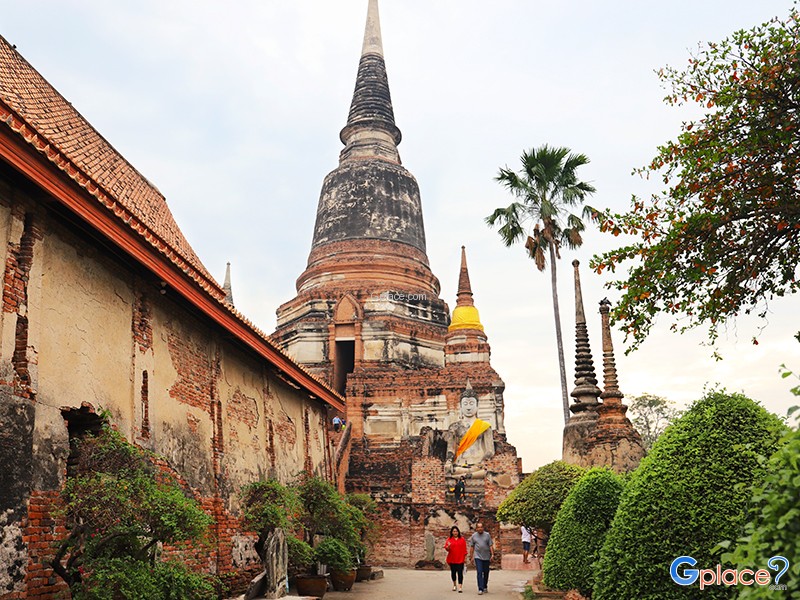
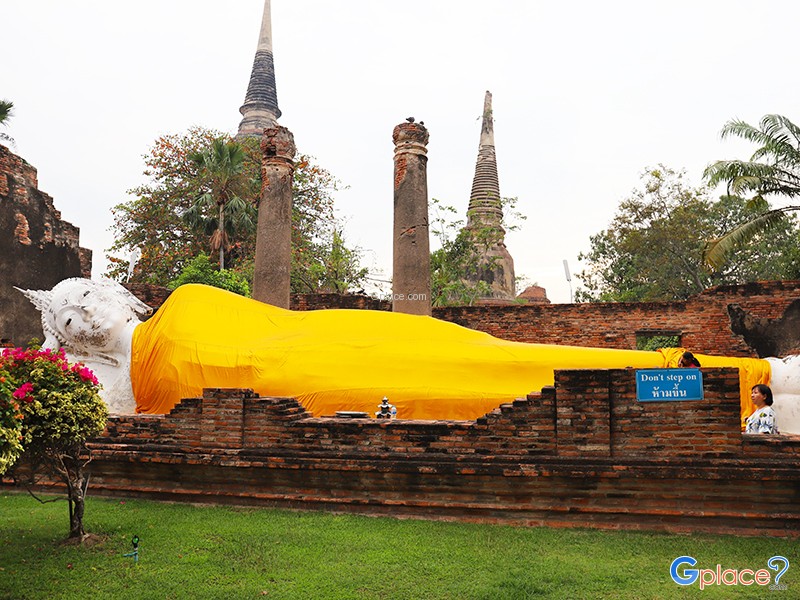
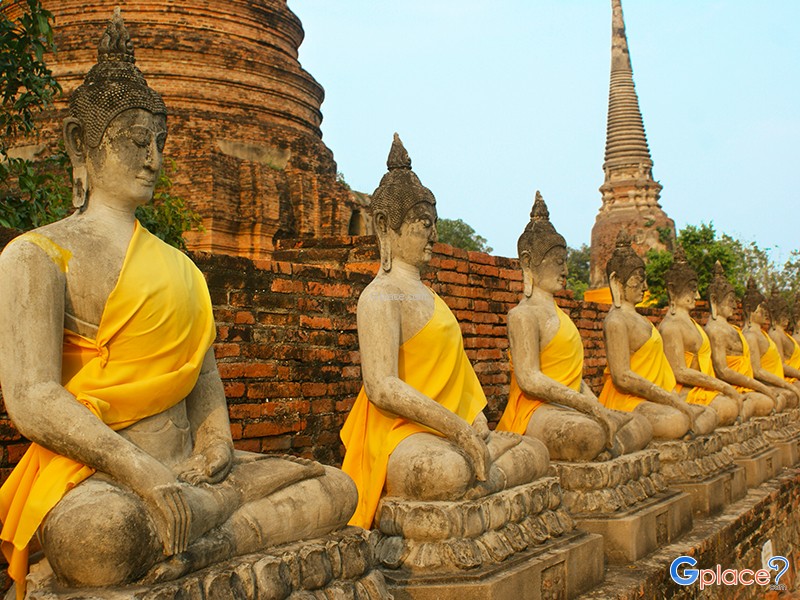
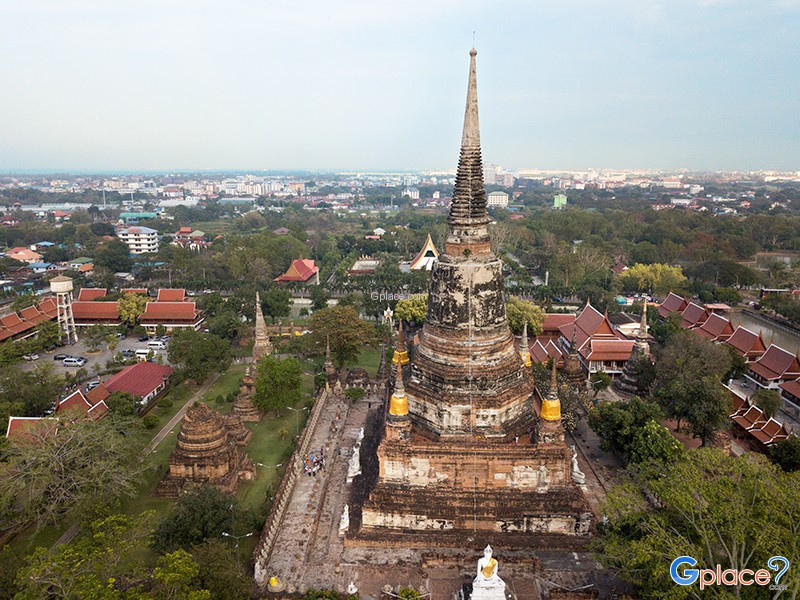
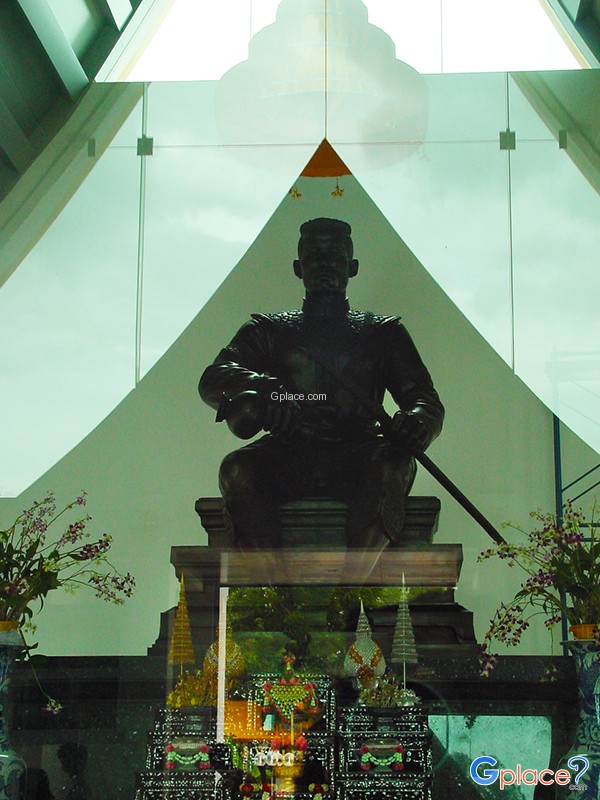
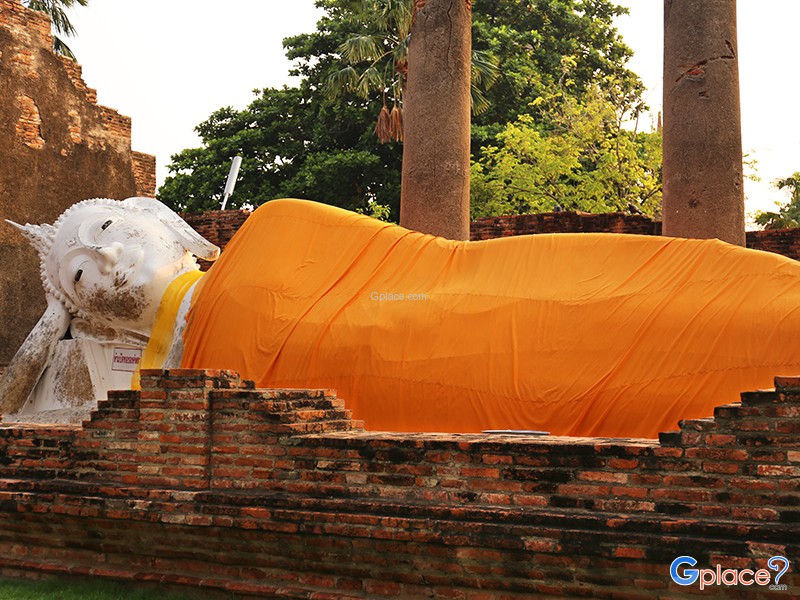
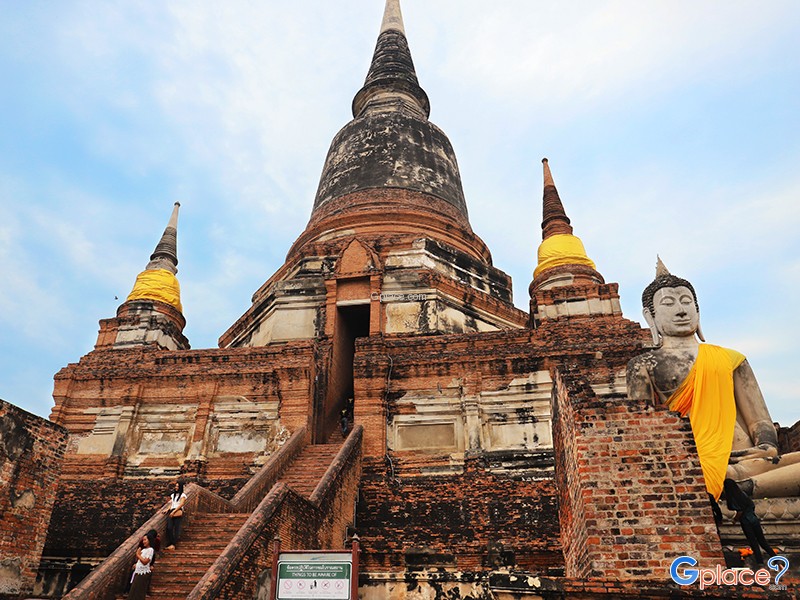
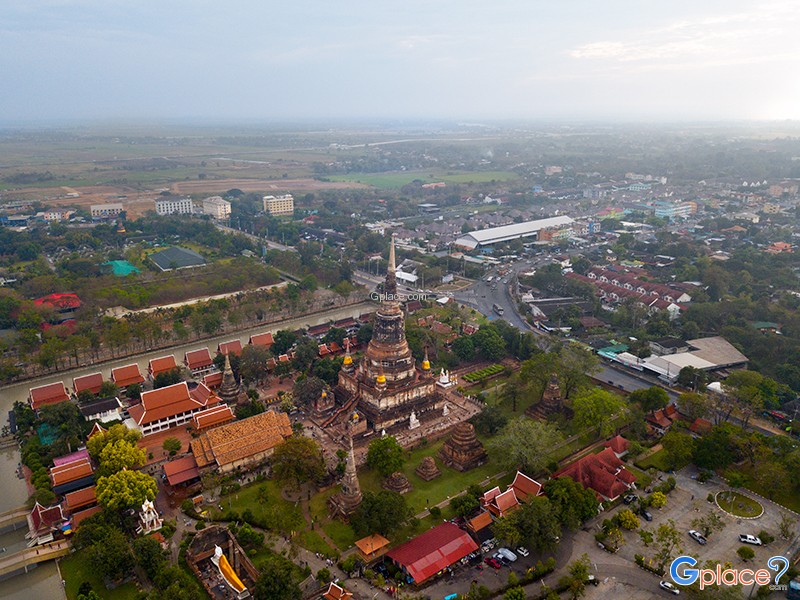
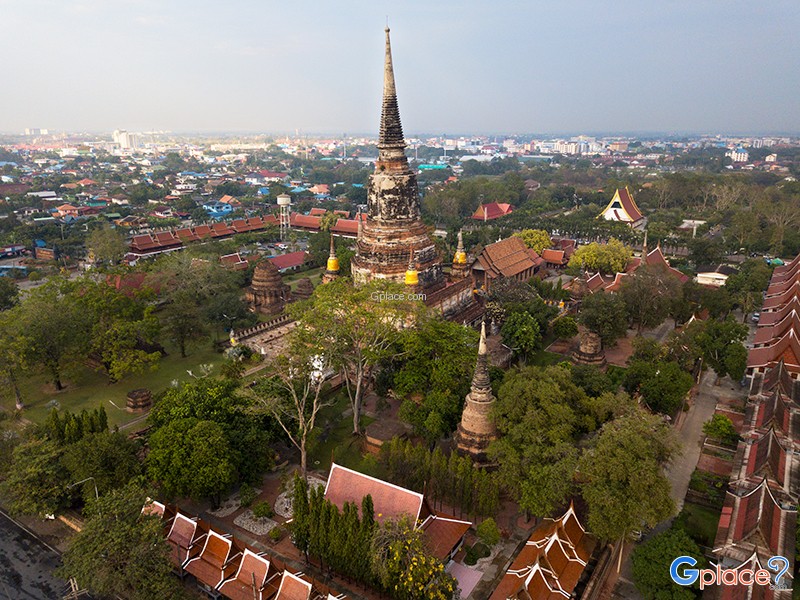
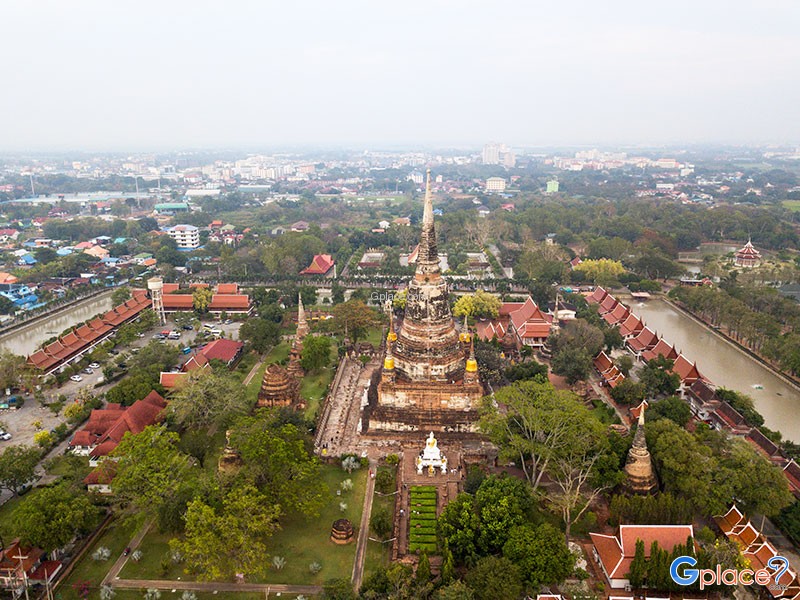
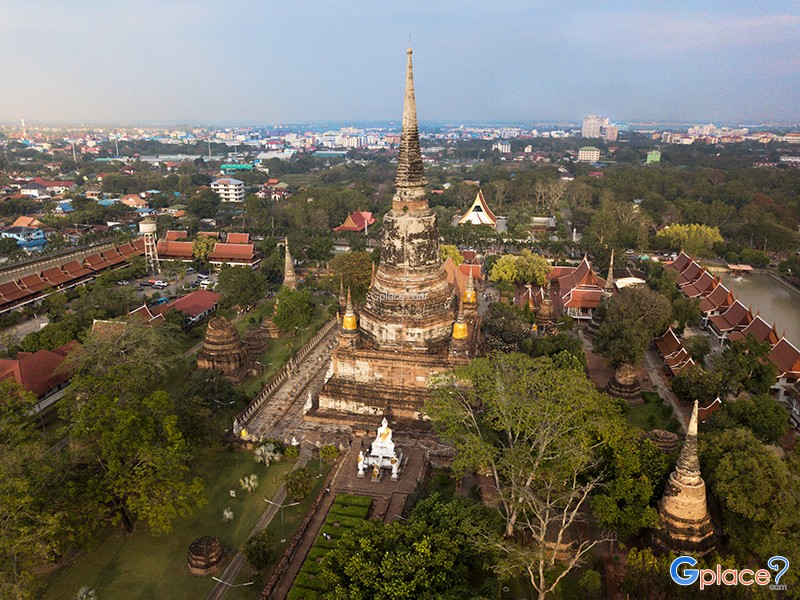
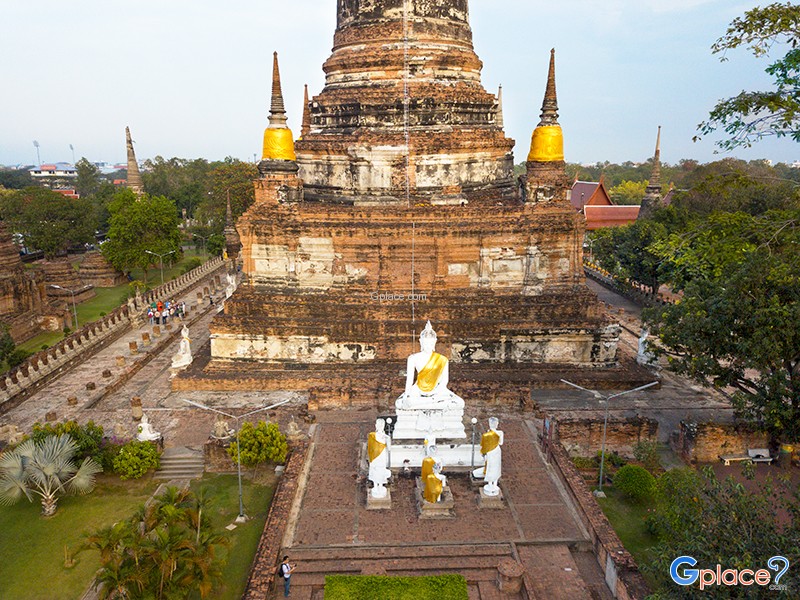
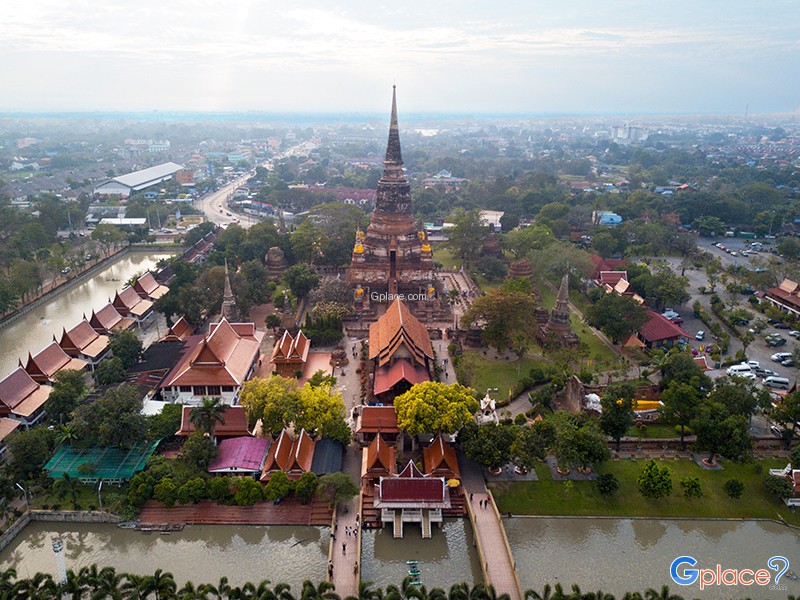
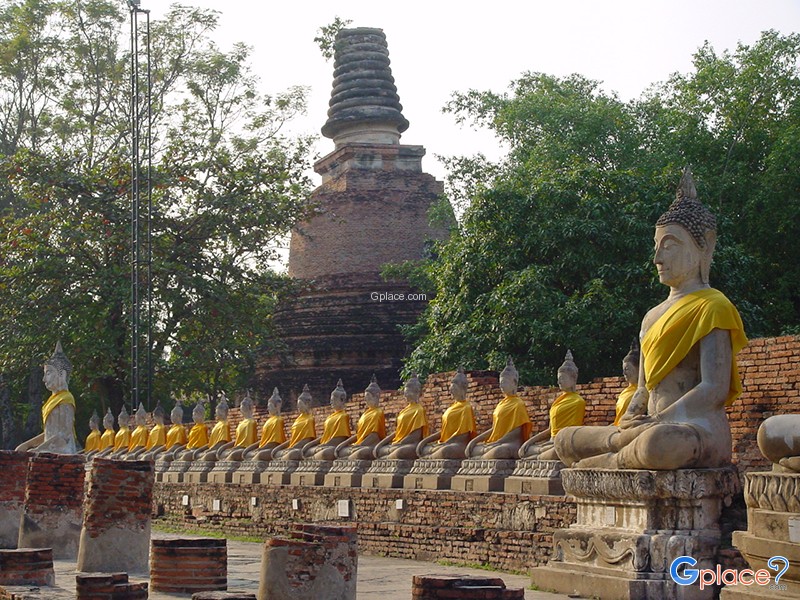
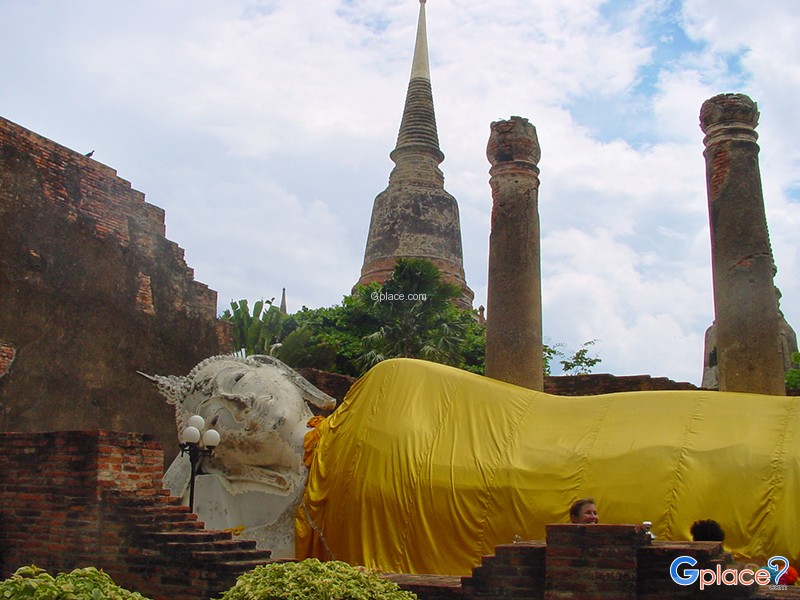
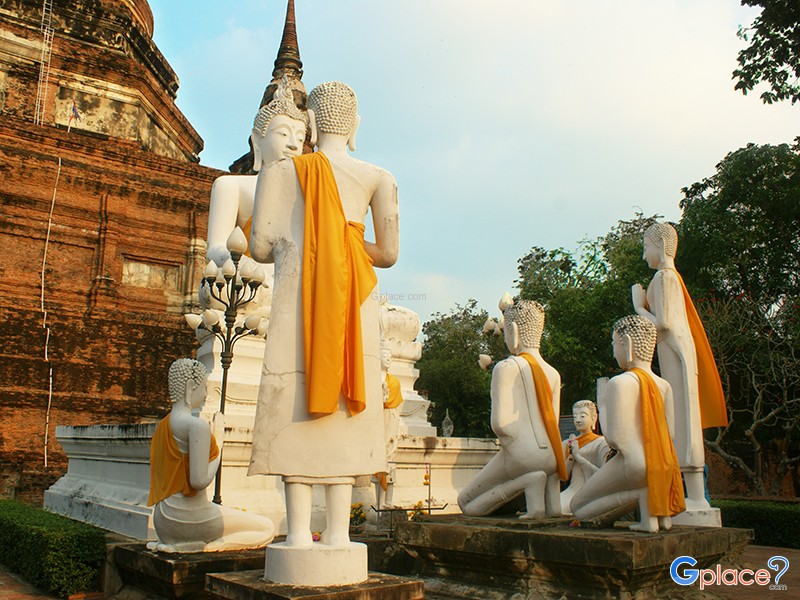
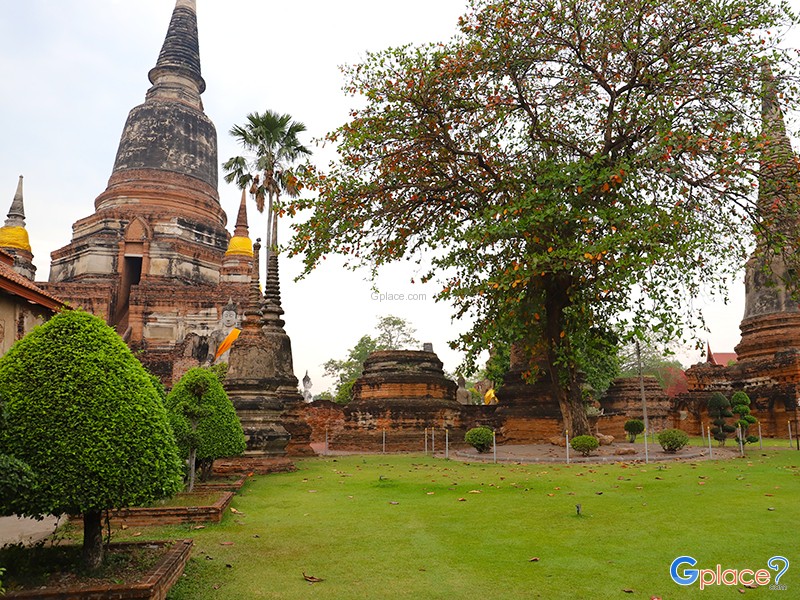
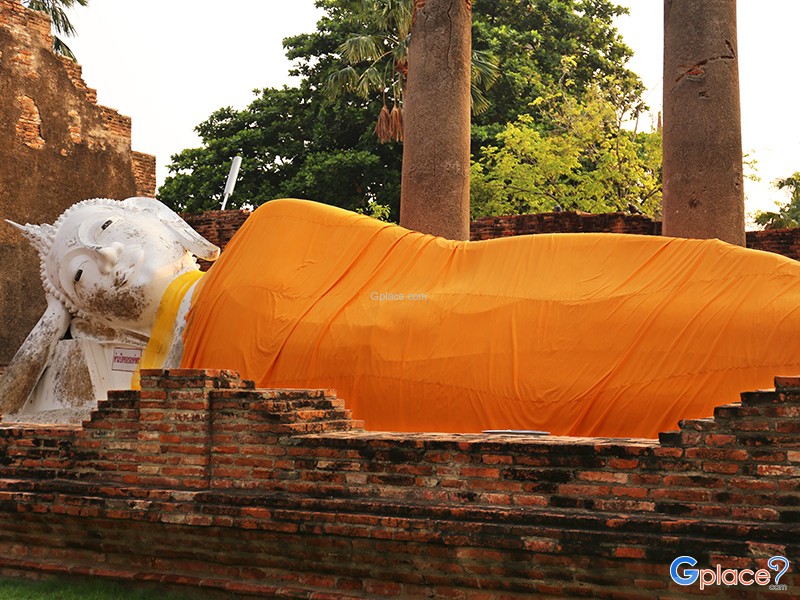
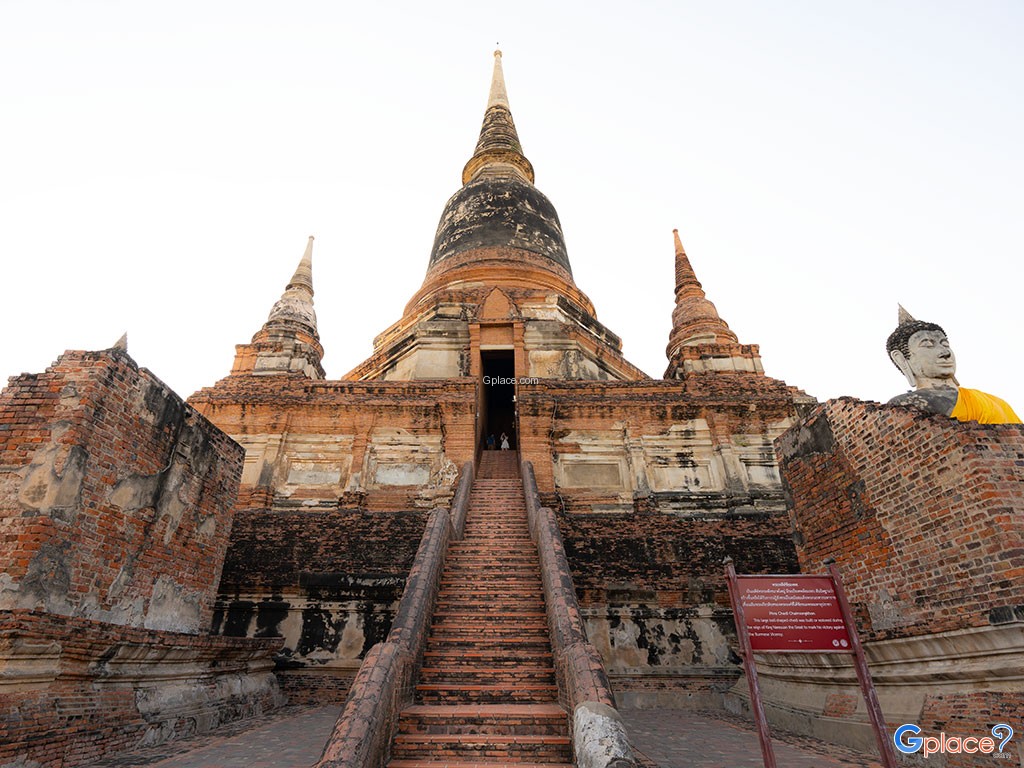
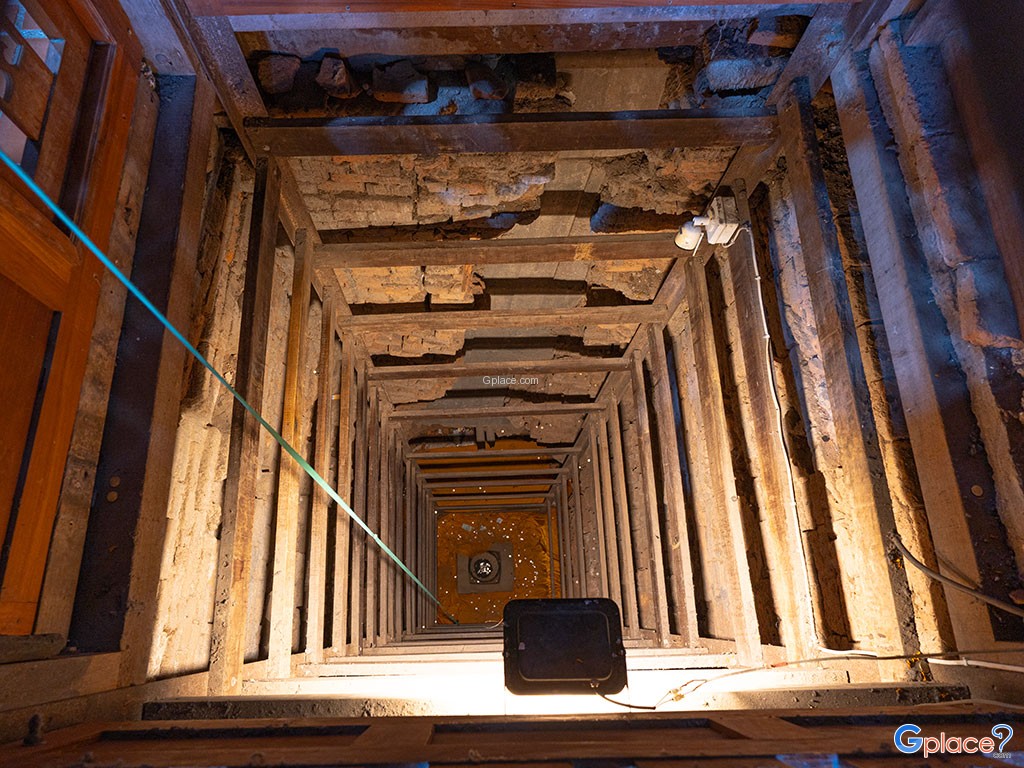

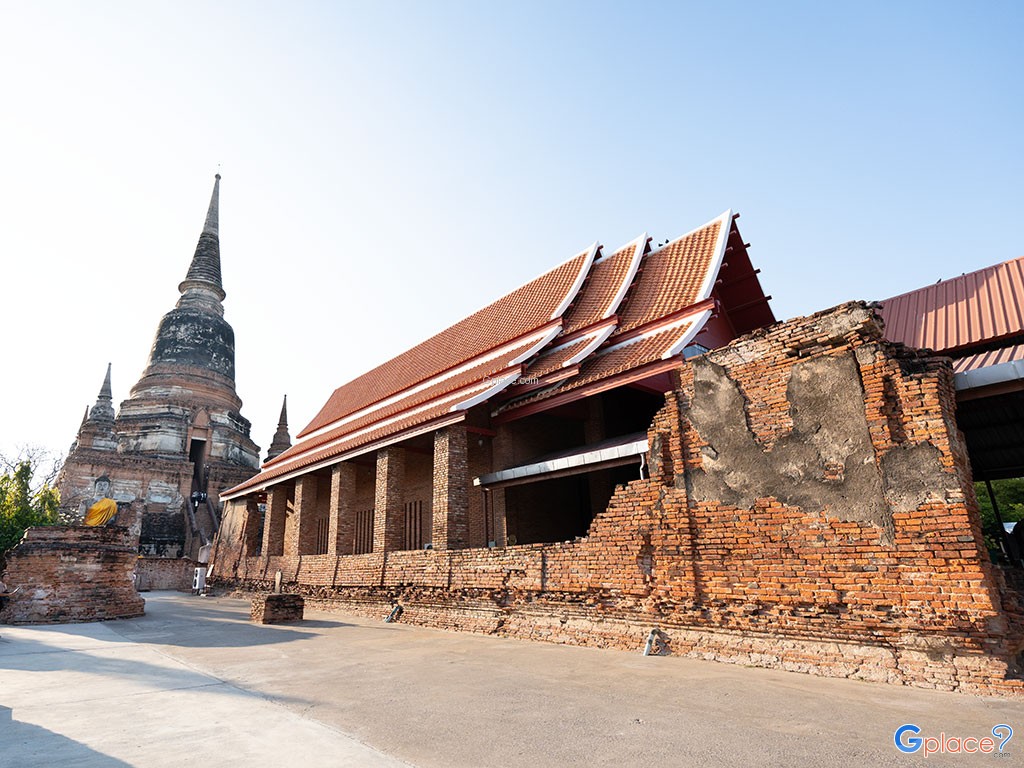
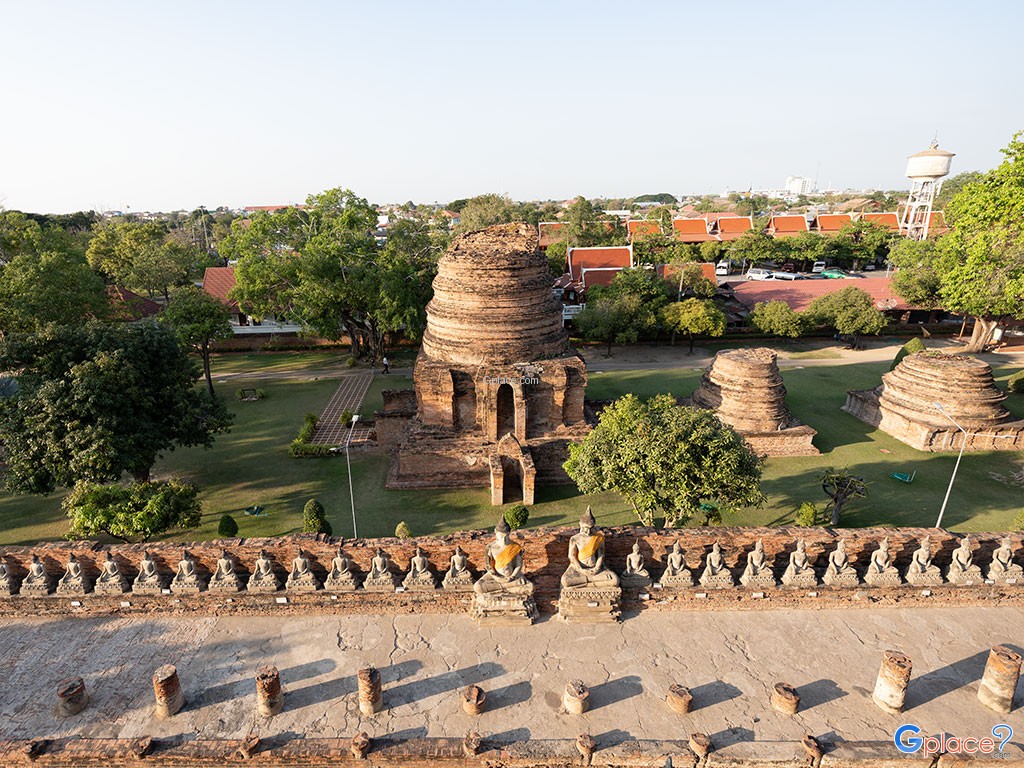
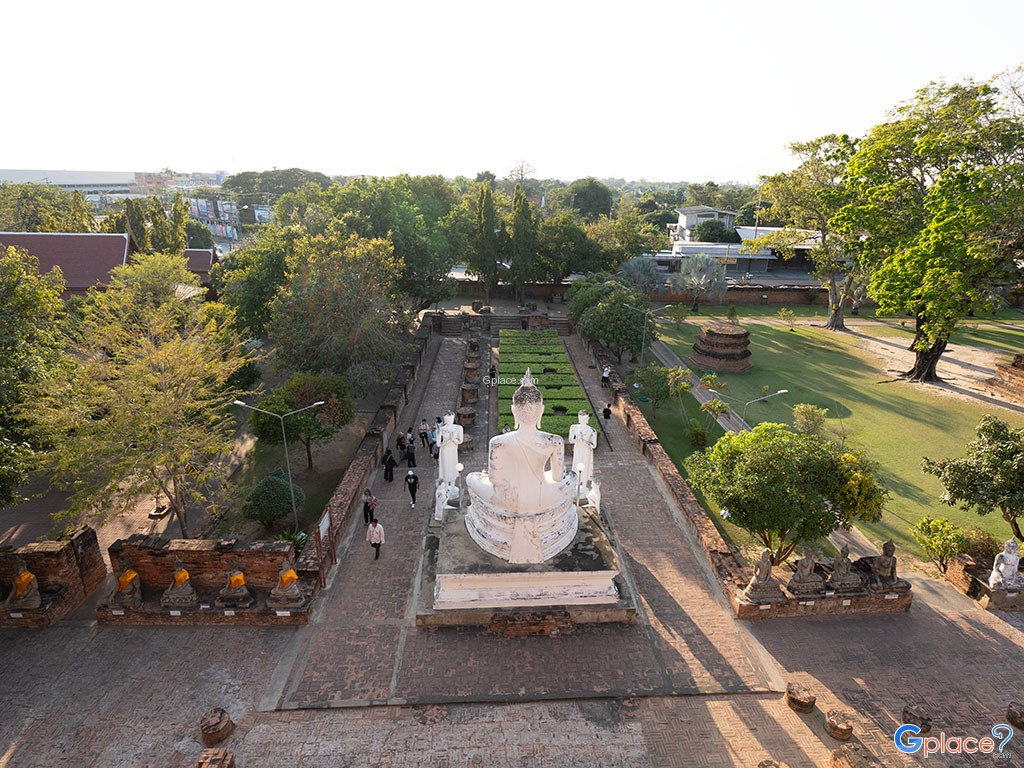
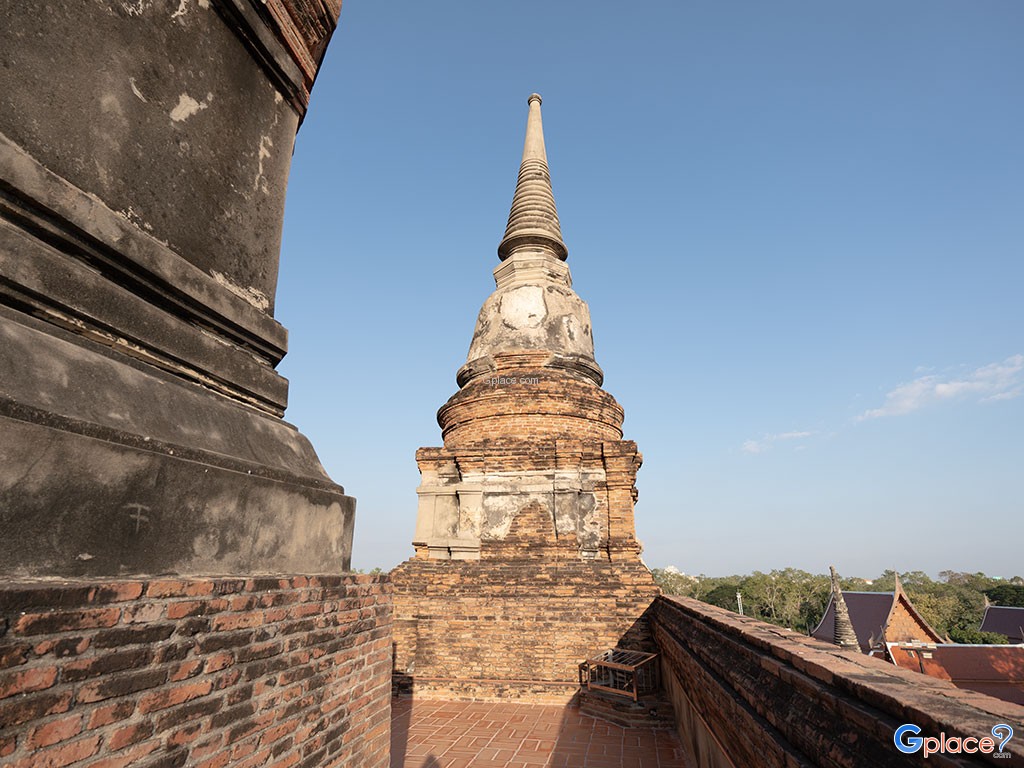
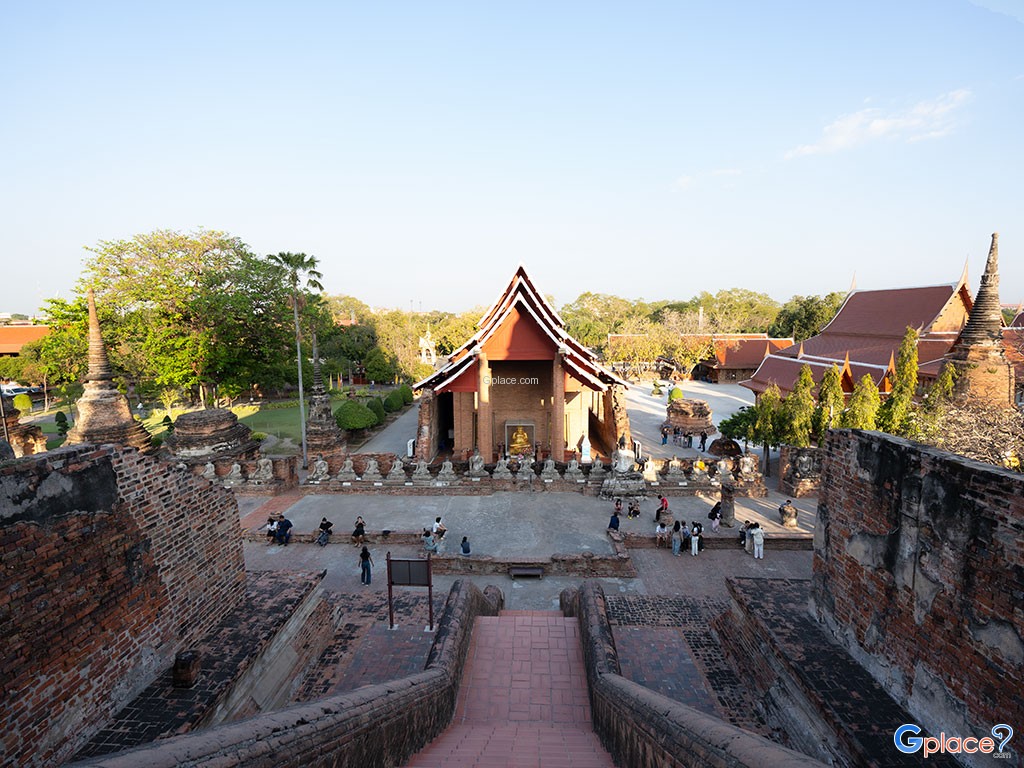
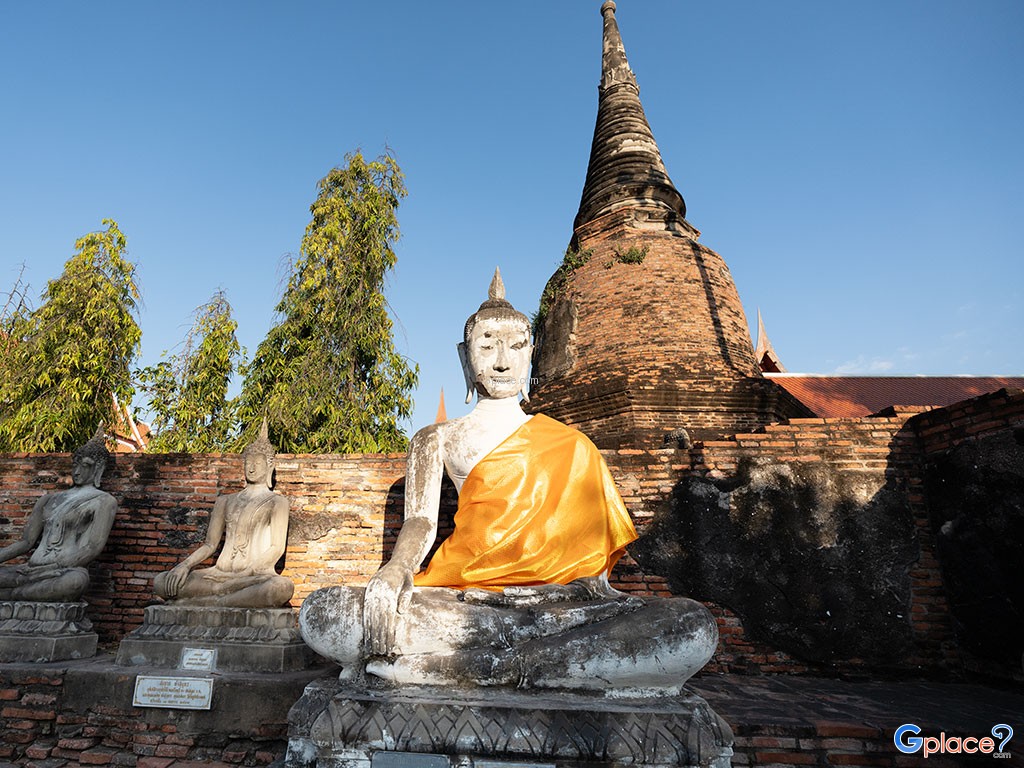
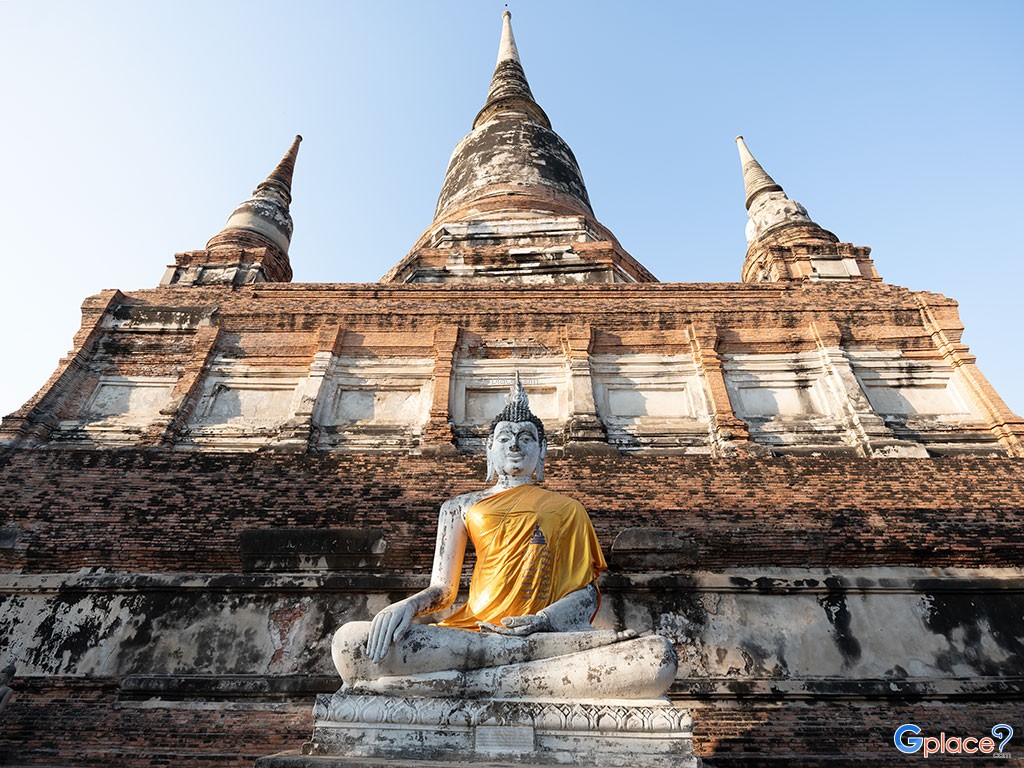
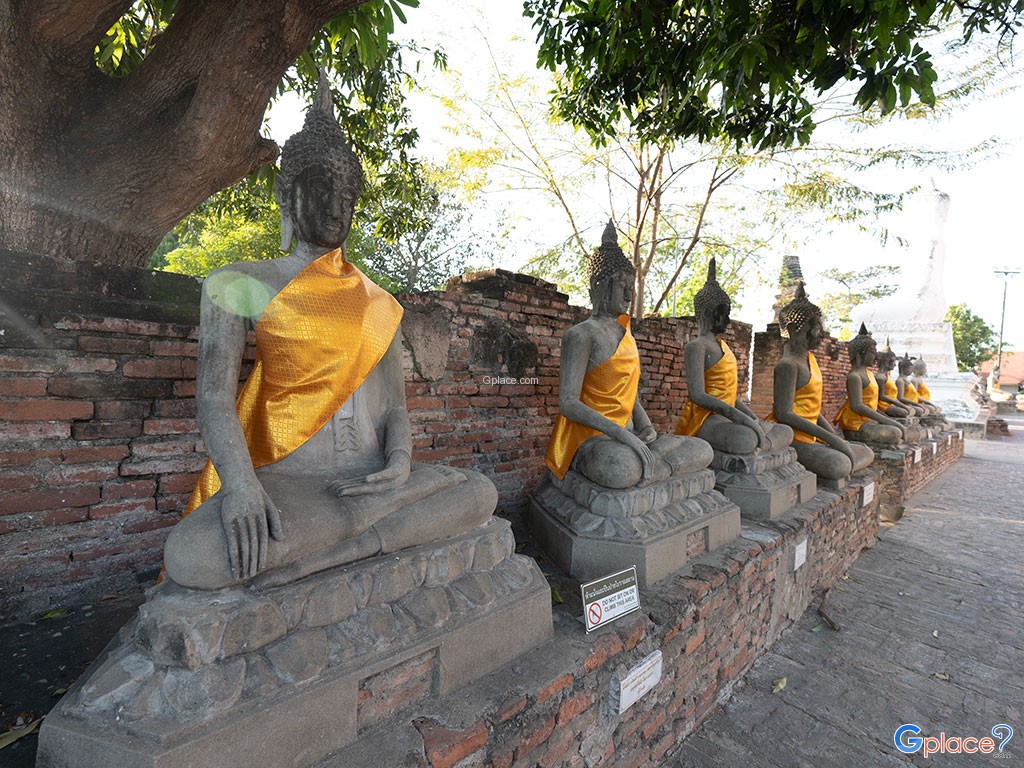
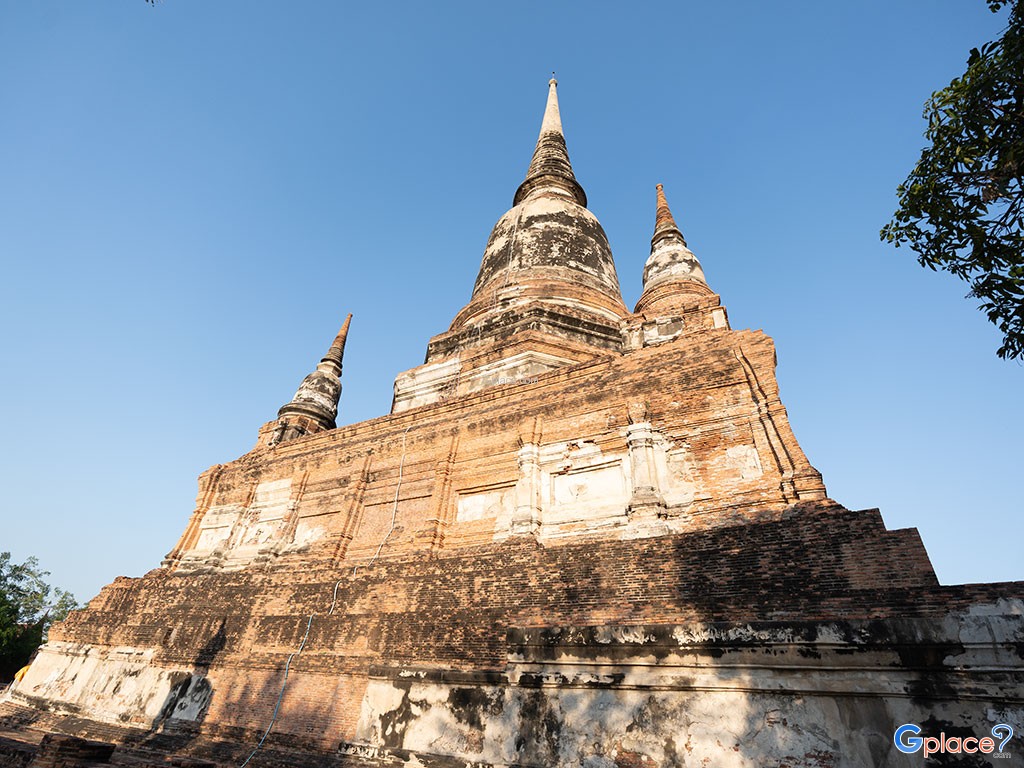

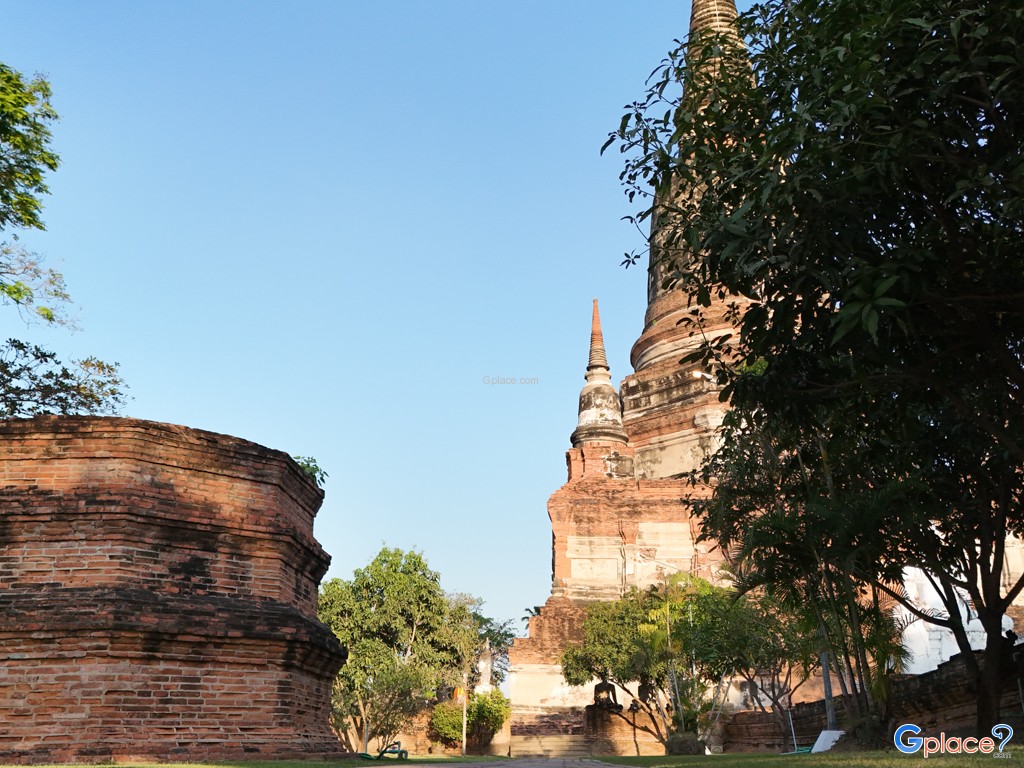
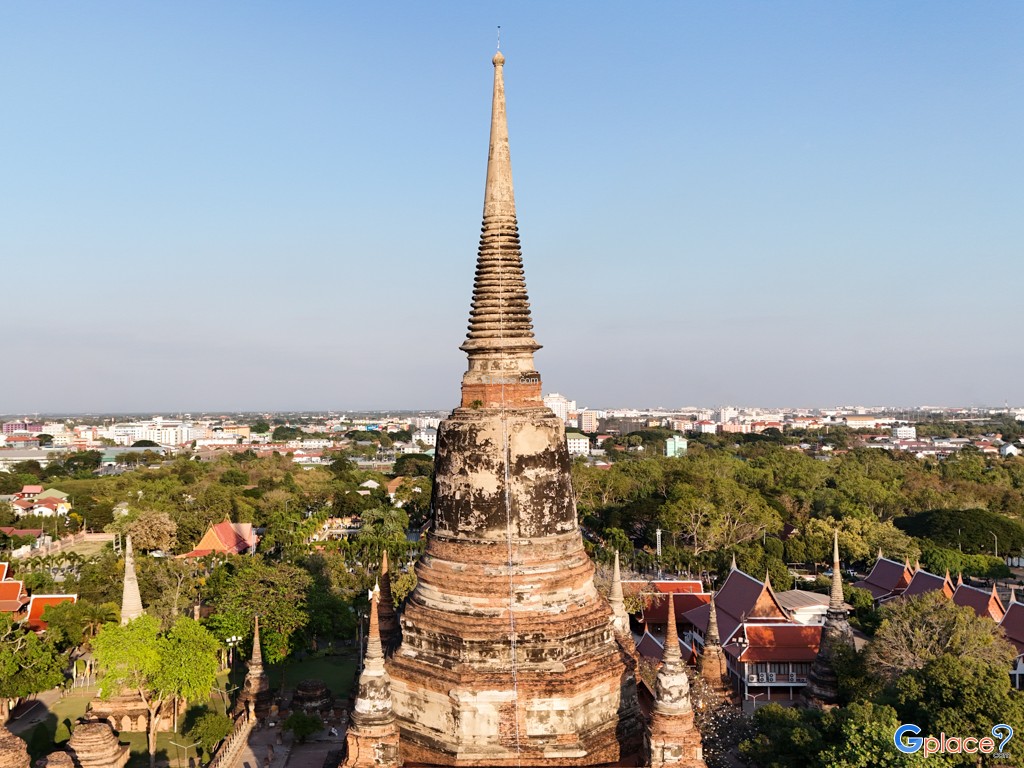
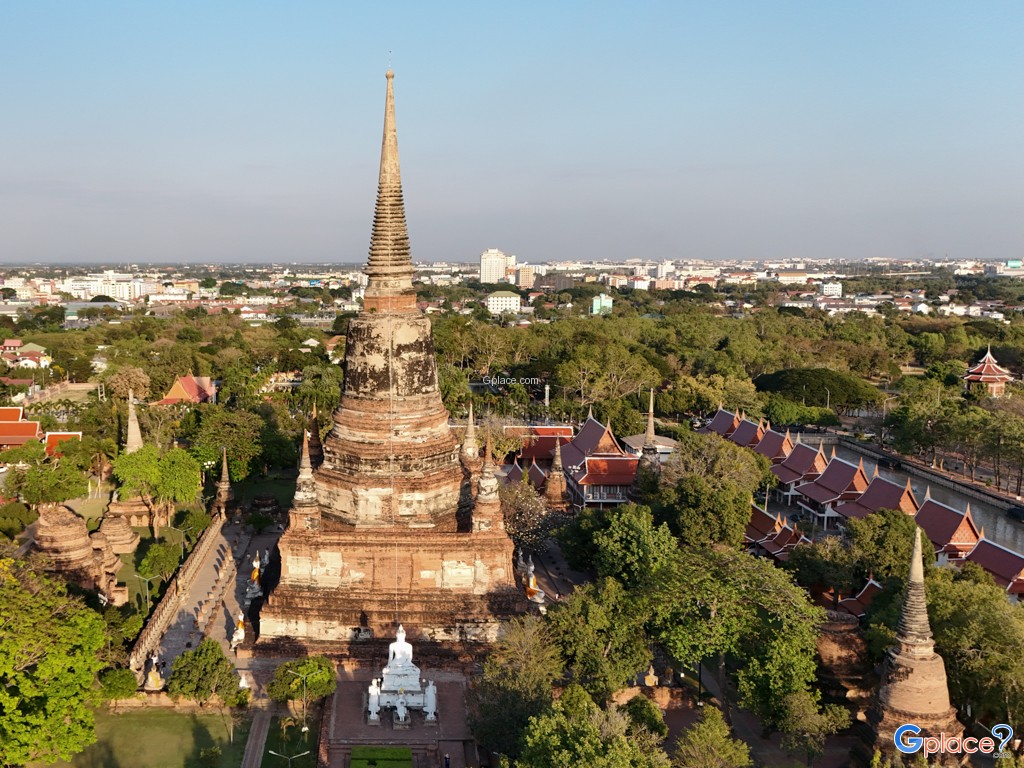
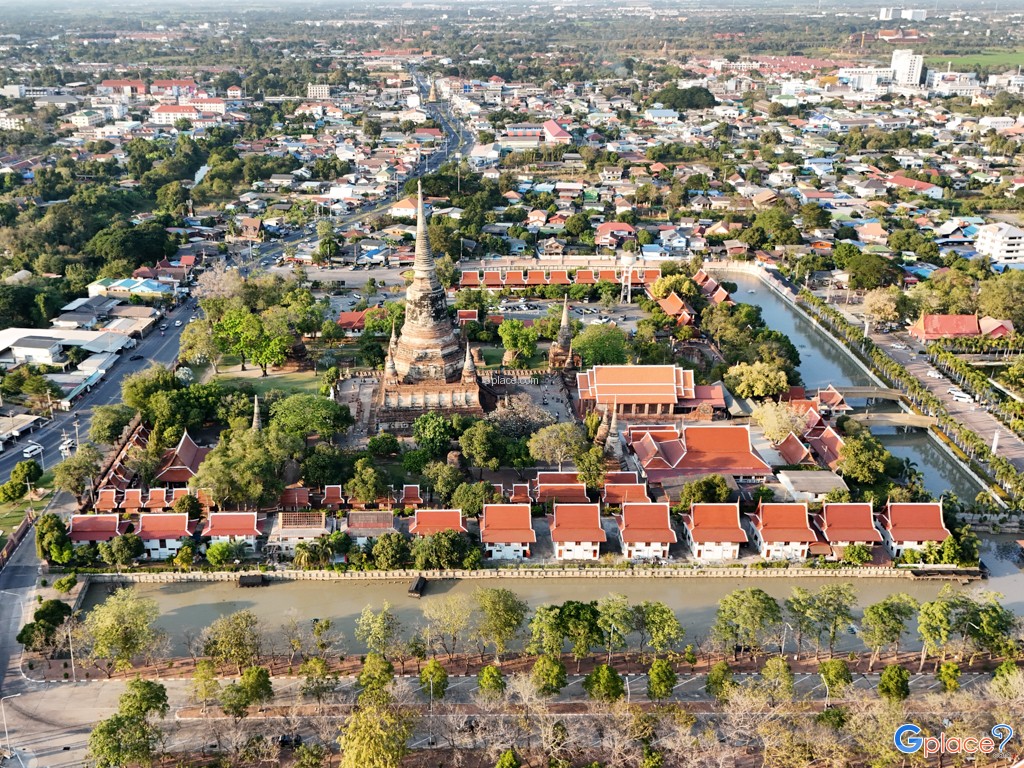
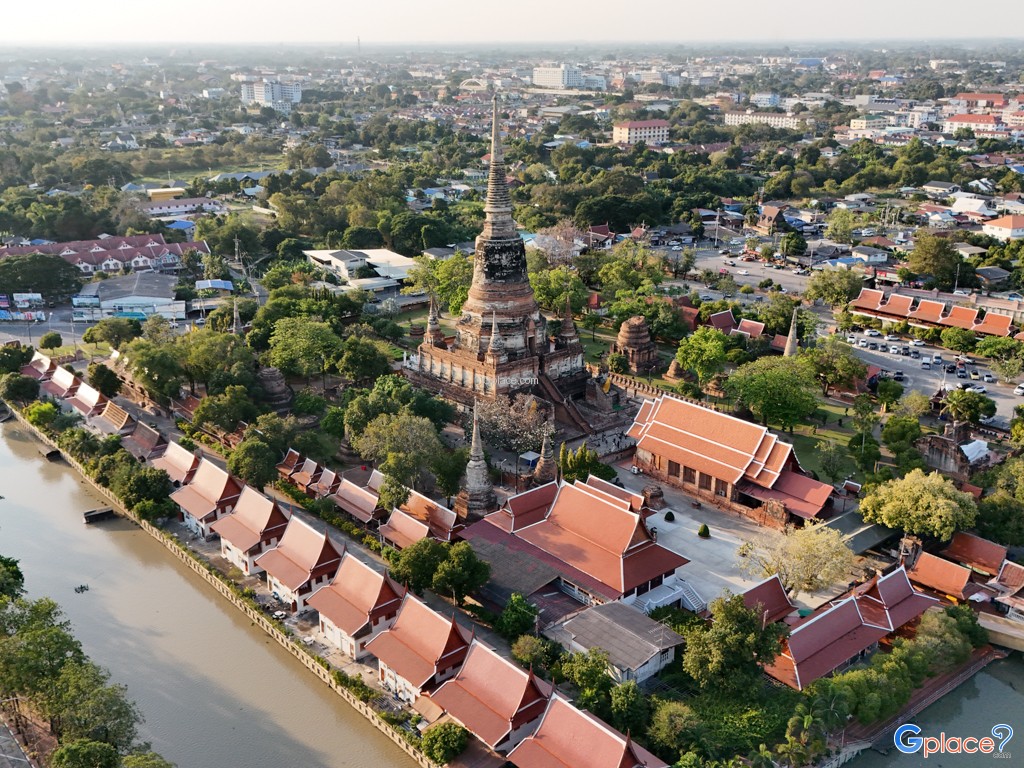
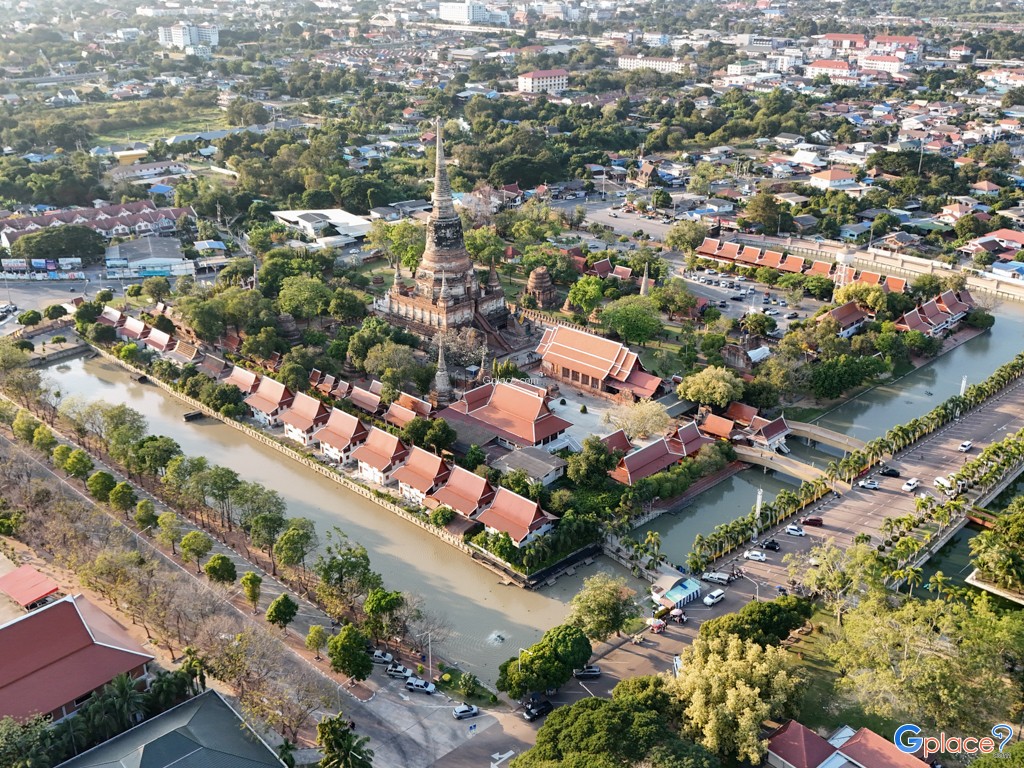
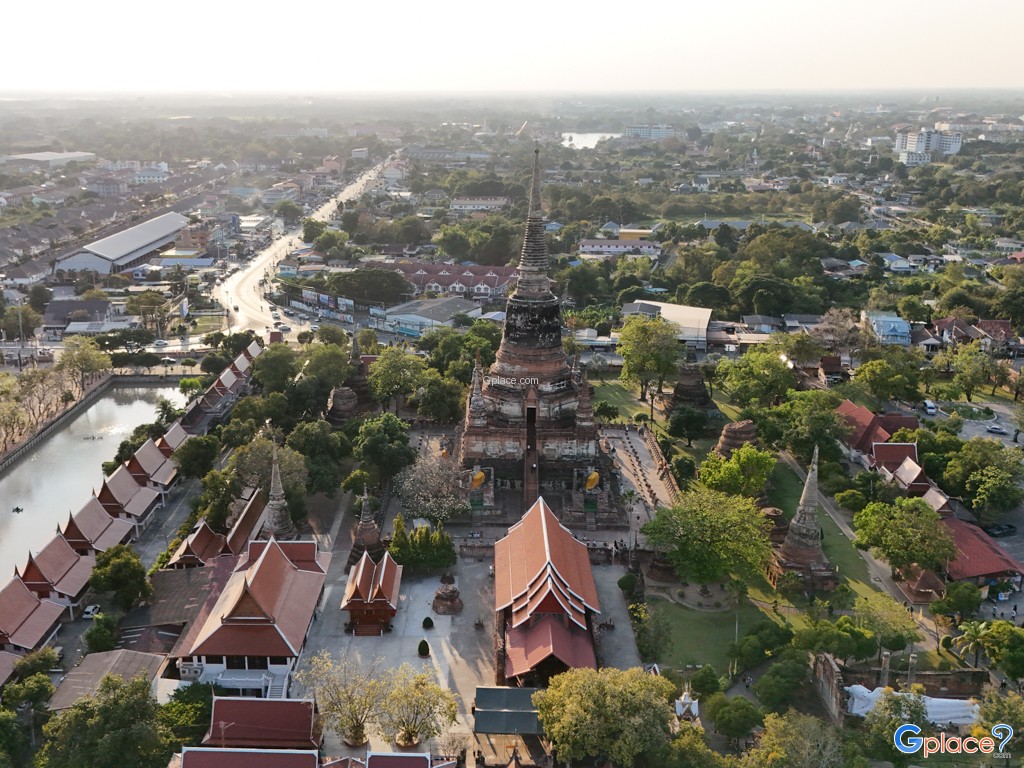
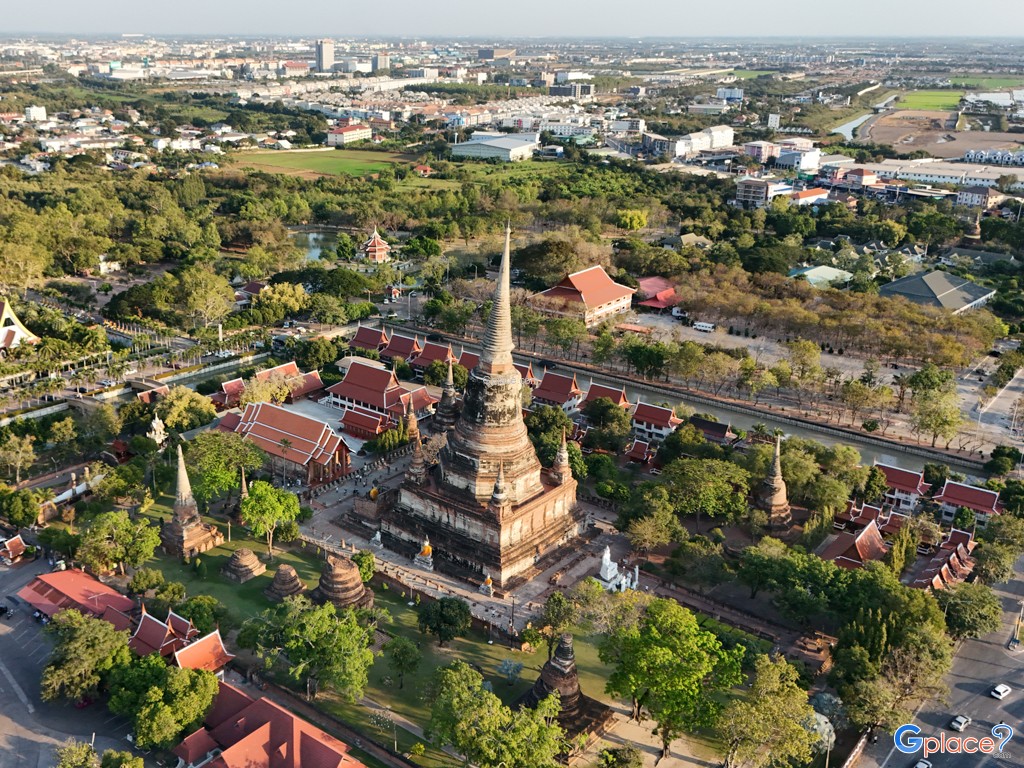
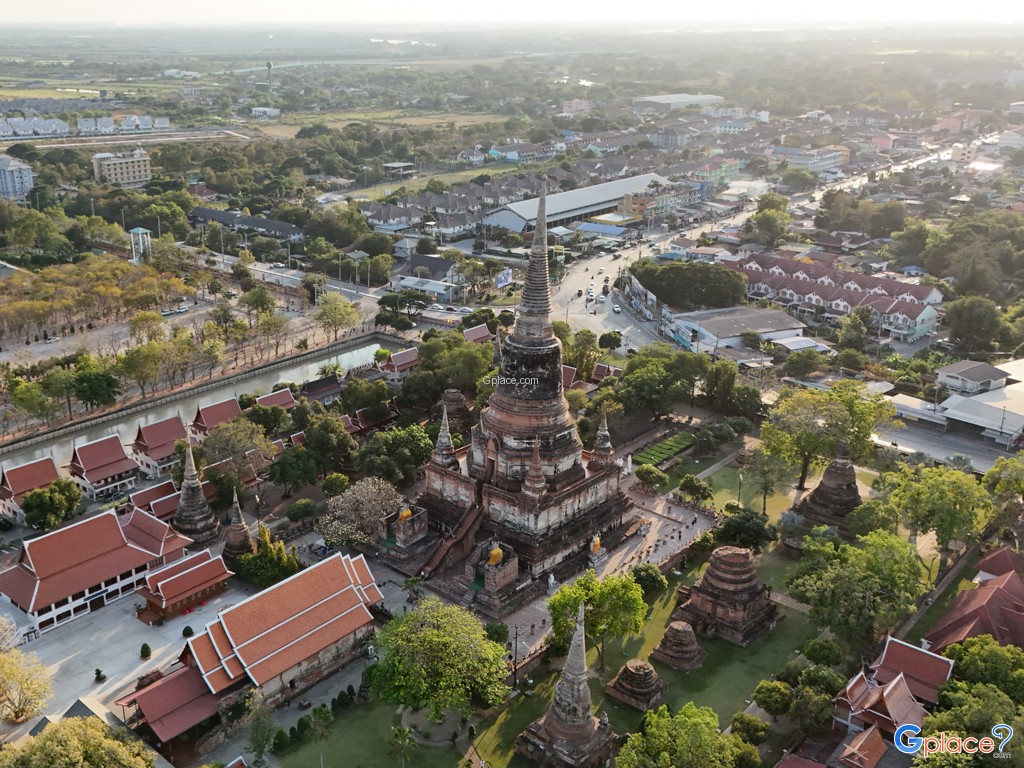
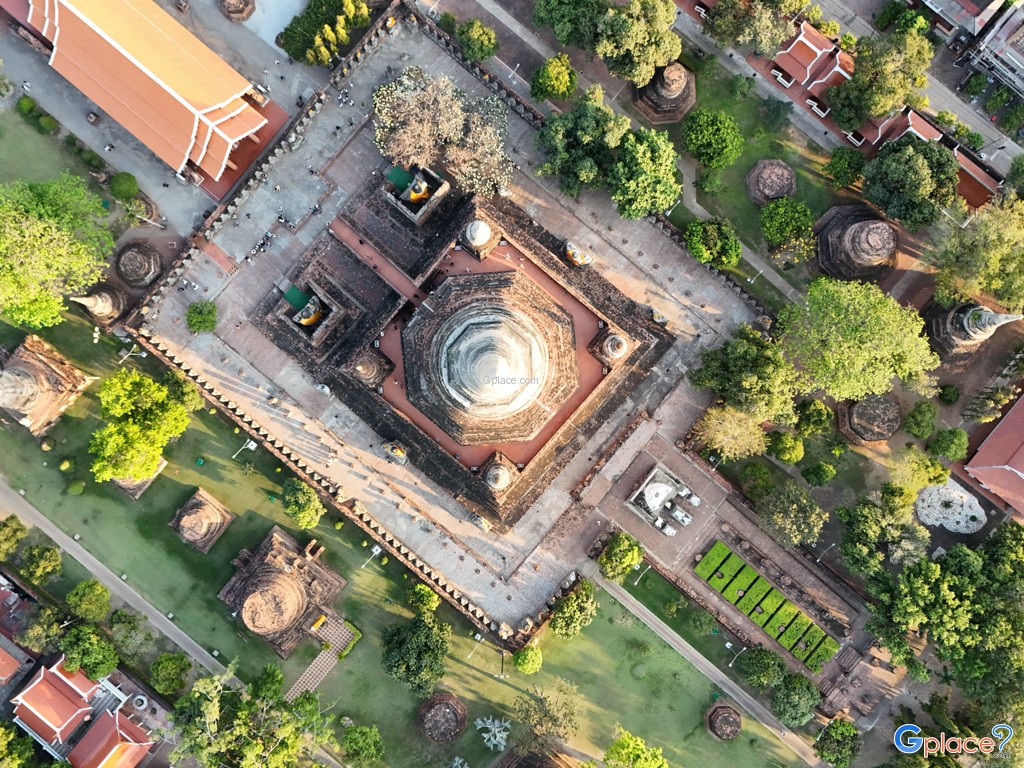
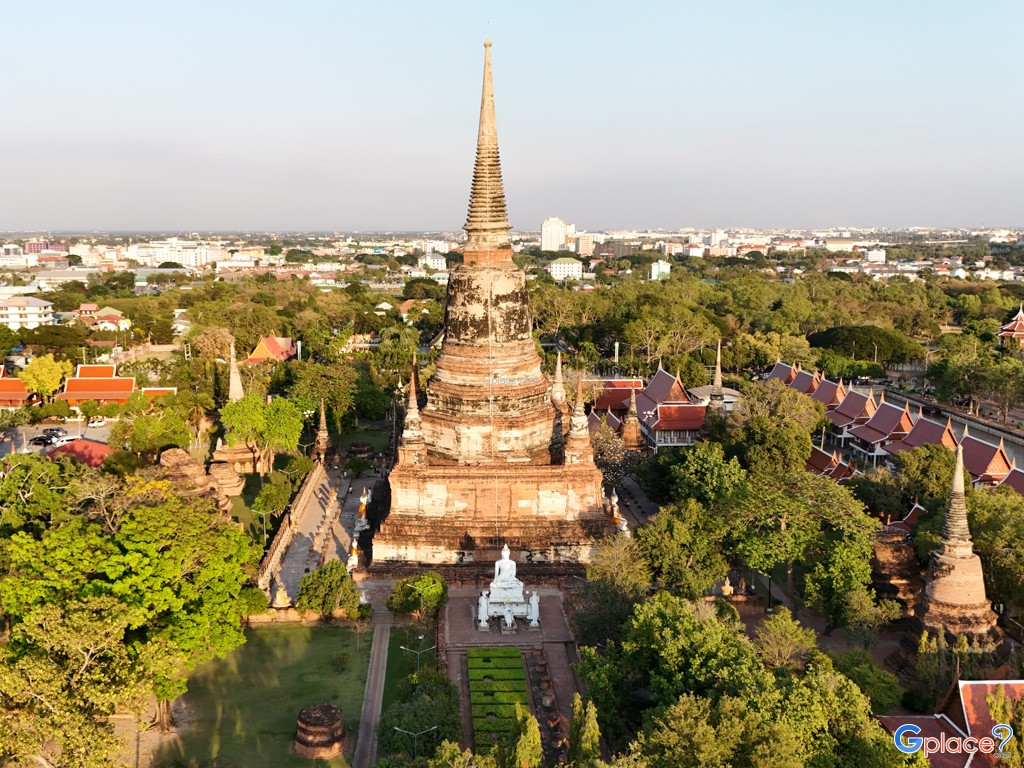
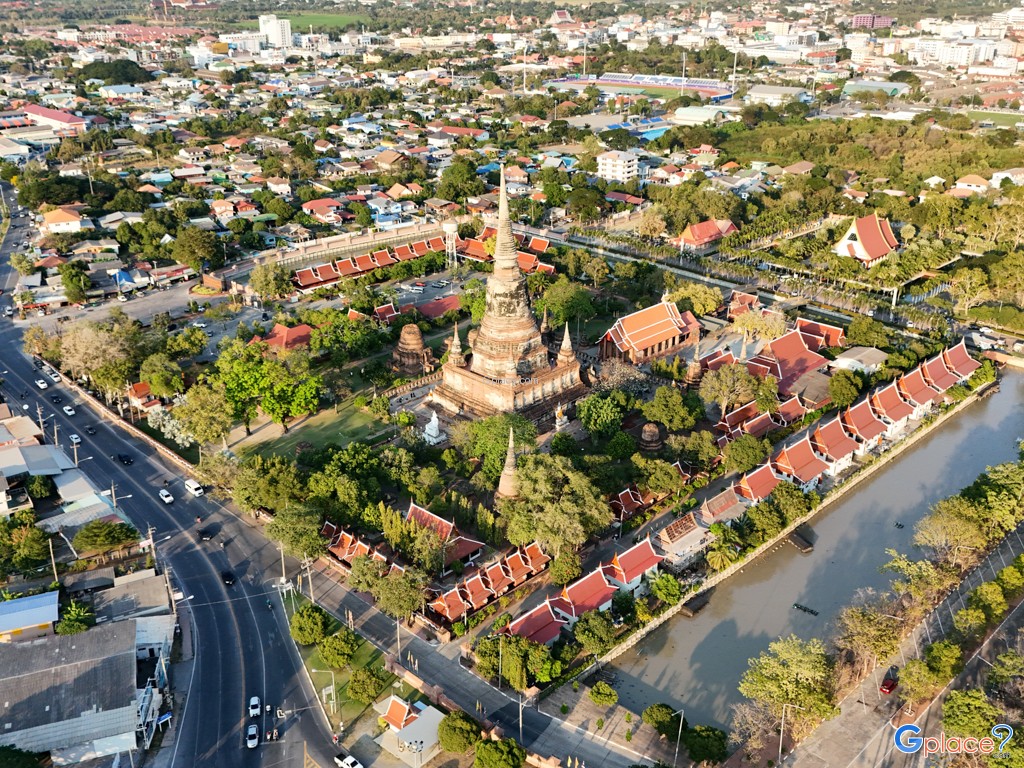
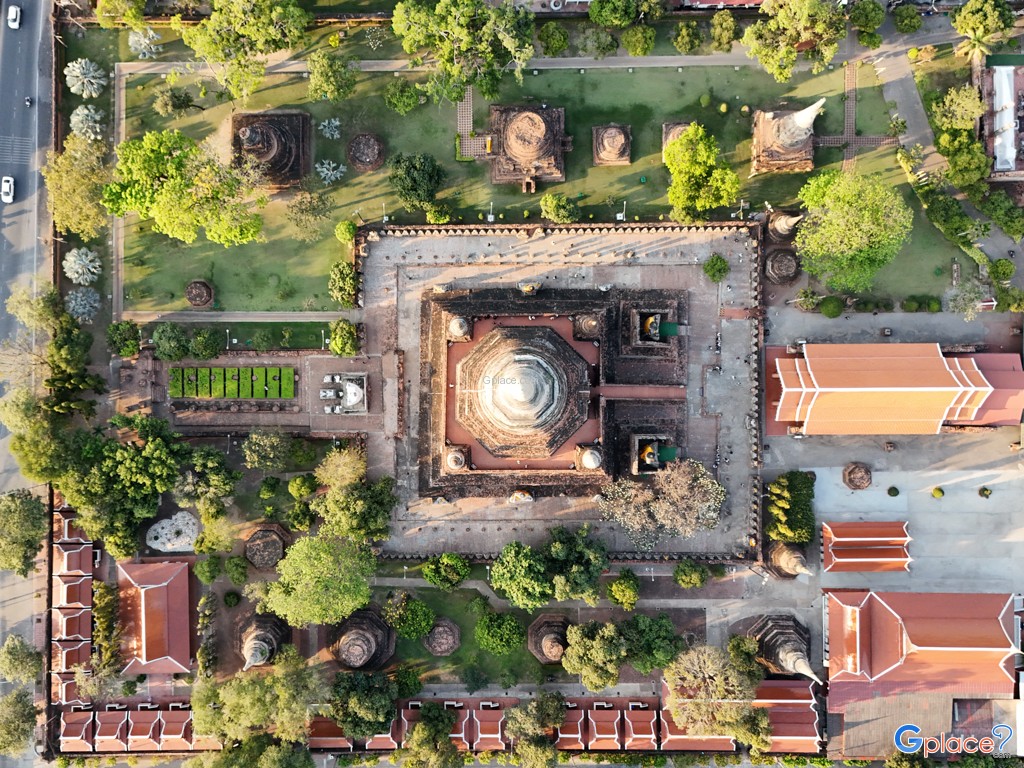
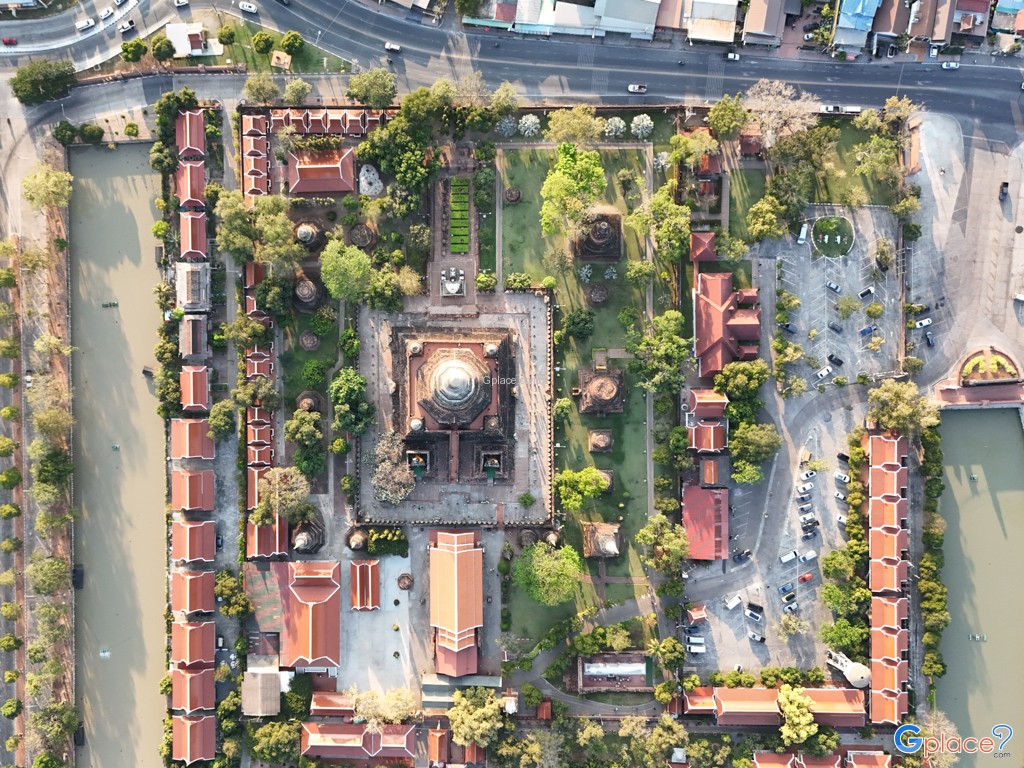
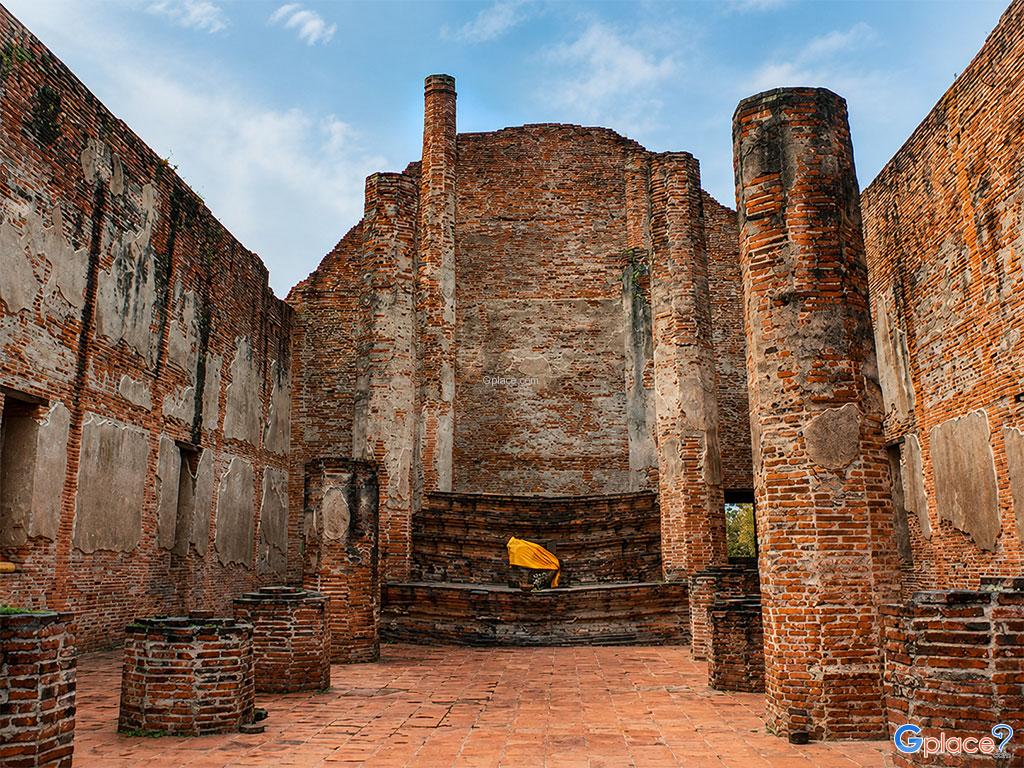
“Pay respects to the Great Pagoda of Auspicious Victory and marvel at the beautifully serene Reclining Buddha enshrined in the open-air chapel. ”
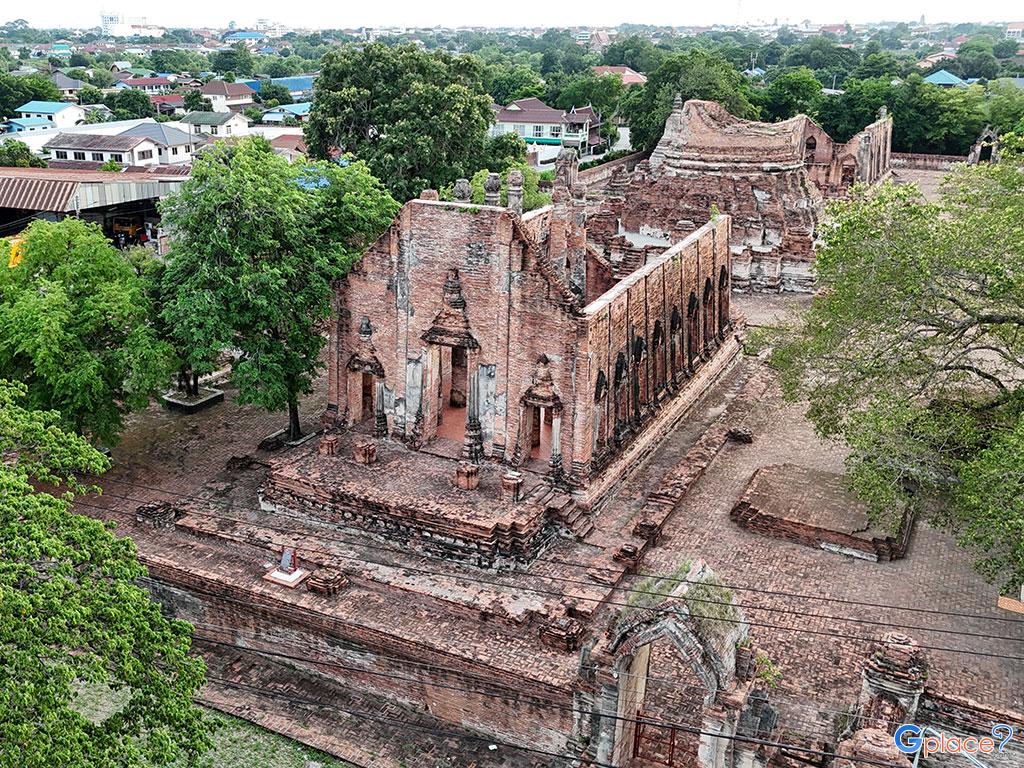
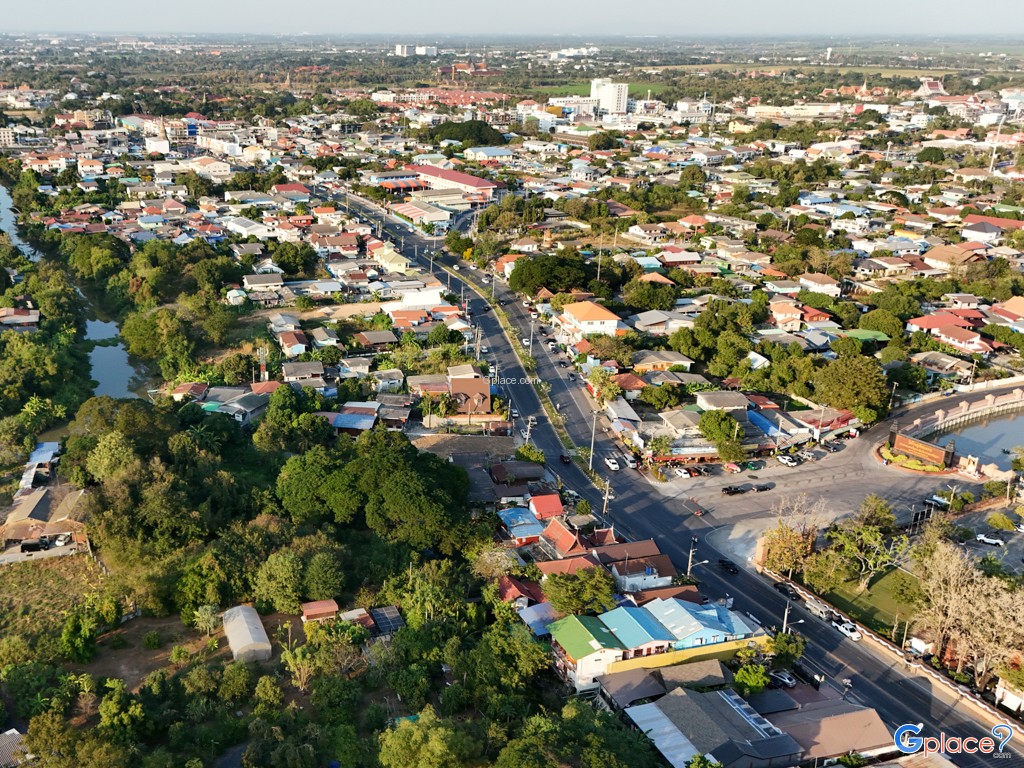
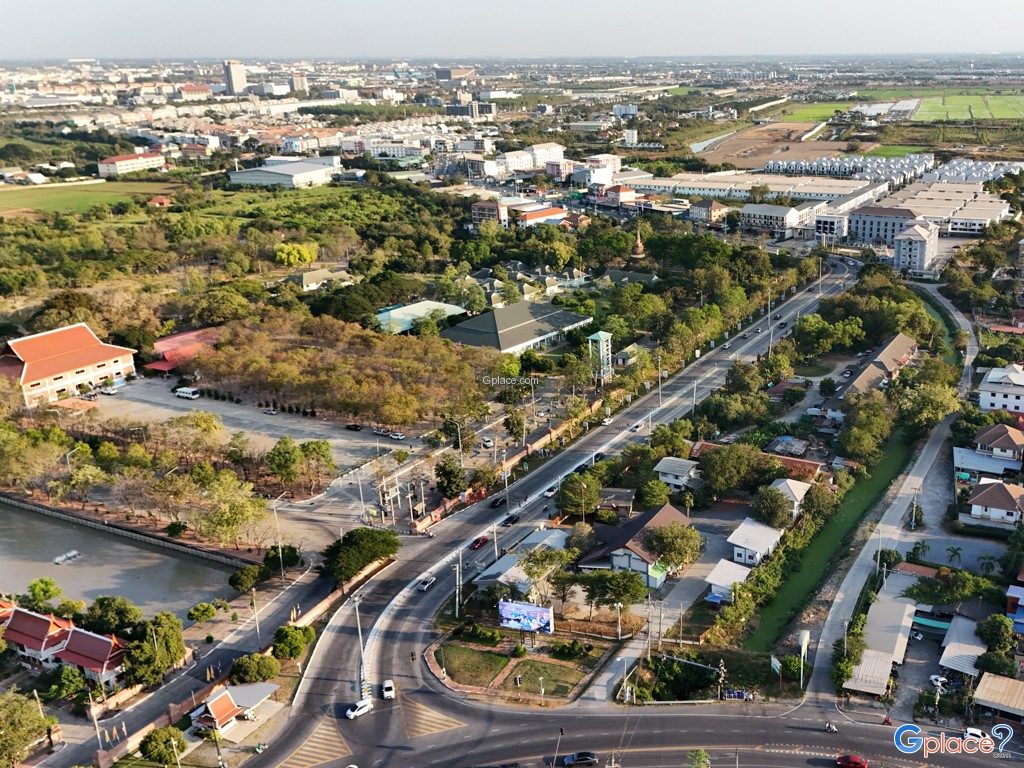
Yai Chai Mongkhon Temple, formerly known as Wat Pa Kaew or Wat Chao Phraya Thai, is located on the eastern bank of the Pa Sak River, on the outskirts of Ayutthaya. When entering the city, visitors can notice Wat Sam Pluem’s chedi, also known as the “Chedi in the Middle of the Road.” From there, turning left and continuing for about one kilometer will lead to Yai Chai Mongkhon Temple on the left-hand side. This temple is an important historical site that played significant roles in religion, politics, and the preservation of Thai independence.
According to historical evidence, Wat Pa Kaew was founded during the reign of King Ramathibodi I (King U-Thong) around 1357 CE. It was established as a monastic center for monks who had traveled to study Buddhist teachings and discipline under Phra Wanarat Mahathera in Sri Lanka. This group of monks became known in Thai as the Pa Kaew Sect, giving rise to the temple’s original name. Wat Pa Kaew later became a major center of Buddhist education during the early Ayutthaya period.
Later, the king appointed the head of the Pa Kaew sect as Somdet Phra Wanarat, serving as the Supreme Patriarch of the Right, alongside Phra Phutthakhothachan, who served as the Supreme Patriarch of the Left. As a result, the temple gained great importance within the monastic hierarchy. The temple later came to be known as Wat Chao Phraya Thai, a name believed to originate either from being the cremation site of Chao Kaew Chao Thai or from the term “Chao Thai,” which was used in ancient times to refer to high-ranking monks. Thus, the name Chao Phraya Thai symbolized the position of the Supreme Patriarch.
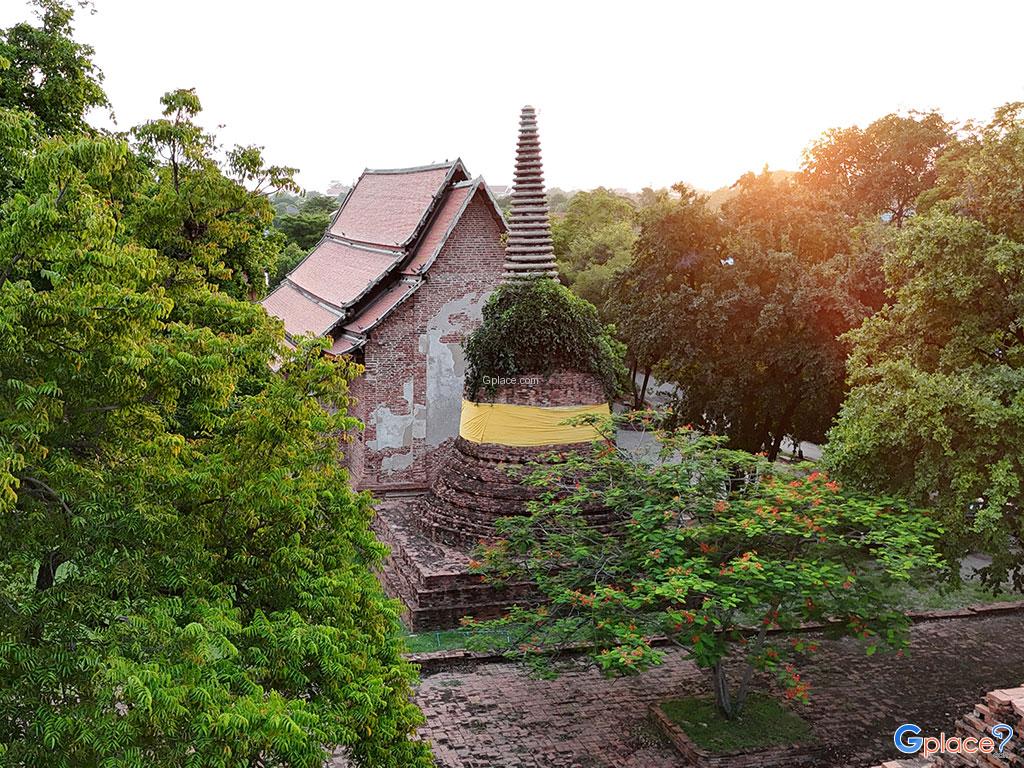
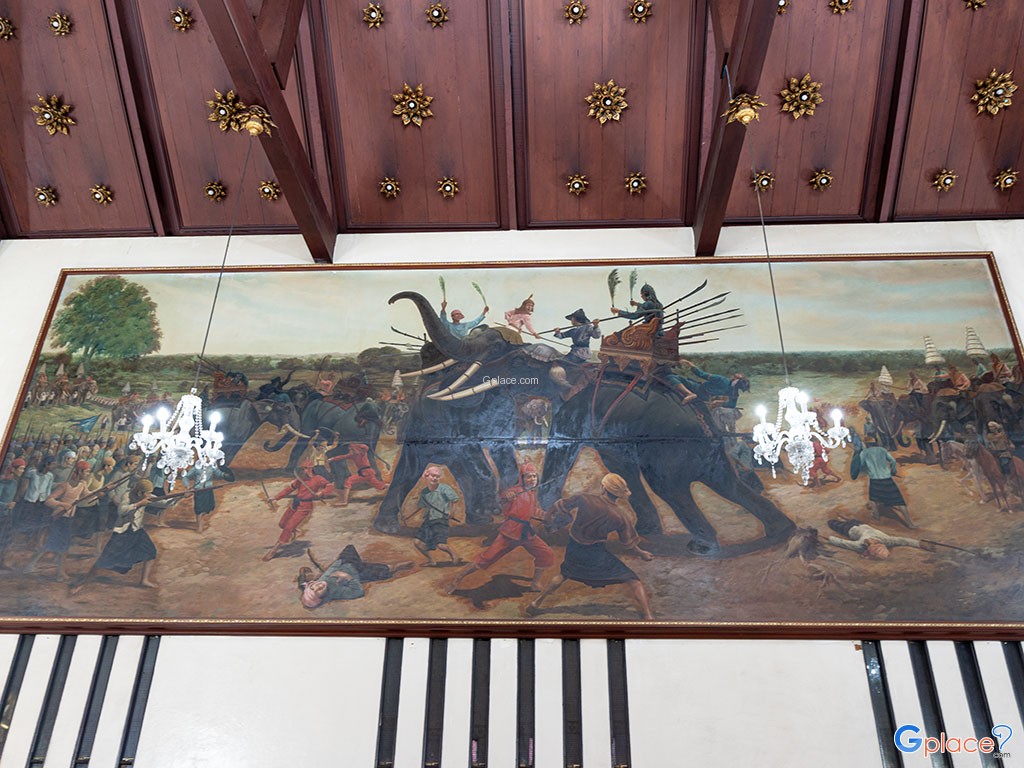
The most significant historical event associated with the temple occurred in 1593 CE, when King Naresuan the Great achieved victory in an elephant duel against the Crown Prince of Hongsawadi at Nong Sarai in present-day Suphan Buri Province. To commemorate this historic triumph, the king ordered the construction of Phra Chedi Chai Mongkhon at this temple. Some scholars believe the chedi was built over an existing structure, while others believe it was entirely new. Regardless, the chedi stands as the tallest in Phra Nakhon Si Ayutthaya Province, measuring approximately one sen and one wa in height_, and has become the defining landmark of the temple.
During the reign of King Naresuan, Yai Chai Mongkhon Temple also served as the residence of Somdet Phra Wanarat, a highly respected senior monk. According to legend, after the elephant duel victory, King Naresuan was enraged at generals who failed to follow him into battle and intended to punish them by death. Somdet Phra Wanarat intervened, citing the Buddha’s struggle against Mara beneath the Bodhi tree as a parallel to the king’s solitary battle, and advised him to build a great chedi instead of executing the generals. The king agreed, leading to the construction of Phra Chedi Chai Mongkhon as seen today.
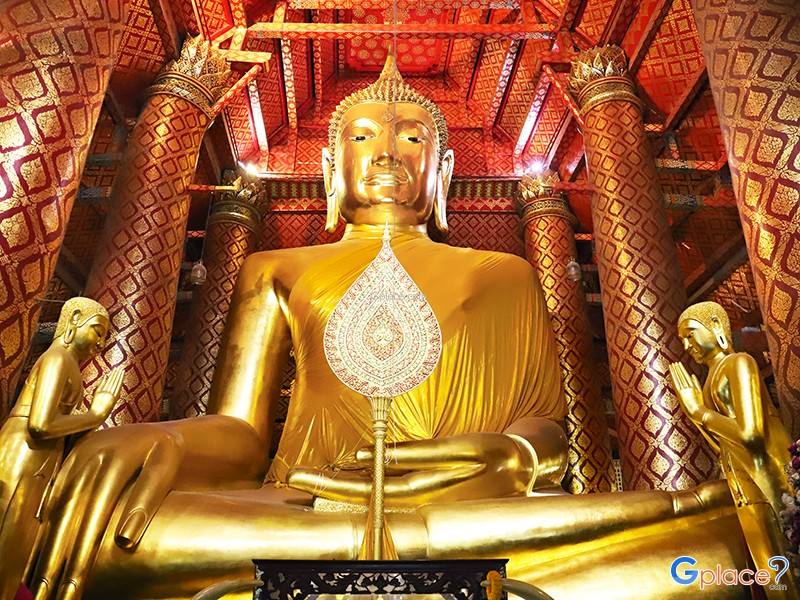
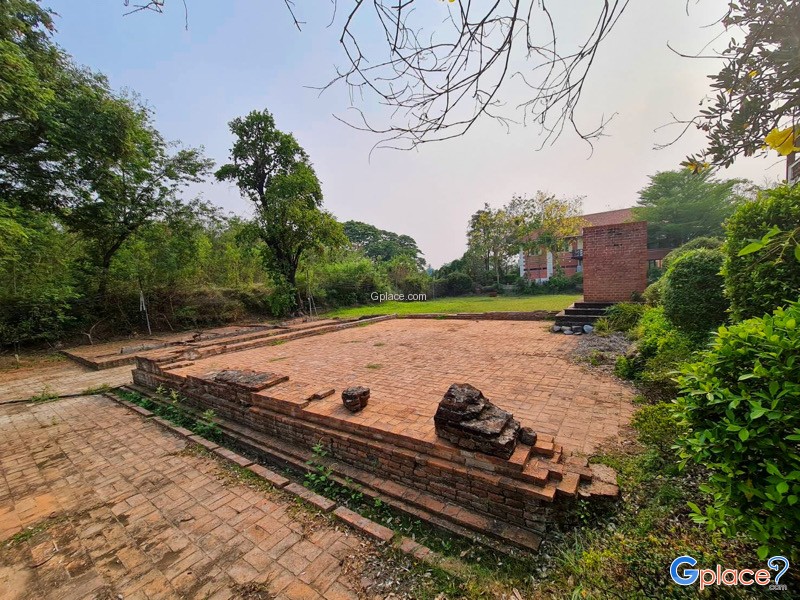
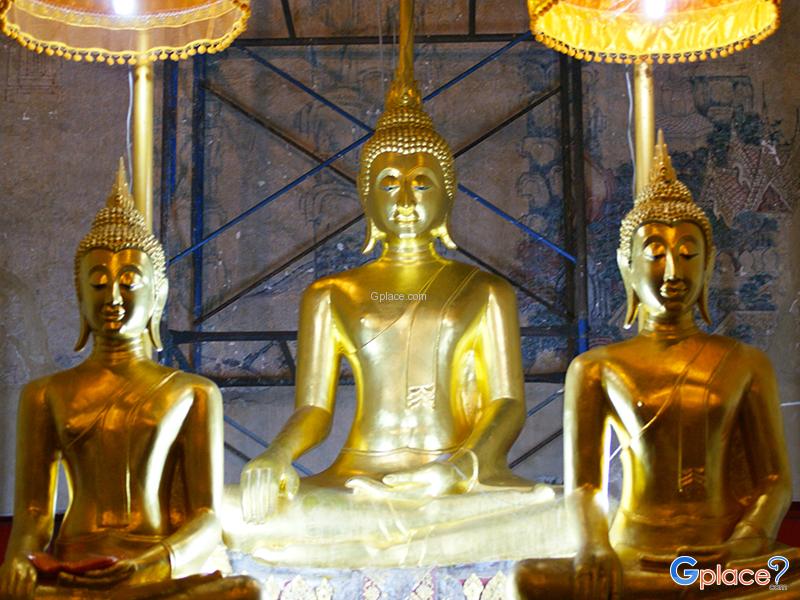
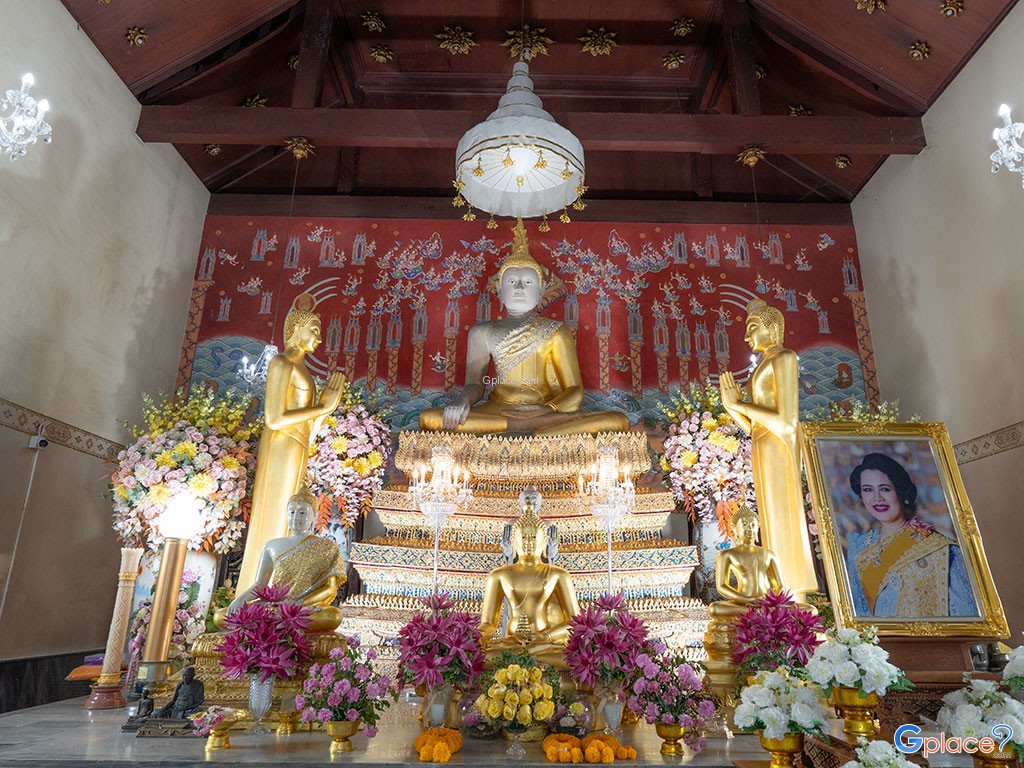
After the second fall of Ayutthaya, the temple was abandoned for a period before being restored and reinstated as an active monastery. Within the temple grounds are Phra Phuttha Chai Mongkhon, the principal Buddha image enshrined in the ordination hall, and the Shrine of King Naresuan the Great, completed in 2001 CE. Today, Yai Chai Mongkhon Temple stands as a place of worship, a historical landmark, and a powerful symbol of Thai courage, independence, and national pride.
How to Get There
Private Car:
- Take the Asia Highway into Ayutthaya. Turn left at the Wat Sam Pluem Pagoda roundabout and continue for about 1 km; the temple is on your left.
Frog-nosed Tuk-Tuk:
- Available from Ayutthaya Train Station or the city island; just ask for "Wat Yai Chai Mongkhon."
Motorbike/Bicycle:
- Very accessible with ample parking in front of the temple entrance.
Travel Tips
-
November to February offers the best weather for climbing the stupa without extreme heat.
-
Dress politely (shoulders and knees covered) to show respect for the sacred site and Thai traditions.
-
The steps up the main pagoda are quite steep; elderly visitors and those with knee issues should exercise caution.
-
Try the famous "Roti Sai Mai" (Thai cotton candy) available in front of the temple, a signature Ayutthaya treat.
-
To avoid crowds, aim for early morning before 09:30 or late afternoon after 16:00.
Admission Fee
-
Local visitors: Free
-
Foreign visitors: 20 THB
Opening Hours
-
Open daily, 08:00 – 17:00
Yai Chai Mongkhon Temple

 Share
Share
 Yai Chai Mongkhon Temple, 40 Luang Phor Khao Soi 3, Phai Ling, Phra Nakhon Si Ayutthaya, Phra Nakhon Si Ayutthaya, Thailand
Map
Yai Chai Mongkhon Temple, 40 Luang Phor Khao Soi 3, Phai Ling, Phra Nakhon Si Ayutthaya, Phra Nakhon Si Ayutthaya, Thailand
Map
 Closed today
Mon8.00 - 17.00
Tue8.00 - 17.00
Wed8.00 - 17.00
Thu8.00 - 17.00
Fri8.00 - 17.00
Sat8.00 - 17.00
Sun8.00 - 17.00



 8199
8199
Recommend trips
- With the deepest respect from the sky
- อยุธยา ต้องเที่ยว
- 12 วัดไหว้พระขอพร หลังปลดล็อคโควิด
- จุดท่องเที่ยวฝรั่ง ตามรอยคลิปดังท่องเที่ยวไทยยูทูบ
- พระนอนศักดิ์สิทธิ์เมืองไทย
- ไหวมั้ย 15 วัดอยุธยาวันเดียว
- ตามรอยสถานที่ อ้อเจ้า การะเกด บุพเพสันนิวาส
- ทริปอยุธยาครึ่งวัน
- Pilgrimage to 9 temples in Ayutthaya
- 30 วัดสวย ใกล้กรุงเทพ
- เสาร์ อาทิตย์ ไปเช้า เย็นกลับ