 Attractions
  Hotel
Hotel  Restaurant
  Shopping
  Abroad





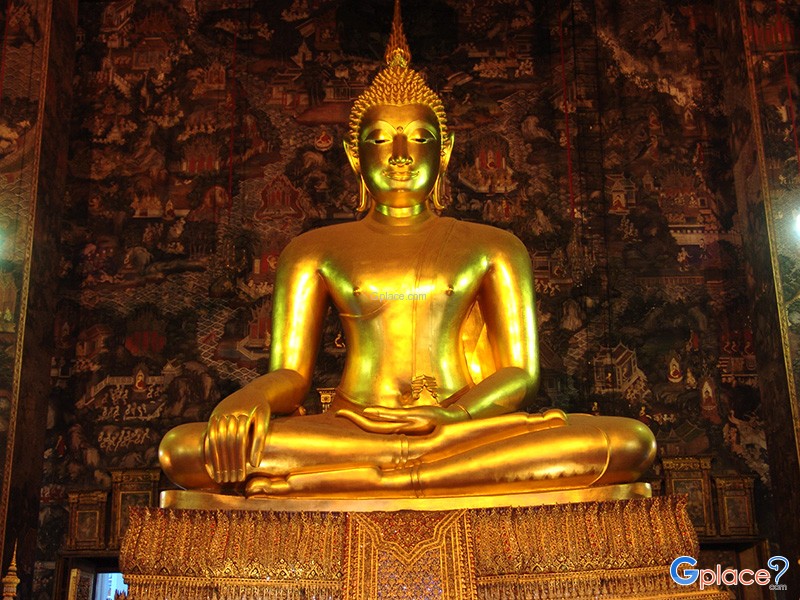

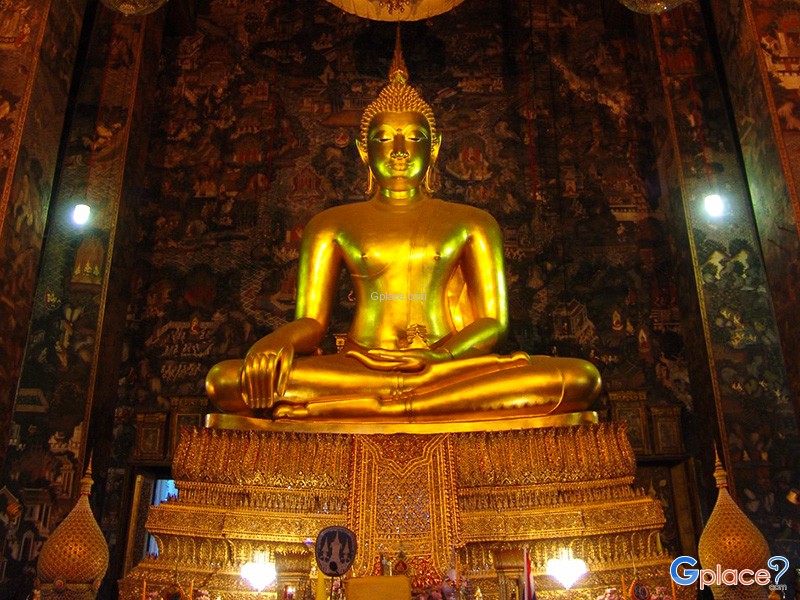
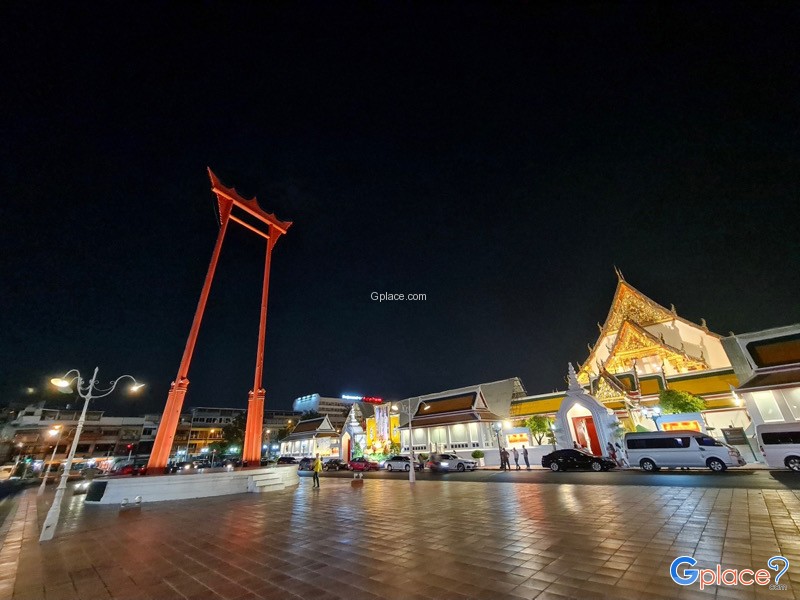
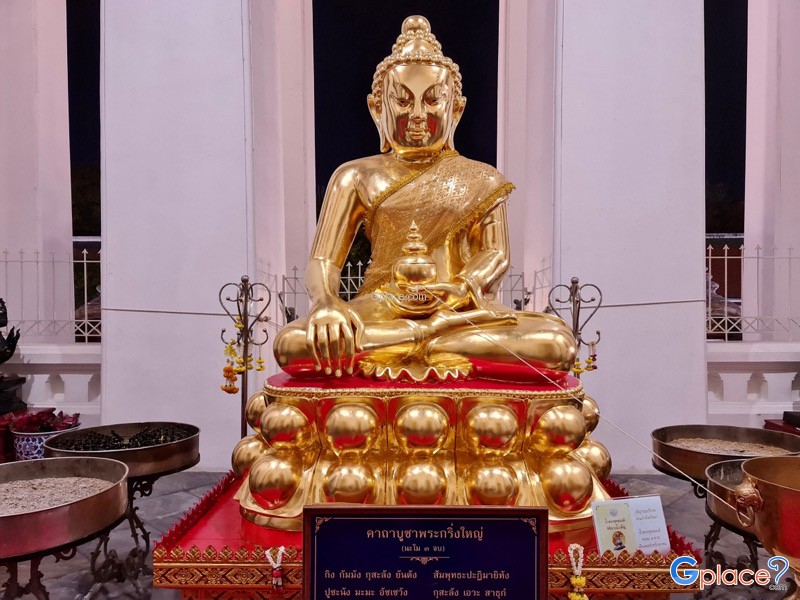
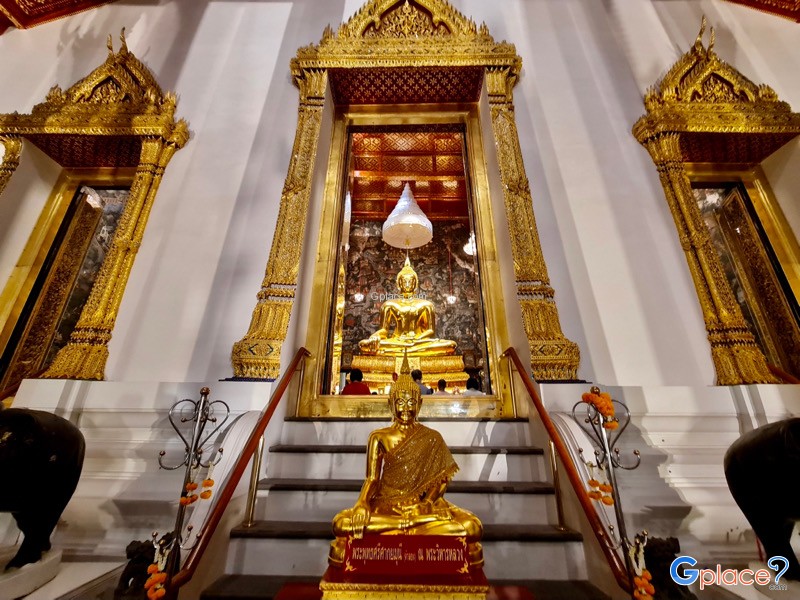
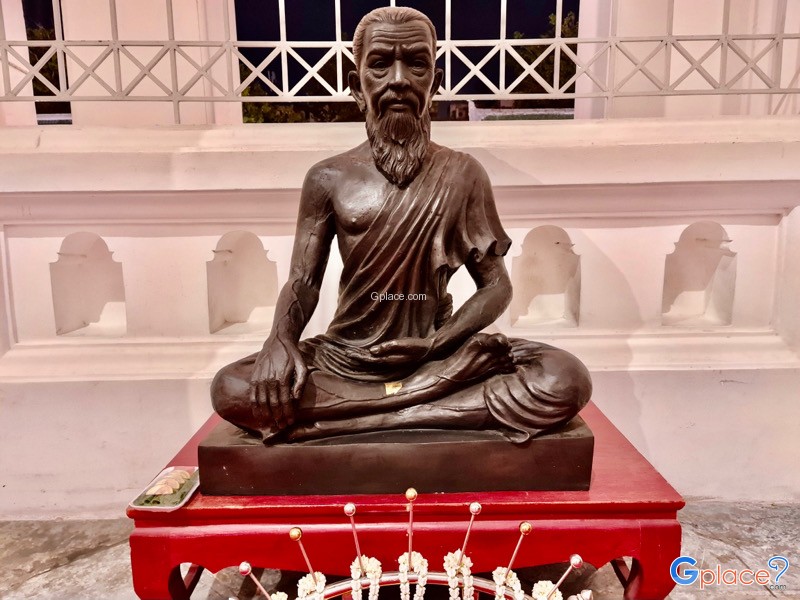
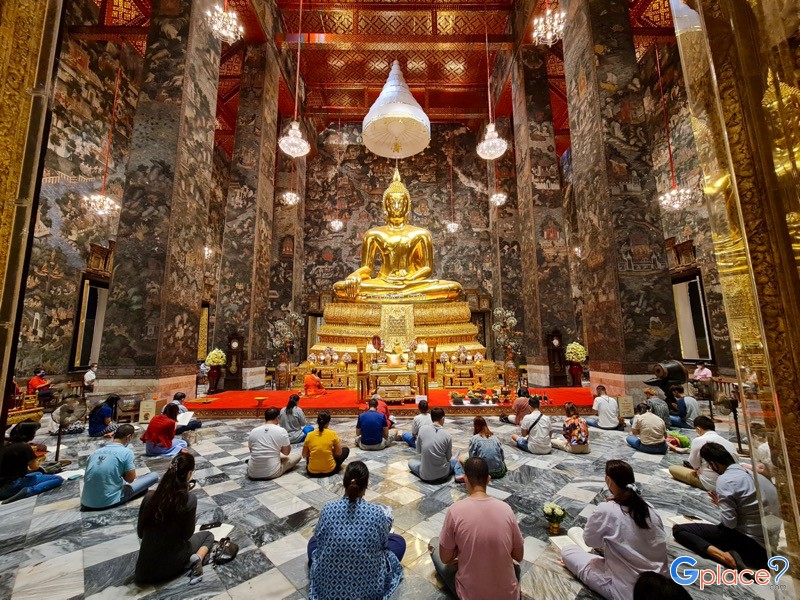
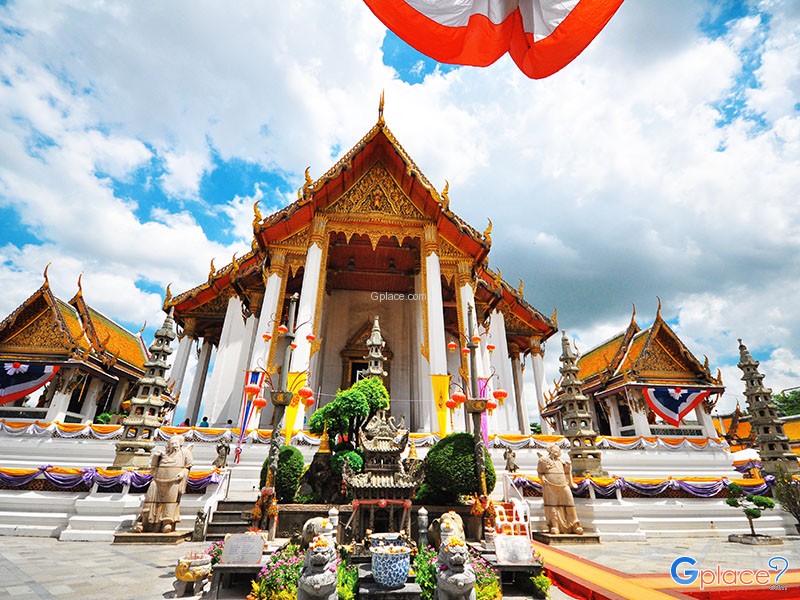
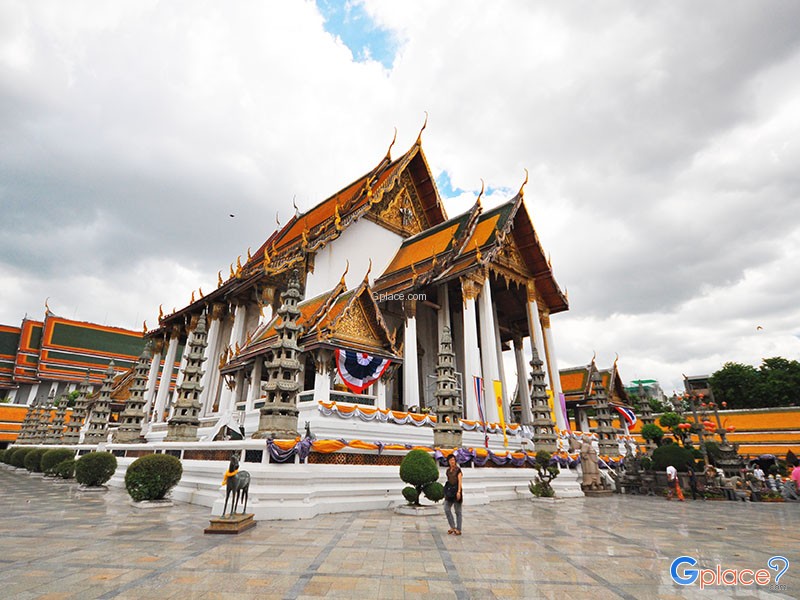
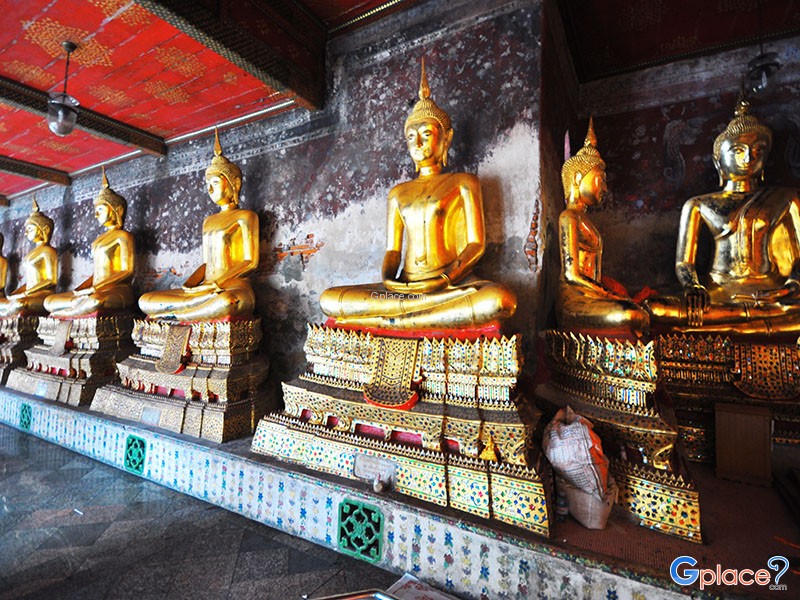
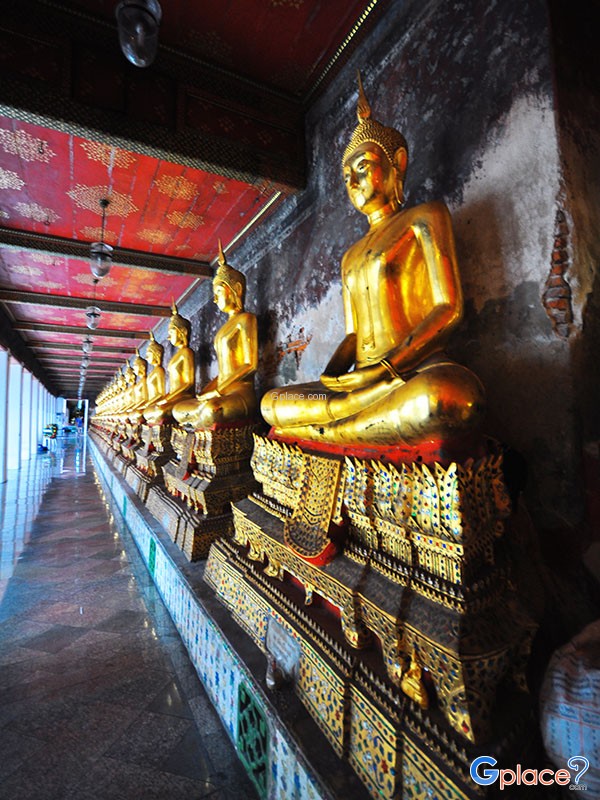
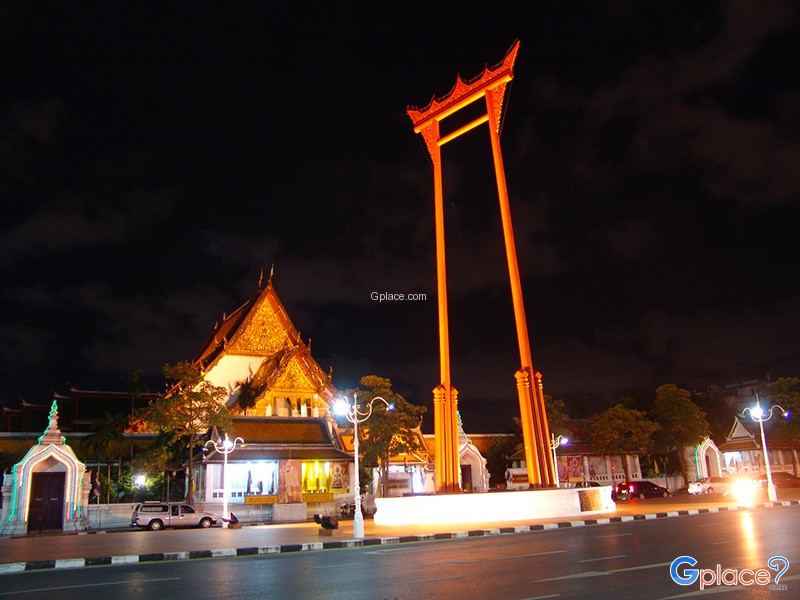
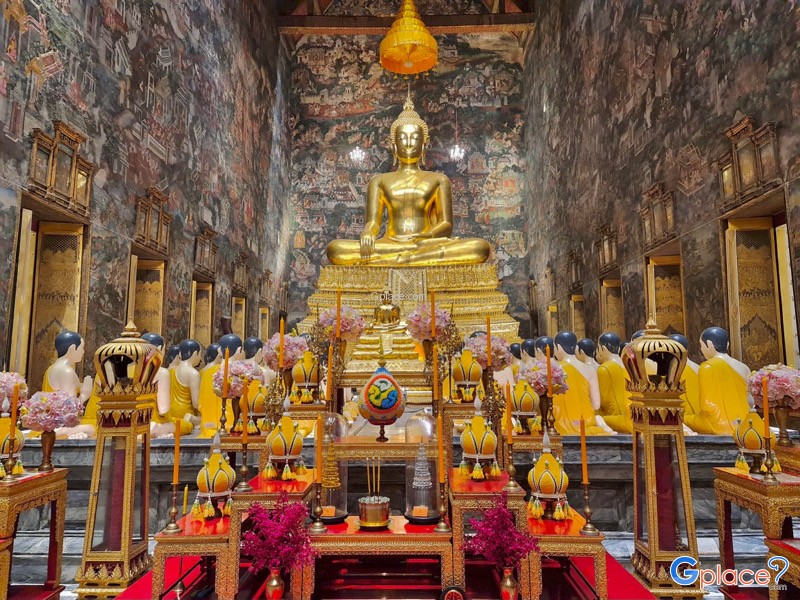
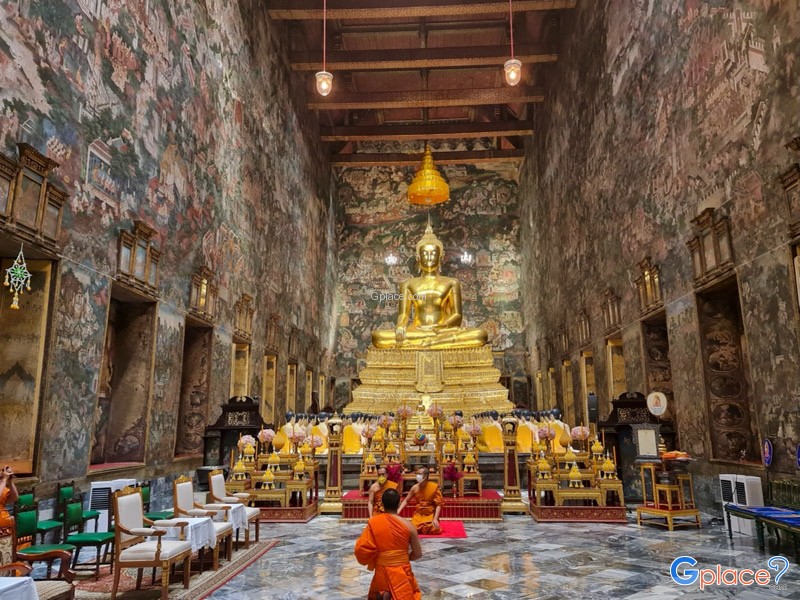

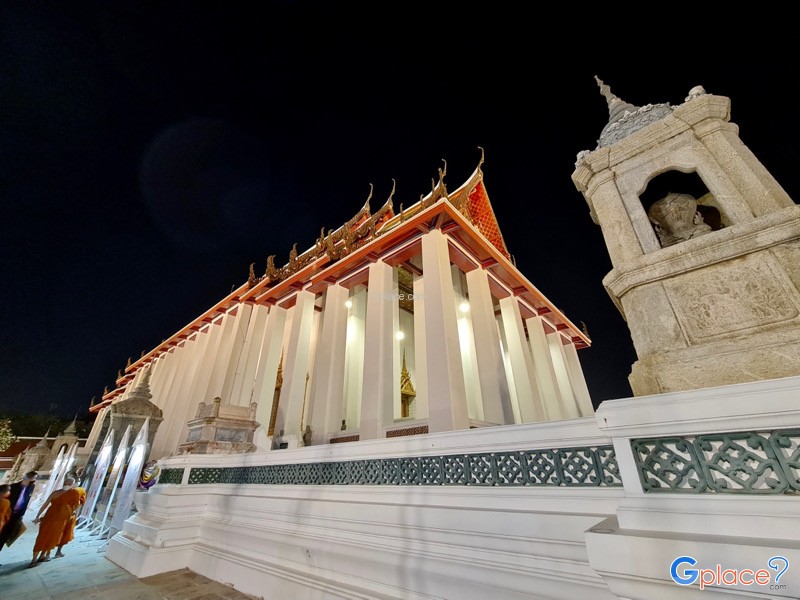

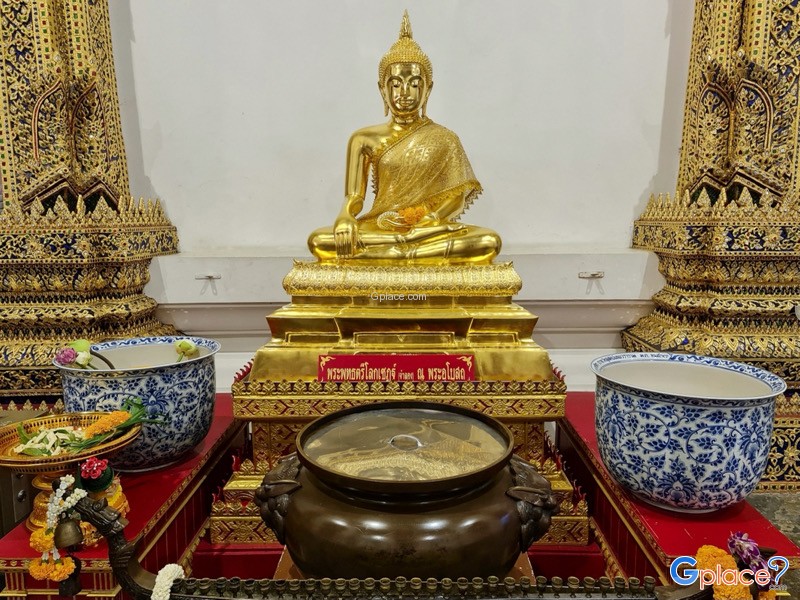

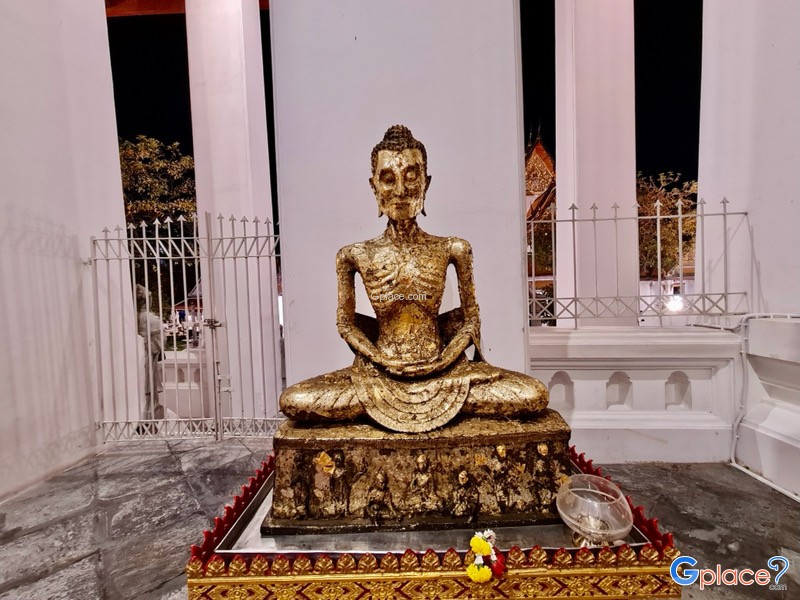

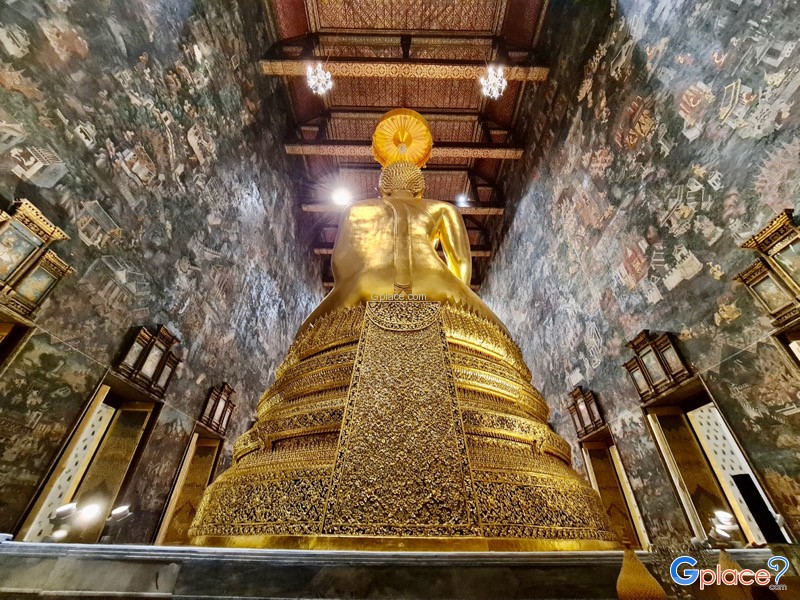
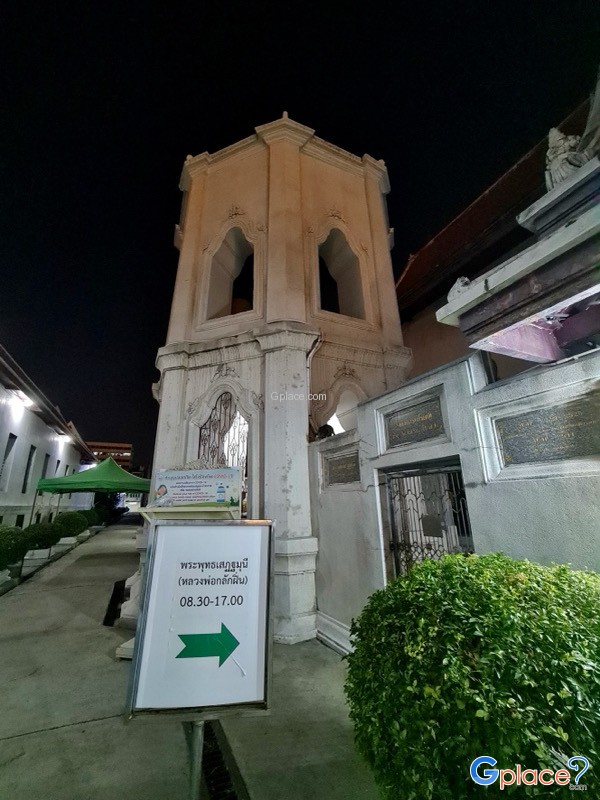
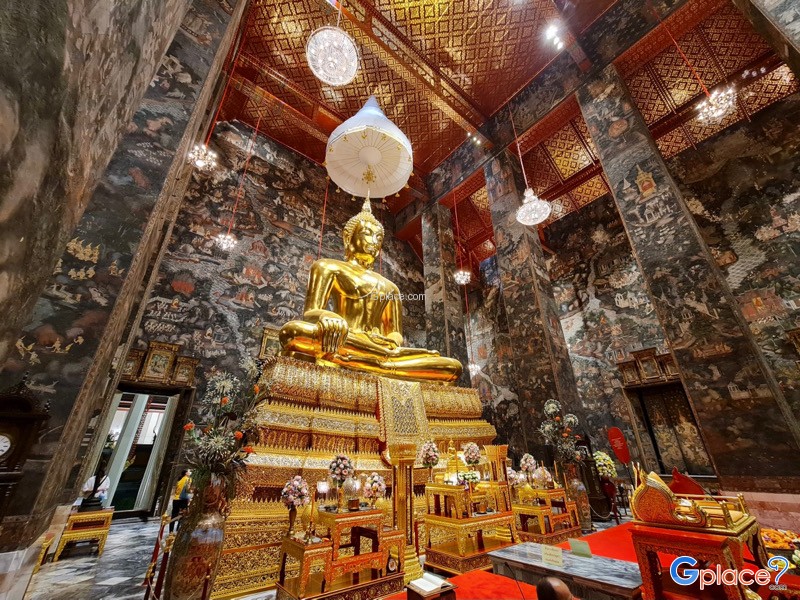
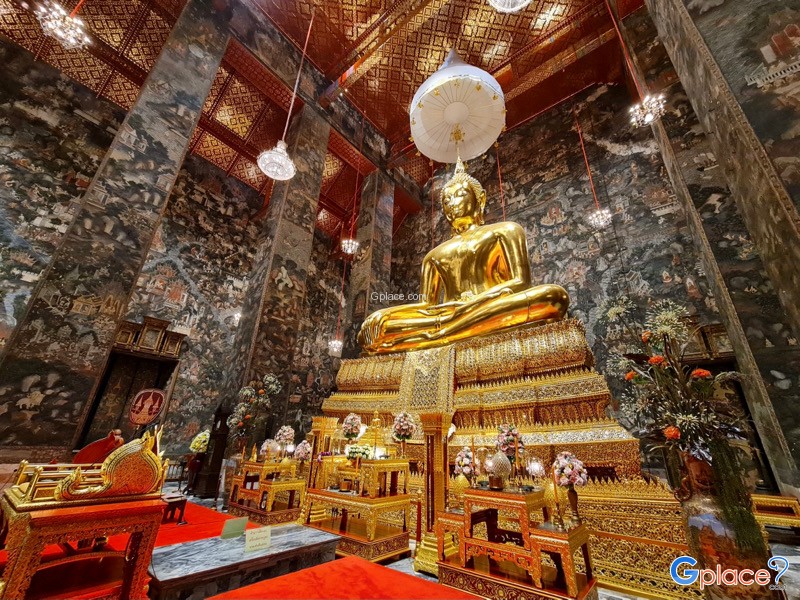
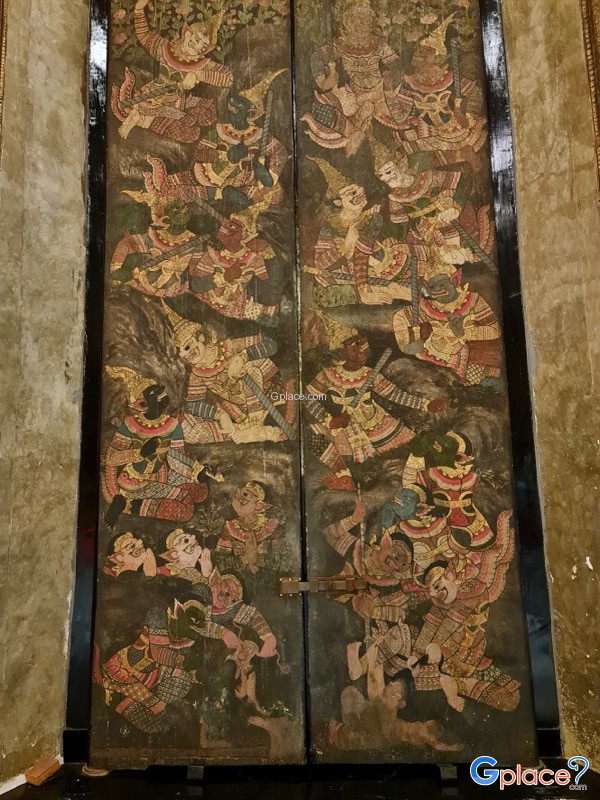
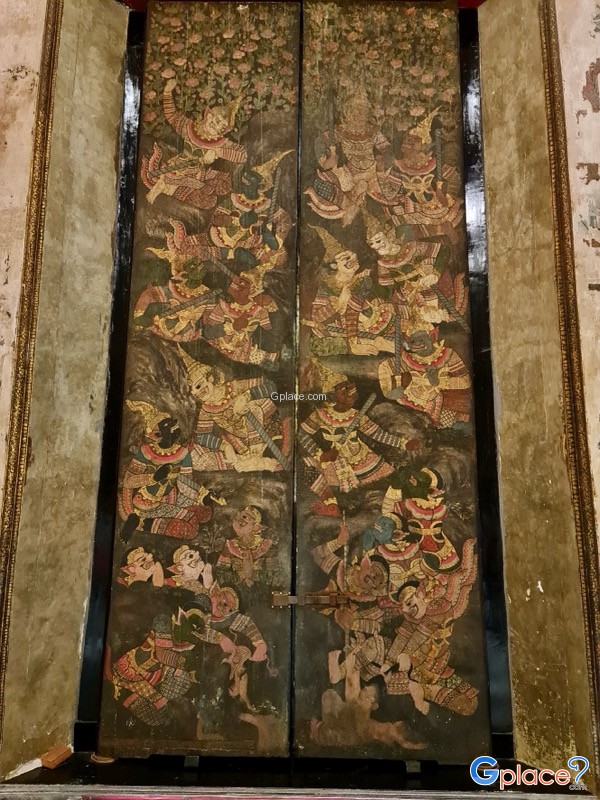
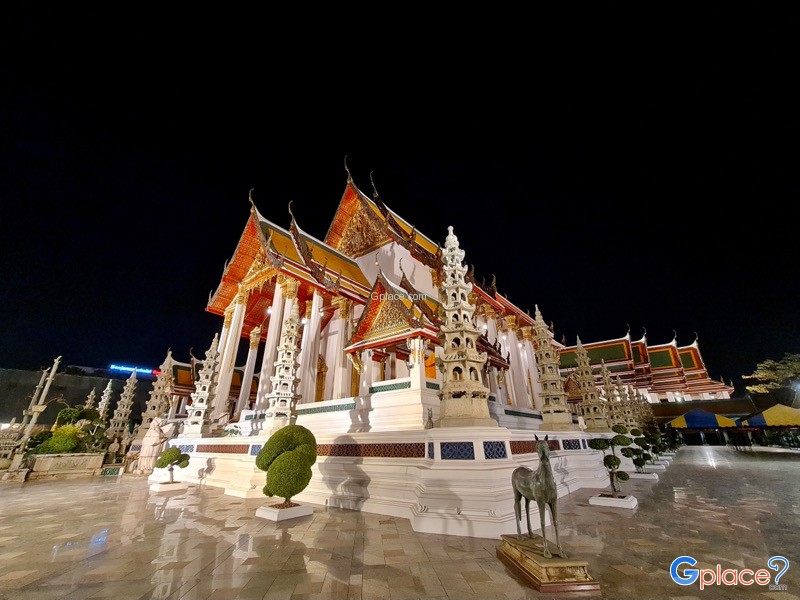

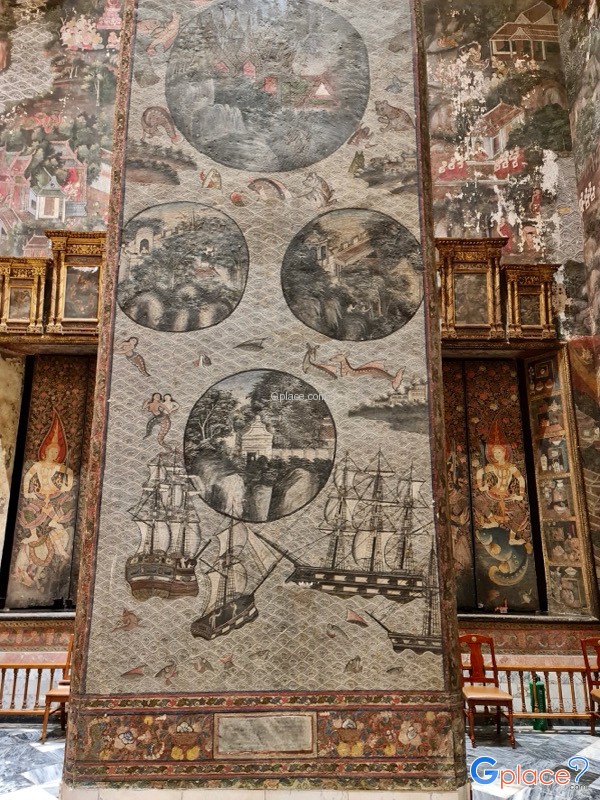
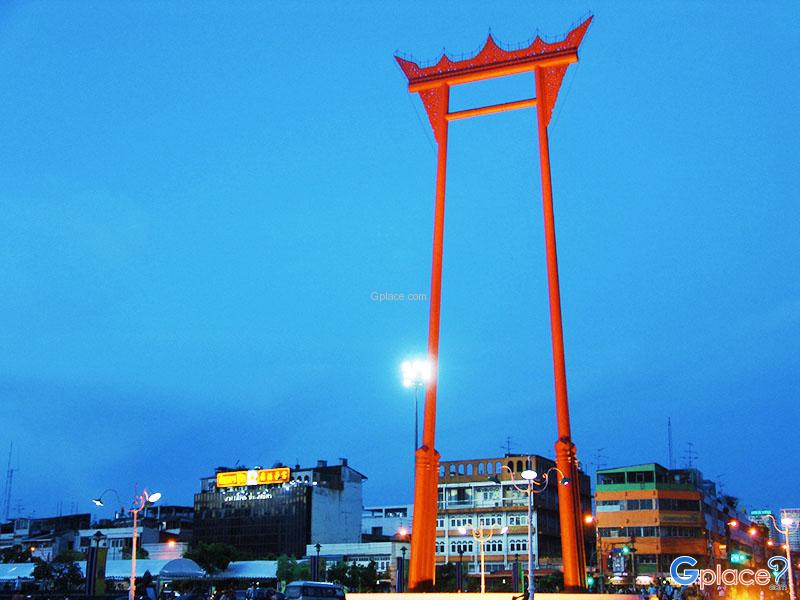
“Marvel at the Phra Sri Sakyamuni, a massive bronze Buddha from the Sukhothai era, set within a grand vihara surrounded by elite Thai architecture and the famous Giant Swing landmark.”
Suthat Thepwararam Temple is one of Bangkok’s most significant royal monasteries and a masterpiece of early Rattanakosin architecture. Construction began during the reign of King Rama I and was completed in the reign of King Rama III. The temple was intended to house the revered Phra Si Sakyamuni, a monumental bronze Buddha image relocated from Sukhothai, representing the refined elegance of Sukhothai artistic tradition.
Layout and Architectural Concept
The temple’s layout clearly separates the sacred Buddhavasa (ordination hall and main sanctuary) from the Sanghavasa (monastic residential quarters), reflecting royal planning principles of order and spiritual hierarchy.
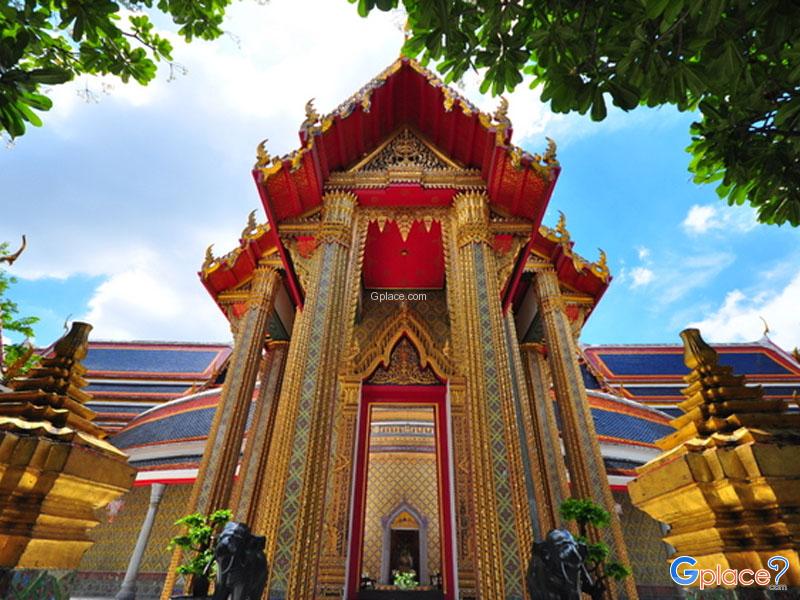
Architecturally, Wat Suthat blends Sukhothai grace with late Ayutthaya monumentality. The buildings are proportionally grand yet harmonious, featuring multi-tiered roofs, elegant finials, and gilded stucco pediments.
The Main Hall and Phra Si Sakyamuni
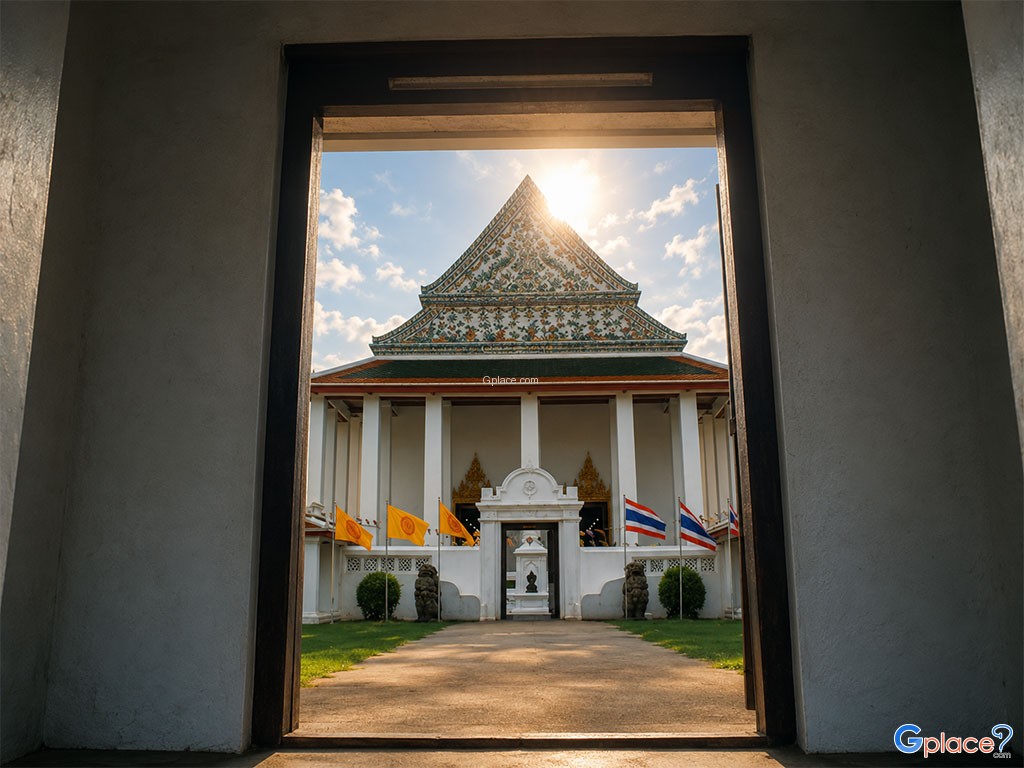
The grand viharn (assembly hall) is among the largest in Thailand. Inside sits Phra Si Sakyamuni, a massive bronze Buddha in the Mara-Vijaya posture. The statue’s serene facial expression, flame-like ushnisha, and refined proportions embody the spiritual aesthetics of Sukhothai art.
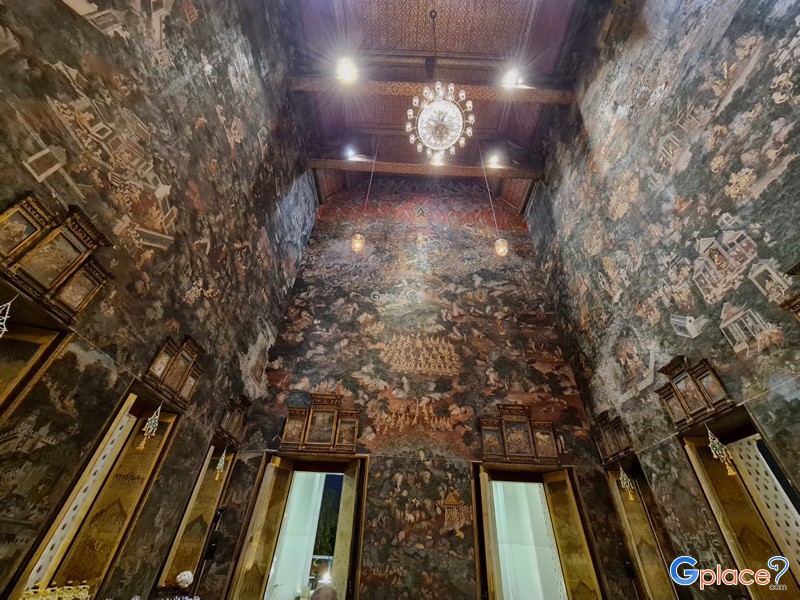
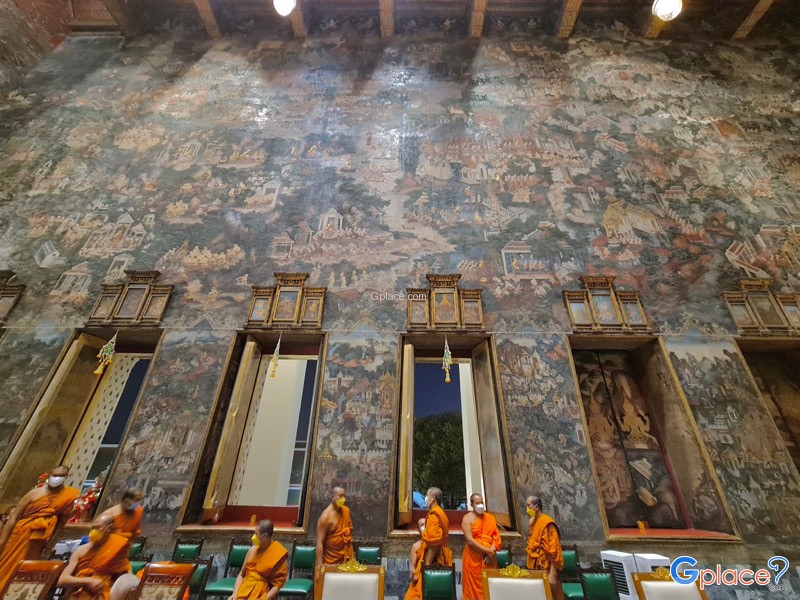
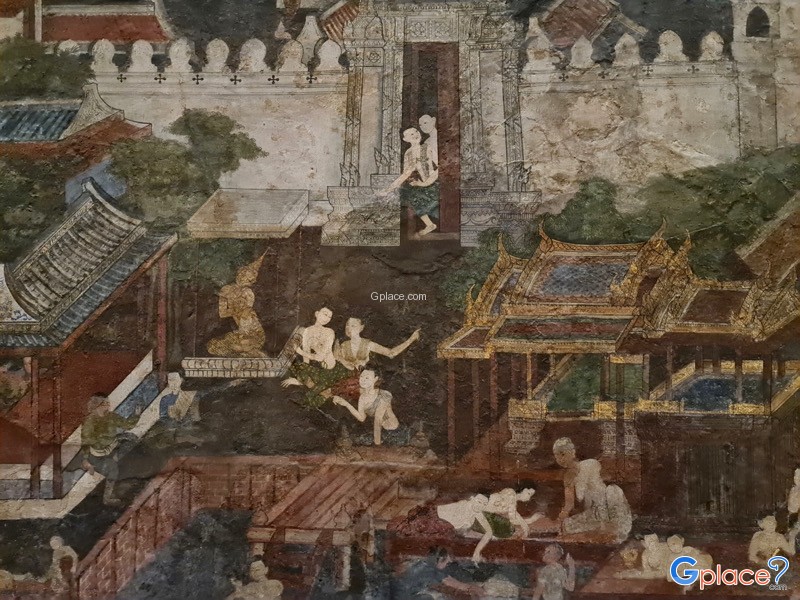
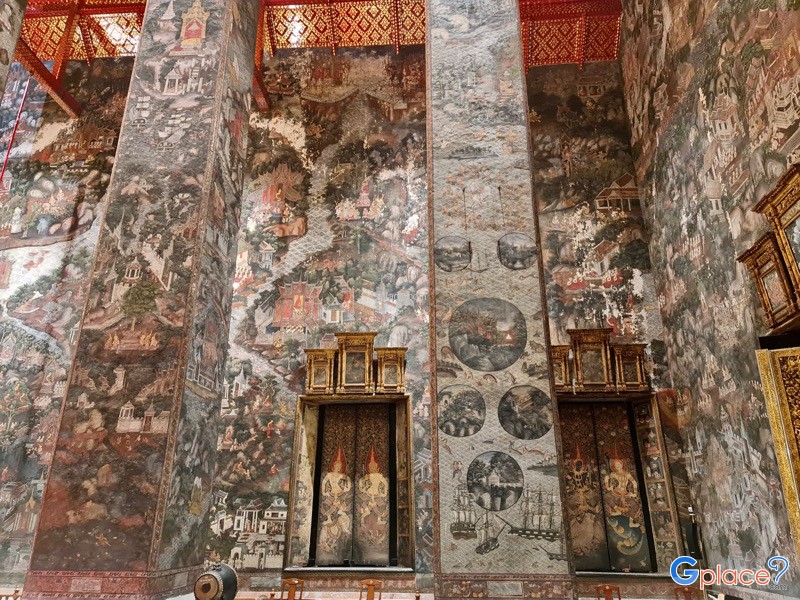
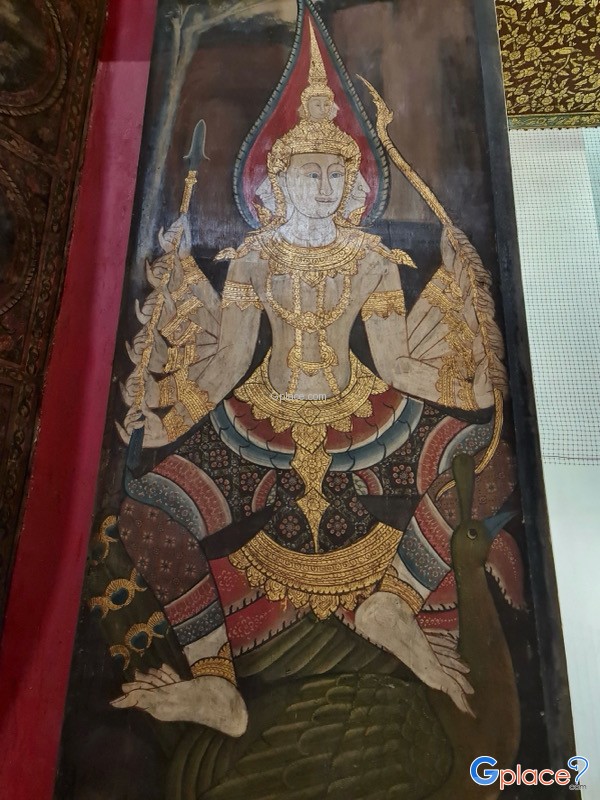
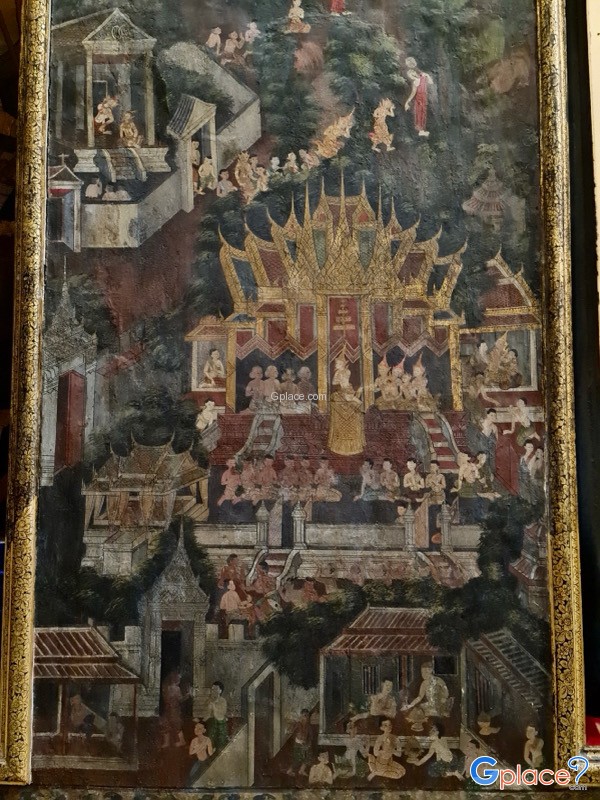
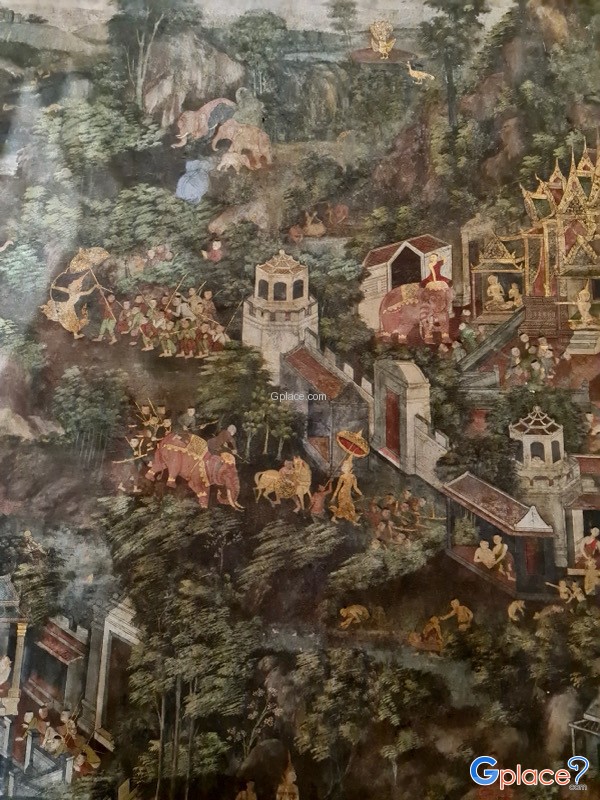
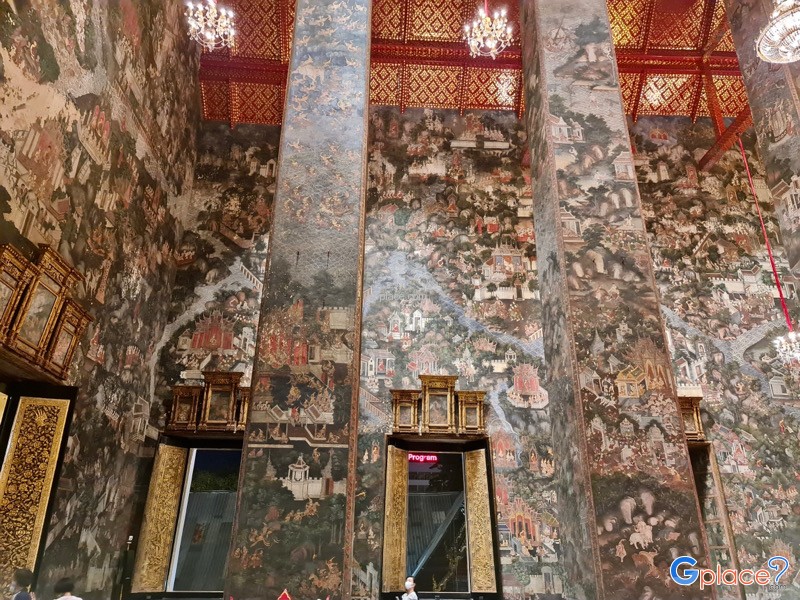
Interior murals depict episodes from the Buddha’s life, Jataka tales, and scenes of early Rattanakosin society. These murals serve not only as religious narratives but also as historical records of Thai customs, attire, and architecture.
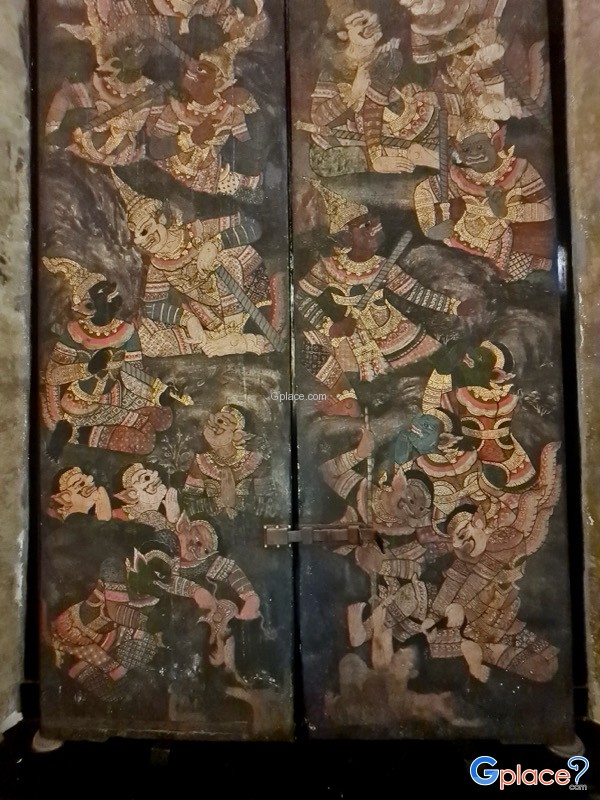
The original carved wooden doors—crafted by King Rama II—are celebrated masterpieces of royal artistry. The originals are preserved in the National Museum, with replicas currently installed at the temple.
Other Significant Elements
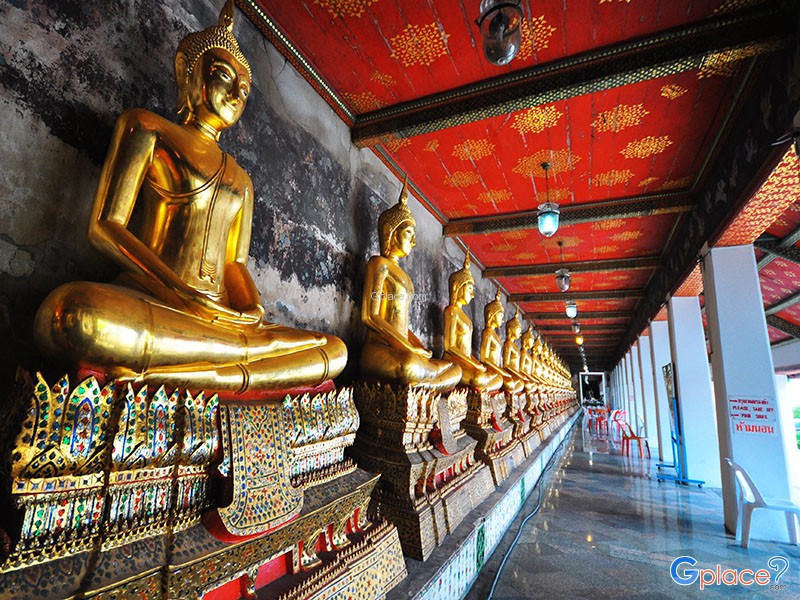
The ordination hall is spacious and dignified, supported by towering columns. Cloisters surrounding the sacred zone enshrine numerous stucco Buddha images in orderly rows, enhancing the meditative ambiance.
Stone Chinese pagodas placed around the courtyard reflect early Rattanakosin trade relations with China. Marble-paved courtyards add to the temple’s visual clarity and solemn beauty.
Relationship with the Giant Swing
Directly in front of the temple stands the iconic Giant Swing, historically used in Brahmin ceremonies. The juxtaposition of the Giant Swing and Wat Suthat symbolizes the harmonious coexistence of Buddhist and Brahmanical traditions within Thai royal culture.
Cultural and Artistic Significance
Wat Suthat is widely regarded as a model of royal temple aesthetics in the Rattanakosin era. Its balanced proportions, refined stucco work, and mural artistry represent the pinnacle of Thai Buddhist art.
During late afternoon, sunlight casts dramatic shadows across the marble courtyard and viharn façade, creating a tranquil atmosphere ideal for meditation, merit-making, and scholarly exploration.
Suthat Thepwararam Temple is therefore not only a place of worship but also a living archive of Thai Buddhist art and national heritage—an oasis of serenity amid the vibrant heart of Bangkok.
How to Get There
MRT:
- Take the Blue Line to Sam Yot Station, Exit 3. Walk along Unakan Road for about 5-10 minutes toward Bamrung Mueang Road.
Public Bus:
- Bus numbers 12, 35, 42, and those stopping near Democracy Monument.
Private Car:
- Limited parking is available around Siriphong Road or nearby private parking lots.
Travel Tips
Best Visiting Season:
- Early morning from 08:30 – 10:30 AM for peace and cooler weather, or after 05:00 PM to see the beautifully lit structures.
Attire:
- Modest dress is required (shoulders and knees covered) as this is a high-ranking Royal Monastery.
Photography:
- Photos of the exterior are encouraged. Inside the halls, please be respectful and avoid disturbing those praying.
Local Culture:
- The Giant Swing area is famous for legendary street food and traditional cafes. Exploring the nearby Phraeng Nara neighborhood is highly recommended.
Planning:
- The temple remains open until 08:00 PM, offering a very calm and serene experience for evening prayer or reflection.
Admission Fee
-
Thai Nationals: Free
-
Foreigners: 100 THB
Opening Hours
-
Daily: 08:30 AM – 08:00 PM
Suthat Thepwararam Temple

 Share
Share
 Suthat Thepwararam Temple, Bamrung Mueang Road, Wat Ratchabophit, Phra Nakhon, Bangkok, Thailand
Map
Suthat Thepwararam Temple, Bamrung Mueang Road, Wat Ratchabophit, Phra Nakhon, Bangkok, Thailand
Map
 Open now : 8.30 - 20.00
Mon8.30 - 20.00
Tue8.30 - 20.00
Wed8.30 - 20.00
Thu8.30 - 20.00
Fri8.30 - 20.00
Sat8.30 - 20.00
Sun8.30 - 20.00



 7849
7849