
 Attractions
  Hotel
Hotel  Restaurant
  Shopping
  Abroad





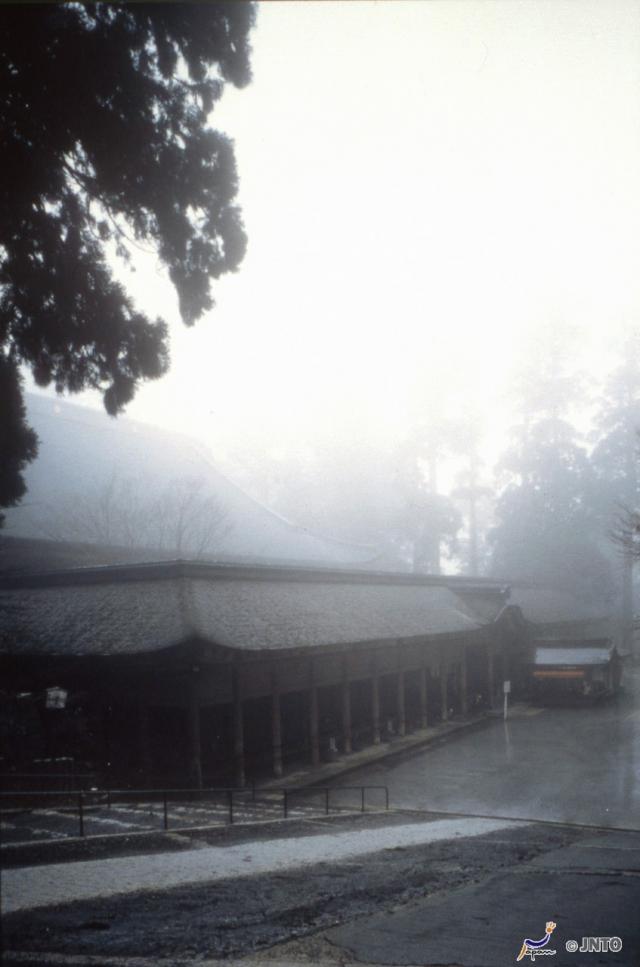

“A UNESCO-listed mountain sanctuary where Japan’s greatest monks trained, famed for its eternal sacred flame, ascetic marathon monks, and panoramic views over Kyoto and Lake Biwa.”
Enryaku-ji Temple was founded in 788 by the monk Saicho and is the headquarters of the Tendai sect. It is one of the most sacred sites in Japanese Buddhist history and is called the “Mother of Japanese Buddhism” because founders of important sects such as Zen, Pure Land, and Nichiren trained here.
Enryaku-ji is part of the 17 Historic Monuments of Ancient Kyoto, which include seventeen outstanding cultural properties spread across Kyoto City, Uji City, and Ōtsu City. These sites are registered by UNESCO to preserve Japan’s artistic and historical heritage.
The temple is not a single building but a group of over 100 structures spread across Mount Hiei, divided into three main areas based on terrain and religious functions:
-
Todo (Eastern Pagoda Area): The main hub and origin of the temple. It houses the Konpon Chu-do, a National Treasure, and the Inextinguishable Dharma Lamp, which has been burning continuously for over 1,200 years. As of 2026, the large-scale restoration that began in 2016 is in its final stages. Visitors can walk along the Sky Corridor to see the traditional thatched roof repairs up close—a rare opportunity.
-
Saito (Western Pagoda Area): About a 20-minute walk from Todo, this quiet, forested area houses Shaka-do, the oldest structure on Mount Hiei. Originally from Onjo-ji Temple, it was moved here by Toyotomi Hideyoshi.
-
Yokawa Area: Located approximately 4 km north, this is the most remote and tranquil area, best accessed by shuttle. The main hall, Yokawa Chu-do, is built on tall stilts along the slope and painted bright red, appearing like a ship floating above a sea of trees. It is especially beautiful during autumn foliage and winter.
Mount Hiei is also the site of the Sennichi Kaihogyo (Marathon Monks), one of the most grueling spiritual disciplines in the world. Monks walk 1,000 days over seven years. The final stage is the 9-day Doiri, in which they abstain from food, water, and sleep while chanting. Those who complete it are honored as Living Buddhas.
Historically, Enryaku-ji also had significant political and military influence, with warrior monks (Sohei) intervening in Kyoto politics. In 1571, Oda Nobunaga ordered the mountain burned down. Most buildings today are Edo-period reconstructions, preserving the original architectural style and spiritual essence.
How to Get There
Kyoto Side:
-
Eizan Railway → Yase-Hieizanguchi Station
-
Transfer to Eizan Cable Car + Hiei Ropeway
-
Closed early Jan–late Mar for winter maintenance
-
Best views of Kyoto city
Shiga Side:
-
JR Kosei Line → Hieizan-Sakamoto Station
-
Transfer to Sakamoto Cable Car (Japan’s longest cable car)
-
Open year-round, offering scenic views of Lake Biwa
Shuttle Bus: Connects Todo, Saito, and Yokawa
-
Walking between all areas is possible but takes several hours and involves hiking trails
Travel Tips
-
Wear proper walking shoes; trails include slopes and stone steps
-
Allocate at least half a day, ideally a full day, to visit all areas
-
Mount Hiei is 5–10°C cooler than Kyoto city
-
Bring an extra layer even in summer
-
Winter is quiet; check transportation schedules before traveling
Admission Fee:
-
Combined Enpan Ticket 1,000 yen, covers Todo, Saito, and Yokawa
-
Cable car, ropeway, and shuttle fees are separate
Opening Time:
-
Generally 09:00 – 16:00
-
Todo Area opens at 08:30
-
Closing times are 30–60 minutes earlier in winter (Dec–Feb)
-
Last admission varies by season
Enryaku ji Temple

 Share
Share
 4220 Sakamotohonmachi,Otsu, Shiga, Japan 520-0116
Map
4220 Sakamotohonmachi,Otsu, Shiga, Japan 520-0116
Map
 Closed today
Mon9.00 - 16.00
Tue9.00 - 16.00
Wed9.00 - 16.00
Thu9.00 - 16.00
Fri9.00 - 16.00
Sat9.00 - 16.00
Sun9.00 - 16.00



 116
116