 Attractions
  Hotel
Hotel  Restaurant
  Shopping
  Abroad





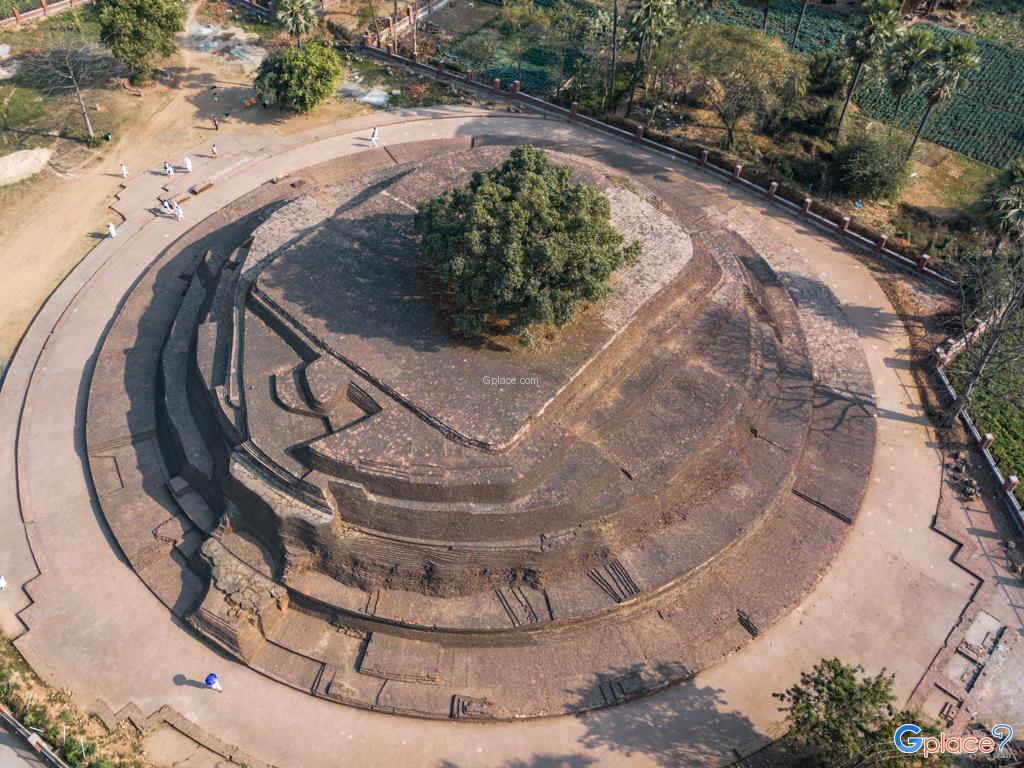



“An inverted-bowl-shaped brick stupa amidst rice fields, near the Niranjana River. It serves as historical evidence linking to the pivotal event of Sujata's milk-rice offering before the Buddha's enlightenment.”
Sujata Stupa, also known as Sujata Kuti, is located outside the main Bodh Gaya temple complex, in the village of Bakraur, across the Niranjana River. It is approximately 2–3 kilometers from the Mahabodhi Temple. This area is considered one of the most significant “Buddhist historical landscapes” of Bodh Gaya, as it is directly related to the events preceding the Buddha's enlightenment.
Landscape and Overview of the Area
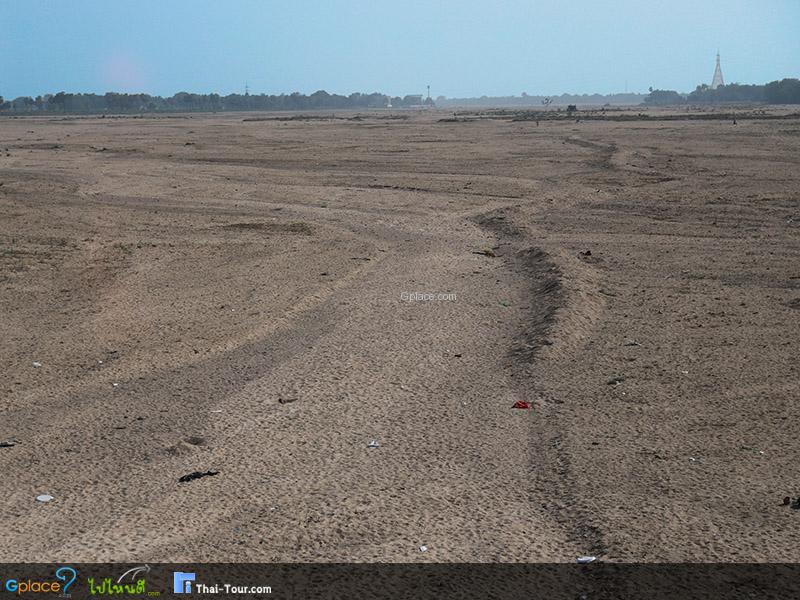
This area is a flat plain along the Niranjana River, surrounded by rice fields and traditional Indian rural villages. The stupa stands prominently in an open area, making it clearly visible from a distance. The overall atmosphere feels different from the bustling Bodh Gaya temple complex, as this place is quieter, more peaceful, and more natural.
Stupa Structure and Archaeological Evidence
What is visible today is a large, inverted-bowl-shaped brick stupa (Dome Stupa). Key features include:
- Large circular stupa base
- Ancient fired brick structure
- Multiple superimposed layers of bricks from different eras
- Visible traces of historical earth accumulation
Based on studies by the Archaeological Survey of India (ASI), it is believed that this stupa has undergone continuous development since the time of the Buddha and was significantly restored during the reign of Emperor Ashoka the Great, who played a crucial role in constructing and restoring important stupas across Jambudvipa (the Indian subcontinent).
Significance in Buddhist History (The Essence of This Place)
This site is associated with one of the most important events in Buddhist history: Sujata's offering of milk-rice.
This event holds profound spiritual significance as it marked a “turning point in thought” for the Bodhisattva, moving him from self-mortification (attakilamathanuyoga) to the path of Middle Way (Majjhimapatipada), which later became the foundation of all Buddhist teachings.
In-depth Story of Sujata
Sujata was the daughter of Seniyakutampee, a wealthy merchant in Senanigama village, Uruvela region. In her youth, she made a vow to the “tree deity” residing in a large banyan tree near her home, expressing two wishes:
- To have a husband of equal status and lineage
- To have a first-born son
When her wishes came true, she gave birth to a son named “Yasa,” who later became an important figure in Buddhist history.
The Event Under the Banyan Tree (The Convergence of Two Life Paths)
When it was time for the offering ceremony, she prepared milk-rice (49 sweet milk-rice balls) to offer to the deity. At the same time, Prince Siddhartha, the Bodhisattva, who had just abandoned extreme asceticism, arrived and sat under that very banyan tree. At that moment, he was:
- His body was emaciated from fasting
- Yet his mind was firm and deeply peaceful
- In a state close to advanced meditation
The maidservant who saw him mistook him for a “deity” and returned to inform Sujata.
The Offering of Milk-rice
When Sujata arrived and saw the Bodhisattva, she developed profound faith, believing him to be the tree deity she intended to worship.
She then offered the milk-rice in a golden bowl with utmost reverence.
This event was not merely an offering of food, but became a “spiritual turning point” for the Bodhisattva.
A Pivotal Turning Point for Buddhism
After receiving the milk-rice, the Bodhisattva reflected and realized that extreme self-mortification was not the path to enlightenment. This was the origin of the concept of
“Majjhimapatipada” or the Middle Way.
The Path from Sujata Kuti
After this event, he crossed the Niranjana River to the Bodh Gaya side, sat under the Bodhi Tree, and began advanced spiritual practice, eventually attaining enlightenment as the Samma Sambuddha (Fully Enlightened One).
Significance of the Site Today
Even after more than 2,500 years, this area remains a “nexus of Buddhist history.” Visitors can experience:
- The simplicity of rural India
- Ancient ruins amidst rice fields
- A peaceful tranquility distinct from the main temple
- A sense of connection to the events preceding the enlightenment
Key Takeaways for Visitors
Sujata Stupa is not merely an ancient ruin, but a “starting point of a profound transformation” that led to the concept of the Middle Way, which is the heart of Buddhism.
How to Get There
- Start from the Mahabodhi Temple → Take an auto-rickshaw → Tell the driver “Sujata Stupa / Bakraur” → Cross the Niranjana River → Enter Bakraur village → Walk a short distance to the stupa. The journey takes 10–15 minutes.
Travel Tips
- Visit in the morning, 06:00–09:00 AM, for the best weather.
- Wear comfortable shoes, as the area is earthy and consists of rice fields.
- Carry drinking water and sun protection.
- Dress modestly, suitable for a sacred site.
- Be mindful of personal belongings and avoid strangers attempting to sell items.
Admission Fee:
- Free admission
- Small parking fee may apply during certain periods.
Opening Hours:
- Open daily 06:00 AM – 06:00 PM
Sujata Stupa

 Share
Share
 Bakraur, Bodh Gaya, Bihar 824231, India
Map
Bakraur, Bodh Gaya, Bihar 824231, India
Map
 Open now : 6.00 - 18.00
Mon6.00 - 18.00
Tue6.00 - 18.00
Wed6.00 - 18.00
Thu6.00 - 18.00
Fri6.00 - 18.00
Sat6.00 - 18.00
Sun6.00 - 18.00



 40
40