 Attractions
  Hotel
Hotel  Restaurant
  Shopping
  Abroad





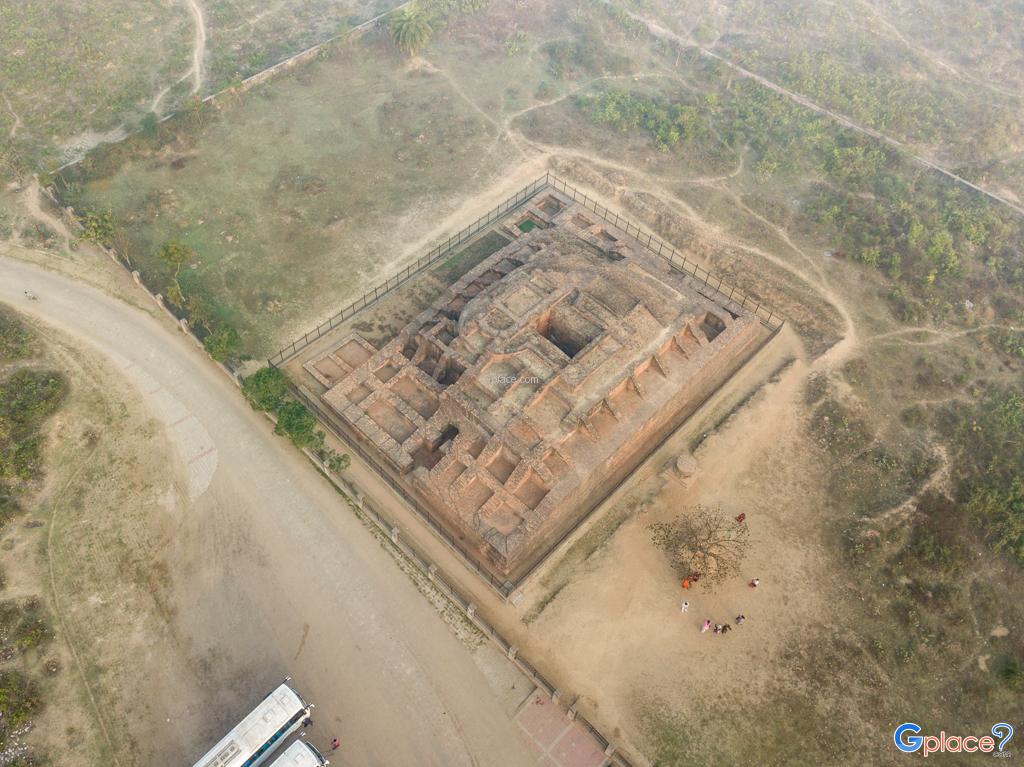

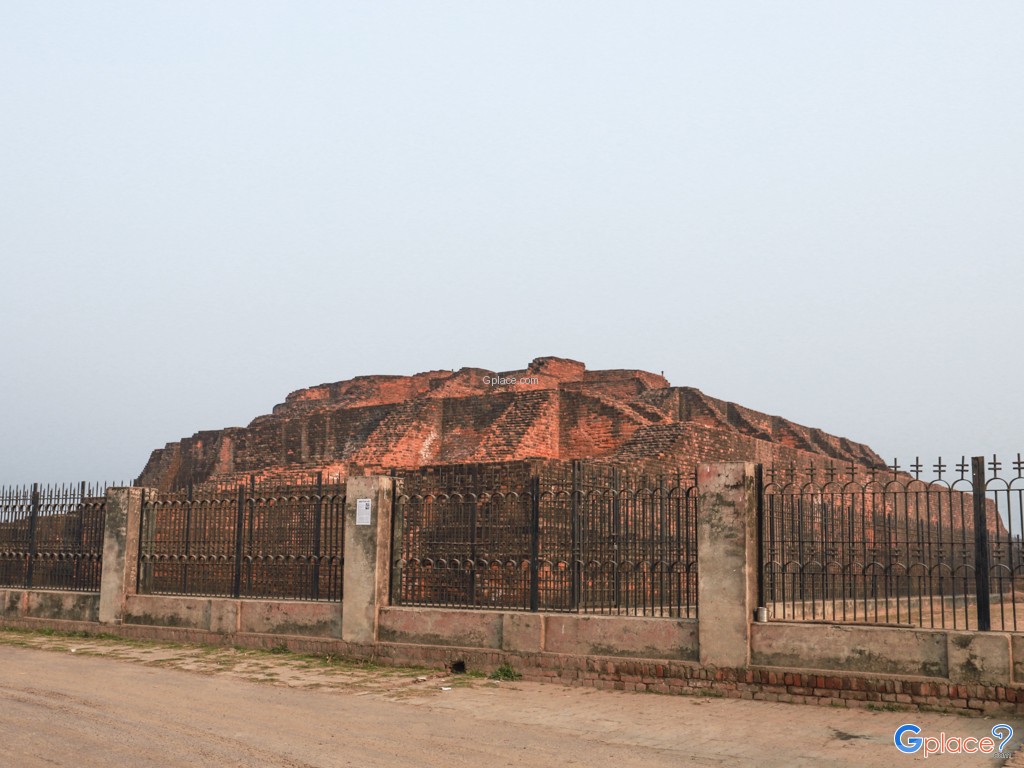


“A large ancient brick stupa in the Mahet area, featuring an interior passage resembling a tunnel. It stands out with its multi-era construction and offers panoramic views of ancient Shravasti.”
Angulimala Stupa, or locally known as Pakki Kuti, is located in the Mahet area, which is part of ancient Shravasti, distinct from the Sahet zone where Jetavana Mahavihara is located. This area holds significance both historically and religiously. This stupa was built in remembrance of Phra Angulimala, a former great bandit who repented, and is also connected to the original home area of the Brahmin family.
Angulimala was originally named Ahimsa. He was the son of a Brahmin in the royal court of King Pasenadi of Kosala, and his mother's name was Mantani. He was intelligent and studied in Takshashila, where he was favored by his teacher. However, due to the envy of his fellow students, he was slandered, leading his teacher to devise a plan for him to kill 1,000 people. Ahimsa then became a bandit, cutting off the fingers of his victims and stringing them into a garland to wear around his neck, thus earning him the name “Angulimala” from the words Anguli (finger) and Mala (garland), meaning “Garland of Fingers”.
After he had killed 999 people and was about to commit an even more severe sin, he encountered the Buddha in this area. A significant event occurred where the Buddha said, “I have stopped, but you have not yet stopped,” a profound teaching about ceasing defilements. This caused Angulimala to feel remorse, gain faith, and request ordination as a monk, eventually attaining Arahantship later. There is also an important chant called Angulimala Paritta.
Archaeologically, this stupa is characterized by a large red brick structure, and excavations have revealed that it was built in layers over several periods, from the Mauryan to the Kushan dynasties. Inside, there is a tunnel-like passage or cave believed to have been used for meditation, and visitors can enjoy panoramic views of ancient Shravasti from above.
The surrounding atmosphere is peaceful and serene, suitable for meditation, especially during 07:00 – 09:00 AM and 16:00 – 17:30 PM when soft sunlight beautifully illuminates the ancient bricks. However, visitors should bring water, hats, or umbrellas as some areas are open and facilities are limited.
Furthermore, one can walk to the nearby Stupa of Anathapindika (Kachchi Kuti) to see another important ancient site and gain a clearer overall picture of Shravasti. This place is thus both an archaeological site and a symbol of forgiveness, life transformation, and the power of Dharma.
How to Get There
- By Plane: Land at Lucknow Airport, then hire a car to Shravasti, which takes approximately 4–5 hours (170 km).
- By Train: Get off at Balrampur station (closest), then take a taxi/auto-rickshaw for about 20–30 minutes.
- By Car/Private Vehicle: From Jetavana Mahavihara, drive along Mahet Road for about 1–2 km.
- Local Transport: Use an auto-rickshaw or a three-wheeler from Shravasti town; it's convenient and economical.
Travel Tips
- It is recommended to visit during 07:00 – 09:00 AM or 16:00 – 17:30 PM to avoid the heat and enjoy beautiful light.
- Prepare sufficient drinking water as the area is vast and shops are few.
- It is advisable to wear a hat or carry a sun umbrella as most of the area is open.
- You should walk to visit the nearby Kachchi Kuti Stupa to cover all important sites.
- Suitable for those who wish to meditate, go on a pilgrimage, and study Buddhist history.
Admission Fee:
- ASEAN Passport Holders (including Thailand): Approximately 20–25 INR (passport required).
- Other Foreign Nationals: Approximately 300–600 INR.
Opening Hours:
- Open daily: 06:00 – 17:00 (or from sunrise to sunset).
Angulimala Stupa

 Share
Share
 Mahet Road, Rajgarh Kularia, Shravasti, Uttar Pradesh 271805, India
Map
Mahet Road, Rajgarh Kularia, Shravasti, Uttar Pradesh 271805, India
Map
 Closed today
Mon6.00 - 17.00
Tue6.00 - 17.00
Wed6.00 - 17.00
Thu6.00 - 17.00
Fri6.00 - 17.00
Sat6.00 - 17.00
Sun6.00 - 17.00



 55
55