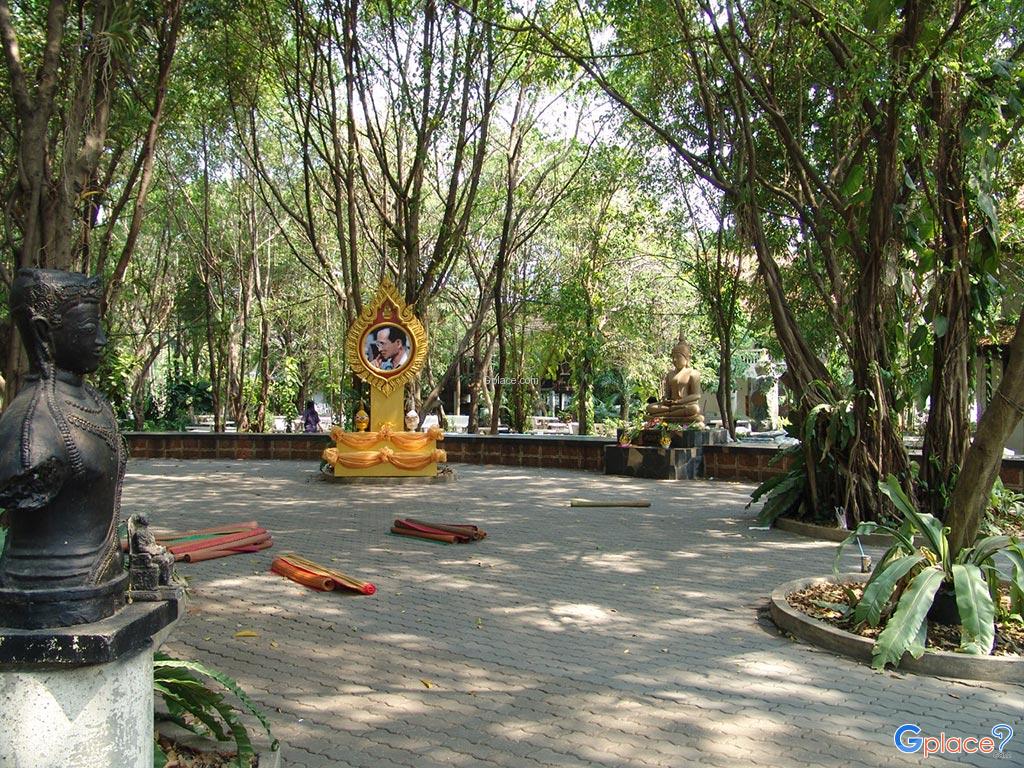
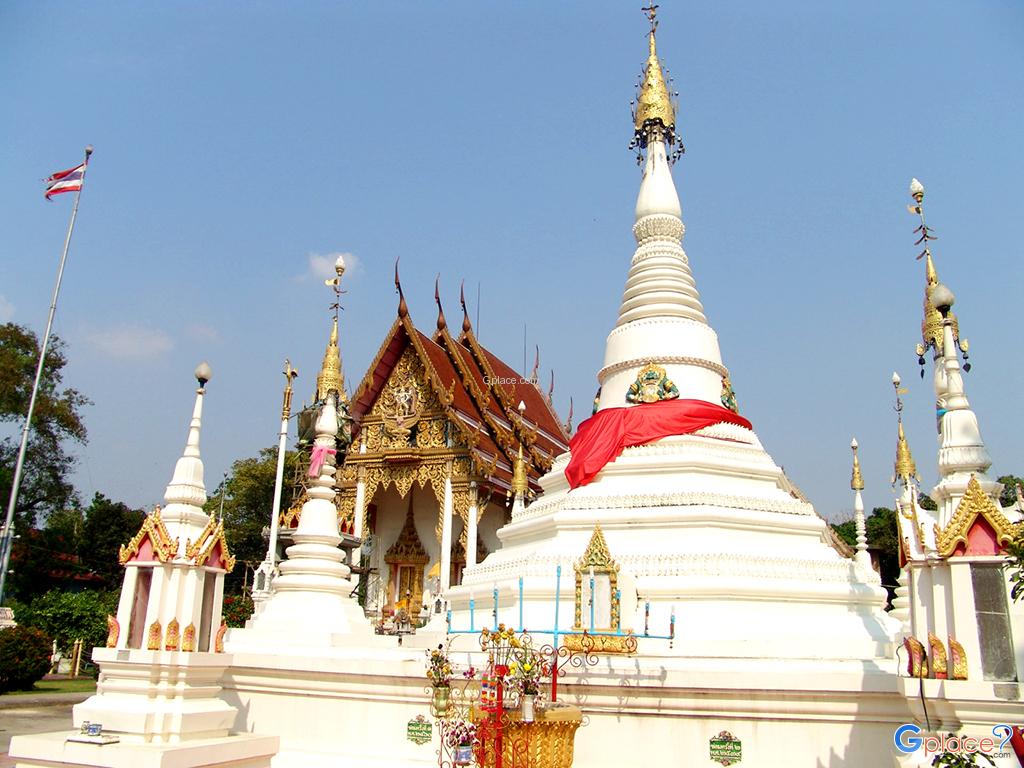
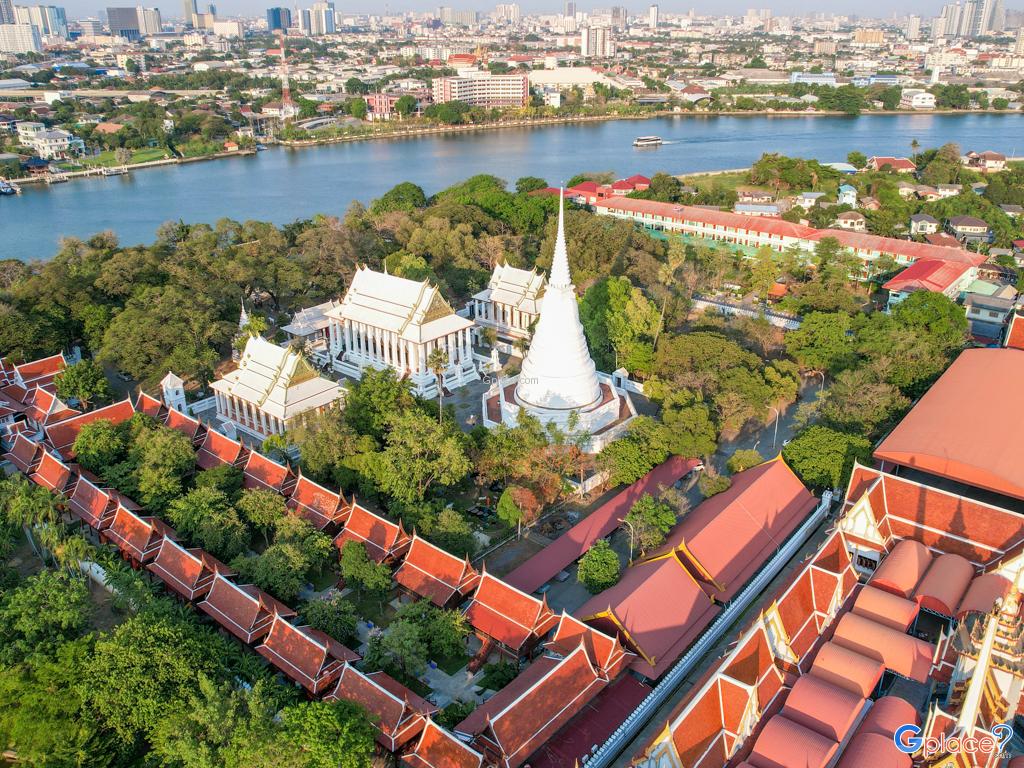
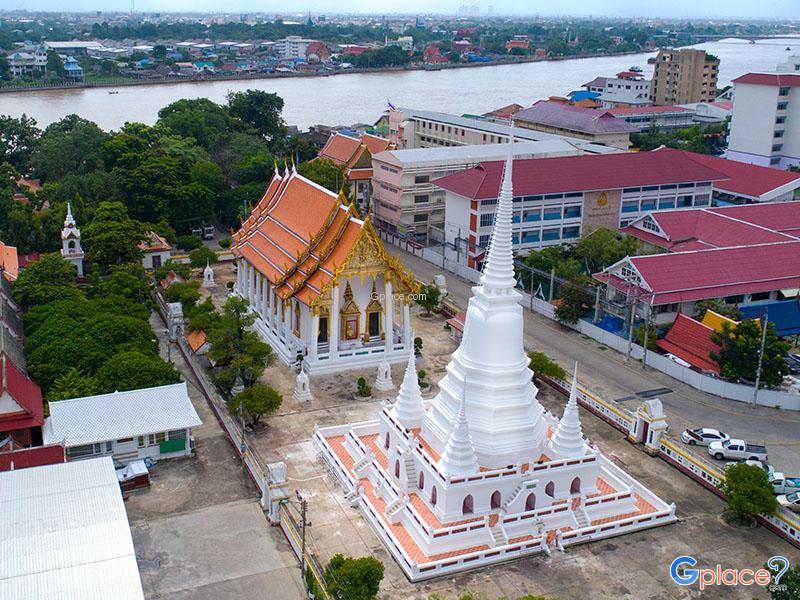
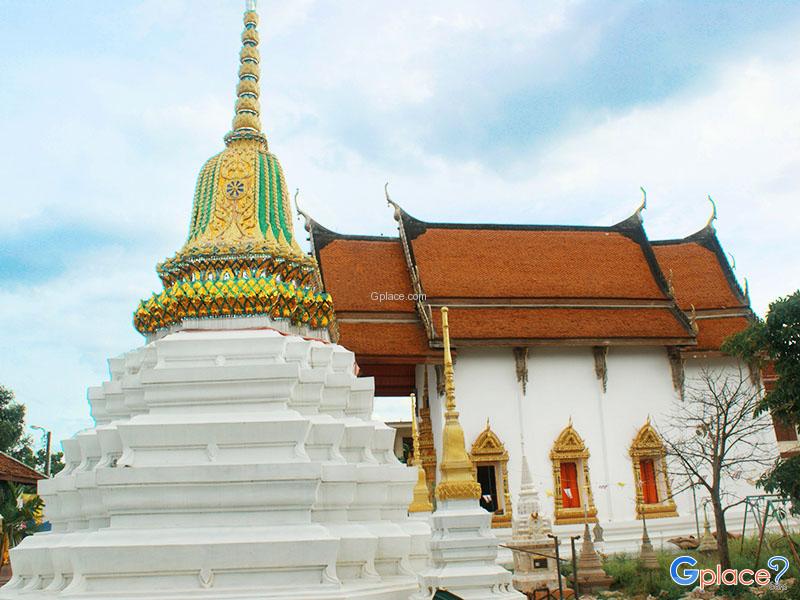
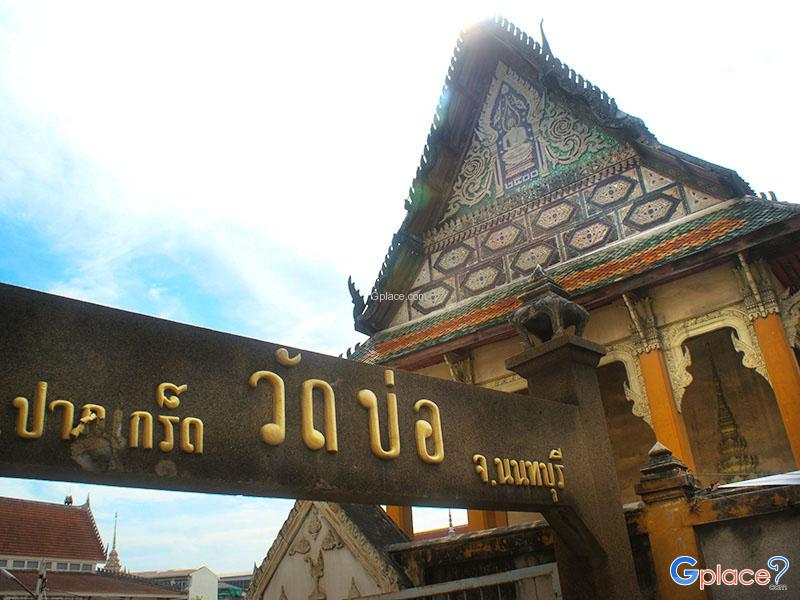
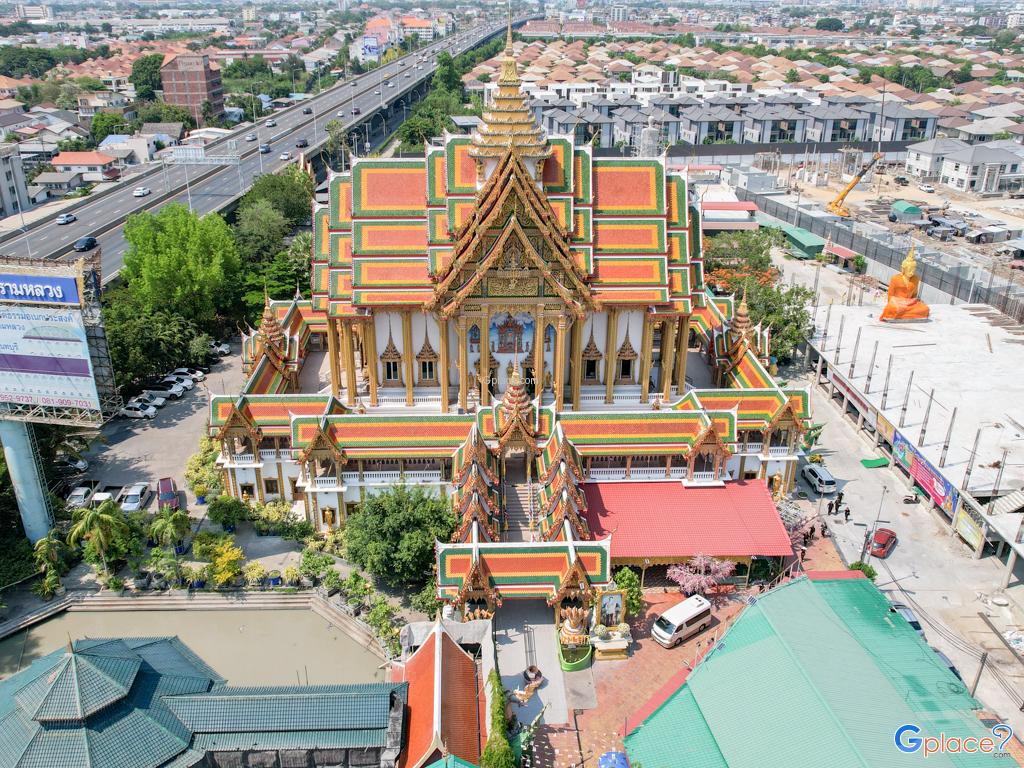
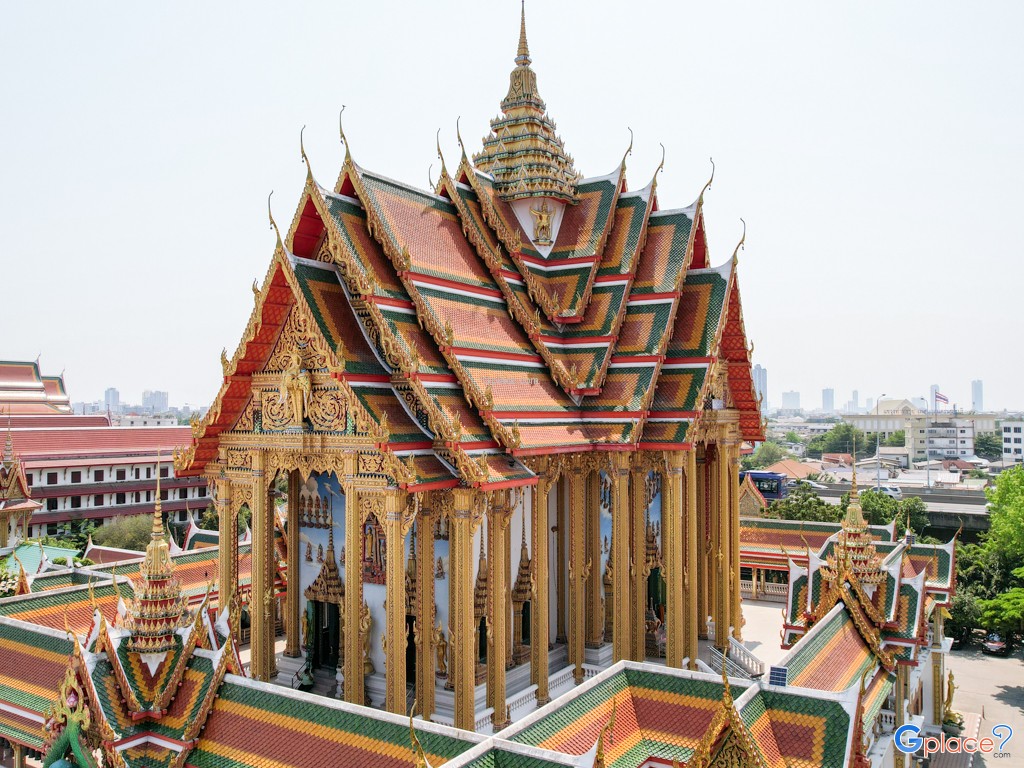
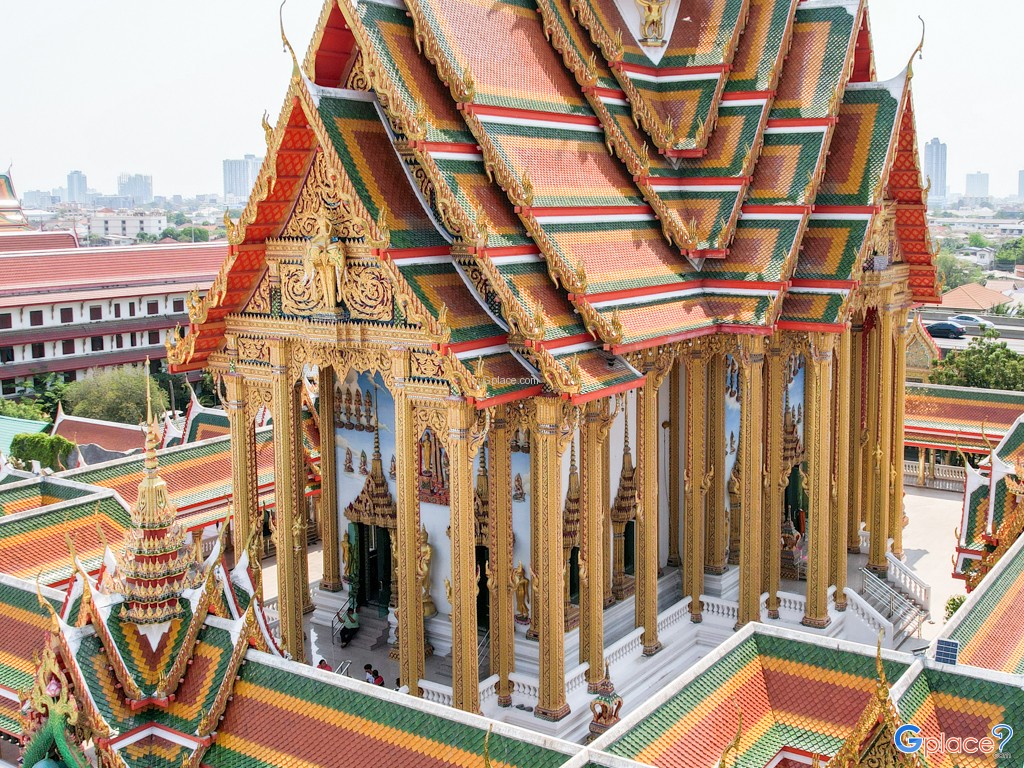
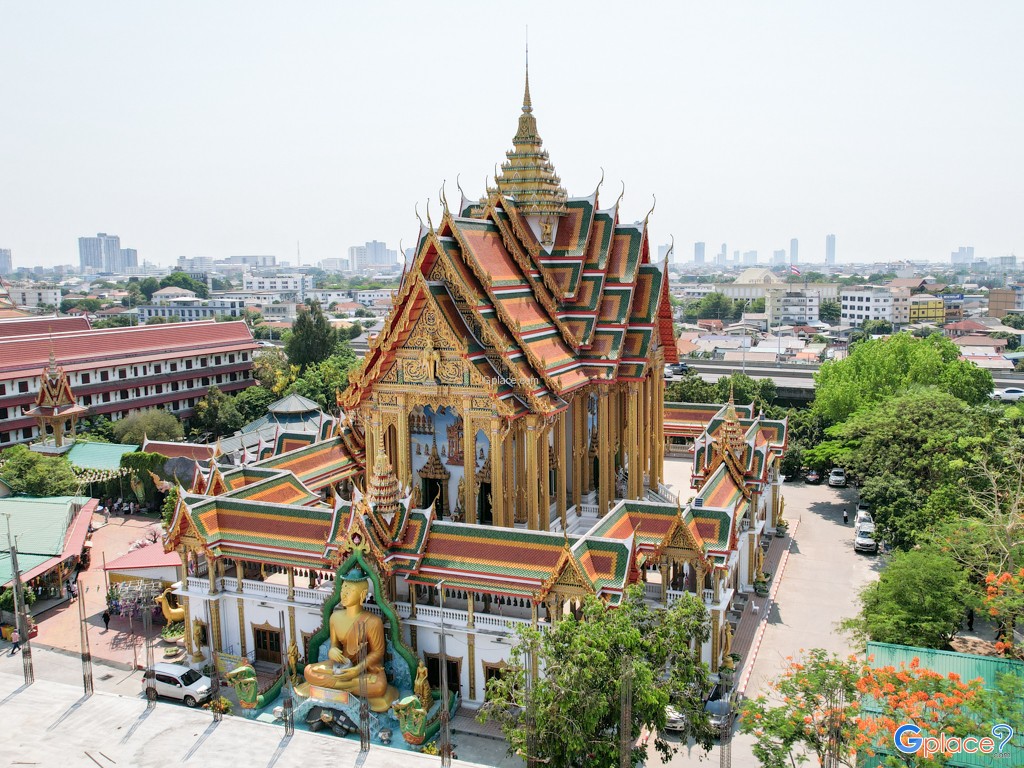
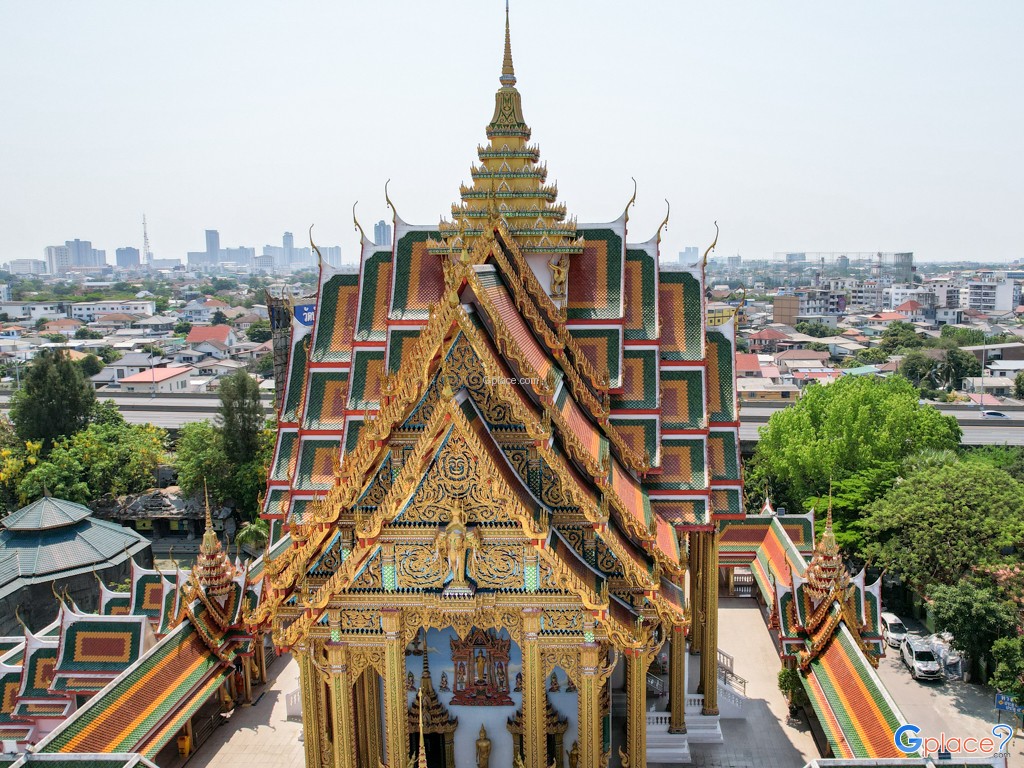
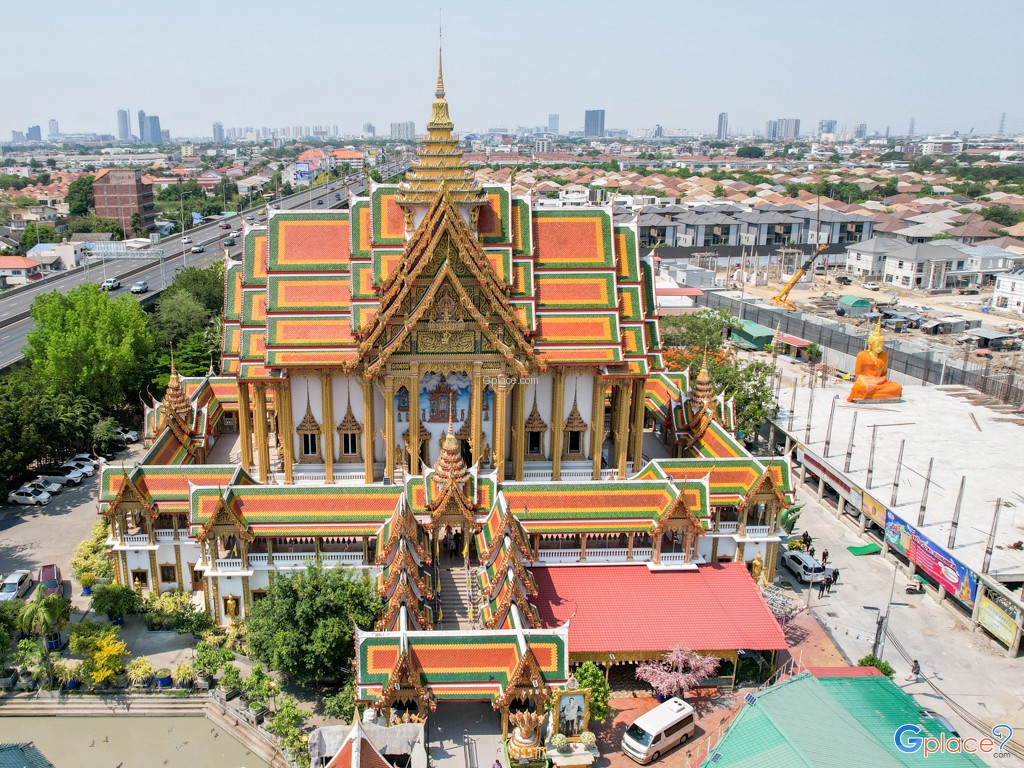
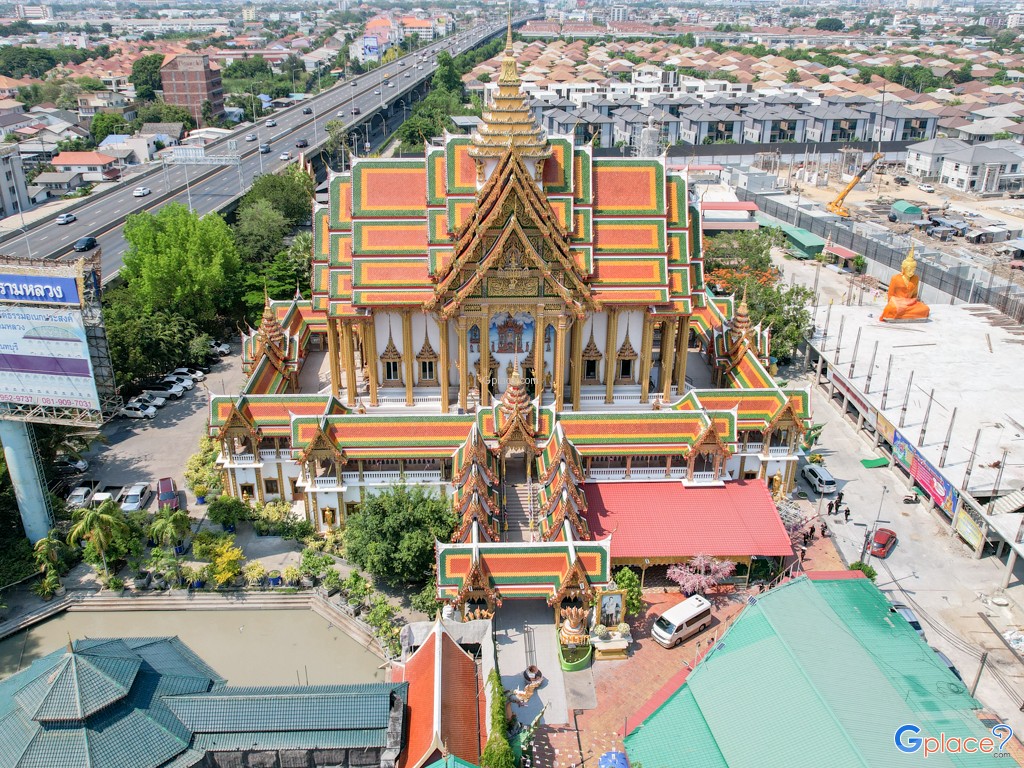
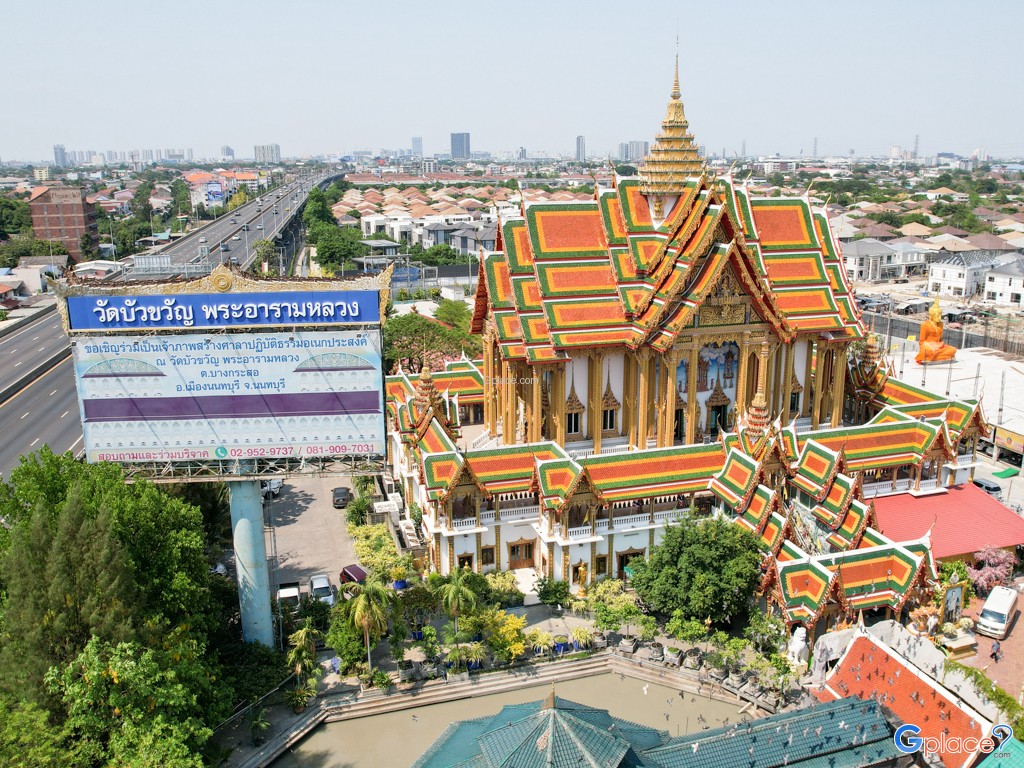
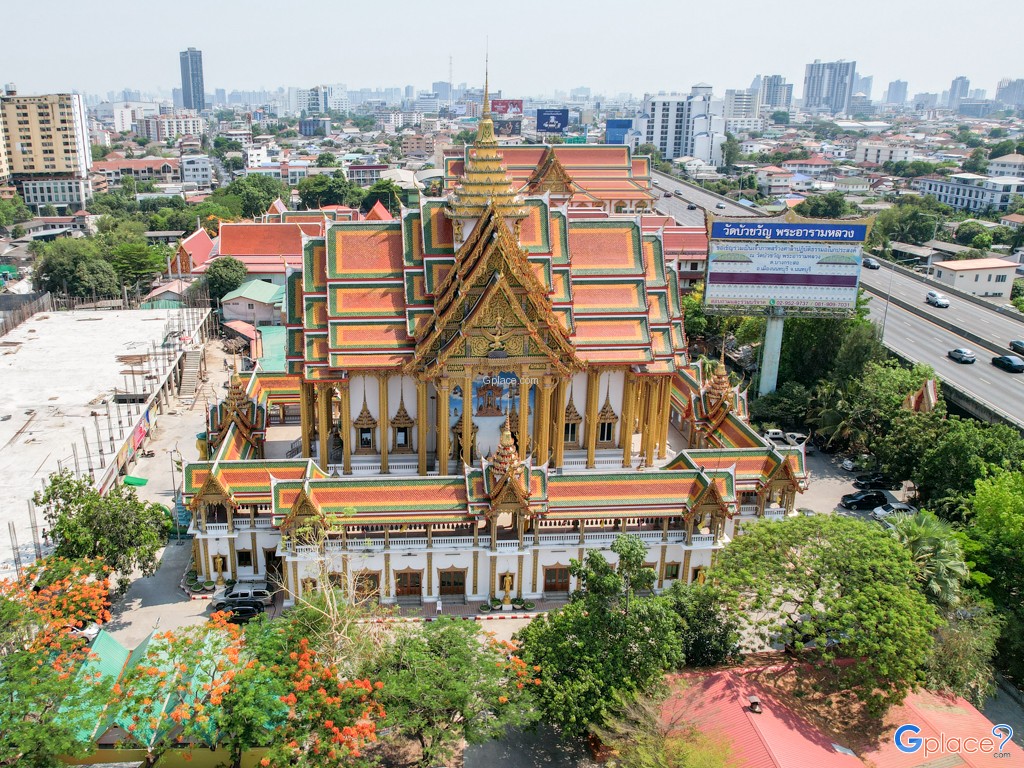
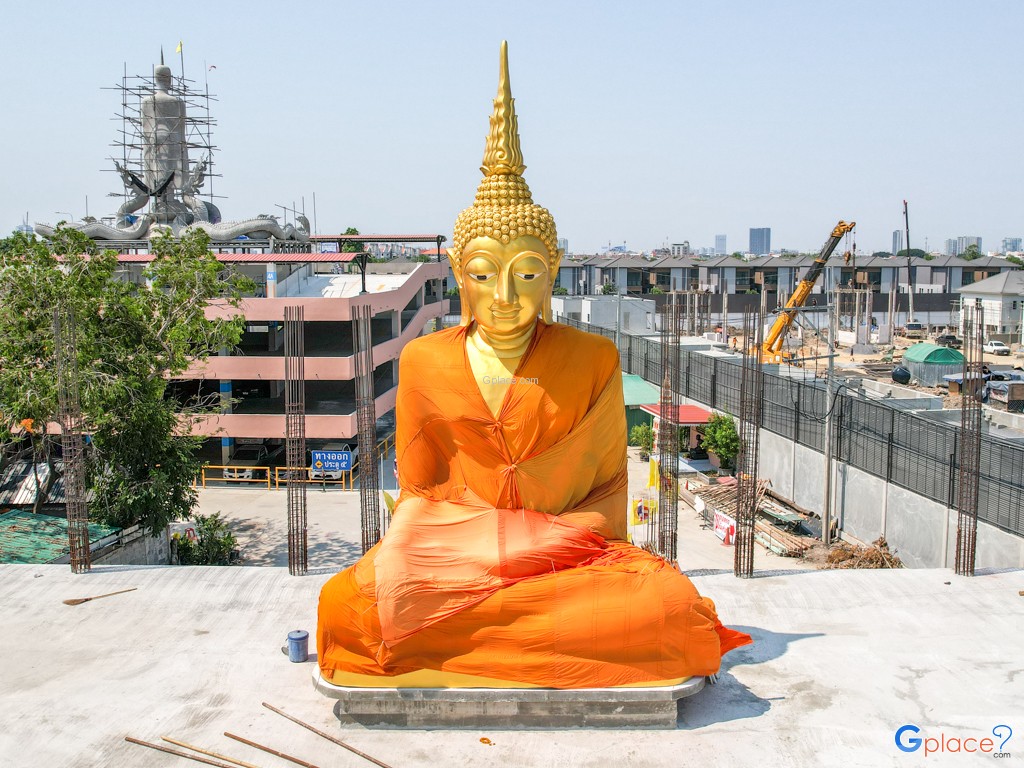
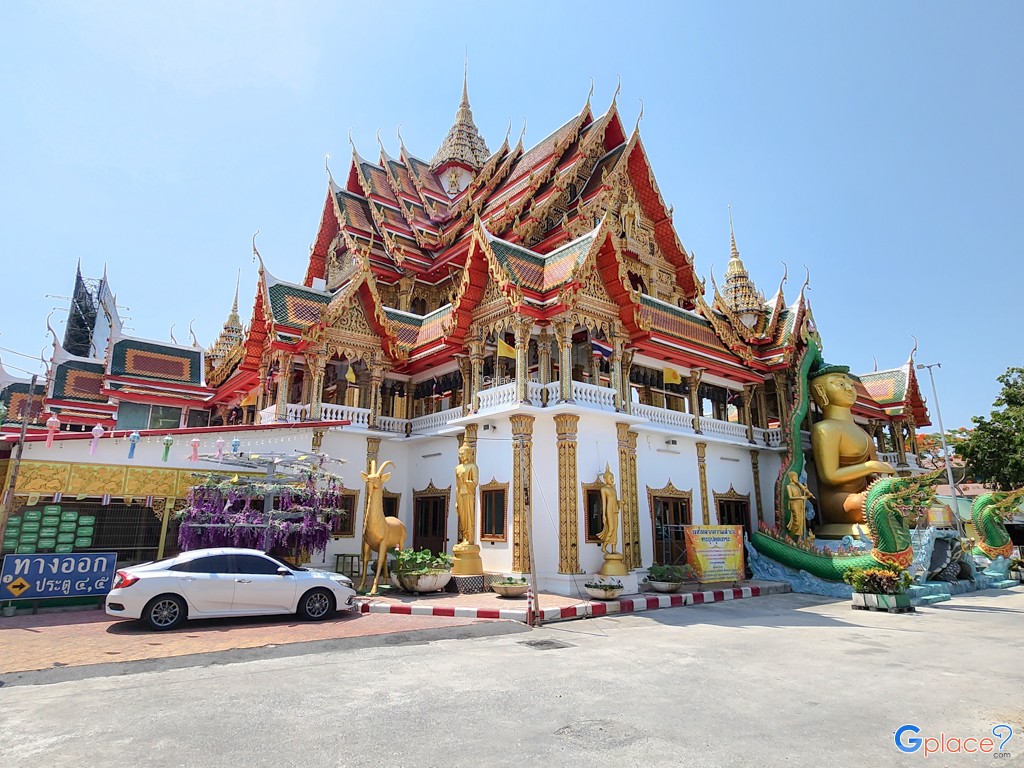
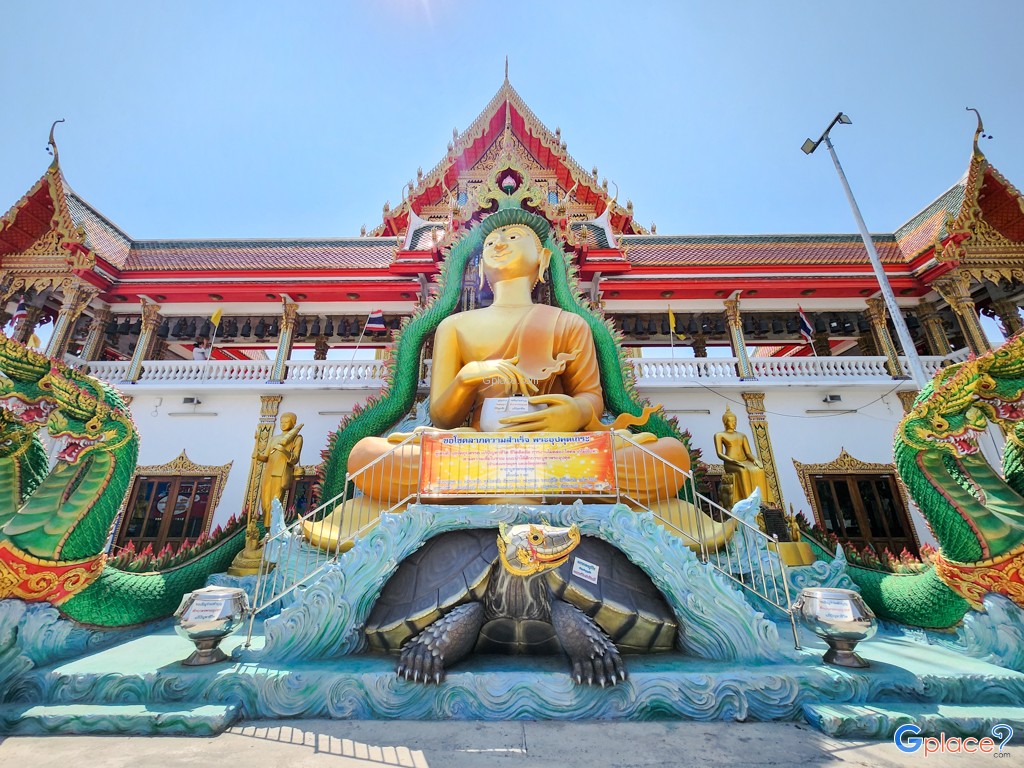
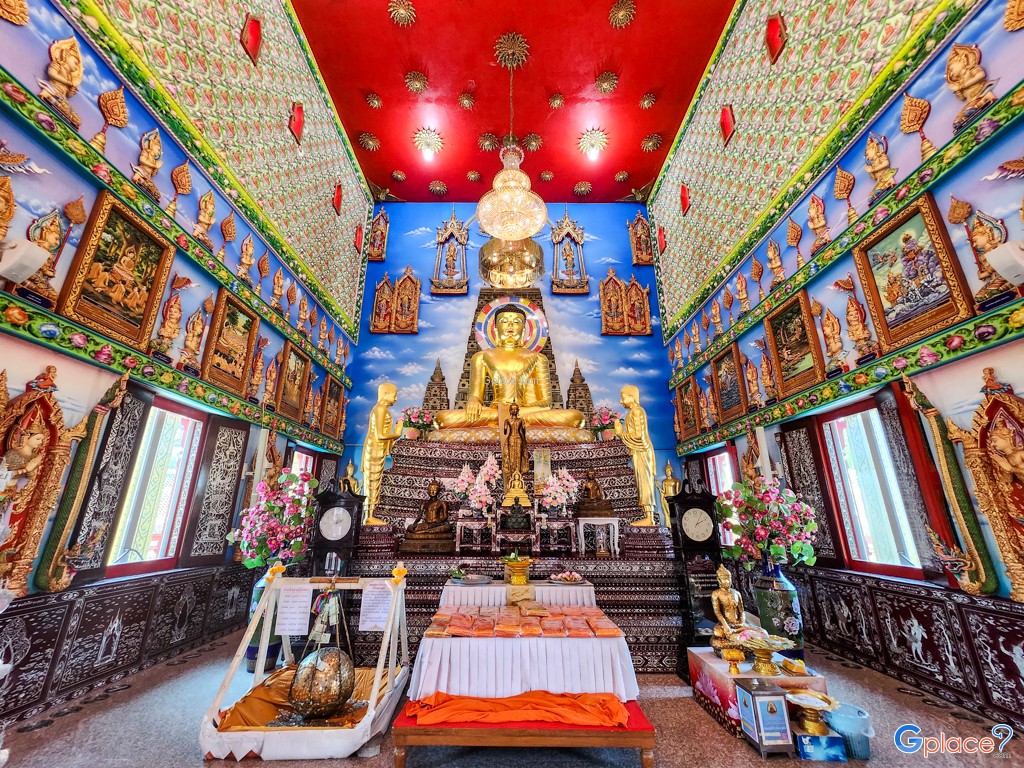
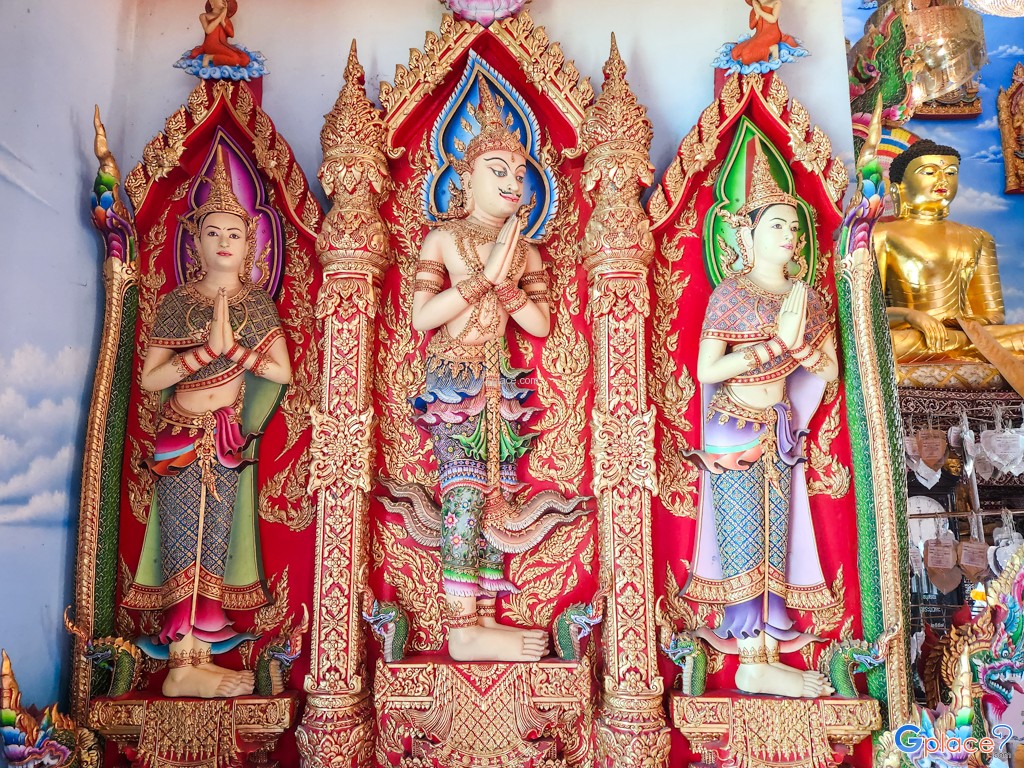
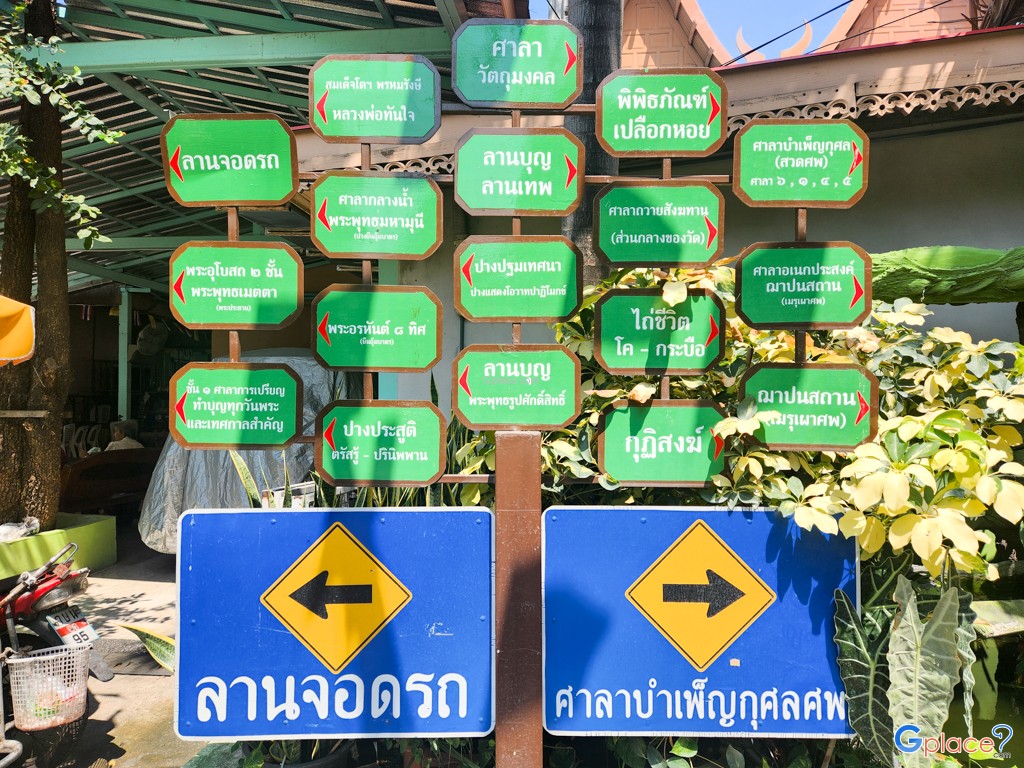
Wat Bua Khwan Royal Monastery in Nonthaburi is an important Buddhist temple with a long historical development that reflects the growth of the local community from the past to the present. It is believed to have originated during the reign of King Rama V, when the surrounding area was still rural, consisting mainly of agricultural land, orchards, and canal-side settlements. At that time, the temple began as a small local monastery established through the cooperation of villagers, serving as a place for religious activities such as merit-making, listening to sermons, and functioning as a spiritual center for the community. Over time, it was continuously developed and renovated across different periods in terms of religious structures, spatial organization, and monastic administration, eventually being elevated to a third-class royal monastery in 2008, which reflects its recognized importance at both community and national levels.Within the temple grounds, the area is spacious, open, and shaded with a variety of trees, creating a peaceful and well-organized environment. The layout is clearly divided into different functional zones, including ceremonial areas, meditation spaces, and sections for visitors and devotees. The main architectural highlight is the four-gabled ordination hall, which stands as the central structure of the temple. It features symmetrical proportions, extended porches on all four sides, multi-tiered roofs, and traditional Thai decorative elements such as chofah, bai raka, and hang hong ornaments. The surfaces are intricately decorated with stucco patterns and gold leaf work, demonstrating refined Thai craftsmanship that blends traditional aesthetics with contemporary restoration techniques.
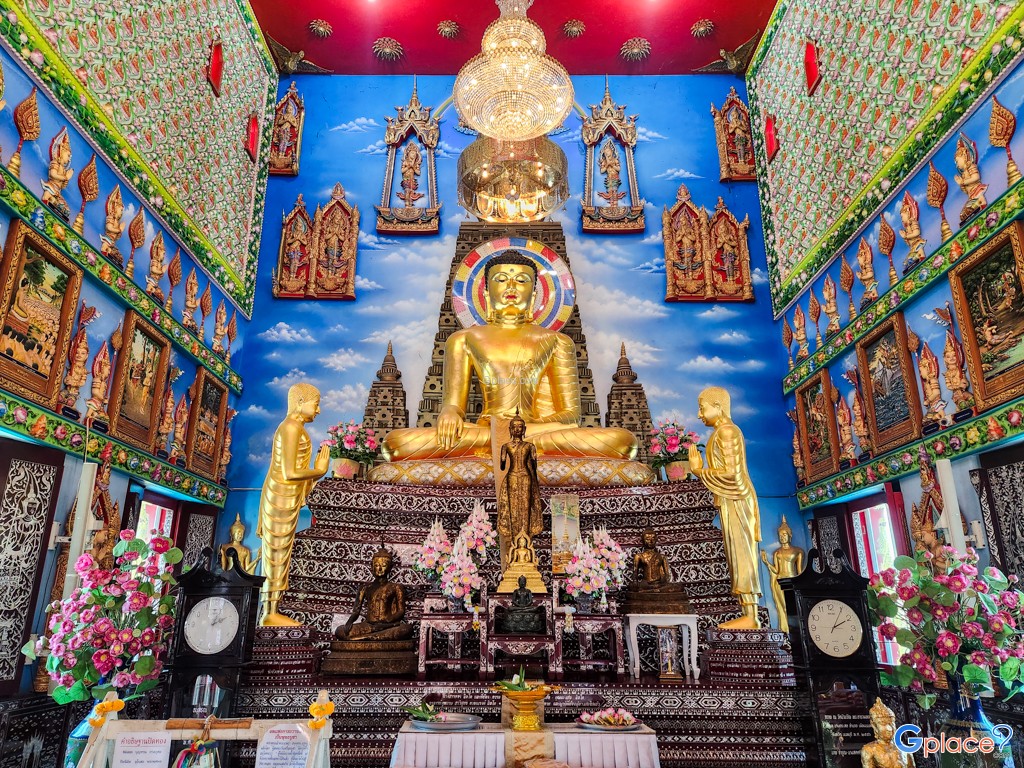
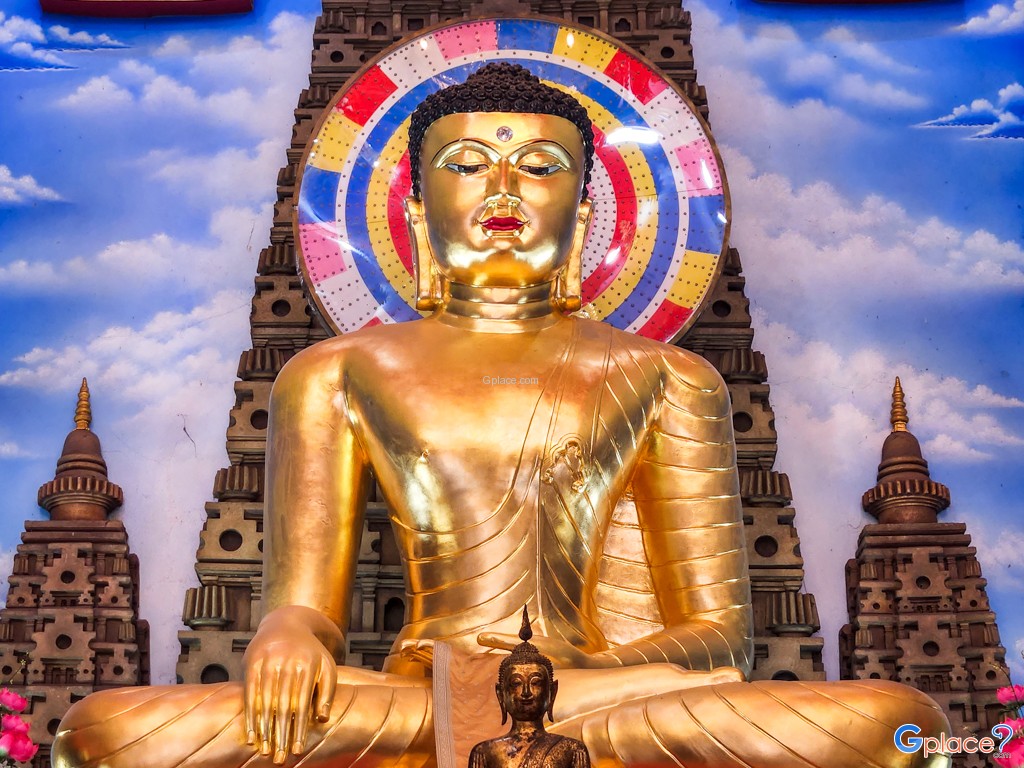
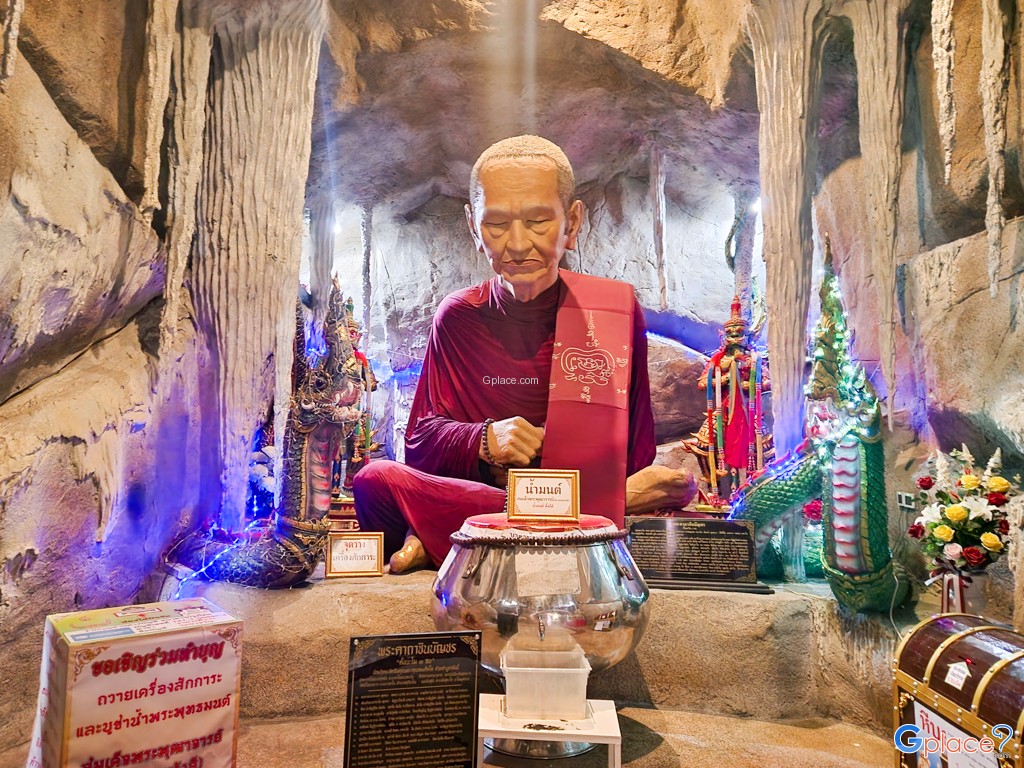
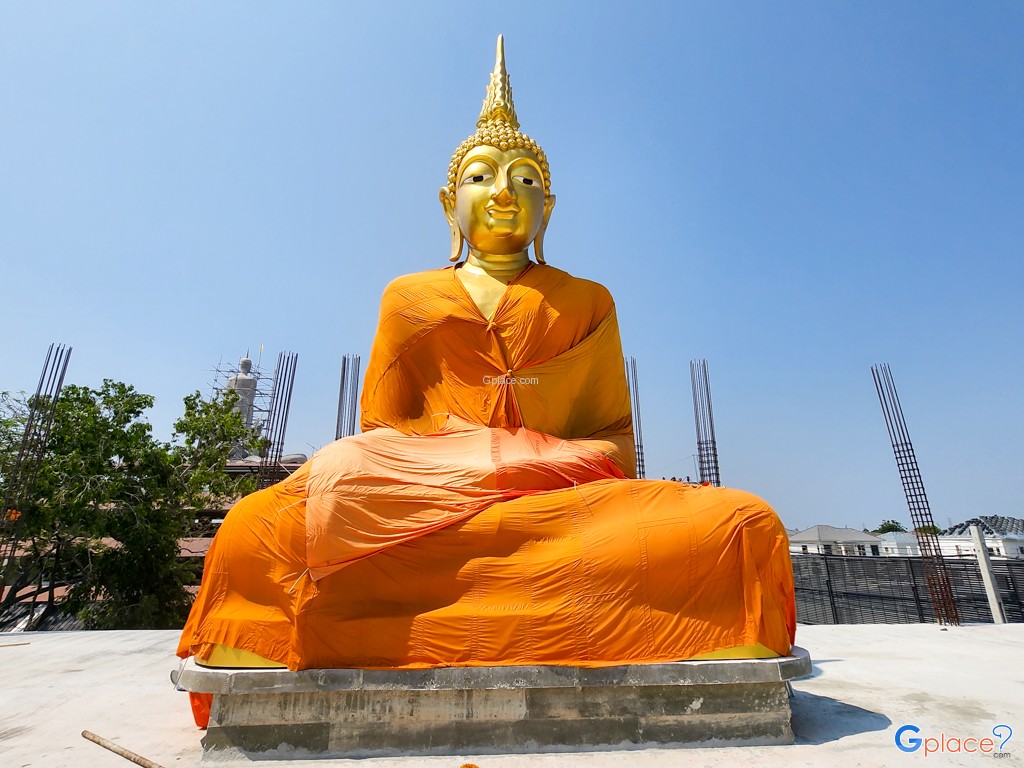
Inside the ordination hall is the principal Buddha image known as Phra Phuttha Khunodom, created in the Chiang Saen artistic style. It is characterized by a rounded and serene facial expression, a flame-shaped halo, and balanced proportions that convey calmness, compassion, and auspiciousness, making it highly revered by local devotees. The interior walls are decorated with murals depicting the life of the Buddha, the Ten Great Jataka tales, and moral teachings on karma and ethics, presented in a colorful and accessible style that allows both educational and artistic appreciation.In addition to the principal Buddha image, the temple also features a highly respected Rahu shrine, which is widely visited by people seeking to remove bad luck, enhance fortune, and overcome obstacles. Offerings such as black-colored items are commonly made according to traditional beliefs, including eggs and beverages. The temple also provides various merit-making activities such as feeding fish, making donations, and worshiping popular amulets.
Overall, Wat Bua Khwan offers a peaceful yet lively atmosphere as it continues to serve both as a religious center and a community hub. It hosts daily alms-giving activities, major Buddhist ceremonies such as Makha Bucha, Visakha Bucha, and Asalha Bucha days, as well as local festivals and merit-making events throughout the year. This makes the temple not only a place of worship but also an important social space that connects the local community, reflecting how Thai temples in urban settings successfully integrate traditional heritage with modern cultural contexts.

 Attractions
  Hotel
Hotel  Restaurant
  Shopping
  Abroad









 Share
Share
 1, Ngamwongwan 23 , Ngamwongwan, Bang Khen , Mueang Nonthaburi , Nonthaburi 11000
Map
1, Ngamwongwan 23 , Ngamwongwan, Bang Khen , Mueang Nonthaburi , Nonthaburi 11000
Map
 Closed today



 77
77