 Attractions
  Hotel
Hotel  Restaurant
  Shopping
  Abroad





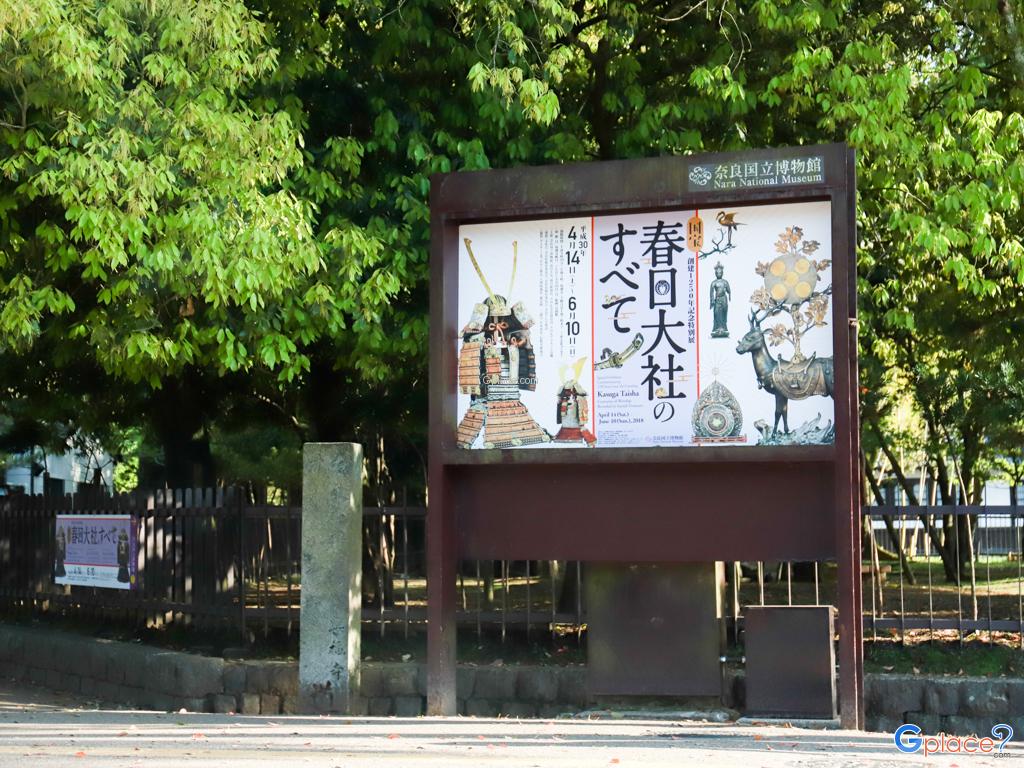

“The most authoritative museum in the world for Japanese Buddhist sculpture, housing National Treasures in a historic landmark setting.”
Nara National Museum, established in 1889 and opened to the public in 1895, is Japan’s second-oldest national museum, following Tokyo National Museum. It is internationally recognized as the foremost center for the study of Japanese Buddhist art, especially sculpture from the Asuka, Nara, and Heian periods. Its location in Nara—Japan’s first permanent capital—places it at the core of the country’s early religious and cultural development.
The museum complex is composed of several architecturally significant buildings connected by a 150-meter underground passageway, allowing visitors to move comfortably between galleries. The Nara Buddhist Sculpture Hall (Original Building), completed in 1894, is a French Renaissance–style structure designated as an Important Cultural Property and was the first Western-style building in Nara. It houses over 100 masterpieces of Buddhist statuary, displayed chronologically to illustrate the evolution of Buddhist imagery in Japan.
The New Wing (Shinkan)—comprising the East and West Wings—was designed by architect Junzo Yoshimura and draws inspiration from traditional Azekura (log storehouse) architecture. These galleries display Buddhist paintings, calligraphy, ritual implements, and major special exhibitions. The Ritual Bronzes Gallery presents the Sakamoto Collection, featuring more than 380 ancient Chinese bronze ritual vessels, highlighting the cultural transmission from China to early Japan.
The museum’s collection includes approximately 1,900 works, among them 13 National Treasures and 114 Important Cultural Properties. Notable highlights include the Hell Scroll (Jigoku Zoshi), a vivid 12th-century National Treasure depicting Buddhist visions of the afterlife, and the celebrated Shosoin Exhibition, held annually in late October to early November, showcasing rare 8th-century imperial treasures. In 2025, special 130th Anniversary National Treasure rotation displays feature masterpieces rarely shown to the public.
How to Get There
-
From Kintetsu Nara Station: Approximately 15 minutes on foot, heading east
-
From JR Nara Station: About 30 minutes on foot, or take Nara City Loop Bus #2 to
“Himurojinja / Kokuritsu-hakubutsukan” stop -
Located between Kofuku-ji Temple and Todai-ji Temple within Nara Park
Travel Tips
-
Start your visit at the Sculpture Hall to understand the core visual language of Japanese Buddhism
-
Photography is prohibited inside most galleries, especially where National Treasures are displayed
-
Excellent English signage, QR-code explanations, and multilingual audio guides are available
-
The underground passageway is free to enter and includes a quiet restaurant and museum shop
-
For the Shosoin Exhibition, book timed-entry tickets online well in advance
Admission Fee:
-
Permanent Collection: 700 yen
-
Free Admission: Visitors aged 18 and under
-
Special exhibitions require separate tickets
Opening Time:
-
9:30 AM – 5:00 PM (Last entry at 4:30 PM)
-
Closed: Mondays
-
If Monday is a national holiday, the museum opens and closes on Tuesday instead.
-
Nara National Museum

 Share
Share
 50 Noboriōji-chō, Nara 630-8213 Japan
Map
50 Noboriōji-chō, Nara 630-8213 Japan
Map
 Open now : 9.30 - 17.00
Mon -
Tue9.30 - 17.00
Wed9.30 - 17.00
Thu9.30 - 17.00
Fri9.30 - 17.00
Sat9.30 - 17.00
Sun9.30 - 17.00

 https://www.narahaku.go.jp/guide/butsuzo/

 835
835