 Attractions
  Hotel
Hotel  Restaurant
  Shopping
  Abroad








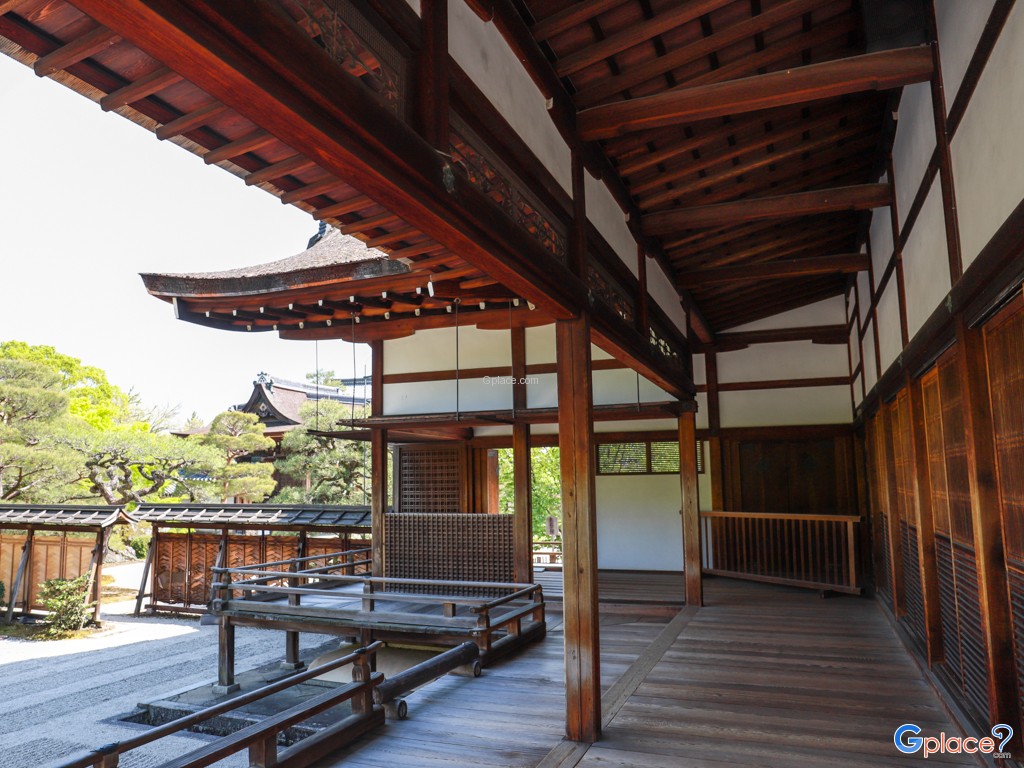
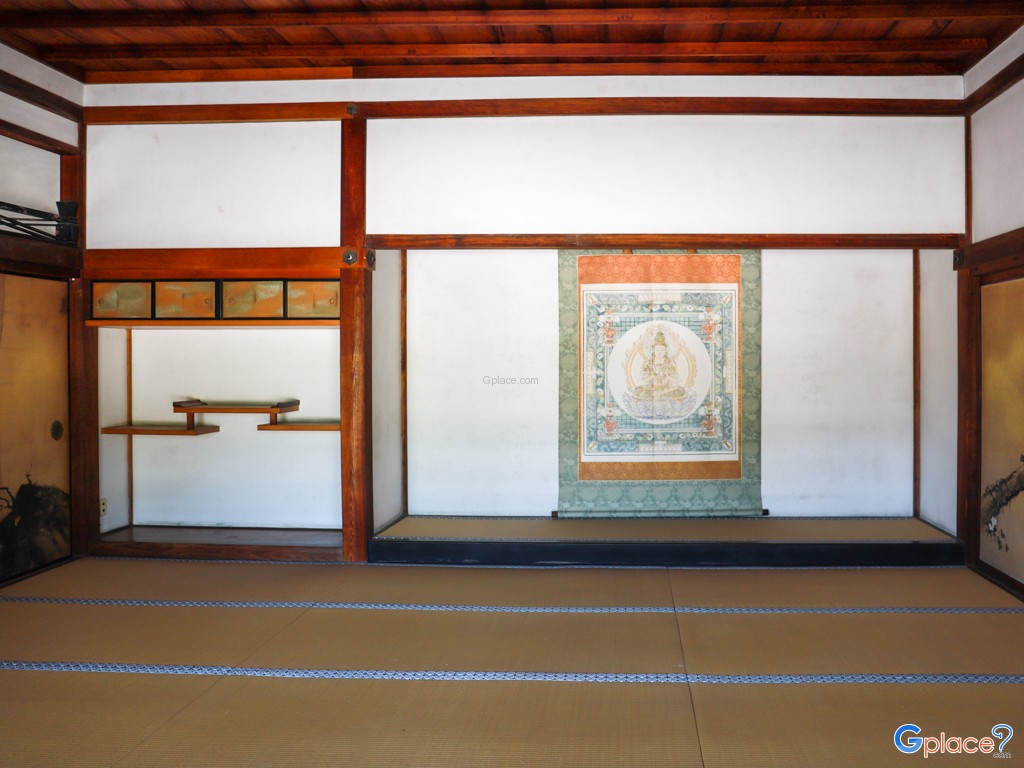
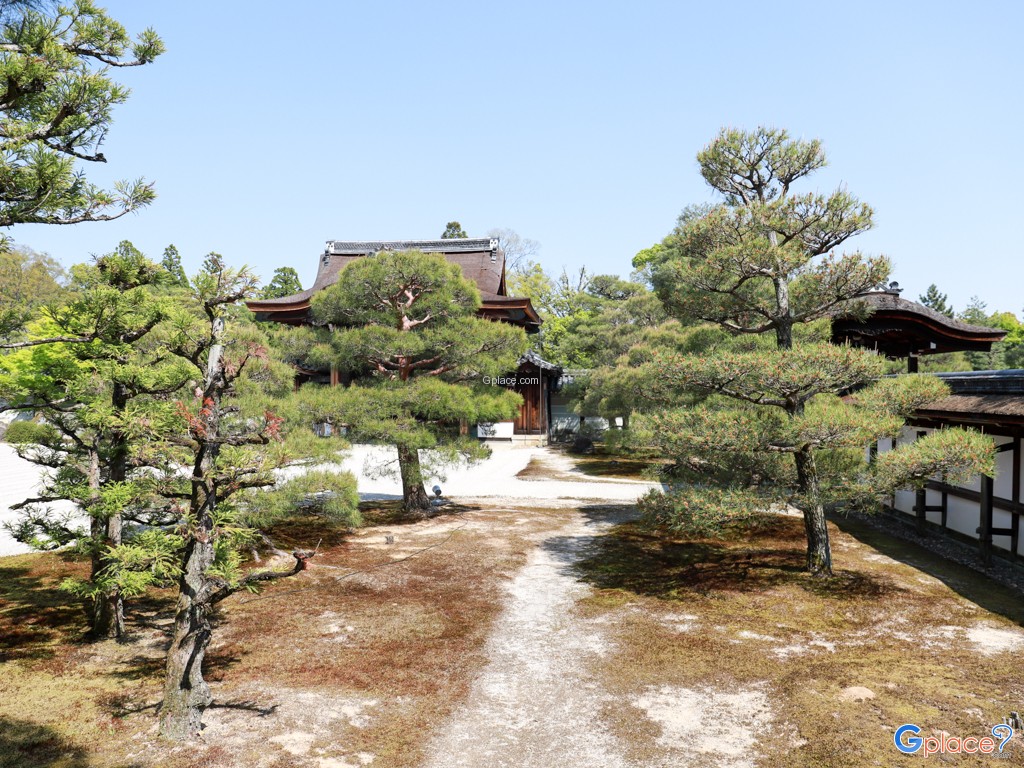

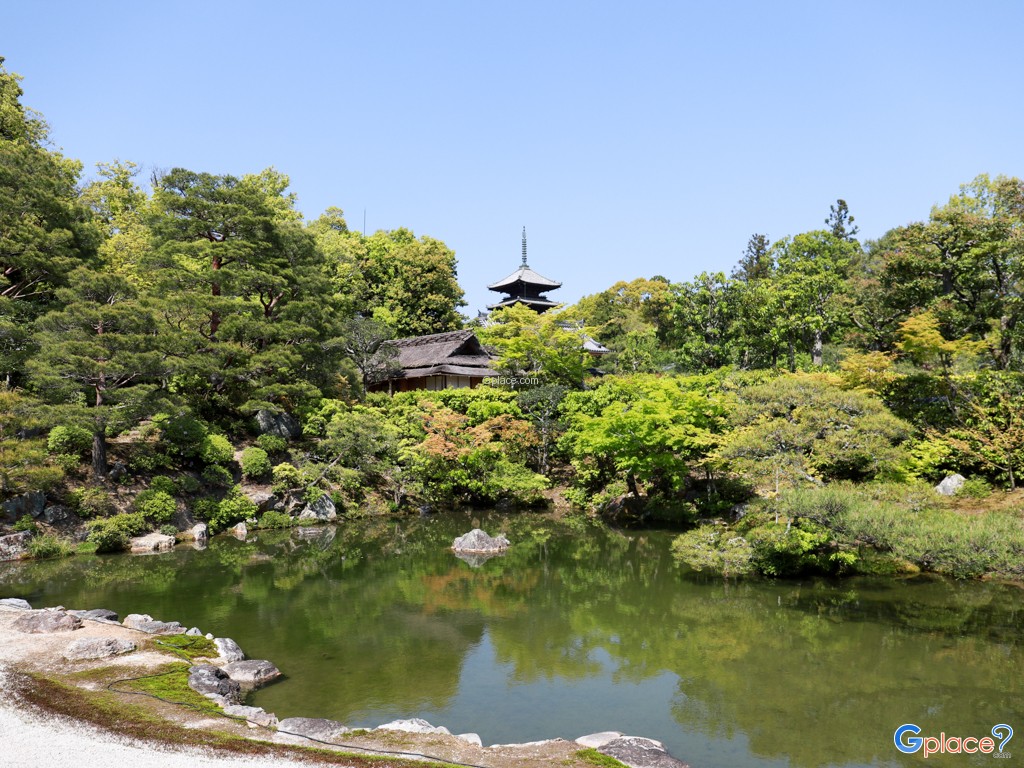




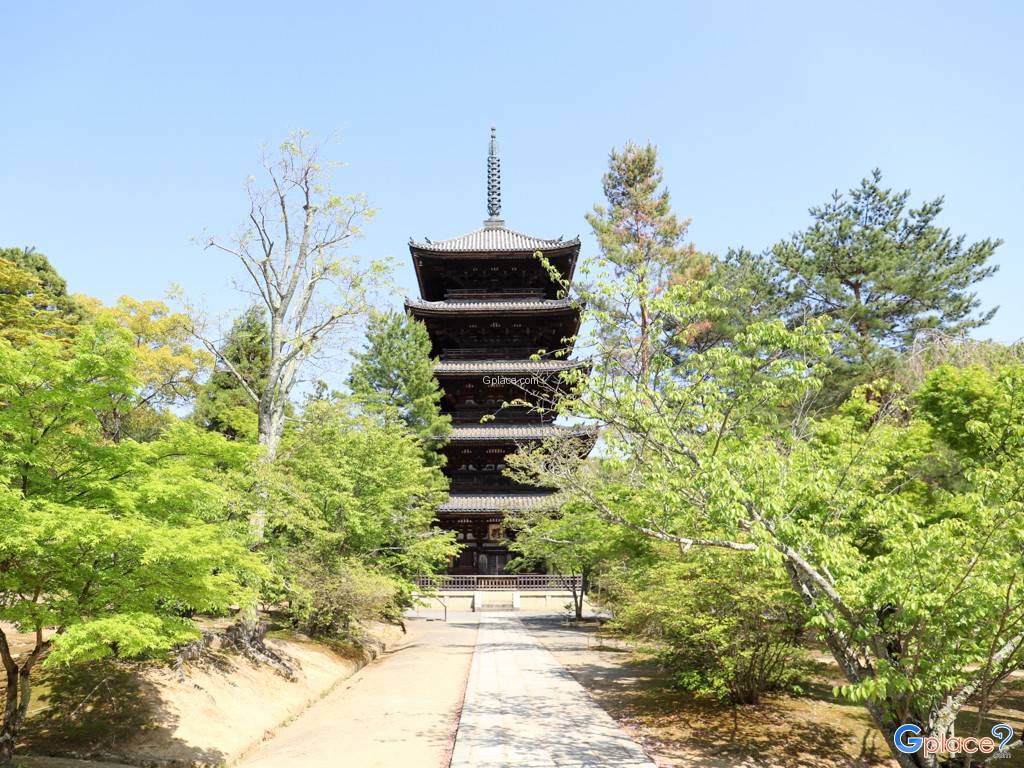
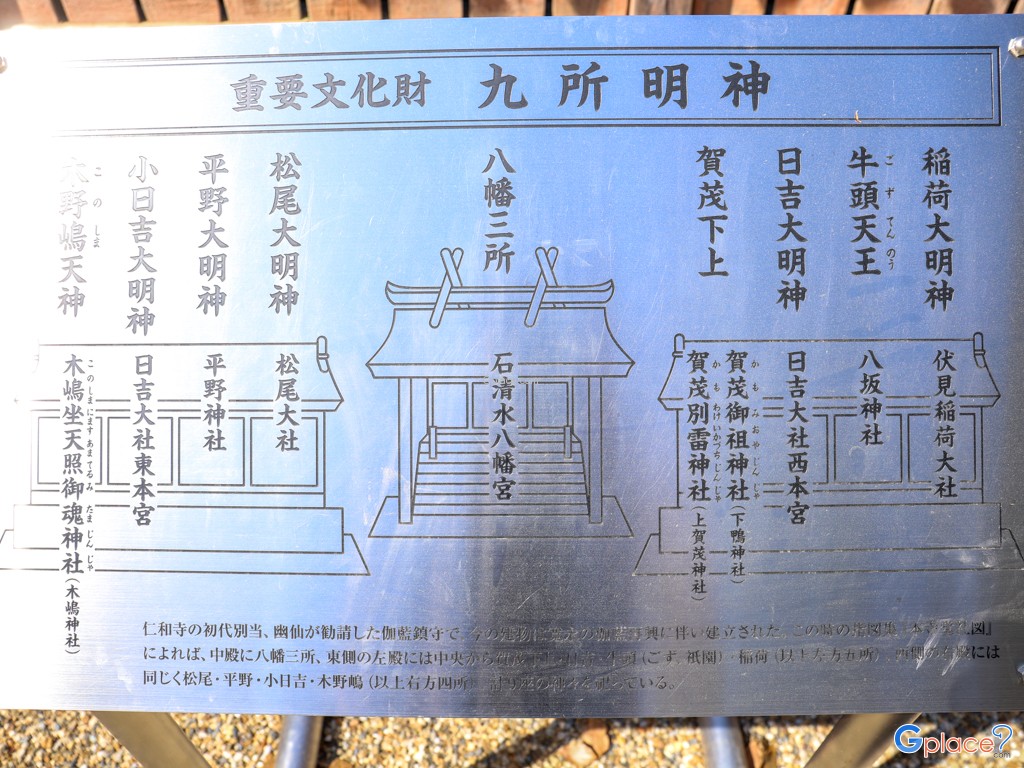
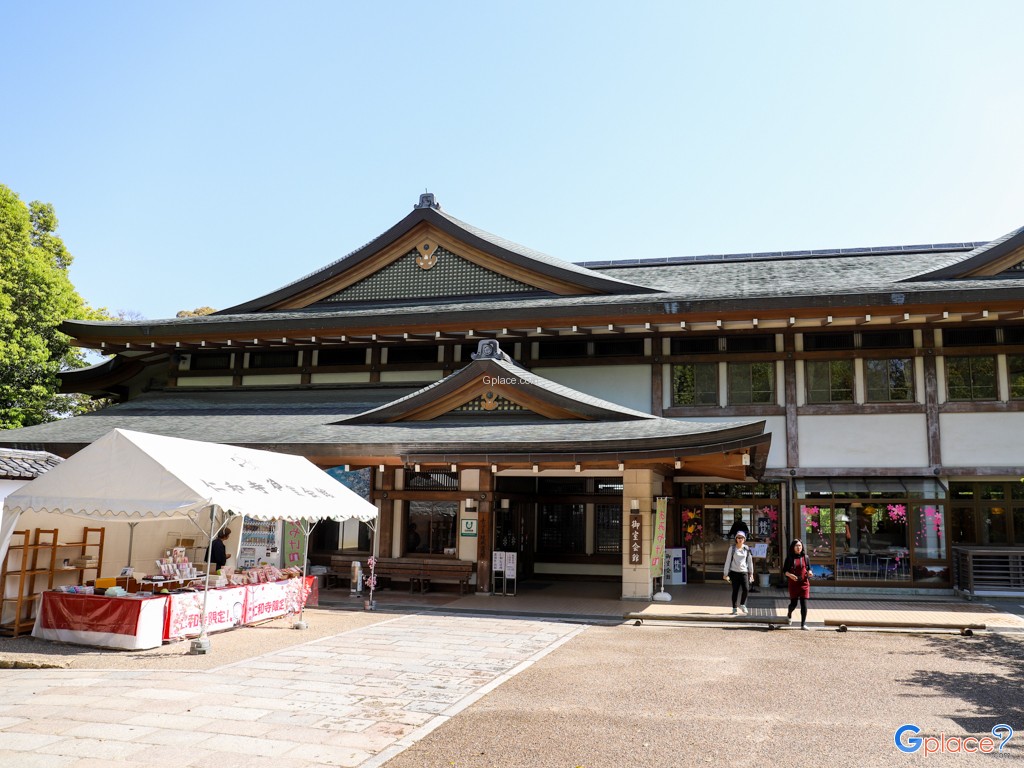
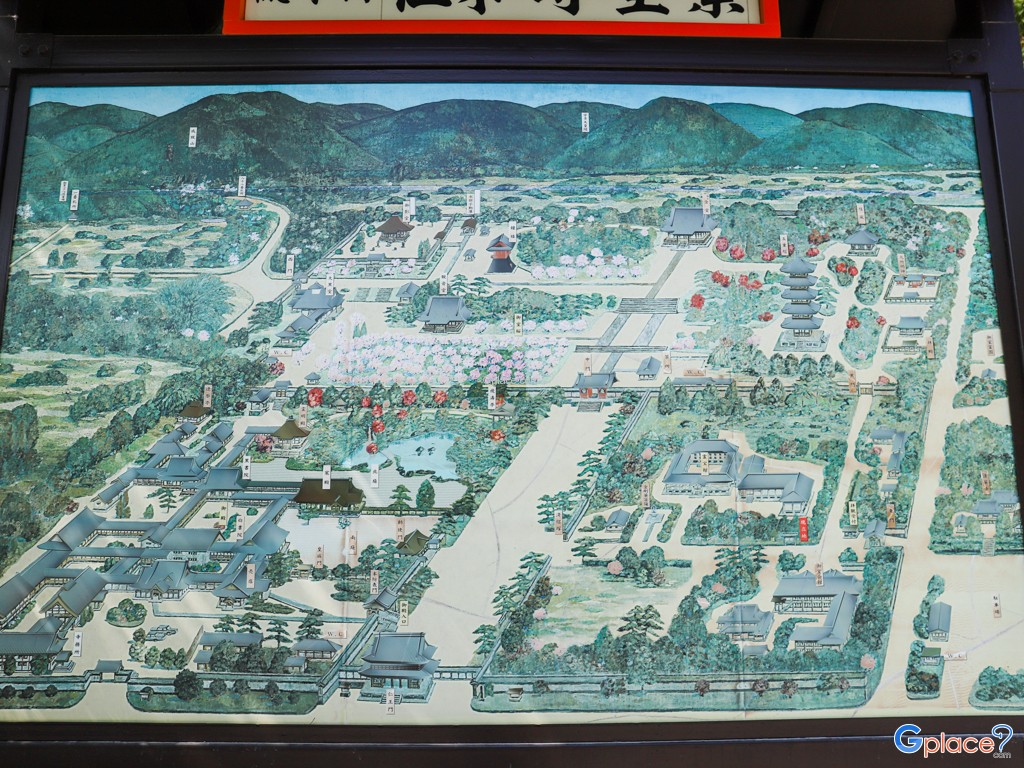
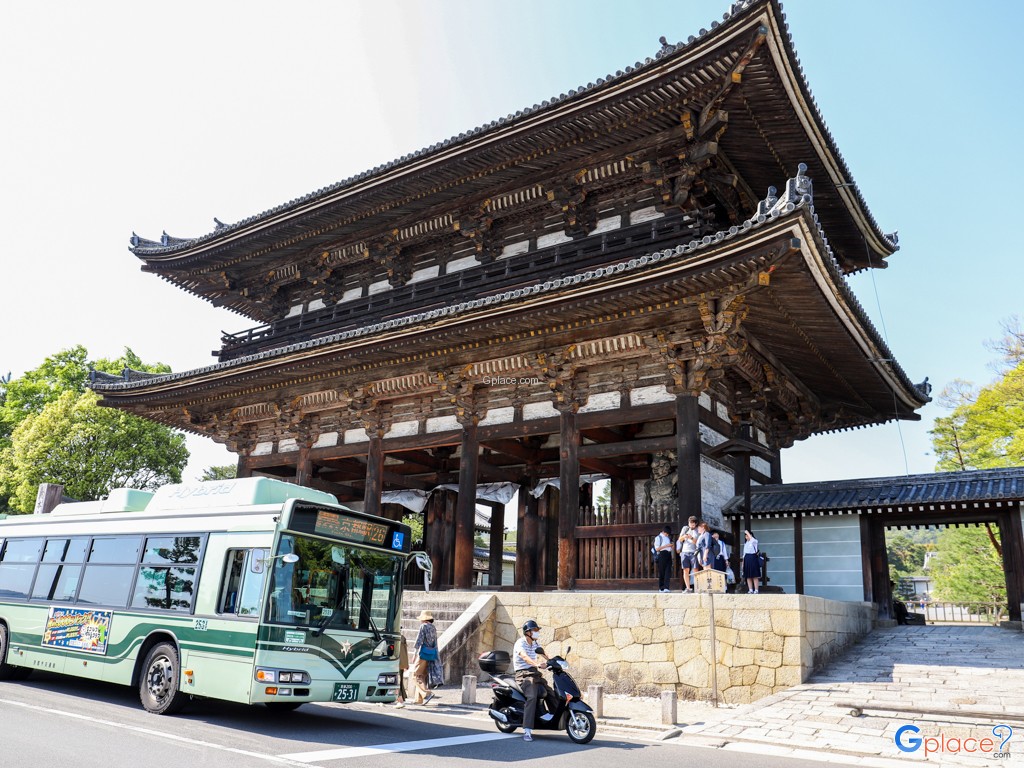
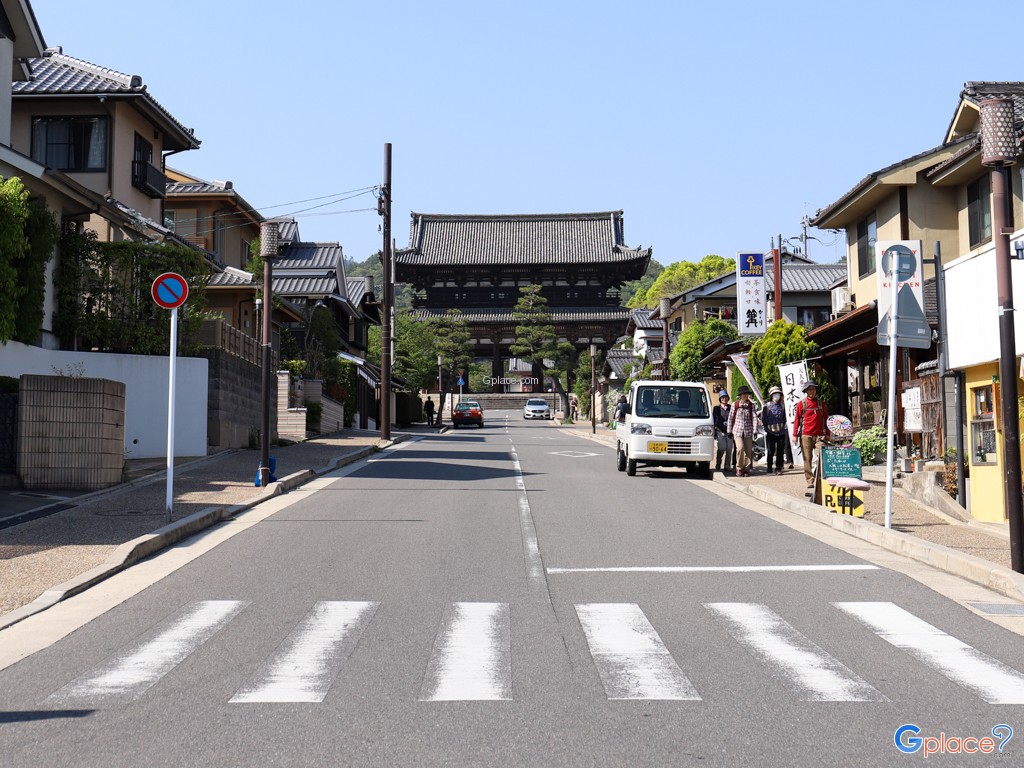
“An imperial temple where a palace, Zen rock gardens, and Kyoto’s latest-blooming cherry blossoms coexist within a single UNESCO World Heritage site.”
Ninna-ji Temple was founded in 888 CE by Emperor Uda and holds a special place in Japanese history as a Monzeki Temple—a temple traditionally headed by retired emperors or members of the imperial family. This status elevated Ninna-ji beyond a religious institution into a space where imperial governance, Buddhist practice, and court culture intersected.
The temple serves as the head temple of the Omuro School of Shingon Buddhism, playing a major role in religious education and ritual practice since the Heian period. Its defining distinction lies in the presence of a Goten —an imperial palace complex located within the temple grounds—symbolizing the concept of an emperor renouncing worldly power in pursuit of spiritual enlightenment.
Owing to its exceptional historical, architectural, and spiritual value, Ninna-ji was inscribed as a UNESCO World Heritage Site as part of the Historic Monuments of Ancient Kyoto.
Goten Area
The heart of Ninna-ji’s imperial identity
-
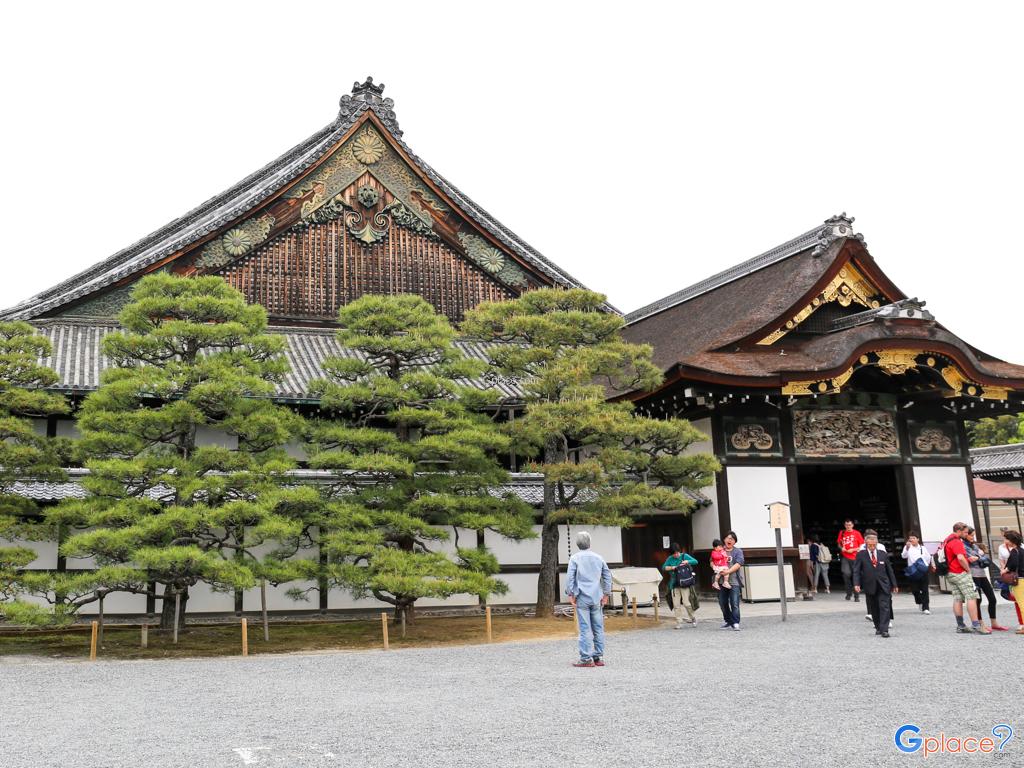
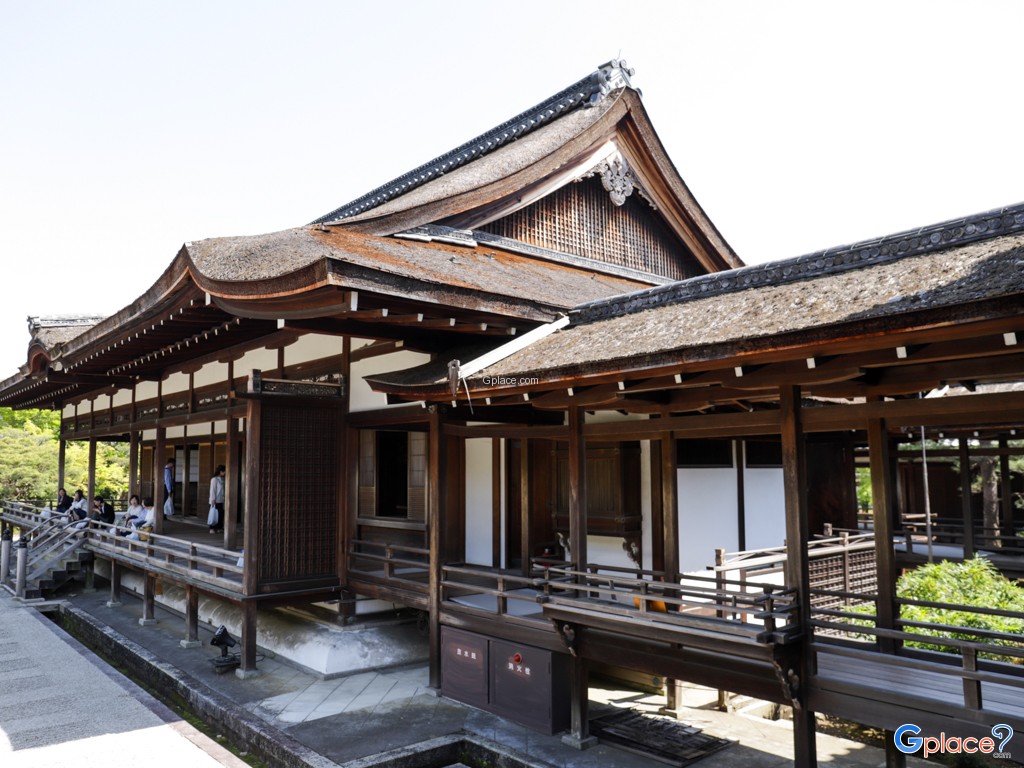
Ninnaji Goten
A palace complex once used as the residence and administrative center of imperial abbots. Its restrained elegance reflects court aesthetics adapted to Buddhist ideals of humility and contemplation. -
Shinden
The principal ceremonial hall of the Goten, used for formal rites connected to the imperial court. -
Shiroshoin – White Study
A formal study and reception building for high-ranking monks, characterized by openness and brightness, often used for scholarly and ceremonial purposes. -
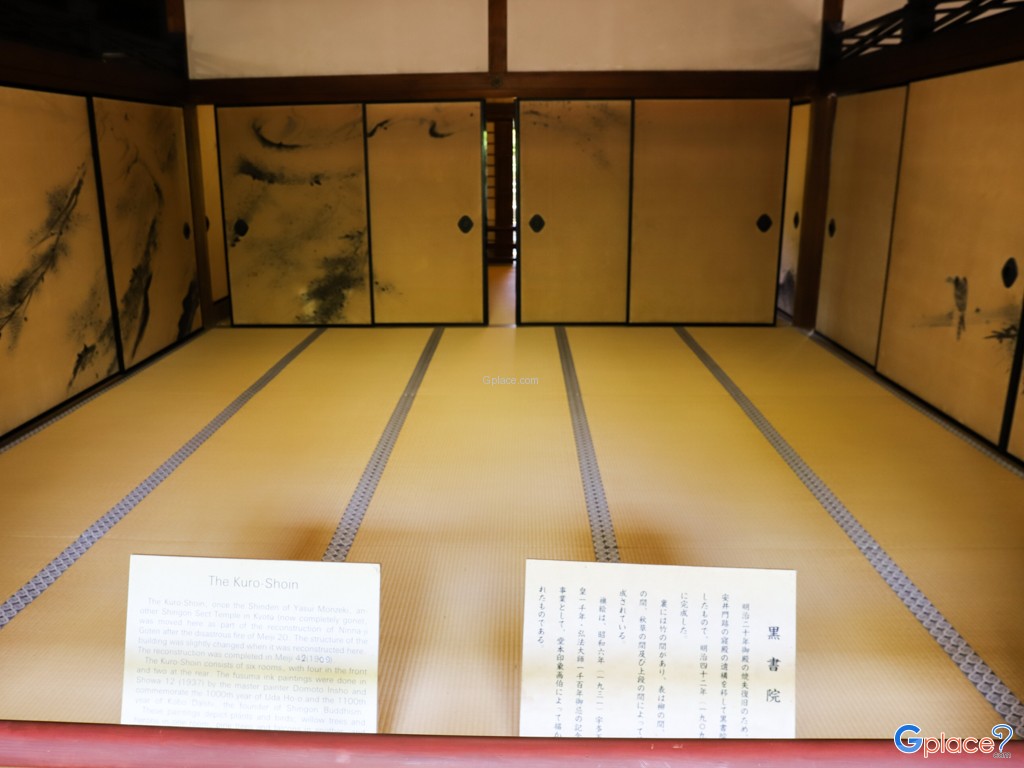
Kuro Shoin – Black Study
A more private residential and working space for imperial abbots. Its subdued atmosphere reflects daily life within the palace precinct, contrasting with the formality of the White Study. -
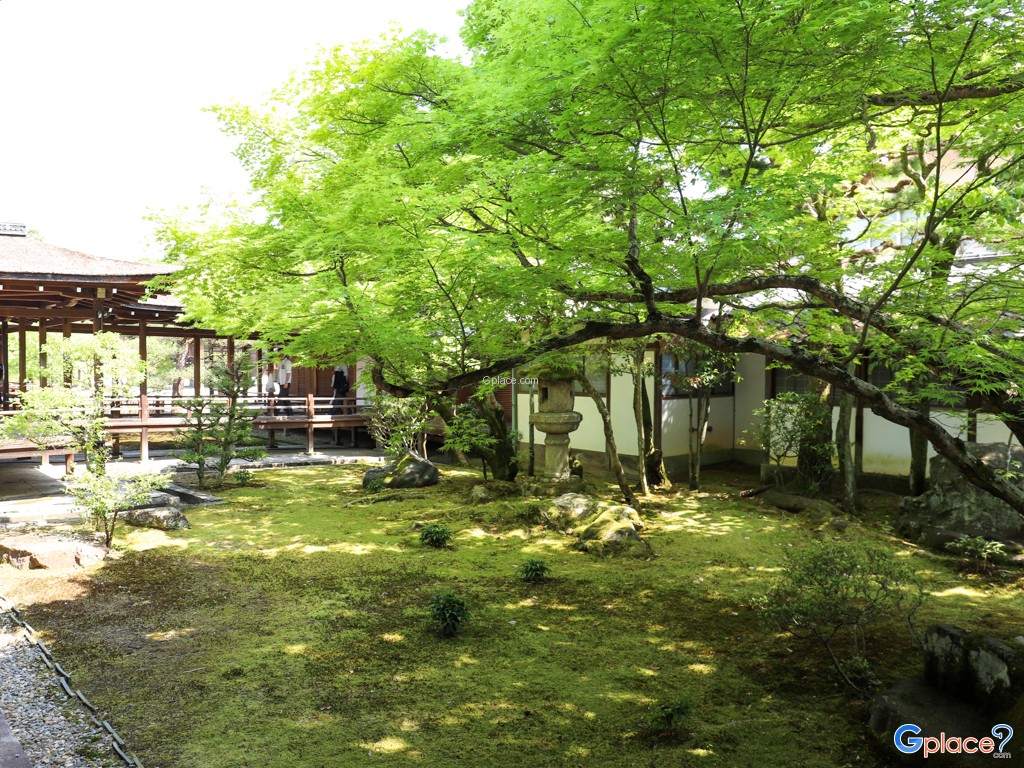
Palace Garden
A stroll-style garden designed according to aristocratic landscaping principles, harmonizing architecture and nature. -
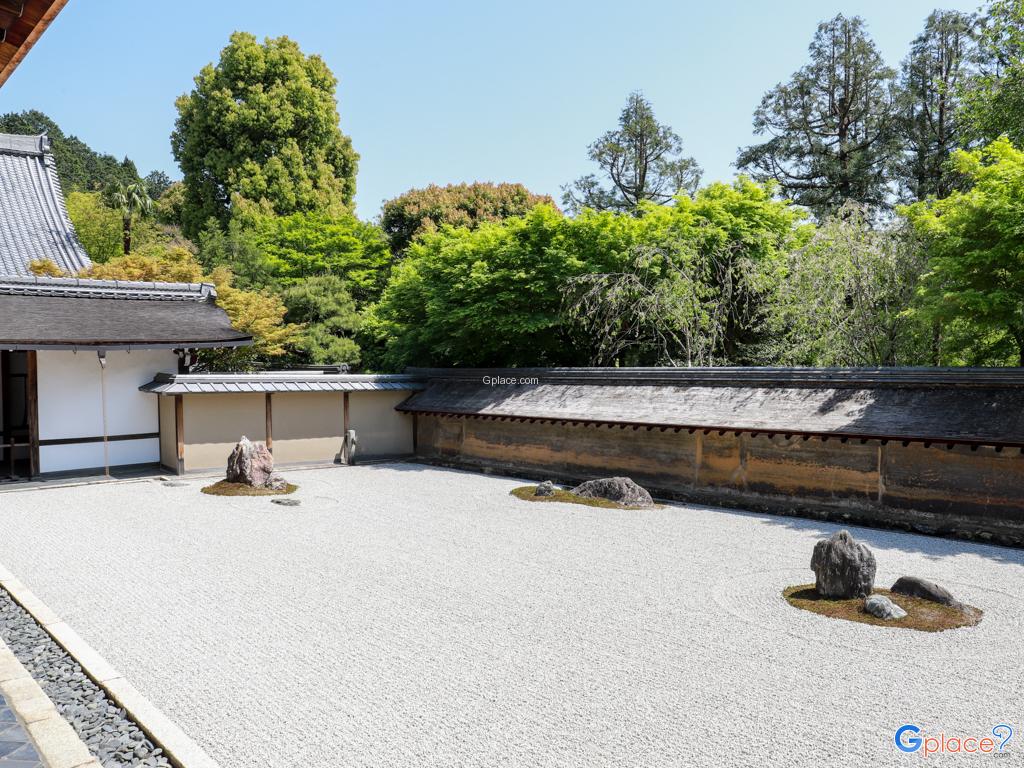
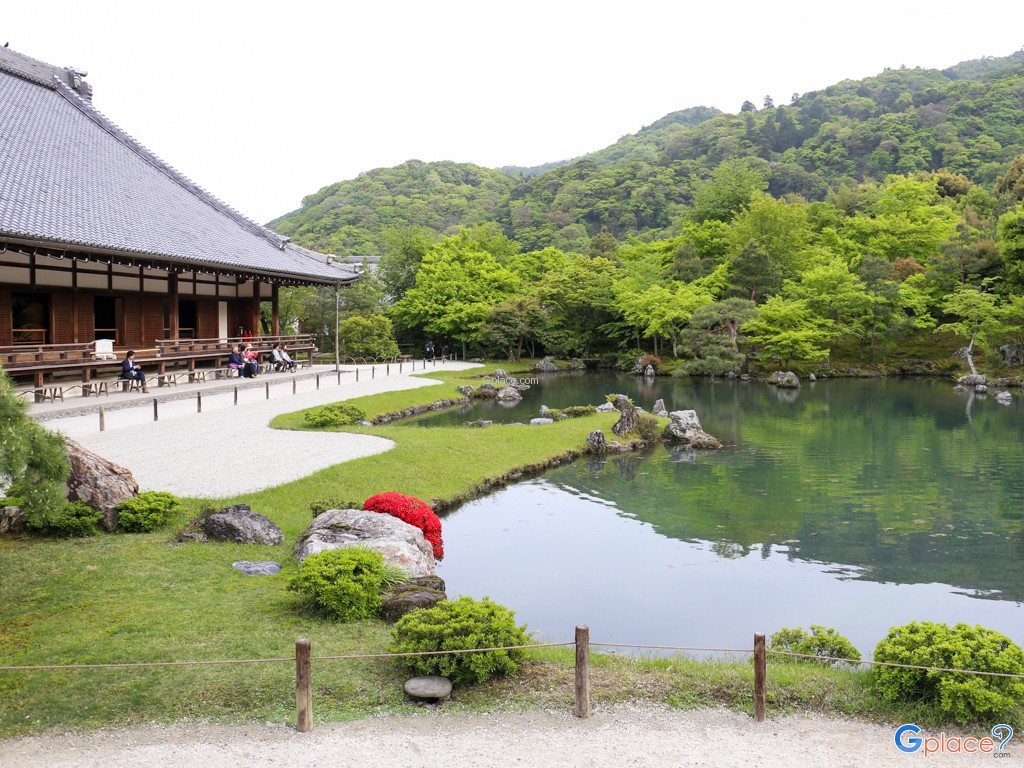
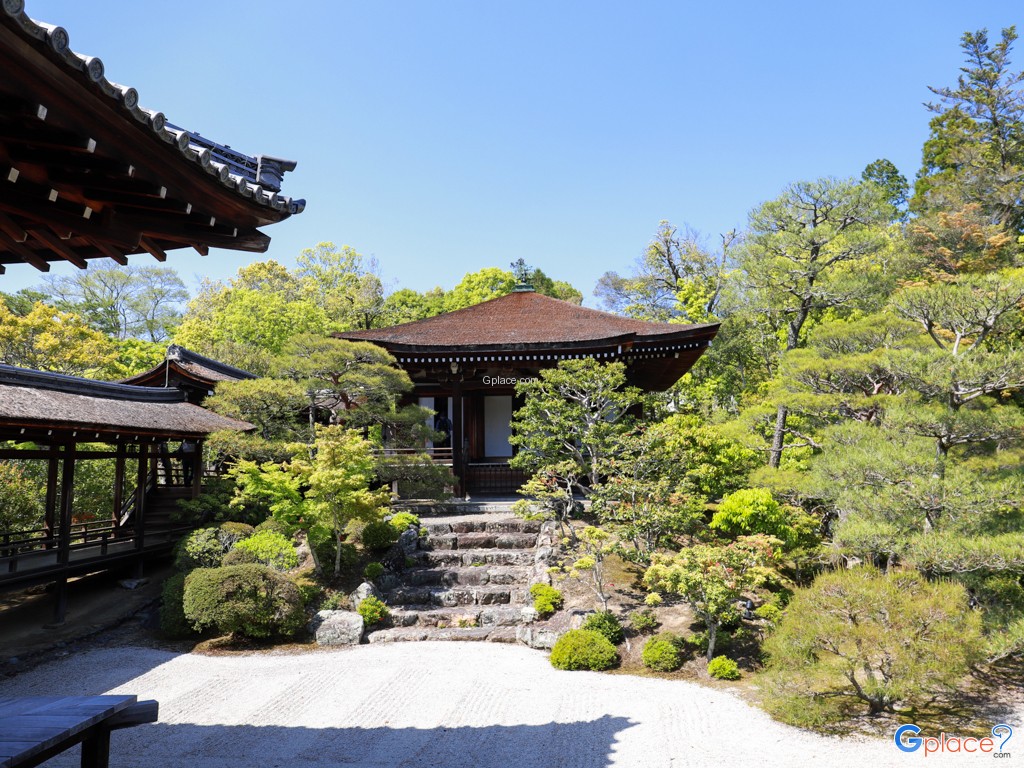
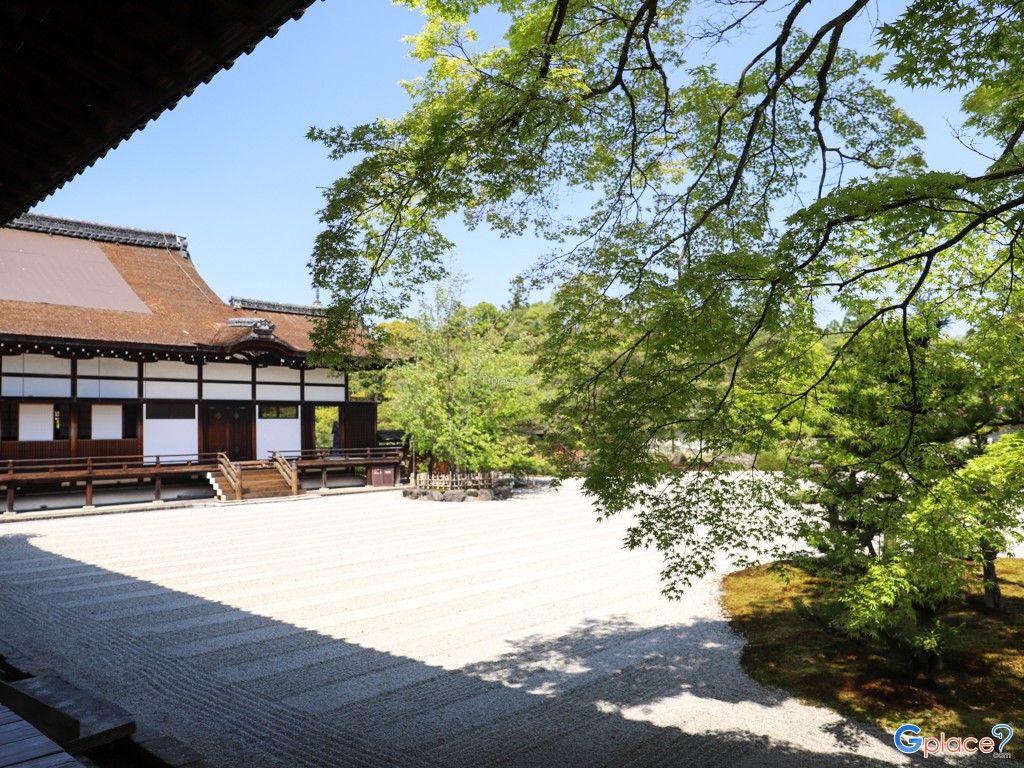
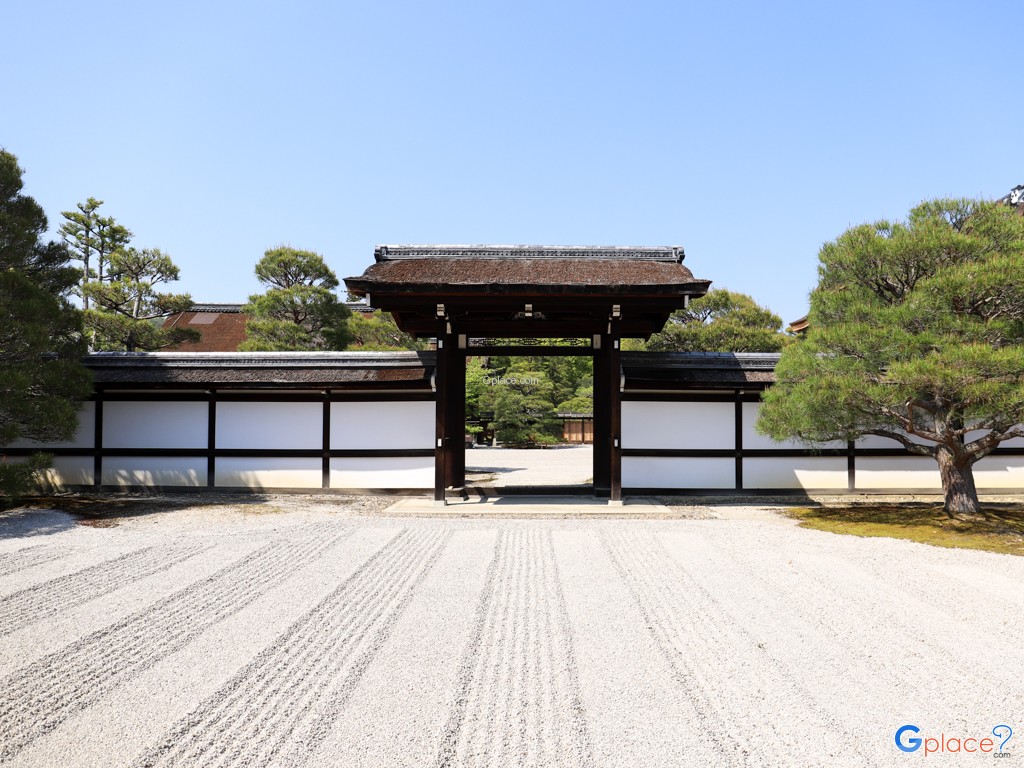
Karesansui Garden
A Zen rock and sand garden located before the Goten, symbolizing mountains and flowing water. Designed for seated meditation rather than walking, it embodies Zen philosophy through abstraction and stillness.
Sacred Buildings & Cultural Structures
Representing Ninna-ji’s religious and intellectual legacy
-
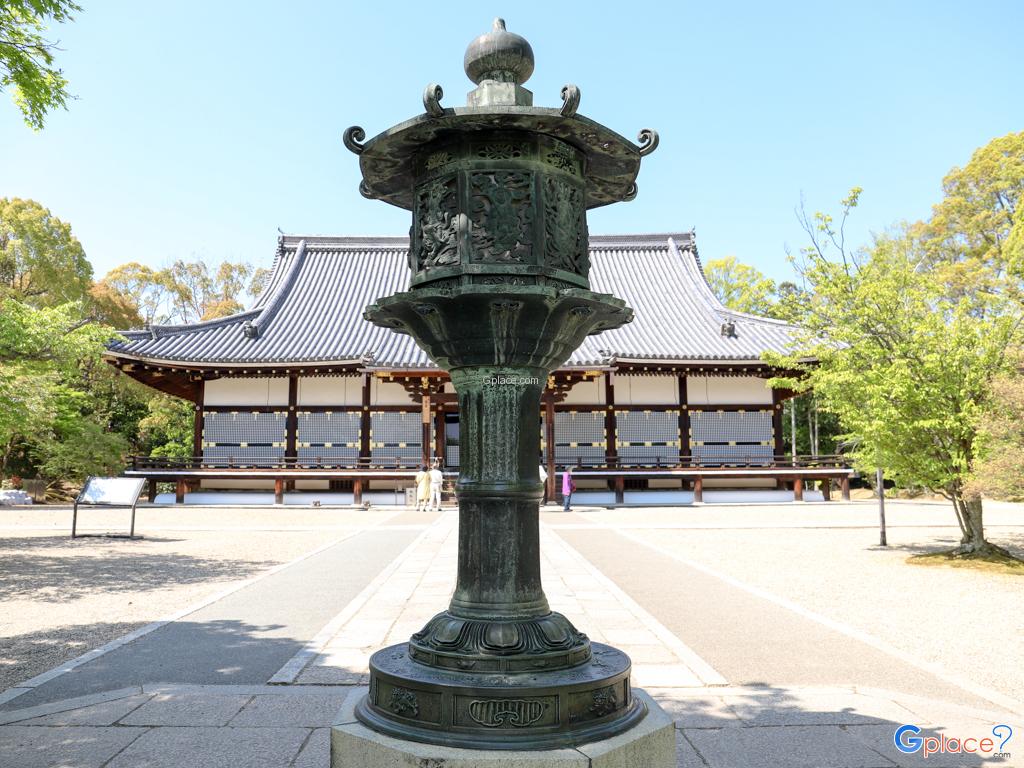
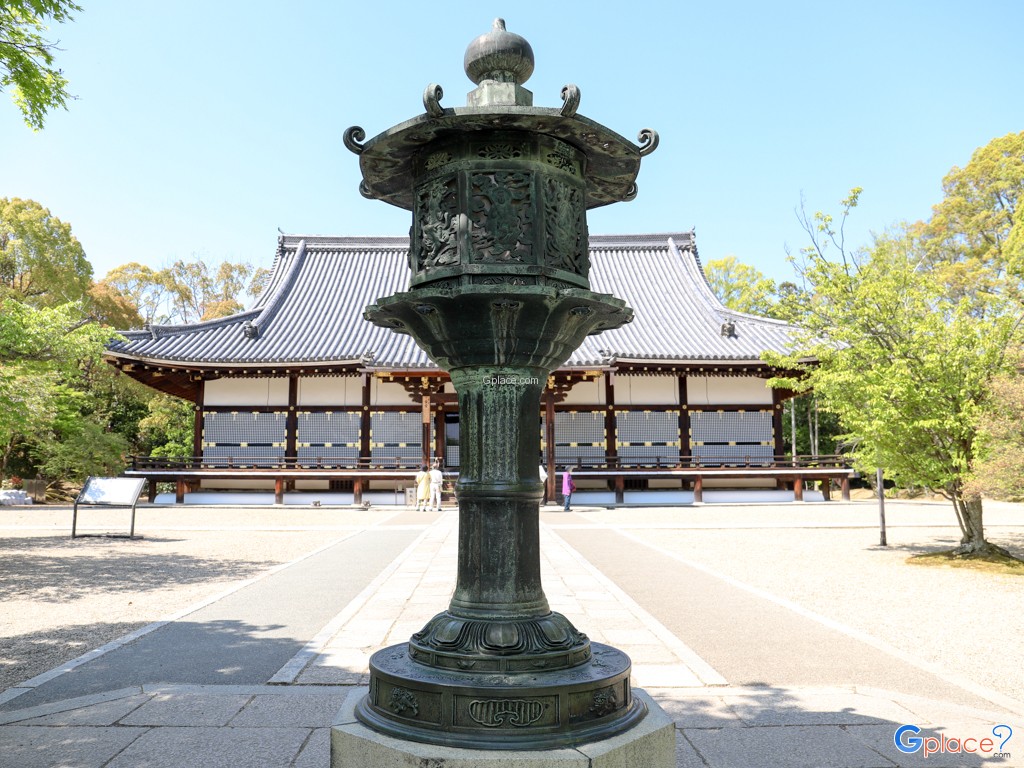
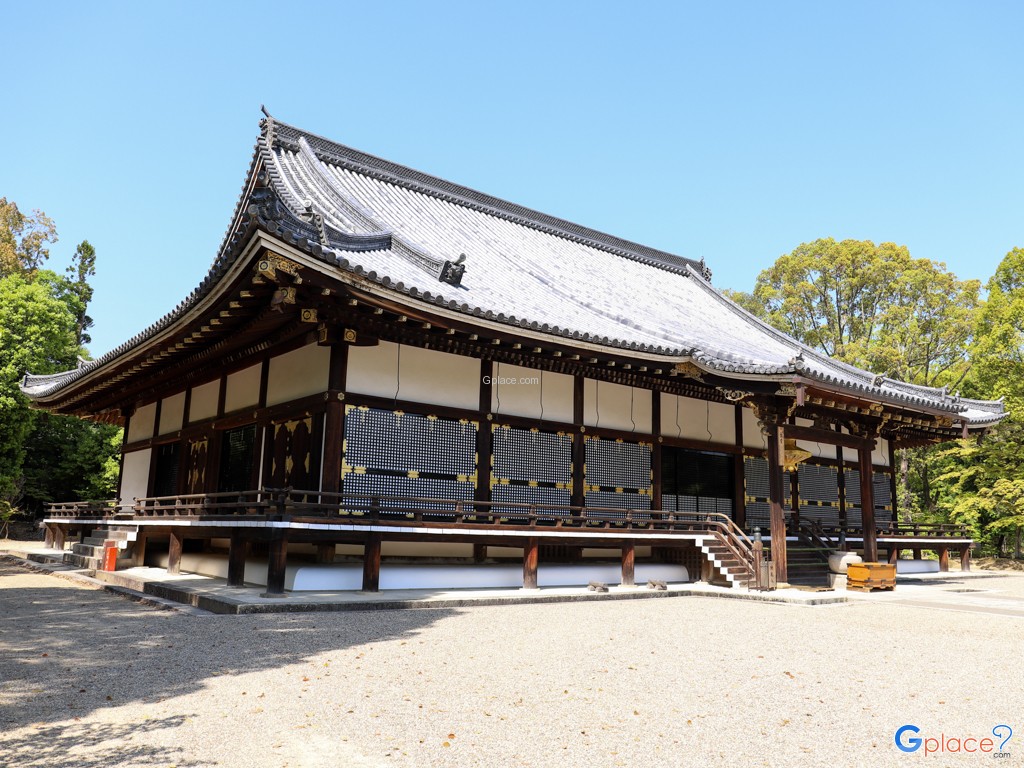
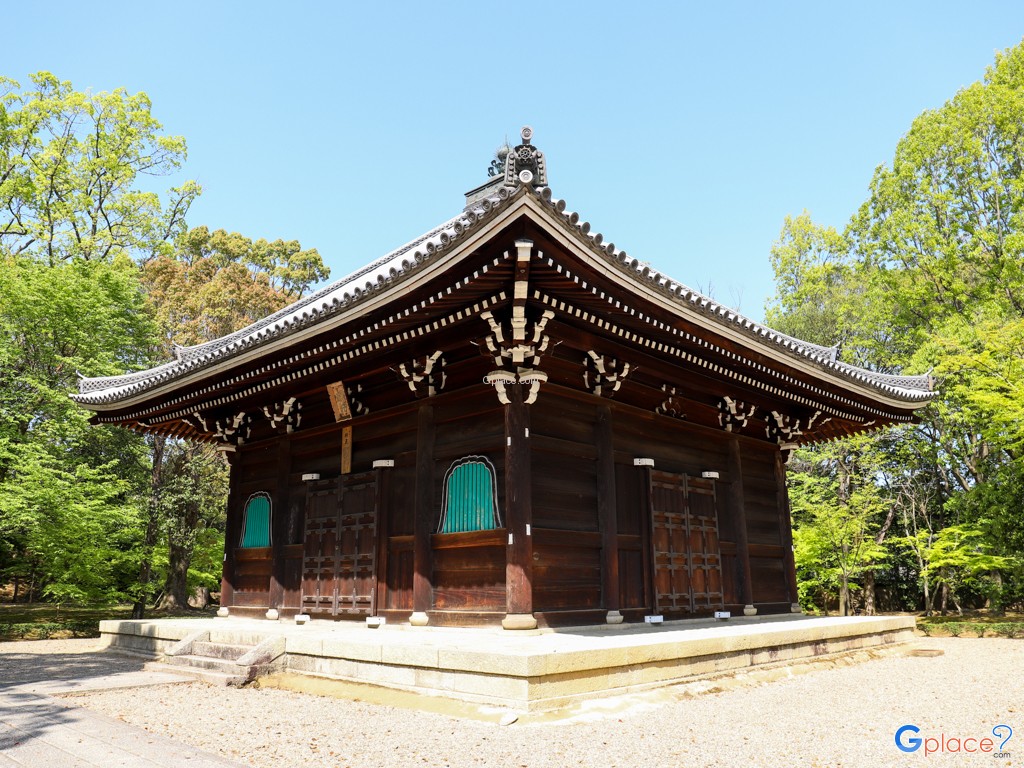
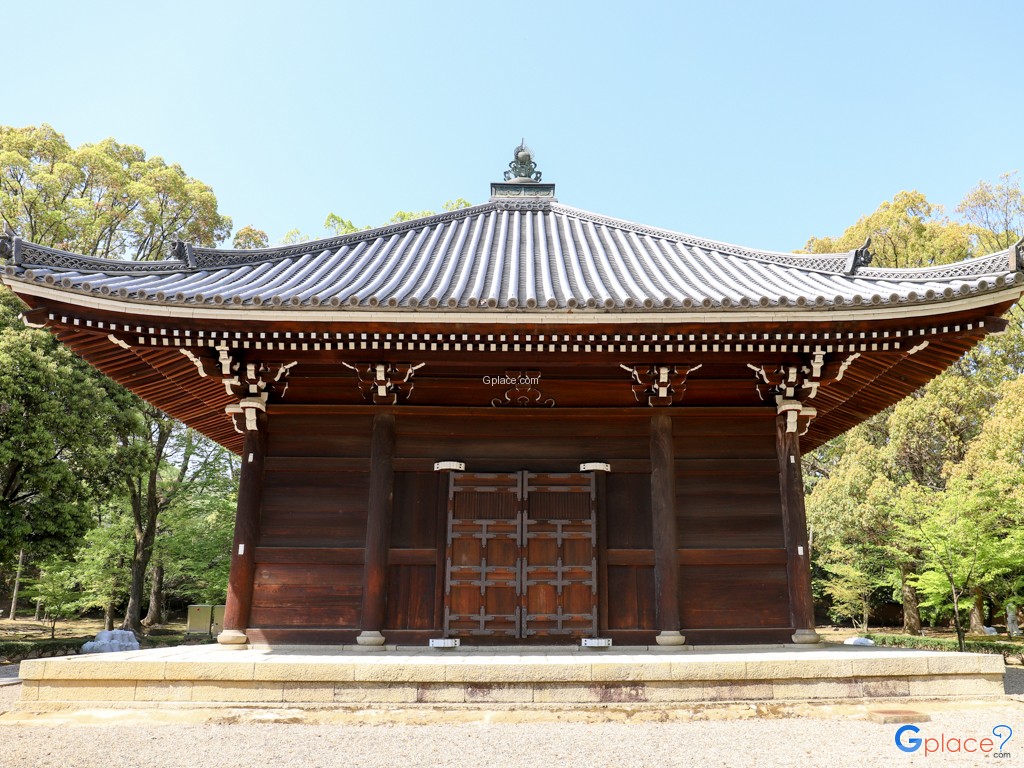
Kon-dō – Main Hall
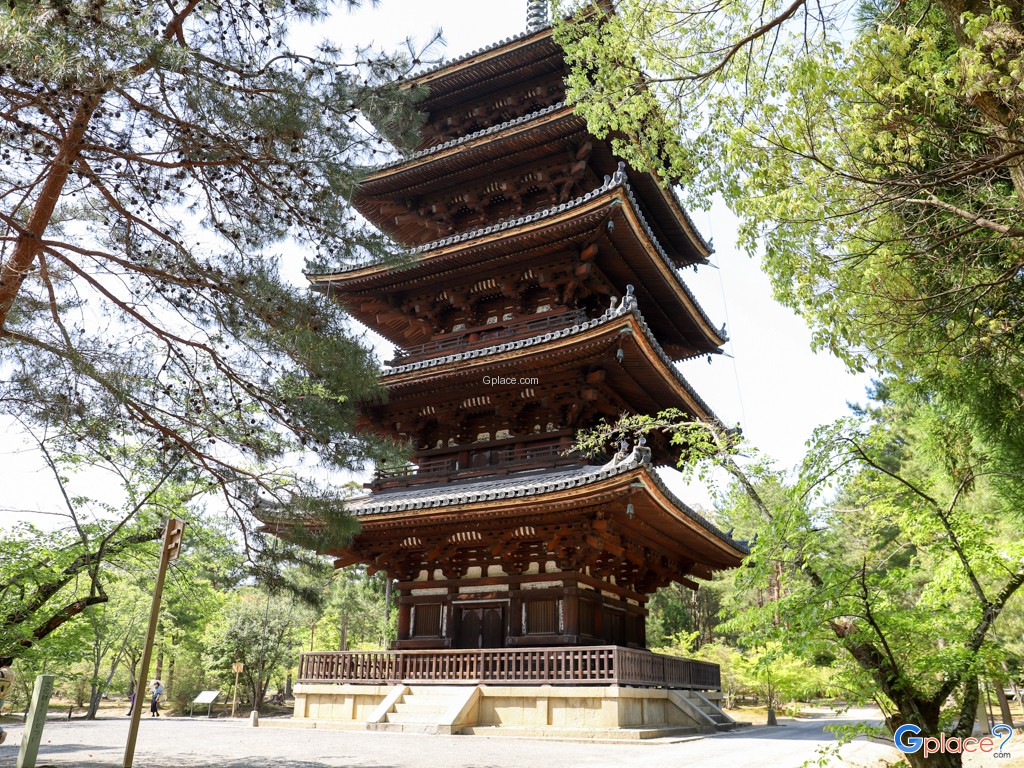
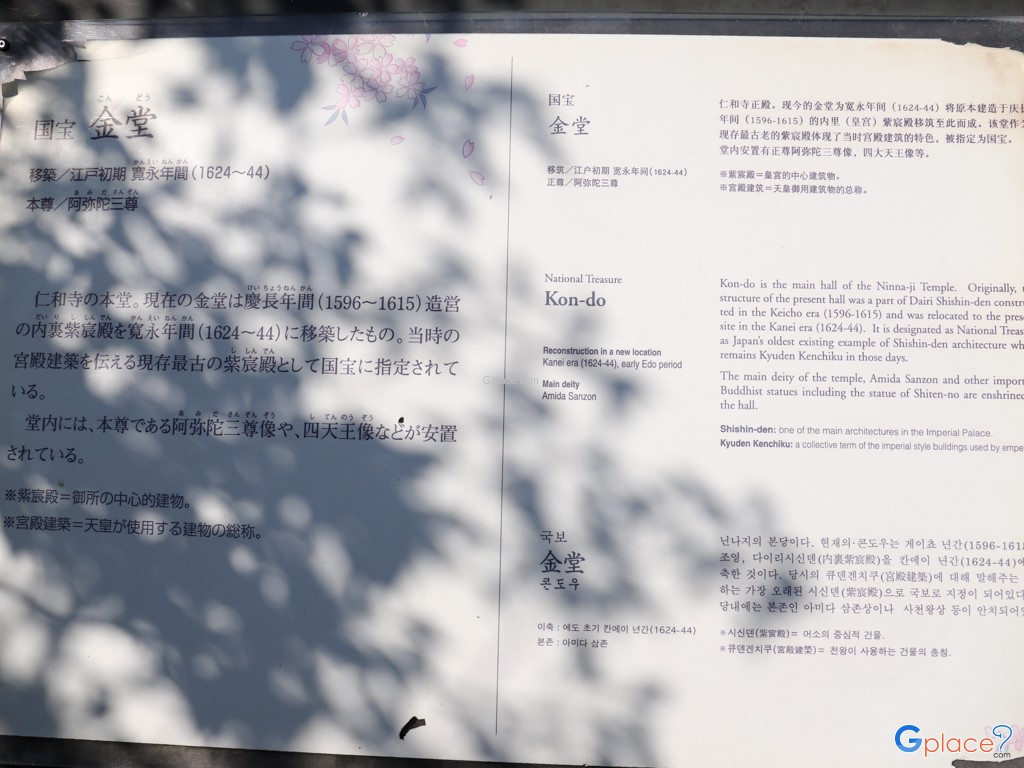
The central worship hall of Ninna-ji and a National Treasure of Japan. Originally part of the Imperial Palace in Kyoto, it was relocated here in the 17th century and houses the temple’s principal Buddhist images. - Five-Story Pagoda: A prominent landmark within the grounds, representing the five elements of Buddhist cosmology and adding vertical balance to the otherwise horizontal palace layout.
-
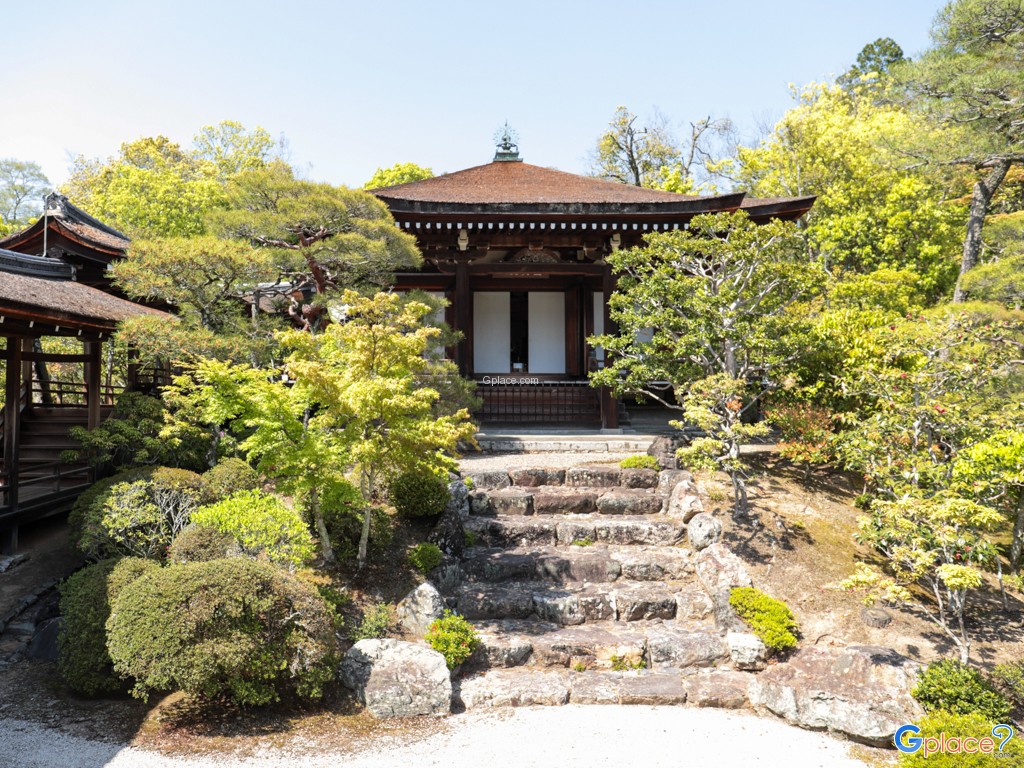
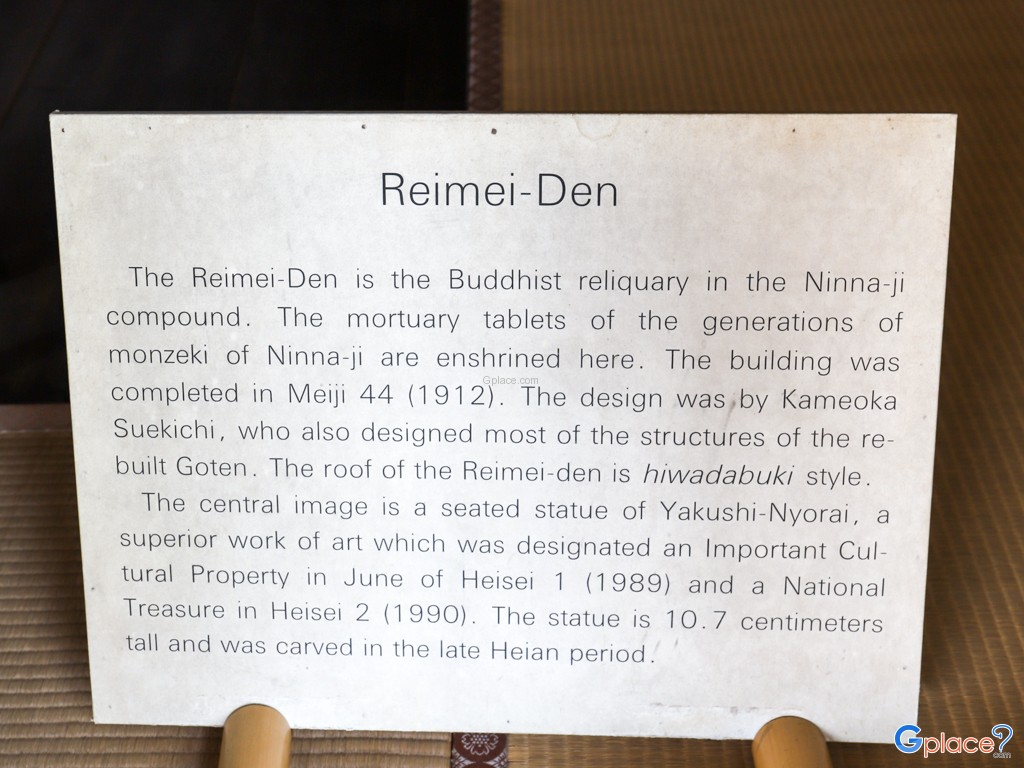
Reimeiden
A hall dedicated to specialized Buddhist rituals and memorial services. -
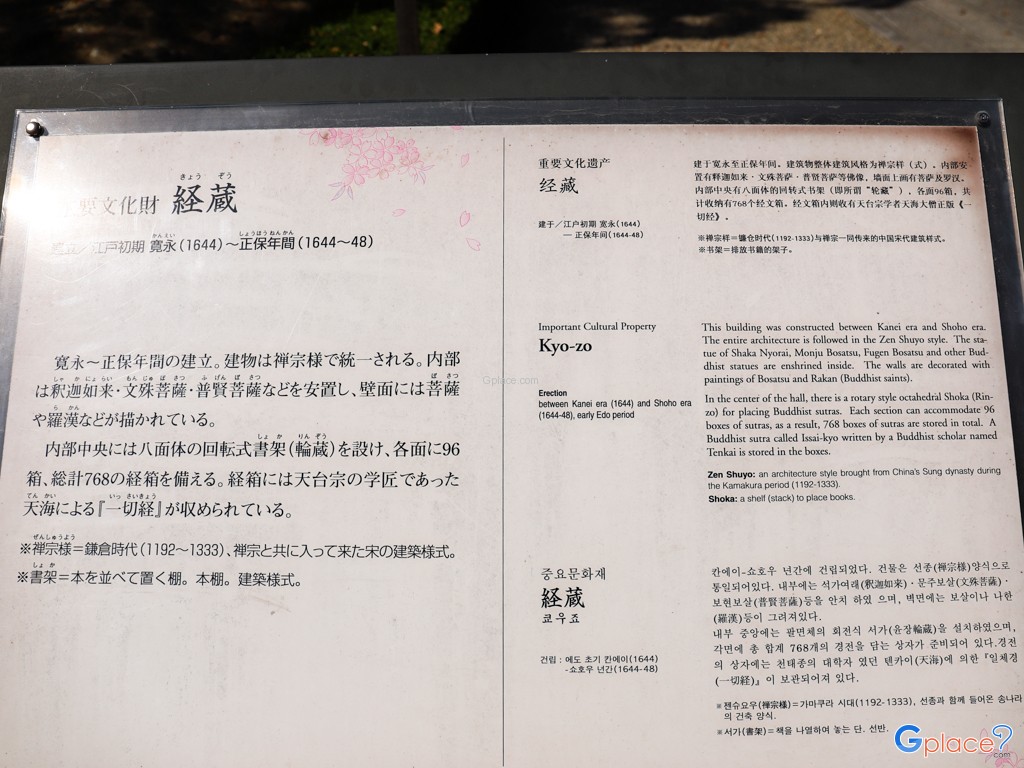
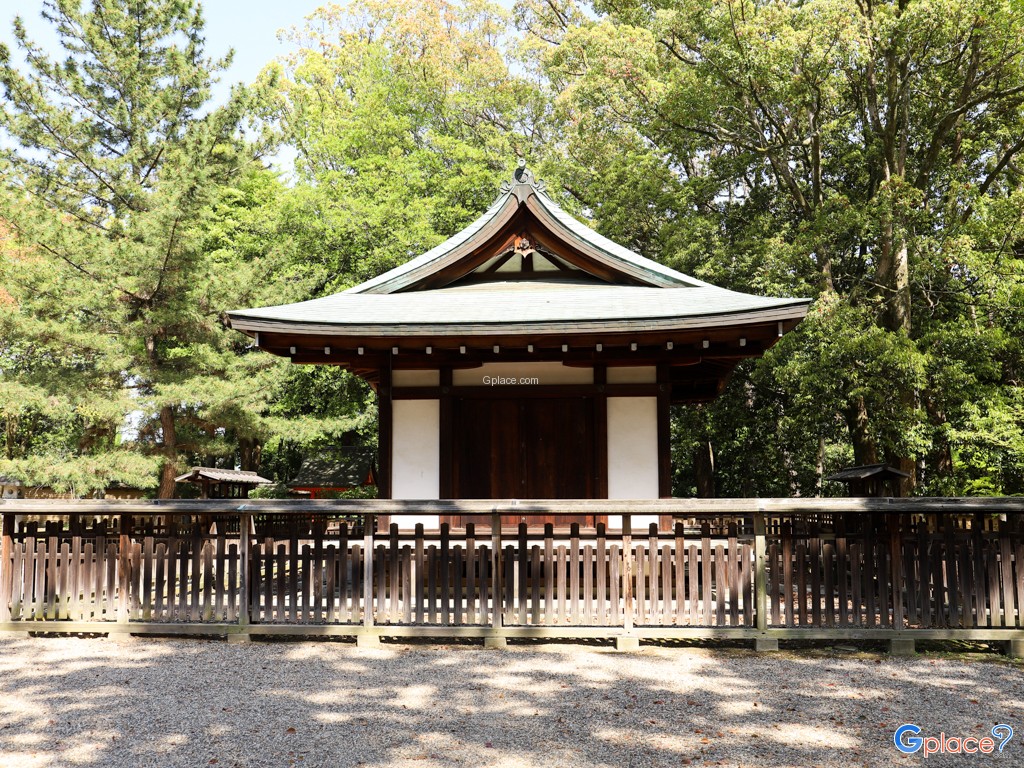
Kyozō – Sutra Repository
A repository for Buddhist scriptures and classical texts, underscoring Ninna-ji’s role as a center of religious learning. -
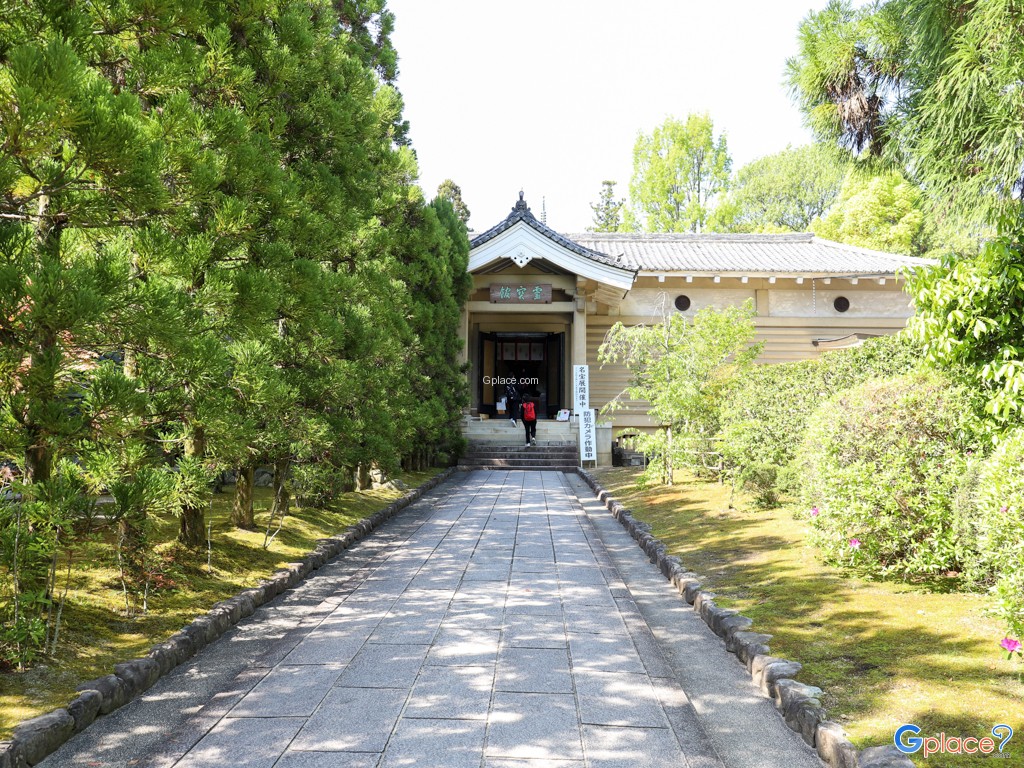
Reihokan – Treasure Hall
Displays important Buddhist statues, ritual objects, and imperial artifacts associated with the temple. -
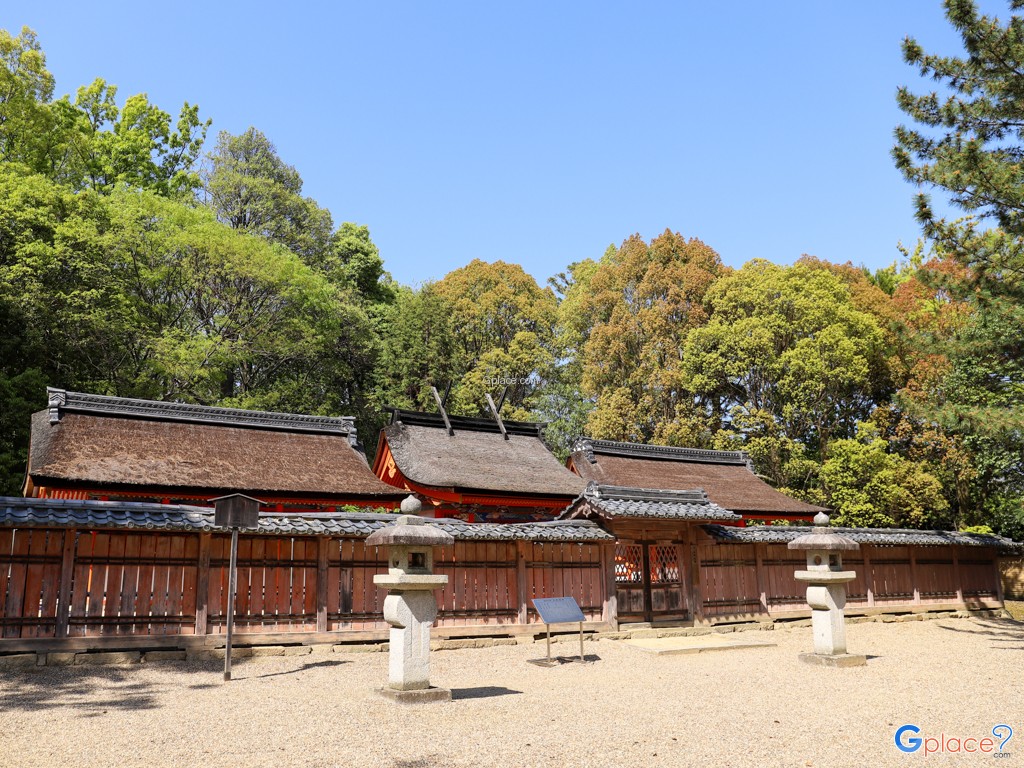
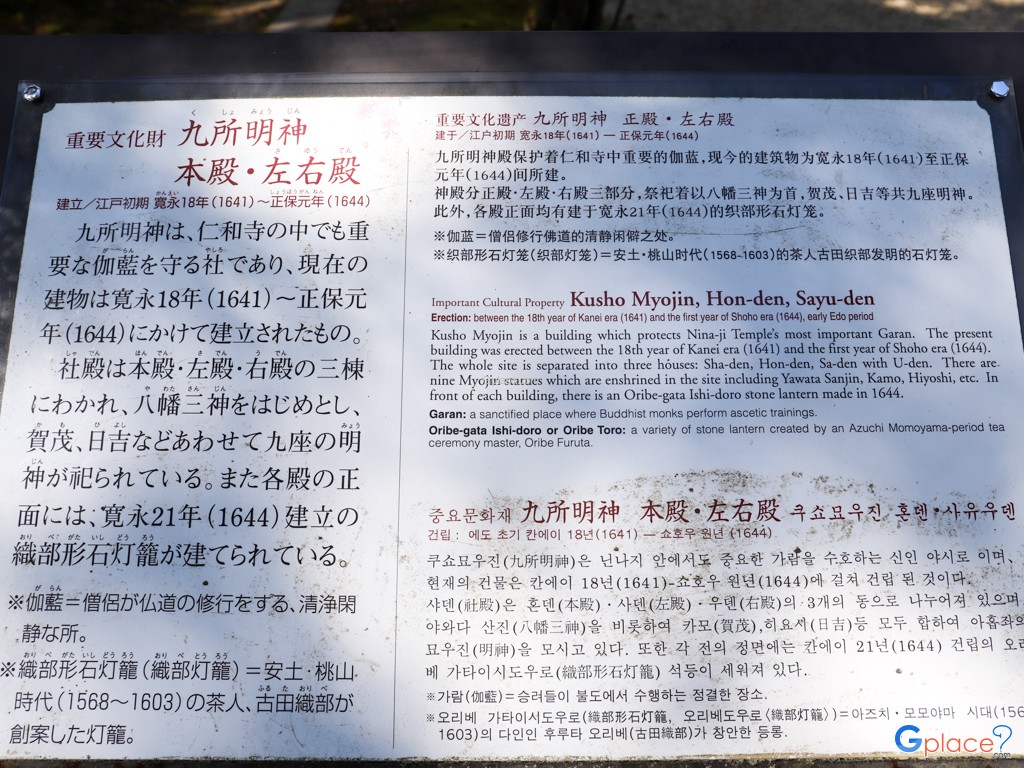
Kusho-myojin Shrine
A Shinto shrine within the temple grounds, illustrating the traditional syncretism of Buddhism and Shinto in Japan.
Ceremonial & Sacred Structures
Defining ritual hierarchy and sacred boundaries
-
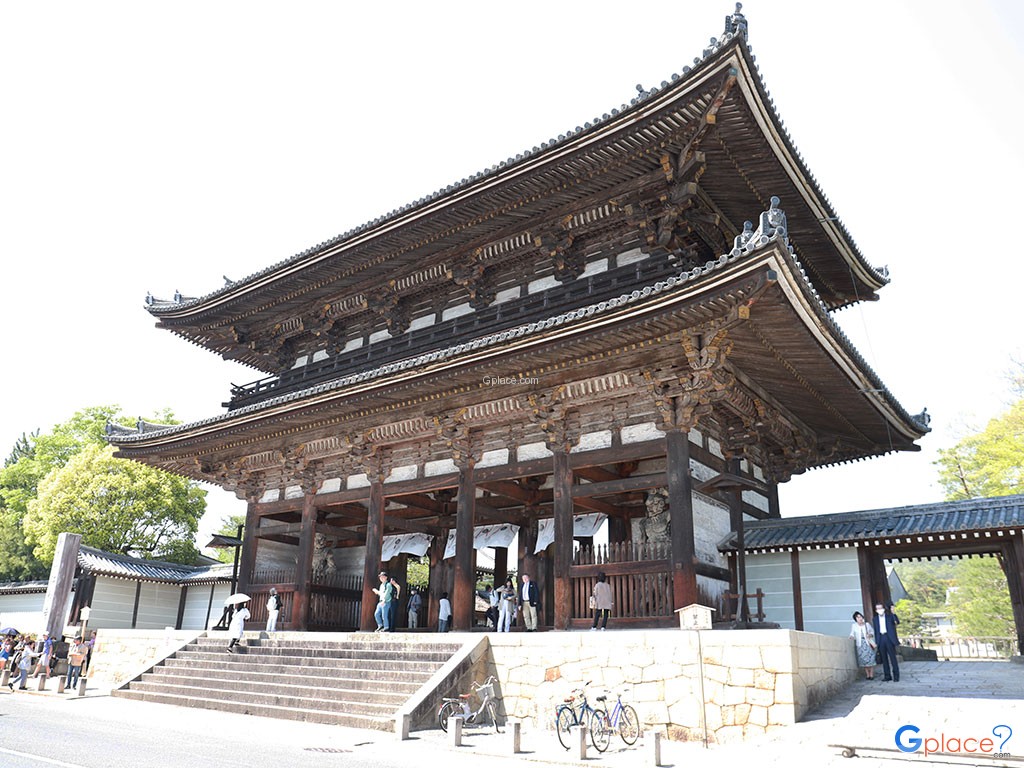
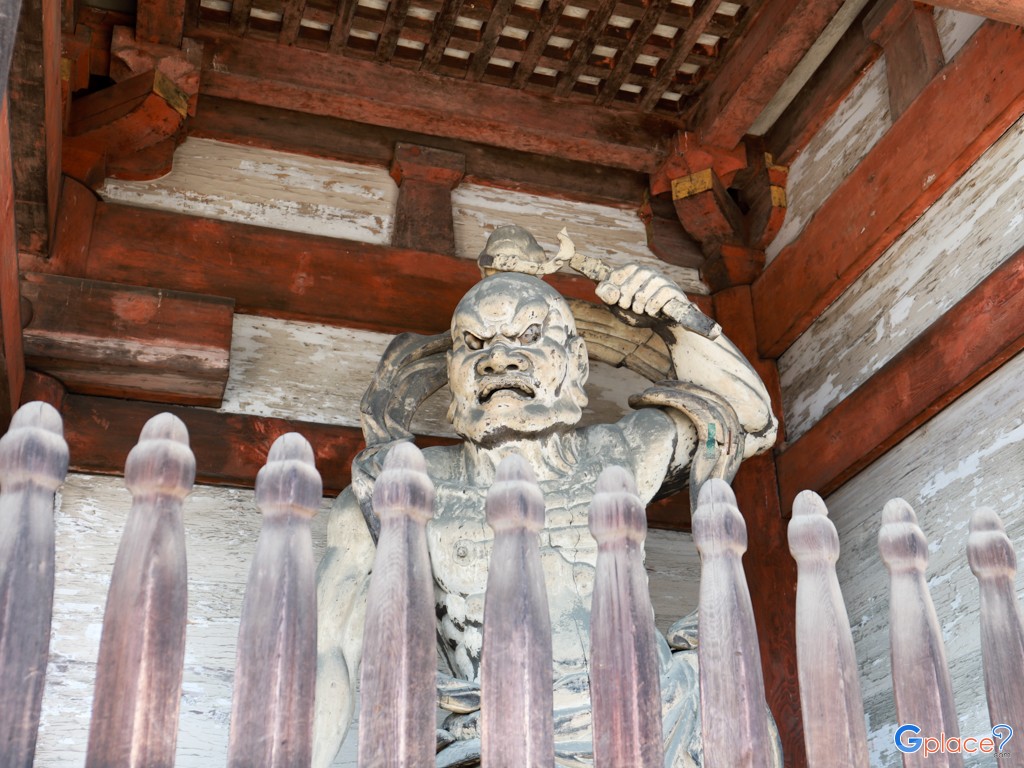
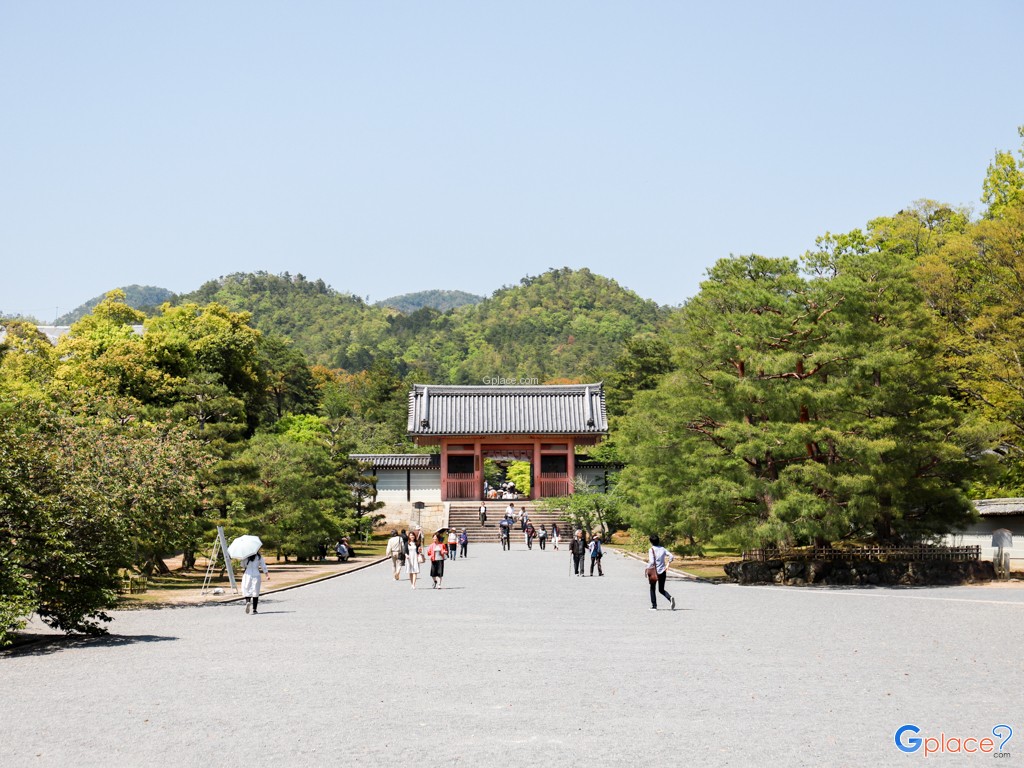
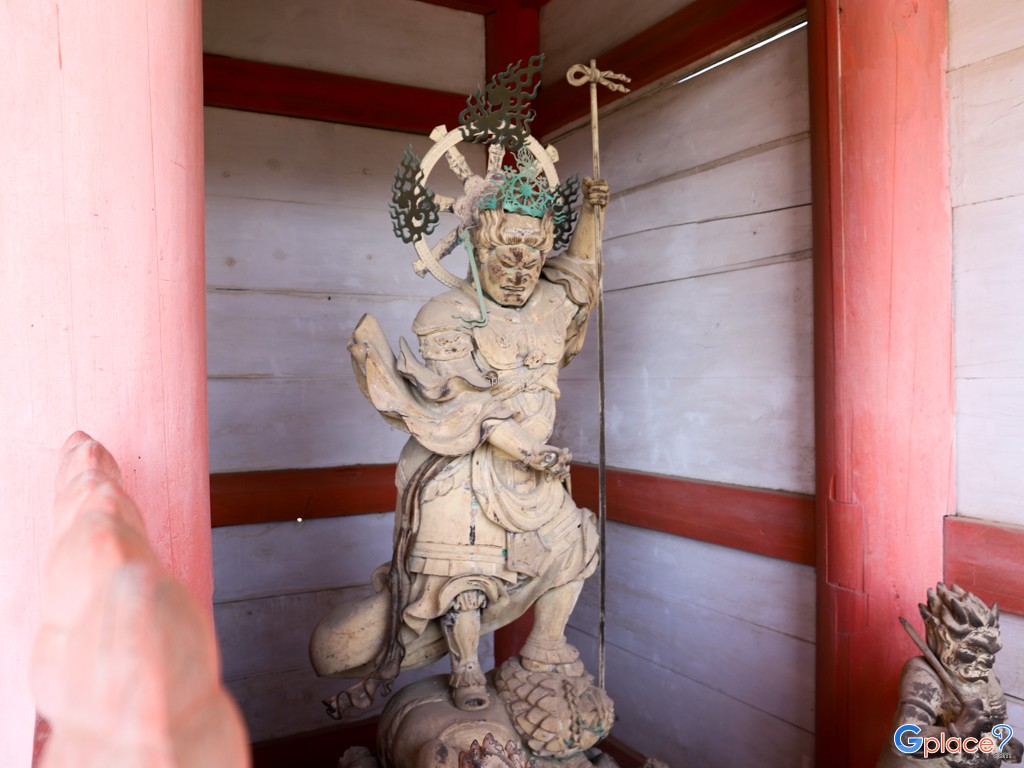
Niōmon Gate
The grand outer gate guarded by two fierce Niō guardian deities, marking the transition from the secular world to sacred space. -
Chūmon – Central Gate
An inner gate leading toward the main ceremonial precincts, emphasizing ritual progression rather than defense. -
Chokushi-mon – Imperial Messenger Gate
A gate reserved for imperial envoys, symbolizing Ninna-ji’s direct connection to the Emperor. -
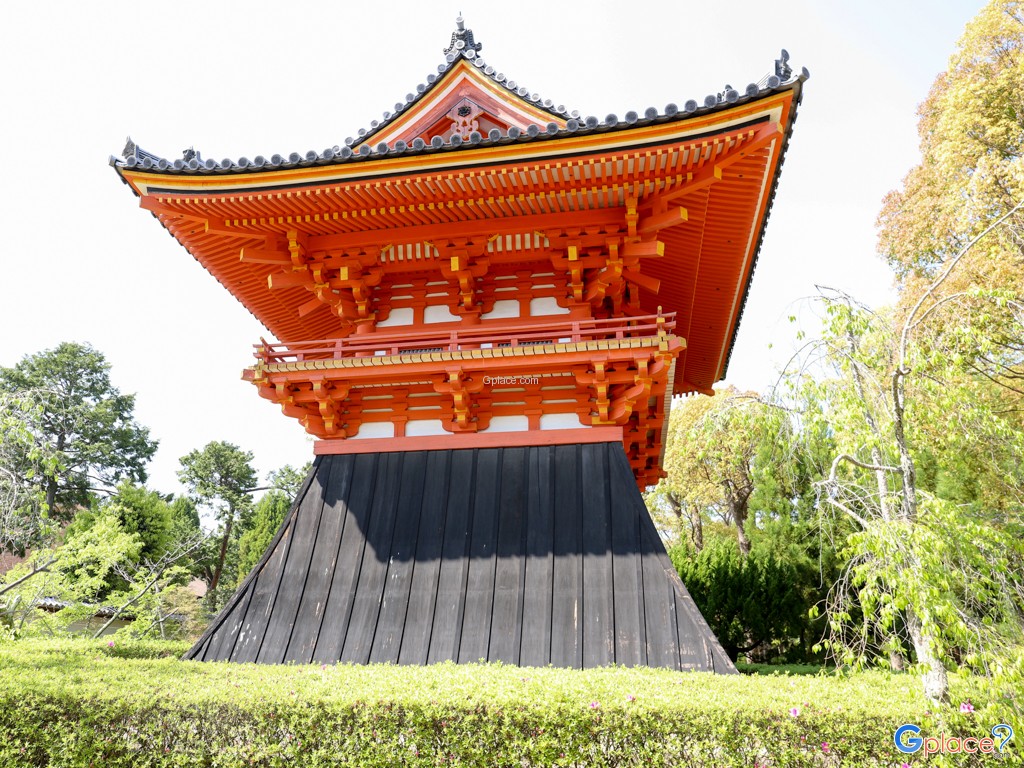
Shoro – Bell Tower
Used to mark time and accompany religious ceremonies through ritual bell ringing.
Behind the main temple complex lies the Omuro 88 Temple Pilgrimage, a forested hiking route that takes approximately two hours to complete. The trail features 88 miniature shrines, each representing a temple from the famous Shikoku pilgrimage. Completing the route is believed to grant spiritual merit equivalent to undertaking the full 1,200-kilometer pilgrimage.
How to Get There
Randen Tram (Keifuku Line):
Get off at Omuro-Ninnaji Station, the Niomon Gate is visible directly ahead. Then walk approximately 3 minutes to the temple's entrance. This is the most recommended option, especially during peak travel seasons, as it effectively avoids road congestion.
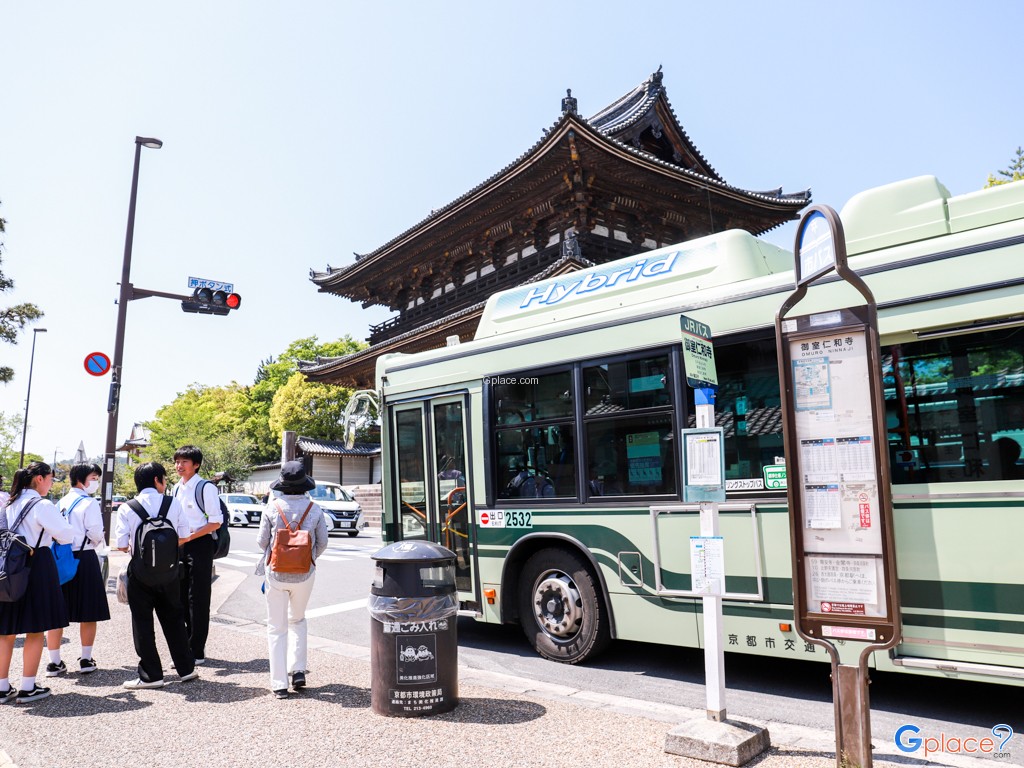
Kyoto City Bus:
-
Route 26: Departs from Kyoto Station (Boarding Point B3). This is the most direct and convenient route for travelers staying near Kyoto Station.
-
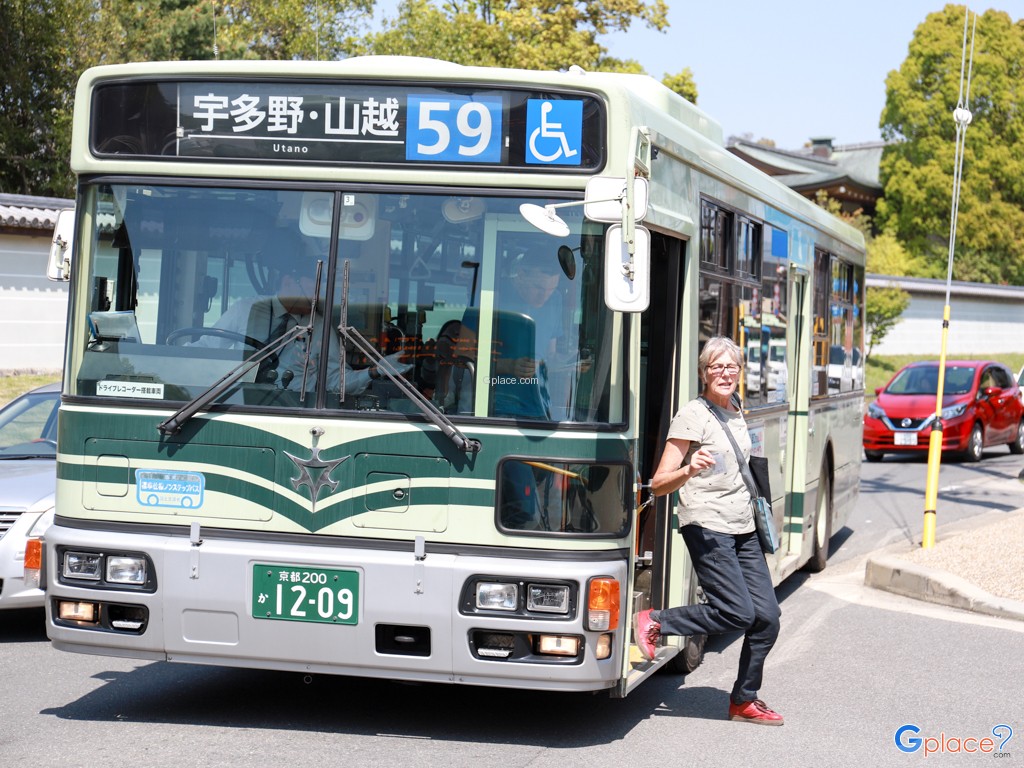
Route 59: Passes through Shijo Kawaramachi, Sanjo Keihan, and major landmarks such as Kinkaku-ji and Ryoan-ji. Ideal for visitors coming from the city center or combining Ninna-ji with other famous temples.
-
Route 10: Runs from the Sanjo Keihan area via Kitano Tenmangu Shrine, making it suitable for those traveling from the eastern side of Kyoto.
JR Bus (Takao–Keihoku Line):
Board at Kyoto Station at stop JR3 (Karasuma side). Travelers holding a nationwide JR Pass or certain JR West Kansai Area Passes can use this bus at no additional cost.
Taxi:
Approximately 25–30 minutes from central Kyoto. Taxi use is not recommended during cherry blossom season or peak travel periods, as traffic around the temple can be extremely congested and travel times may be significantly longer than using trams or buses.
Travel Tips
-
Omuro Sakura Season: This is the busiest period at Ninna-ji Temple, as Omuro Sakura are the last cherry blossoms to bloom in Kyoto. These unique, low-growing cherry trees typically reach full bloom from mid to late April, allowing visitors to enjoy the blossoms at eye level. To avoid crowds and take better photographs, it is recommended to arrive before the temple opens (before 9:00 AM).
-
Omuro 88 Pilgrimage Route: The trail is about 3 km long and takes around 2 hours. It is a forest hiking path with dirt and stone sections that can become slippery after rain. Wear proper walking shoes and bring water, as there are no shops along the route.
-
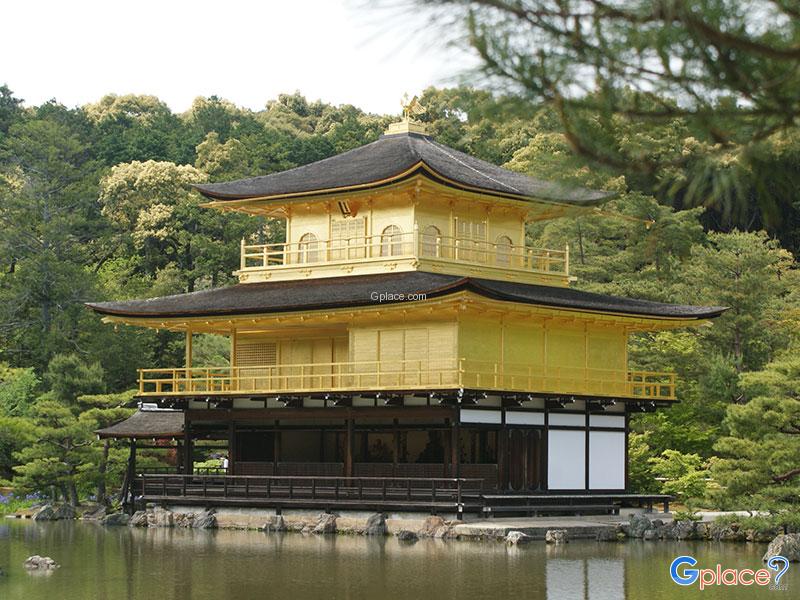
Nearby Attractions: Ninnaji is close to Ryoan-ji Temple and Kinkaku-ji (Golden Pavilion), making it easy to plan a full-day itinerary along the scenic Kinukake-no-michi route.
-
Autumn Visit: Late November offers a quieter atmosphere with beautiful autumn foliage and fewer visitors.
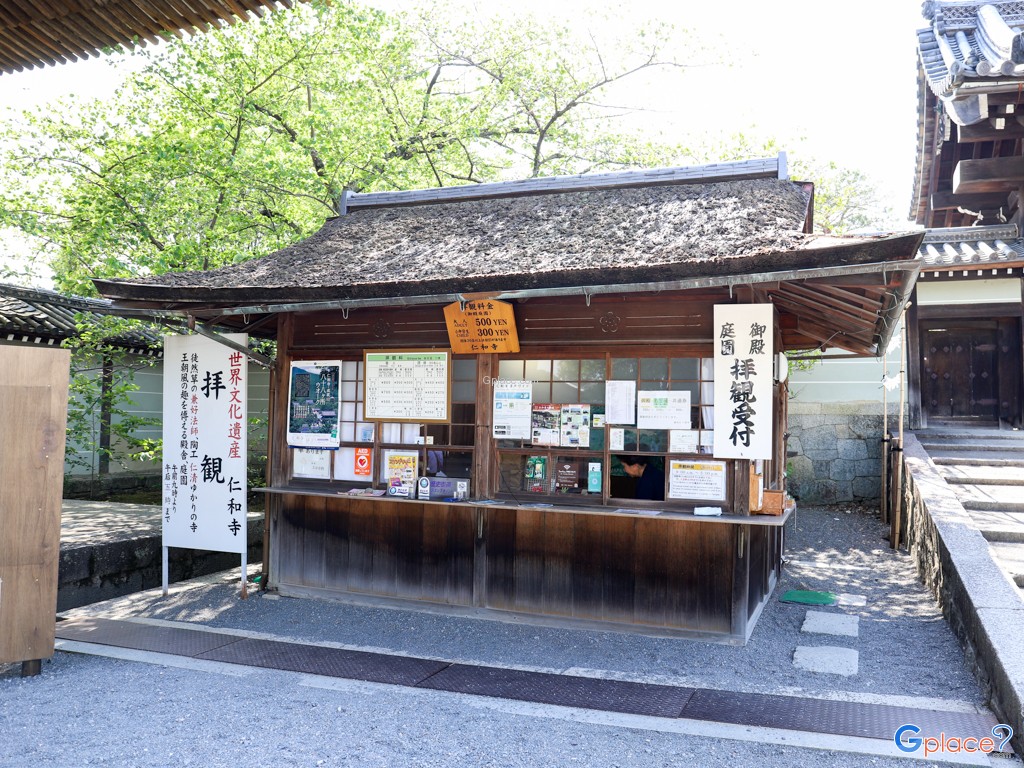
Admission Fee:
-
Regular Period:
-
Temple grounds: Free
-
Goten (Imperial Residence): Approximately 800 yen
-
-
Cherry Blossom Season:
-
Special entrance fee for temple grounds: approximately 500–800 yen (subject to annual changes)
-
Additional fee may apply for the Goten, or a combined ticket may be available
-
Opening Time:
-
March–November: 9:00 AM – 5:00 PM
-
December–February: 9:00 AM – 4:30 PM
Ninnaji Temple

 Share
Share
 33 Omuroouchi Ukyo Ward, Kyoto, Kyoto Prefecture 616-8092
Map
33 Omuroouchi Ukyo Ward, Kyoto, Kyoto Prefecture 616-8092
Map
 Closed today
Mon9.00 - 16.30
Tue9.00 - 16.30
Wed9.00 - 16.30
Thu9.00 - 16.30
Fri9.00 - 16.30
Sat9.00 - 16.30
Sun9.00 - 16.30



 410
410